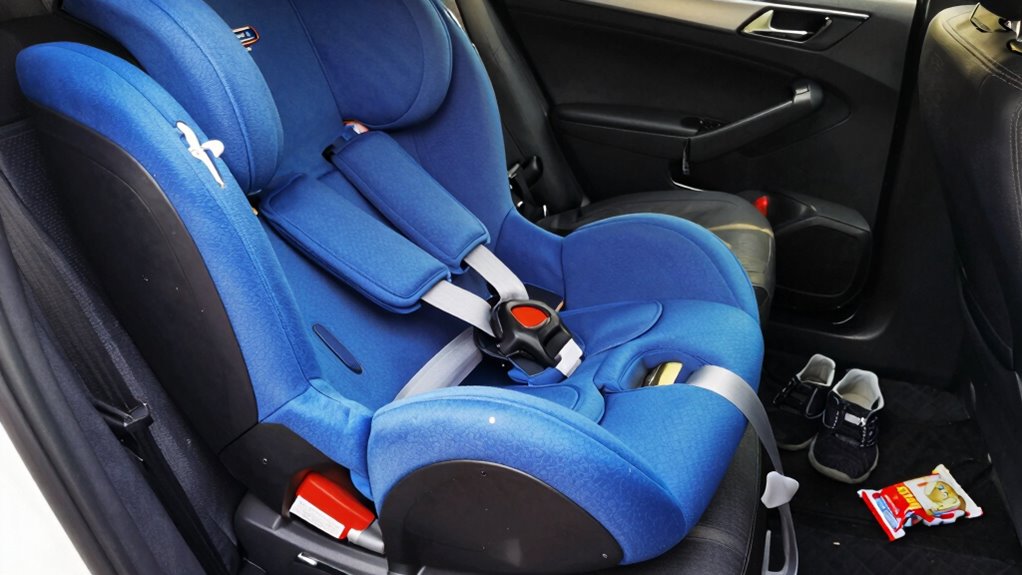

Managing booster seat logistics might seem small, but it can cause big co-parent conflicts. Ensuring the seat fits your child’s age and size, installing it correctly, and doing routine checks helps keep your kid safe during travel. Having a designated spot and planning ahead prevent last-minute disagreements. Staying informed about safety standards further reduces risks. Paying attention to these details makes co-parenting smoother and travel safer—stay tuned to discover simple but effective strategies to avoid disputes.
Key Takeaways
- Disagreements often stem from inconsistent booster seat placement or installation between co-parents.
- Lack of routine checks can lead to safety concerns and conflicts over proper use.
- Differences in understanding safety standards cause disputes about suitable booster seat choices.
- Forgetting to pack or bring the booster seat complicates travel plans and creates tension.
- Small lapses in routine or communication undermine safety, fueling co-parenting disagreements.
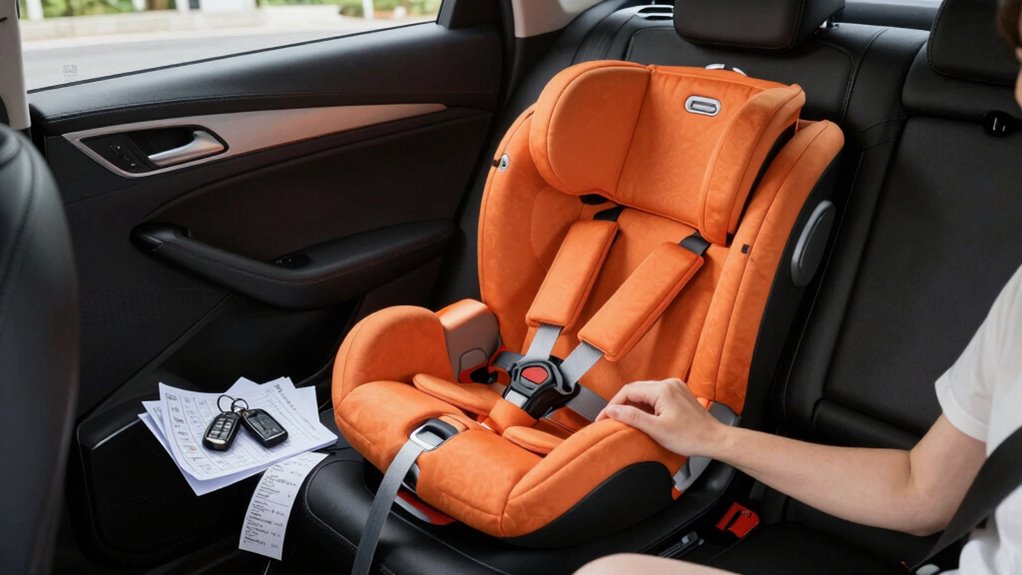
Have you ever wondered how booster seat logistics guarantee your child’s safety and comfort during travel? It’s a small detail that often gets overlooked but plays a vital role in child safety and maintaining smooth parenting routines. When you’re juggling busy schedules, coordinating who has the booster seat, ensuring it’s properly installed, and making sure your child is comfortable can feel like just another task on your never-ending to-do list. However, these tiny logistics can considerably impact your child’s safety and your peace of mind. Proper booster seat logistics mean you’re consistently using the right seat for your child’s age and size, which directly influences child safety. It’s not just about having a booster seat; it’s about making sure it’s appropriate, correctly installed, and used every time you travel. When you follow a reliable system—like checking the seat’s installation before each trip—you reduce the chances of errors that could compromise safety. This routine becomes second nature, ensuring your child is always secure, whether it’s a quick trip to the store or a longer road journey. Maintaining child passenger safety is essential to prevent preventable injuries and ensure your child’s well-being. Parenting routines often revolve around consistency, and booster seat management is no different. You might have a designated spot for the booster seat in your car, or a habit of double-checking its secure fit. These small routines help prevent disagreements and confusion, especially when co-parenting. When both parents understand and follow the same procedures—like always using the booster seat for kids over a certain age—you establish a clear standard that everyone respects. This consistency not only enhances safety but also reduces the chances of arguments over who’s responsible for what. Handling booster seat logistics effectively also involves planning ahead. You might keep an extra booster seat in your car or pack it in your travel bag, so you’re never caught off guard. It’s about being proactive, ensuring that your child’s safety isn’t left to chance. Additionally, understanding car seat standards can help you select the most suitable booster seat for your child’s needs. Being aware of regulatory guidelines ensures that the booster seats you choose meet safety requirements and provide optimal protection. Learning about latest safety standards can also help you make better purchasing decisions. Staying informed about the latest safety standards can also help you make better purchasing decisions. These small steps support your parenting routines by making travel less stressful and more predictable. When everyone in the family knows the routine, it becomes easier to manage co-parenting disagreements and focus on what truly matters—your child’s well-being. In the end, booster seat logistics may seem like a minor detail, but they’re integral to child safety and your parenting rhythm. When you pay attention to these small but essential factors, you create a safer, more harmonious environment for your child and a smoother experience for yourself.
adjustable booster seat for toddlers
As an affiliate, we earn on qualifying purchases.
As an affiliate, we earn on qualifying purchases.
Frequently Asked Questions
How Do Parents Decide Who Provides the Booster Seat?
In shared custody situations, you and your co-parent typically decide who provides the booster seat based on safety protocols and convenience. You might alternate weeks or agree that the child keeps the booster seat at one parent’s house. It’s important to communicate clearly, prioritize safety, and document your arrangement. Establishing a consistent plan helps prevent conflicts and guarantees your child’s safety during transportation.
What Happens if Both Parents Forget to Bring the Booster Seat?
Imagine arriving at the car, the sun casting long shadows, only to realize the booster seat’s not there. When both parents forget to bring it, prioritize car seat safety first—check if the child can ride safely without it or if a quick trip to a nearby store is possible. This situation calls for quick parenting negotiation, keeping the child’s safety top priority while working together to solve the problem calmly.
Are There Legal Requirements for Booster Seat Use During Exchanges?
You need to follow legal obligations and safety regulations regarding booster seat use during exchanges. Most states require children to be secured in an appropriate booster seat until they reach a certain age, weight, or height. Failing to do so can result in fines or other penalties. Always check your local laws to verify you’re compliant and prioritize your child’s safety during every exchange, making booster seat use a non-negotiable part of the process.
How Can Co-Parents Communicate About Booster Seat Logistics Effectively?
You can communicate about booster seat logistics effectively by setting clear parenting boundaries and establishing a consistent routine. Use a shared calendar to avoid scheduling conflicts and clarify who’s responsible for bringing or installing the booster seat. Keep conversations respectful and focused on your child’s needs. Regular check-ins help prevent misunderstandings, ensuring both parents feel heard and that booster seat arrangements stay smooth and collaborative.
What Alternatives Exist if Parents Disagree on Booster Seat Placement?
When shared custody and travel routines clash over booster seat placement, you might think arguing solves everything. Instead, consider creating a detailed, written agreement that outlines who’s responsible and when. If disagreements persist, involve a neutral third party or co-parenting counselor. This way, you avoid unnecessary fights, keep routines consistent, and prioritize your child’s safety without making booster seat logistics a battleground.
car booster seat with easy installation
As an affiliate, we earn on qualifying purchases.
As an affiliate, we earn on qualifying purchases.
Conclusion
Managing booster seat logistics can feel like trying to untangle a ball of yarn—frustrating and endless. But remember, clear communication and a bit of patience are your best tools. When you coordinate with your co-parent, you’re building a bridge that makes daily shifts smoother, like a well-oiled machine. In the end, it’s these small, steady efforts that keep the peace and keep your little one safe—because, in this game, teamwork truly makes the dream work.
compact travel booster seat for kids
As an affiliate, we earn on qualifying purchases.
As an affiliate, we earn on qualifying purchases.
booster seat safety standards compliant
As an affiliate, we earn on qualifying purchases.
As an affiliate, we earn on qualifying purchases.