


Readers searching for self-help books about narcissism often face two different problems: they may be worried about their own behavior, or they may be trying to cope with someone else’s. Rethinking Narcissism by Craig Malkin takes the broader, self-reflective route, treating narcissism as a spectrum and helping readers recognize healthier and less healthy patterns. Wendy T. Behary’s Disarming the Narcissist is more relationship-focused, with guidance for communicating with a person whose narcissistic behavior causes recurring conflict.

Turn your wind-down time into listening time
- Thousands of audiobooks, podcasts and originals
- Listen on your phone, tablet or Echo — also offline
- Cancel anytime

Stop Being a Narcissist: Easy Strategies to Break Negative Patterns in Relationships
- ✔ Format: Book; specific format not stated
- ✔ Program length: 12 weeks
- ✔ Stated focus: Changing negative relationship patterns
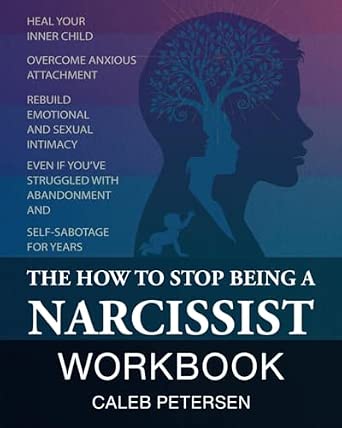
The How to Stop Being a Narcissist Workbook: Heal Your Inner Child, Overcome Anxious Attachment, and Rebuild Emotional and Sexual…
- ✔ Format: Workbook
- ✔ Program length: Not provided
- ✔ Stated focus: Inner-child healing and anxious attachment

Enough! I Refuse to Be a Narcissist Anymore: How to Stop Being a Narcissist
- ✔ Format: Not provided
- ✔ Program length: Not provided
- ✔ Stated purpose: How to stop being a narcissist, as indicated by the title
The main tradeoff is insight into the trait versus tools for handling a difficult dynamic. Choose Malkin if you want a nuanced framework for self-understanding or are wary of labeling yourself or another person. Choose Behary if you need practical ways to respond, protect your limits, and reduce unproductive conflict. Neither book can diagnose a mental health condition or make another person change.
At a Glance
| Criteria | Rethinking Narcissism by Craig Malkin | Disarming the Narcissist by Wendy T. Behary | Winner |
|---|---|---|---|
| Primary focus | Understanding narcissism as a spectrum | Communicating with and setting limits around a person with narcissistic traits | Depends |
| Use for self-reflection | Strong; invites examination of one’s own traits and motivations | Some self-awareness, especially about relationship patterns | A |
| Use in difficult relationships | Useful background, but less centered on managing a specific relationship | Strong; relationship strategies are the central purpose | B |
| Practical tools | Conceptual framework and reflective guidance | More directly action-oriented communication and boundary guidance | B |
| Approach to narcissism | Nuanced; distinguishes healthy confidence from harmful patterns | Centers the challenges of interacting with someone who has narcissistic patterns | A |
| Best fit | Readers seeking insight, including those concerned about their own behavior | Readers dealing with repeated conflict with a partner, relative, or colleague | Depends |
| Value | Often the better first purchase when the main need is understanding | Worth paying for when relationship tactics are the immediate need | Depends |
Stop Being a Narcissist: Easy Strategies to Break Negative Patterns in Relationships
Stop Being a Narcissist earns our top position because its description gives readers a clearer starting framework than the other two listings: a 12-week approach centered on relationship patterns, social skills, self-worth, and habit change. That combination ties the topic to day-to-day behavior, which is useful for readers who want to move beyond recognizing a label and think about what they might change in their relationships. The stated program length also makes its intended structure easier to evaluate than the workbook’s unspecified format details or the minimal description for Enough!.Its advantage is clarity of scope, not proof of effectiveness. The supplied information does not describe the week-by-week content, exercises, author qualifications, or how it handles complex situations. Compared with the workbook, it appears broader and more explicitly organized around habit change; compared with Enough!, it provides more concrete topics to assess before buying. We would choose it when a defined sequence and relationship focus sound motivating, but skip it if we need to know the actual techniques in advance or want a highly specified workbook experience.
Pros:
- States a structured 12-week approach.
- Directly addresses negative patterns in relationships.
- Includes social skills and self-worth in its described focus.
- Gives more information for comparison than the other two listings.
Cons:
- The supplied description does not explain the 12-week sequence or its specific exercises.
- The book’s format and detailed contents are not provided.
- No author background or evidence base is included in the product information.
Best for: Readers who want a stated time frame and a broad focus on changing relationship habits, social skills, and self-worth.
Not ideal for: Readers who need detailed sample exercises, evidence or credentials in the listing, or a clearly described therapeutic method before choosing.
Bottom line: We rank it first for the clearest stated structure and behavior-change focus, while noting that the listing leaves the practical details of the 12-week plan open.
“We rank it first for the clearest stated structure and behavior-change focus, while noting that the listing leaves the practical details of the 12-week plan open.”
The How to Stop Being a Narcissist Workbook: Heal Your Inner Child, Overcome Anxious Attachment, and Rebuild Emotional and Sexual…
The How to Stop Being a Narcissist Workbook has the most distinctive thematic angle in this group: its title links inner-child healing and anxious attachment with rebuilding emotional and sexual intimacy. That makes it a more focused alternative to the first book’s broader relationship-pattern and habit-change framing. Readers who see attachment and closeness as central questions may find that stated emphasis a better match than a general 12-week program.The workbook label suggests an active format, but the available description does not spell out what readers will do on the page, how the material is organized, or how its claims are approached. That uncertainty matters more here because the product information is especially sparse and the title is reported as truncated, leaving the full scope unclear. Compared with Stop Being a Narcissist, we get more specific emotional themes but less information about structure. Compared with Enough!, the workbook at least signals a format and several topics. We would shortlist it for its stated focus, while readers who need a well-documented method should look for fuller contents before deciding.
Pros:
- Identifies itself as a workbook.
- Names inner-child healing and anxious attachment as central themes.
- Explicitly includes emotional and sexual intimacy.
- Offers a more focused thematic contrast with the first book’s broader habits approach.
Cons:
- No detailed product description or specifications were supplied.
- The complete scope is unclear because the provided title is truncated.
- The exercises, structure, and author background are not described.
Best for: Readers who specifically want a workbook framed around inner-child themes, anxious attachment, and emotional or sexual intimacy.
Not ideal for: Readers who prefer a clearly described step-by-step program or need detailed information about exercises and scope before committing.
Bottom line: We see it as the strongest thematic fit for readers focused on attachment and intimacy, but its sparse listing makes the actual workbook difficult to assess.
“We see it as the strongest thematic fit for readers focused on attachment and intimacy, but its sparse listing makes the actual workbook difficult to assess.”
Enough! I Refuse to Be a Narcissist Anymore: How to Stop Being a Narcissist
Enough! I Refuse to Be a Narcissist Anymore presents a forceful, change-oriented premise. For readers who want a title that plainly signals a desire to stop narcissistic behaviors, that directness may make it an approachable candidate to investigate. But the supplied product data gives no description of the book’s methods, format, structure, or specific topics. We therefore cannot tell whether it offers a plan, reflective prompts, relationship guidance, or another approach.That lack of detail places it behind the other options in our ranking. Stop Being a Narcissist gives us a stated 12-week framework and several behavior themes, while the workbook identifies attachment and intimacy as its focus. Enough! communicates intent through its title but offers little basis for matching it to a particular reader’s needs. We would consider it if its direct framing resonates and more complete product details are available, but readers who want to compare methods should start with the better-described alternatives. The title alone cannot establish suitability or likely outcomes.
Pros:
- The title clearly signals a goal of changing narcissistic behavior.
- Its direct framing may appeal to readers looking for a straightforward entry point.
- It provides a third option for comparison beyond a structured program and a themed workbook.
Cons:
- No product description beyond the title was supplied.
- Format, structure, and program length are not specified.
- The available information does not identify methods, exercises, or specific relationship themes.
Best for: Readers drawn to a direct, commitment-focused title who can review fuller contents or sample material before choosing.
Not ideal for: Readers who want a known program length, a clearly identified workbook format, or specific topics and methods described before buying.
Bottom line: We place it third because its direct title is clear, but the product information is too limited to judge its practical fit against the other two.
“We place it third because its direct title is clear, but the product information is too limited to judge its practical fit against the other two.”
As an Amazon Associate we earn from qualifying purchases.
Key Differences
The books start from different points. Malkin asks what narcissism means, how it varies, and how a reader can recognize patterns without treating a label as a complete explanation of a person. That makes his book a stronger starting point for self-reflection and for readers who want a broad psychological framework. Behary starts with the relationship: what can happen when a person’s self-protective or self-centered patterns repeatedly undermine communication, and how the reader might respond.
That difference shapes their practical value. Behary is more directly relevant when you need language and strategies for a recurring interaction. Malkin is more useful when the core problem is uncertainty: whether a behavior is narcissistic, how much the label explains, or what healthier alternatives might look like. Neither approach guarantees a better relationship. If another person is abusive or unwilling to respect boundaries, a book cannot substitute for outside support or practical safety planning.
For most readers, the right first book depends on who is asking the question. If you suspect your own conduct is harming people, start with Malkin’s self-examination rather than using a relationship guide to diagnose someone else. If you are already clear that a recurring relationship is the problem and want responses you can try, Behary is the more targeted purchase. Paying for both makes sense only when you want both the wider framework and relationship-specific guidance.
Detailed Comparison
Primary focus (major difference)
Malkin’s book explains narcissism across a range of traits and behaviors; Behary’s book centers on the experience of interacting with a person who shows strong narcissistic patterns. The winner depends on the question: Malkin for understanding the concept, Behary for handling a relationship. This is a major difference because the books address distinct starting problems.
Use for self-reflection (Rethinking Narcissism by Craig Malkin wins — major)
Rethinking Narcissism is the clearer choice for readers examining their own behavior. Its spectrum framing makes room for self-assessment without assuming that every self-focused act signals a disorder. Behary offers some perspective on relationship patterns, but its main lens is the other person’s behavior. The gap is moderate to major if personal accountability is the priority.
Use in difficult relationships (Disarming the Narcissist by Wendy T. Behary wins — major)
Behary is more closely aimed at people trying to cope with repeated friction, since communication and boundaries sit at the center of its approach. Malkin can provide context for understanding what might be happening, but it is less specifically geared to the next difficult conversation. Behary wins by a major margin for this use; readers should still avoid expecting a script or technique to control someone else’s response.
Practical tools (Disarming the Narcissist by Wendy T. Behary wins — moderate)
Behary is the more action-oriented option for readers looking for ways to approach conversations and protect limits. Malkin offers a useful framework and reflective guidance, but readers may need to translate those ideas into steps for a particular relationship. The difference is moderate: a reader seeking explanation may prefer Malkin’s approach, while someone facing a recurring interaction is likelier to use Behary’s.
Approach to narcissism (Rethinking Narcissism by Craig Malkin wins — moderate)
Malkin’s spectrum approach is a better fit for readers who want nuance and a way to think about healthy and harmful forms of narcissistic traits. Behary’s focus is narrower by design, giving more attention to difficult relationship patterns. Malkin wins for breadth, with a moderate difference. Behary’s narrower focus is useful when the reader already knows that relationship dynamics are the immediate concern.
Best fit for different readers (major difference)
There is no universal winner. Readers worried about their own conduct, confused by labels, or seeking a broad introduction are better served by Malkin. Readers trying to deal with a partner, family member, or colleague whose behavior repeatedly disrupts communication are more likely to benefit from Behary. The practical difference is major because buying the wrong focus can leave the reader with information that does not address the immediate problem.
Value (moderate difference)
Value depends less on which book costs less and more on whether its focus matches the need. Malkin is the stronger first purchase when the reader wants foundational understanding; Behary earns its cost when relationship guidance is the reason for buying. Paying for both is hard to justify before choosing a priority. The difference is moderate and depends on the reader’s situation and current prices.
Rethinking Narcissism by Craig Malkin: Pros and Cons
Pros:
- Offers a broad, spectrum-based way to think about narcissism.
- Supports self-reflection and avoids making a label the whole story.
- Useful for readers who want context before deciding what a relationship pattern means.
Cons:
- Less directly focused on managing a specific difficult relationship.
- Readers looking for immediate conversation strategies may want more applied guidance.
- A framework cannot diagnose the reader or another person.
Disarming the Narcissist by Wendy T. Behary: Pros and Cons
Pros:
- Directly addresses relationships involving strong narcissistic patterns.
- More focused on communication and setting boundaries.
- Better suited to readers seeking practical responses to recurring conflict.
Cons:
- Its relationship-centered focus may be less suitable for readers primarily examining themselves.
- A reader could overapply the narcissism label to another person.
- No communication strategy can guarantee cooperation or replace professional or safety support when needed.
Who Should Choose What
Choose Rethinking Narcissism by Craig Malkin if:
- You are concerned that your own behavior may be self-centered or harmful and want to examine it.
- You want a broad, nuanced introduction before applying a label to yourself or someone else.
- Your main need is to understand narcissism as a range of traits rather than manage one specific relationship.
Choose Disarming the Narcissist by Wendy T. Behary if:
- You face repeated conflict with someone whose behavior seems strongly narcissistic and want relationship-focused guidance.
- You are looking for ways to communicate and set limits, while recognizing that you cannot make the other person change.
- You already understand the basics and need a more targeted resource for a difficult dynamic.
Skip both if: You need a diagnosis, treatment for significant distress, help with immediate danger, or support for abuse. Seek an appropriately qualified mental health professional or local support service; a self-help book is not a substitute.
Value for Money
Price varies by edition, retailer, and format, so compare the current cost of the edition you plan to use. The better value is the book that fits the problem you actually have: Rethinking Narcissism for broader understanding and self-examination, or Disarming the Narcissist for relationship-focused responses. Paying more for Behary’s targeted guidance can make sense when difficult interactions are your immediate concern. If you are still trying to understand the subject, start with Malkin and add another book only if a clear need remains.
Final Verdict
Choose Rethinking Narcissism if your first question is what narcissism means, whether you recognize it in yourself, or how to think about the trait without reducing a person to a diagnosis. Choose Disarming the Narcissist if your immediate challenge is a recurring relationship and you want guidance on communication and boundaries. The deciding factor is whether you need understanding or relationship tactics. For a general first read, Malkin is the stronger starting point; for a specific difficult dynamic, Behary is the more relevant choice.
Frequently Asked Questions
Which book should I read first if I think I might be narcissistic?
Start with Rethinking Narcissism. Its broader, spectrum-based approach better suits self-examination. If your concern is causing serious distress or damaging relationships, consider discussing it with a qualified mental health professional as well.
Which book is better if someone in my family has narcissistic traits?
Disarming the Narcissist is more directly focused on responding to difficult relationship patterns and setting limits. It cannot diagnose your family member or make them change, so judge its advice against your situation and seek outside support when needed.
Do either of these books diagnose narcissistic personality disorder?
No. Self-help books can offer information and reflection, but a diagnosis requires assessment by a qualified clinician. Avoid treating a book’s descriptions as proof that you or another person has a disorder.
Should I buy both books?
Usually, choose the one that matches your immediate need first. Add the other if you later want both Malkin’s broader framework and Behary’s relationship-centered guidance; owning both is not necessary to get started.