

Recovering from narcissistic abuse is rarely a one-size-fits-all process, and the right tool depends on where you are in your journey — still identifying the problem, breaking a trauma bond, or rebuilding your sense of self. After comparing the leading books and workbooks in this space, The Narcissism Recovery Workbook: Skills for Healing from Emotional Abuse stands out as the best overall pick because it balances psychoeducation with structured, day-to-day exercises. If you want deeper clinical grounding, The DBT Workbook for Narcissistic Abuse and Gaslighting brings evidence-based emotion-regulation skills to the table, while Recovery from Narcissistic Abuse, Gaslighting, Codependency and Complex PTSD (4 Books in 1) offers the broadest coverage for readers dealing with layered trauma. The main tradeoff in this category is depth versus accessibility: dense multi-book bundles cover more ground but can feel overwhelming, while focused single workbooks are easier to finish but may leave gaps. Read on for the full breakdown of all fifteen options.

Turn your wind-down time into listening time
- Thousands of audiobooks, podcasts and originals
- Listen on your phone, tablet or Echo — also offline
- Cancel anytime
Key Takeaways
- Workbooks with daily, structured exercises (like the 51-day program and the DBT workbook) consistently outperform pure-education books for readers actively trying to break trauma bonds, because recovery requires practice, not just insight.
- Multi-book bundles offer the lowest cost per topic covered, but their breadth comes at the price of repetition and pacing — they suit readers juggling codependency and complex PTSD alongside narcissistic abuse, not those with a single focused goal.
- Two titles in this lineup address the other side of the equation: if you’re worried about your own narcissistic traits, Breaking Free From the Mirror and the Mentalization-Based Therapy guide are the only picks built for self-directed change rather than surviving someone else’s behavior.
- Books anchored to a recognized therapy modality (DBT, mentalization-based therapy) provide more transferable skills if you plan to enter formal therapy later — a meaningful advantage over generic self-help frameworks.
- The covert-narcissist title fills a real gap in the category: readers who never experienced overt rage or grandiosity often fail to recognize their situation in general-purpose abuse books, and this specialized pick names the hidden-abuse pattern directly.
| Narcissistic Abuse Recovery: The Complete Guide to Recover From Emotional Abuse, Identify Narcissists, and Overcome Abusive Relationships |  | Best Overall | Format: Book (print and digital) | Primary Focus: Emotional abuse recovery and narcissist identification | Approach: Informational guide | VIEW LATEST PRICE | See Our Full Breakdown |
| It’s Not You: Identifying and Healing from Narcissistic People |  | Best for Validation and Clarity | Format: Book (print, digital, audio) | Primary Focus: Recognition and emotional healing | Approach: Insight-driven narrative | VIEW LATEST PRICE | See Our Full Breakdown |
| Recovery from Gaslighting & Narcissistic Abuse, Codependency & Complex PTSD (3 in 1) |  | Best Value Bundle | Format: Book (digital and print) | Primary Focus: Gaslighting, codependency, and complex PTSD | Approach: Multi-topic compilation | VIEW LATEST PRICE | See Our Full Breakdown |
| Breaking Free From the Mirror: How to Stop Being Narcissistic – The Complete Recovery Workbook |  | Best for Self-Directed Changework | Format: Workbook (digital and print) | Primary Focus: Overcoming one’s own narcissistic tendencies | Approach: Exercise-driven workbook | VIEW LATEST PRICE | See Our Full Breakdown |
| The Beginner’s Simplified Guide to Mentalization-Based Therapy for Narcissism |  | Best for Therapy-Curious Beginners | Format: Book (digital and print) | Primary Focus: Mentalization-based therapy for narcissism | Approach: Educational primer | VIEW LATEST PRICE | See Our Full Breakdown |
| Narcissistic Abuse: A Therapist’s Guide to Identifying, Escaping, and Healing from Toxic and Manipulative People |  | Best for Escape Planning | Format: Book | Author Background: Therapist | Focus Areas: Identifying abuse, escaping toxic people, healing | VIEW LATEST PRICE | See Our Full Breakdown |
| Rethinking Narcissism: Recognizing and Coping with Narcissists |  | Best for Understanding the Spectrum | Format: Book | Focus Areas: Understanding narcissism, coping strategies, self-recognition | Approach: Psychoeducational | VIEW LATEST PRICE | See Our Full Breakdown |
| The Narcissism Recovery Workbook: Skills for Healing from Emotional Abuse |  | Best Skills-Based Workbook | Format: Workbook | Focus Areas: Emotional abuse recovery, self-awareness, resilience | Approach: Skills and exercises | VIEW LATEST PRICE | See Our Full Breakdown |
| Recovery from Narcissistic Abuse, Gaslighting, Codependency and Complex PTSD (4 Books in 1) |  | Best Value Bundle | Format: Workbook and guide | Focus Areas: Narcissistic abuse, gaslighting, codependency, complex PTSD | Approach: Combined education and exercises | VIEW LATEST PRICE | See Our Full Breakdown |
| Self-Healing from Narcissistic Abuse Workbook: 51 Days of Actions, Affirmations, & Activities to Activate and Reclaim Your Authentic Self |  | Best Structured Daily Program | Format: Workbook | Focus Areas: Self-healing, identity reclamation, personal empowerment | Approach: Daily actions, affirmations, and activities | VIEW LATEST PRICE | See Our Full Breakdown |
| The Covert Passive-Aggressive Narcissist: Recognizing the Traits and Finding Healing After Hidden Emotional and Psychological Abuse |  | Best for Recognizing Hidden Abuse | Format: Paperback book | Series: The Narcissism Series | Primary focus: Covert passive-aggressive narcissism | VIEW LATEST PRICE | See Our Full Breakdown |
| The DBT Workbook for Narcissistic Abuse and Gaslighting: Dialectical Behavior Therapy Skills to Stay Emotionally Centered, Overcome Self-Doubt, and Reclaim Your Self-Worth |  | Best Clinically-Grounded Skills | Format: Workbook | Therapy modality: Dialectical Behavior Therapy (DBT) | Primary focus: Emotional regulation, self-doubt, self-worth | VIEW LATEST PRICE | See Our Full Breakdown |
| Disarming the Narcissist: Surviving and Thriving with the Self-Absorbed |  | Best for Ongoing Contact | Format: Paperback book | Primary focus: Managing relationships with narcissistic people | Approach: Practical communication and self-protection strategies | VIEW LATEST PRICE | See Our Full Breakdown |
| Guided Workbook Recover from Narcissistic Abuse: Practical Strategies to Break the Trauma Bond, Rebuild Identity, Restore Self-Esteem & Live Life Your Way | 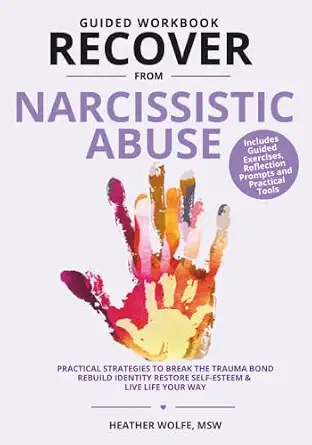 | Best Value Pick | Format: Guided workbook | Primary focus: Trauma bonds, identity, self-esteem | Structure: Sequential practical strategies | VIEW LATEST PRICE | See Our Full Breakdown |
| The Narcissistic Abuse Recovery Guide and Workbook: The Ultimate Toolkit for Healing and Thriving Beyond Toxic Relationships |  | Best All-in-One Toolkit | Format: Combined guide and workbook | Primary focus: Full-spectrum healing and thriving after toxic relationships | Structure: Program-style toolkit with exercises | VIEW LATEST PRICE | See Our Full Breakdown |
| narcissism recovery therapy tool | Format | Approach | Primary Focus | Includes Exercises |
|---|---|---|---|---|
| Narcissistic Abuse Recovery: T | Book (print and digital) | Informational guide | Emotional abuse recovery and narcissist identification | No |
| It’s Not You: Identifying and | Book (print, digital, audio) | Insight-driven narrative | Recognition and emotional healing | No |
| Recovery from Gaslighting & Na | Book (digital and print) | Multi-topic compilation | Gaslighting, codependency, and complex PTSD | Limited — mostly strategies and concepts |
| Breaking Free From the Mirror: | Workbook (digital and print) | Exercise-driven workbook | Overcoming one’s own narcissistic tendencies | Yes — core feature |
| The Beginner’s Simplified Guid | Book (digital and print) | Educational primer | Mentalization-based therapy for narcissism | No |
| Narcissistic Abuse: A Therapis | Book | Guidance and strategy | — | — |
| Rethinking Narcissism: Recogni | Book | Psychoeducational | — | Limited |
| The Narcissism Recovery Workbo | Workbook | Skills and exercises | — | Yes |
| Recovery from Narcissistic Abu | Workbook and guide | Combined education and exercises | — | Yes |
| Self-Healing from Narcissistic | Workbook | Daily actions, affirmations, and activities | — | Yes, daily |
| The Covert Passive-Aggressive | Paperback book | Trait recognition plus healing guidance | Covert passive-aggressive narcissism | — |
| The DBT Workbook for Narcissis | Workbook | — | Emotional regulation, self-doubt, self-worth | — |
| Disarming the Narcissist: Surv | Paperback book | Practical communication and self-protection strategies | Managing relationships with narcissistic people | — |
| Guided Workbook Recover from N | Guided workbook | Self-directed exercises | Trauma bonds, identity, self-esteem | — |
| The Narcissistic Abuse Recover | Combined guide and workbook | — | Full-spectrum healing and thriving after toxic relationships | — |
More Details on Our Top Picks
Narcissistic Abuse Recovery: The Complete Guide to Recover From Emotional Abuse, Identify Narcissists, and Overcome Abusive Relationships
This guide earns the top spot because it does three jobs at once: identification, escape, and recovery. Most books in this space pick one lane — It’s Not You leans heavily on recognition and validation, while this title carries the reader through the full arc of leaving and rebuilding. Compared with the 3-in-1 bundled guide from the same roundup, it sacrifices some depth on trauma subtypes like complex PTSD, but that focus is a strength for buyers who feel overwhelmed by 600-page compendiums.
The tradeoff is structure: this is a narrative-style read rather than a workbook, so readers who want pen-to-paper exercises will need to pair it with something like The Narcissism Recovery Workbook.
Pros:- Covers the full recovery arc from identification to healing
- Accessible writing that doesn’t require therapy background
- Strong on recognizing manipulation patterns in real relationships
- Works as a standalone without needing companion materials
Cons:- No exercises or worksheets — purely informational
- Less clinical depth on trauma conditions like C-PTSD
Best for: Readers early in recovery who want one book covering identification, leaving, and healing in a single continuous path
Not ideal for: Trauma survivors with complex PTSD symptoms who need specialized clinical depth — the 3-in-1 or DBT workbook will serve them better
- Format:Book (print and digital)
- Primary Focus:Emotional abuse recovery and narcissist identification
- Approach:Informational guide
- Includes Exercises:No
- Coverage Areas:Identification, abusive relationships, healing strategies
- Experience Level:Beginner to intermediate
- Best Use:Standalone recovery roadmap
Our verdict“If you only buy one book to start your recovery journey, this is the one that covers the most ground without losing you.”
It’s Not You: Identifying and Healing from Narcissistic People
Where the Complete Guide races through the whole recovery arc, this title slows down and dwells on the question survivors ask most: was it really me? Its strength is emotional validation — helping readers untangle self-blame from manipulation — which makes it the better fit for someone still in the fog of a toxic relationship rather than already out the door. Compared with Disarming the Narcissist, which centers on managing ongoing contact, this book is oriented toward personal healing rather than tactics for handling the narcissist.
The drawback: it’s lighter on structured recovery steps. Buyers wanting day-by-day action plans should look at the 51-day Self-Healing Workbook instead.
Pros:- Exceptional at dismantling self-blame and confusion
- Clear explanations of narcissistic behavior patterns
- Comforting, empathetic tone for raw emotional states
- Traditionally published with editorial polish
Cons:- Few concrete exercises or recovery tasks
- Less guidance on practical steps like no-contact planning
Best for: Readers still doubting their own perceptions who need validation and clear behavioral explanations before taking action
Not ideal for: Action-oriented buyers who want exercises and step-by-step recovery plans — this is insight-first, not task-driven
- Format:Book (print, digital, audio)
- Primary Focus:Recognition and emotional healing
- Approach:Insight-driven narrative
- Includes Exercises:No
- Coverage Areas:Narcissist identification, emotional wounds, toxic relationship recovery
- Experience Level:Beginner
- Best Use:Early-stage validation and clarity
Our verdict“Choose this if the hardest part of your recovery right now is believing it wasn’t your fault.”
Recovery from Gaslighting & Narcissistic Abuse, Codependency & Complex PTSD (3 in 1)
This three-in-one compilation makes the list because narcissistic abuse rarely arrives alone — gaslighting, codependency, and complex PTSD tend to travel together, and buying separate books for each gets expensive and fragmented. Compared with the standalone Complete Guide, you trade narrative cohesion for breadth: the section on emotional regulation and mindfulness goes deeper than most single-topic rivals, and the codependency material fills a gap that It’s Not You doesn’t touch at all.
The tradeoff is pacing. Compilation volumes can feel like three stapled-together books, and readers who already own a codependency title may find a third of the content redundant.
Pros:- Three recovery topics covered for the price of one book
- Strong sections on emotional regulation and mindfulness
- Addresses codependency, which most narcissism books skip
- Emphasizes rebuilding independence, not just symptom relief
Cons:- Compilation format can feel disjointed across sections
- Depth per topic is thinner than dedicated single-issue books
Best for: Budget-conscious readers who suspect multiple overlapping issues and want broad coverage in one purchase
Not ideal for: Readers who already own books on codependency or C-PTSD — the overlap makes part of the bundle redundant
- Format:Book (digital and print)
- Primary Focus:Gaslighting, codependency, and complex PTSD
- Approach:Multi-topic compilation
- Includes Exercises:Limited — mostly strategies and concepts
- Coverage Areas:Emotional regulation, mindfulness, self-care, independence
- Experience Level:Beginner to intermediate
- Best Use:All-in-one multi-issue recovery overview
Our verdict“The smartest single purchase if your symptoms span gaslighting, codependency, and trauma rather than one clear problem.”
Breaking Free From the Mirror: How to Stop Being Narcissistic – The Complete Recovery Workbook
Every other pick in this lineup assumes you were the target of narcissistic abuse; this workbook flips the lens and addresses the reader who recognizes narcissistic tendencies in themselves. That distinction alone justifies its place. Compared with the Mentalization guide, which explains the therapeutic theory behind change, this is hands-on — structured exercises aimed at building self-compassion and emotional regulation through practice rather than reading. It pairs well with a therapist, but it also functions as a starting point for people who won’t seek professional help.
The honest tradeoff: workbook-style change is slow, and results depend entirely on the reader’s consistency. Casual readers will stall quickly.
Pros:- Rare focus on the narcissist’s own recovery, not the victim’s
- Practical exercise-based format that drives behavioral change
- Centers self-compassion rather than shame
- Works alongside or independent of professional therapy
Cons:- Requires sustained commitment to complete the exercises
- Limited community or professional support structure around it
Best for: Adults who recognize narcissistic patterns in their own behavior and want structured exercises for genuine change
Not ideal for: Abuse survivors seeking validation and healing from someone else’s narcissism — this addresses a completely different reader
- Format:Workbook (digital and print)
- Primary Focus:Overcoming one’s own narcissistic tendencies
- Approach:Exercise-driven workbook
- Includes Exercises:Yes — core feature
- Coverage Areas:Self-compassion, emotional regulation, personal growth
- Experience Level:Self-motivated adults
- Best Use:Structured self-improvement program
Our verdict“The only pick here for readers doing the harder work of changing their own patterns rather than recovering from someone else’s.”
The Beginner’s Simplified Guide to Mentalization-Based Therapy for Narcissism
This guide fills a niche the others ignore: explaining how professional therapy actually works before you commit to it. Mentalization-based therapy is one of the clinical approaches used for narcissistic patterns, and this book translates it into plain language, focusing on developing empathy and reading others’ mental states. Compared with Breaking Free From the Mirror, it offers theory and understanding rather than exercises — think of it as the orientation manual that tells you why these skills matter before a workbook trains them. Its relationship-improvement angle also makes it useful for readers whose goal is better connections, not just symptom relief.
The drawback is its ceiling: there are no worksheets and no advanced clinical strategies, so experienced readers will outgrow it fast.
Pros:- Demystifies a real clinical therapy approach in plain language
- Strong focus on empathy and relationship skills
- Helps readers evaluate whether MBT suits their needs
- Genuinely beginner-friendly without jargon
Cons:- No exercises or worksheets included
- Too shallow for readers already familiar with therapeutic concepts
Best for: Readers considering therapy for narcissism-related issues who want to understand MBT before investing in sessions
Not ideal for: Readers who want hands-on exercises or advanced clinical technique — this stays firmly at the introductory level
- Format:Book (digital and print)
- Primary Focus:Mentalization-based therapy for narcissism
- Approach:Educational primer
- Includes Exercises:No
- Coverage Areas:Mentalization skills, empathy development, relationship improvement
- Experience Level:Beginner
- Best Use:Pre-therapy orientation and education
Our verdict“A low-commitment primer for anyone therapy-curious about mentalization — read it first, then graduate to a workbook.”
Narcissistic Abuse: A Therapist’s Guide to Identifying, Escaping, and Healing from Toxic and Manipulative People
This guide earns its place because it covers the full arc of leaving — identification, escape, and healing — rather than treating recovery as purely an internal process. Compared with Rethinking Narcissism, which leans heavily into understanding the psychology, this book is more action-oriented for readers who are still inside a toxic relationship and need an exit strategy. The clinical background of the author gives the advice a grounded quality that self-published workbooks in this roundup sometimes lack.
The tradeoff is pacing. Because it spans three distinct phases, none receives the deep dive a dedicated single-topic title would offer. Readers already out of the relationship may find the escape chapters less relevant and would be better served by The Narcissism Recovery Workbook.
Pros:- Written by a qualified therapist with clinical grounding
- Covers identification, escape, and healing as one continuous process
- Practical advice for spotting manipulation tactics in real time
- Strong fit for readers still deciding whether to leave
Cons:- Breadth across three phases limits depth in any single area
- Assumes some background familiarity with abuse concepts, which can overwhelm newcomers
Best for: Readers currently entangled with a manipulative partner or family member who need a structured plan to identify the abuse and get out safely
Not ideal for: Those already separated and seeking deep emotional processing — the escape-planning focus will feel like redundant material
- Format:Book
- Author Background:Therapist
- Focus Areas:Identifying abuse, escaping toxic people, healing
- Approach:Guidance and strategy
- Experience Level:Some background knowledge helpful
- Primary Use Case:Recognition and exit planning
Our verdict“This pick makes the most sense for buyers who are still in the relationship and need a professional-grade roadmap out before any healing workbook can help.”
Rethinking Narcissism: Recognizing and Coping with Narcissists
Most titles in this roundup treat narcissism as a problem that happens to you. This one stands out for flipping the lens, helping readers recognize narcissistic traits in themselves as well as others, which makes it the most psychologically educational pick here. Where Narcissistic Abuse: A Therapist’s Guide prioritizes action steps, this book builds conceptual understanding first — useful for readers who keep asking “why do they act this way?” before they can move forward.
The drawback is fit. If you are in acute distress, trauma-bonded, or freshly separated, theory can feel slow when you want relief. This model is better suited to the reflection stage of recovery than the crisis stage, and buyers wanting exercises should pair it with a workbook rather than rely on it alone.
Pros:- Explains narcissism as a spectrum rather than a binary label
- Encourages self-reflection, not just external blame
- Strong foundation for long-term mental health improvement
- Useful for readers navigating narcissistic family members or coworkers, not just partners
Cons:- Education-heavy approach with fewer hands-on recovery exercises
- Sparse detail on content depth makes it hard to gauge before buying
Best for: Analytically minded readers who want to understand narcissism as a spectrum, including their own patterns, before jumping into exercises
Not ideal for: Buyers in acute emotional crisis who need immediate coping tools — the conceptual approach delays practical relief
- Format:Book
- Focus Areas:Understanding narcissism, coping strategies, self-recognition
- Approach:Psychoeducational
- Includes Exercises:Limited
- Experience Level:Accessible to motivated readers
- Primary Use Case:Building conceptual understanding
Our verdict“Choose this if your recovery bottleneck is confusion about narcissistic behavior itself rather than a lack of coping tools.”
The Narcissism Recovery Workbook: Skills for Healing from Emotional Abuse
Of the workbook options in this roundup, this one takes the most skills-forward approach — it reads like structured therapy homework rather than a reading companion. Compared with the Self-Healing from Narcissistic Abuse Workbook, which imposes a fixed 51-day schedule, this format lets readers work at their own pace and revisit exercises as triggers resurface. That flexibility matters for anyone juggling recovery alongside work and family demands.
The emphasis on self-awareness and emotional resilience gives it staying power beyond the initial breakup aftermath. The tradeoff is that self-guided pacing requires discipline; without external accountability, some buyers will start strong and stall. It also presumes the reader has already left the abusive situation, unlike Narcissistic Abuse: A Therapist’s Guide.
Pros:- Practical, repeatable skills rather than passive reading
- Self-paced structure suits unpredictable recovery timelines
- Exercises build self-awareness and emotional resilience
- Works well as an ongoing reference after initial completion
Cons:- Requires genuine self-motivation without a daily framework
- Limited detail on exercise depth makes suitability hard to verify in advance
Best for: Self-directed healers who have exited the relationship and want repeatable emotional skills they can practice on their own schedule
Not ideal for: Readers who need external structure or accountability — the open-ended format is easy to abandon
- Format:Workbook
- Focus Areas:Emotional abuse recovery, self-awareness, resilience
- Approach:Skills and exercises
- Structure:Self-paced
- Includes Exercises:Yes
- Primary Use Case:Post-relationship emotional healing
Our verdict“This is the pick for buyers past the crisis stage who want therapy-style exercises they control the pace of.”
Recovery from Narcissistic Abuse, Gaslighting, Codependency and Complex PTSD (4 Books in 1)
For buyers who don’t yet know which label fits their experience, this four-in-one volume casts the widest net in this batch — narcissistic abuse, gaslighting, codependency, and complex PTSD often overlap, and diagnosing yourself with the wrong frame can send recovery down the wrong path. Compared with the standalone Narcissism Recovery Workbook, you trade depth for breadth across interconnected conditions, which is a reasonable swap early in recovery when you’re still making sense of what happened to you.
The tradeoffs are real. Condensed coverage means each topic gets less attention than a dedicated single-subject title provides, and the bundled format can feel like drinking from a firehose. Buyers who already know their primary struggle — say, complex PTSD specifically — would get more from a focused resource.
Pros:- Covers four overlapping recovery topics in a single purchase
- Practical exercises woven throughout the material
- Strong starting point before committing to specialized titles
- Addresses codependency, which many narcissism-focused books skip
Cons:- Four condensed topics mean shallow treatment of each one
- Sparse author and content details make quality hard to evaluate beforehand
Best for: Readers early in recovery who suspect overlapping issues and want one purchase covering multiple related conditions
Not ideal for: Buyers who have already identified a specific issue — a dedicated single-topic workbook will go deeper than this bundle can
- Format:Workbook and guide
- Focus Areas:Narcissistic abuse, gaslighting, codependency, complex PTSD
- Approach:Combined education and exercises
- Structure:4 books in 1
- Includes Exercises:Yes
- Experience Level:Beginner-friendly
- Primary Use Case:Broad-spectrum early recovery
Our verdict“This option makes the most sense for uncertain beginners who want maximum topic coverage per dollar before narrowing their recovery focus.”
Self-Healing from Narcissistic Abuse Workbook: 51 Days of Actions, Affirmations, & Activities to Activate and Reclaim Your Authentic Self
Where most workbooks here hand you tools and wish you luck, this one imposes a day-by-day 51-day program — the closest thing in this roundup to having a coach set your schedule. That structure is the whole point: compared with the Recovery from Narcissistic Abuse 4-in-1 bundle, which risks becoming shelf decor, the daily format creates momentum and accountability for readers who struggle to self-start. The blend of actions, affirmations, and activities also keeps the material from feeling monotonous.
The commitment requirement cuts both ways. Miss a stretch of days and guilt can compound the very shame you’re trying to shed. The identity-reclamation angle is powerful, but buyers wanting clinical depth or trauma-specific work will find the tone more motivational than therapeutic.
Pros:- Daily structure removes the paralysis of deciding where to start
- Varied mix of actions, affirmations, and activities prevents burnout
- Explicit focus on reclaiming identity after abuse
- Small daily steps suit readers overwhelmed by longer chapters
Cons:- Requires a sustained 51-day commitment to deliver results
- Motivational tone may feel thin for readers needing clinical or trauma-informed depth
Best for: Disciplined readers who thrive on daily routine and want identity-reclamation work broken into small, non-negotiable steps
Not ideal for: Readers with chaotic schedules or all-or-nothing tendencies — the rigid 51-day commitment can backfire when life interrupts it
- Format:Workbook
- Focus Areas:Self-healing, identity reclamation, personal empowerment
- Approach:Daily actions, affirmations, and activities
- Structure:51-day program
- Includes Exercises:Yes, daily
- Primary Use Case:Structured post-abuse self-rebuilding
Our verdict“Pick this if you know you do better with a fixed daily program than an open-ended workbook, and can realistically commit to seven-plus weeks.”
The Covert Passive-Aggressive Narcissist: Recognizing the Traits and Finding Healing After Hidden Emotional and Psychological Abuse
Most recovery books assume the abuse was loud and obvious. This one takes the opposite approach, zeroing in on covert passive-aggressive narcissism — the quiet sabotage, silent treatment, and subtle erasure that victims often struggle to name. That specificity is what earns it a place here: compared with broader guides like It’s Not You, this book goes deeper into one abuse pattern rather than skimming many. Readers who spent years doubting their own perceptions will likely find the recognition framework validating. The tradeoff is density. Where The Self-Healing from Narcissistic Abuse Workbook offers bite-sized daily actions, this is a slower, more psychological read, and the healing section leans conceptual rather than hands-on. This pick makes the most sense for readers who need clarity on what happened before they can start exercises.
Pros:- Focused specifically on covert narcissism, a pattern many general guides overlook
- Part of The Narcissism Series, so it pairs well with companion volumes
- Strong on helping readers name and validate hidden psychological abuse
- Explains the distinction between overt and covert abuse patterns clearly
Cons:- Healing guidance is more conceptual than practical
- Dense psychological writing can overwhelm casual or early-stage readers
Best for: Readers who suspect they were abused by a covert or passive-aggressive narcissist and need validation and language for what they experienced
Not ideal for: Buyers wanting an exercise-heavy workbook — this book prioritizes understanding over structured recovery tasks
- Format:Paperback book
- Series:The Narcissism Series
- Primary focus:Covert passive-aggressive narcissism
- Abuse types covered:Hidden emotional and psychological abuse
- Approach:Trait recognition plus healing guidance
- Structure:Recognition-first, recovery-second
- Reader level:Intermediate; best after initial awareness stage
Our verdict“Choose this if naming the hidden abuse pattern is your first step; skip it if you already understand covert narcissism and want structured exercises.”
The DBT Workbook for Narcissistic Abuse and Gaslighting: Dialectical Behavior Therapy Skills to Stay Emotionally Centered, Overcome Self-Doubt, and Reclaim Your Self-Worth
What separates this workbook from the pack is its evidence-based framework. Rather than invented self-help prompts, it adapts Dialectical Behavior Therapy — the same modality used in clinical settings — to the specific wounds of gaslighting and narcissistic abuse. Compared with The Guided Workbook Recover from Narcissistic Abuse, which takes a more general empowerment approach, this one offers concrete skills for emotional regulation and managing self-doubt in the moment, which matters when you’re spiraling after a triggering conversation. The obvious tradeoff: DBT has a learning curve. Readers unfamiliar with concepts like distress tolerance or opposite action may feel dropped into the deep end, whereas The Beginner’s Simplified Guide to Mentalization-Based Therapy eases readers in more gently. This option stands out for anyone who wants therapy-adjacent structure without the therapy bill.
Pros:- Grounded in DBT, an evidence-based clinical therapy model
- Skills target acute gaslighting symptoms like self-doubt and emotional dysregulation
- Exercises are repeatable tools, not one-time journal prompts
- Directly addresses rebuilding self-worth alongside symptom management
Cons:- Prior familiarity with DBT concepts makes the material easier to absorb
- Clinical tone may feel clinical or detached for readers seeking emotional warmth
Best for: Recovering abuse victims who respond to structured, clinical methods and want transferable emotional-regulation skills
Not ideal for: Complete beginners expecting gentle journaling prompts — the DBT framework assumes some willingness to learn clinical concepts
- Format:Workbook
- Therapy modality:Dialectical Behavior Therapy (DBT)
- Primary focus:Emotional regulation, self-doubt, self-worth
- Abuse types covered:Narcissistic abuse and gaslighting
- Structure:Skills-based exercises
- Reader level:Intermediate; benefits from DBT familiarity
- Best use:Active skill-building during and after recovery
Our verdict“The strongest pick for readers who want clinically validated skills they can reuse long after recovery; less suited to those wanting a soft, narrative-driven approach.”
Disarming the Narcissist: Surviving and Thriving with the Self-Absorbed
Most books in this roundup assume you can eventually go no-contact. This one doesn’t. Its core value is teaching communication strategies for people who must keep dealing with a narcissist — a co-parent, boss, or family member — which makes it a genuinely different tool rather than a redundant one. Where The Covert Passive-Aggressive Narcissist focuses on recognizing abuse patterns, this book moves straight to managing interactions and protecting yourself in the room. Compared with Rethinking Narcissism, which leans more analytical about the spectrum of narcissistic traits, this stays practical and tactical. The tradeoff is that recovery work — identity rebuilding, trauma processing — takes a back seat here. If your priority is healing after leaving, the Narcissism Recovery Workbook serves you better. This model is better suited to survival strategies while still entangled.
Pros:- Rare focus on managing ongoing relationships instead of assuming exit
- Teaches boundary-setting and de-escalation tactics usable in real conversations
- Helps readers understand narcissistic behavior without excusing it
- Empowers emotional self-protection during daily contact
Cons:- Light on post-relationship trauma recovery and identity rebuilding
- Strategies require consistent practice and don’t change the narcissist’s behavior
Best for: Readers who cannot go no-contact — co-parents, adult children of narcissists, and those with narcissistic coworkers or family
Not ideal for: People already out of the relationship who want deep trauma-recovery work rather than interaction management
- Format:Paperback book
- Primary focus:Managing relationships with narcissistic people
- Approach:Practical communication and self-protection strategies
- Relationship context:Ongoing contact (family, work, co-parenting)
- Recovery component:Secondary; focused on surviving interactions
- Reader level:Accessible to most readers
- Complements:Best paired with a dedicated recovery workbook
Our verdict“The go-to pick if a narcissist remains in your life and you need tactics, not theory — but pair it with a recovery workbook for the healing side.”
Guided Workbook Recover from Narcissistic Abuse: Practical Strategies to Break the Trauma Bond, Rebuild Identity, Restore Self-Esteem & Live Life Your Way
For buyers who want the full recovery arc in a single, affordable workbook, this option covers the most ground per dollar: breaking trauma bonds, rebuilding identity, and restoring self-esteem in one guided sequence. Compared with The Narcissistic Abuse Recovery Guide and Workbook, which is larger and more encyclopedic, this one stays streamlined — a benefit for readers who feel overwhelmed by 300-page tomes mid-crisis. Its identity-rebuild focus also distinguishes it from The DBT Workbook for Narcissistic Abuse and Gaslighting, which emphasizes emotional skills over the deeper question of who you are after the relationship. The honest tradeoff: it’s thinner on clinical grounding and author credentials are hard to verify, so readers wanting an evidence-based framework should upgrade to the DBT pick. This pick makes the most sense for self-directed recovery on a budget.
Pros:- Covers the full recovery arc: trauma bond, identity, self-esteem, independence
- Streamlined format avoids overwhelming readers in early recovery
- Action-oriented prompts encourage authentic decision-making
- Affordable single purchase versus multi-book alternatives
Cons:- Limited verifiable information about the author’s credentials
- Less clinical depth than DBT- or therapy-grounded alternatives
Best for: Budget-conscious readers who want a single affordable workbook covering trauma bonds, identity, and self-esteem end to end
Not ideal for: Buyers who prioritize clinical credibility or evidence-based methods — the framework here is practical but not therapy-derived
- Format:Guided workbook
- Primary focus:Trauma bonds, identity, self-esteem
- Structure:Sequential practical strategies
- Approach:Self-directed exercises
- Clinical grounding:Practical rather than therapy-derived
- Reader level:Beginner-friendly
- Depth:Streamlined; covers full arc concisely
Our verdict“The best budget entry point for guided self-recovery, provided you’re comfortable with a non-clinical framework.”
The Narcissistic Abuse Recovery Guide and Workbook: The Ultimate Toolkit for Healing and Thriving Beyond Toxic Relationships
This is the most complete package in this batch — part explanatory guide, part workbook, covering everything from understanding toxic dynamics to exercises for thriving after exit. Think of it as the opposite of The Guided Workbook Recover from Narcissistic Abuse: where that pick trims content for accessibility, this one stacks tools so readers don’t need to buy three separate books. Compared with the 4 Books in 1 recovery bundle elsewhere in this roundup, it integrates guide and exercises into one cohesive progression rather than stitched-together volumes. The real tradeoff is sheer volume. Readers early in recovery, when concentration is damaged, may find the toolkit format exhausting — the Self-Healing from Narcissistic Abuse Workbook with its 51 days of small daily actions is gentler on a fried nervous system. This option stands out for committed readers ready to work through a full program.
Pros:- Combines explanatory guide and workbook in a single cohesive program
- Broad coverage from understanding abuse to thriving afterward
- Multiple exercise types suit different learning styles
- Removes the need to assemble a multi-book recovery library
Cons:- Large scope can overwhelm readers in acute recovery
- Breadth comes at the cost of depth on any single topic like gaslighting or trauma bonds
Best for: Readers further along in recovery who want one thorough, program-style toolkit instead of buying multiple separate books
Not ideal for: Early-stage survivors with limited focus or energy — the volume of material can feel like homework at the worst possible time
- Format:Combined guide and workbook
- Primary focus:Full-spectrum healing and thriving after toxic relationships
- Structure:Program-style toolkit with exercises
- Coverage:Broad: understanding abuse through personal growth
- Reader level:Mid-recovery; requires sustained focus
- Exercise types:Varied, multiple formats
- Scope:All-in-one; replaces multi-book purchases
Our verdict“The most complete single purchase for motivated recoverers; choose a slimmer daily-action workbook instead if your bandwidth is currently low.”

How We Picked
I evaluated each of these fifteen titles against criteria that matter most for recovery outcomes rather than surface features like page count or cover design. The first factor was actionability: does the book give the reader concrete exercises, scripts, or daily practices, or does it only explain what narcissistic abuse is? Insight is a starting point, but breaking a trauma bond requires repetition and behavioral tools. The second factor was clinical grounding — titles anchored to established frameworks like dialectical behavior therapy or mentalization-based therapy ranked higher for readers who want transferable skills, especially those planning to work with a therapist.
From there, I weighed audience fit and scope. A book written for partners still living with a narcissist serves a very different reader than one written for someone rebuilding identity after leaving, and I ranked titles higher when their intended audience was clear and well served. Multi-book bundles were judged on organization and pacing, since breadth without structure often goes unread. Finally, I considered emotional accessibility — recovery readers are often exhausted and foggy from gaslighting, so books with a compassionate tone and manageable chapter length earned an edge over denser, more academic treatments. The ranking reflects these tradeoffs: structured, skill-based workbooks cluster at the top, specialized and modality-based picks fill the middle, and broader reference-style guides sit lower for readers who need action over information.
| narcissism recovery therapy tool | Includes Exercises | Experience Level |
|---|---|---|
| Narcissistic Abuse Recovery: T | No | Beginner to intermediate |
| It’s Not You: Identifying and | No | Beginner |
| Recovery from Gaslighting & Na | Limited — mostly strategies and concepts | Beginner to intermediate |
| Breaking Free From the Mirror: | Yes — core feature | Self-motivated adults |
| The Beginner’s Simplified Guid | No | Beginner |
| Narcissistic Abuse: A Therapis | — | Some background knowledge helpful |
| Rethinking Narcissism: Recogni | Limited | Accessible to motivated readers |
| The Narcissism Recovery Workbo | Yes | — |
| Recovery from Narcissistic Abu | Yes | Beginner-friendly |
| Self-Healing from Narcissistic | Yes, daily | — |
| The Covert Passive-Aggressive | — | — |
| The DBT Workbook for Narcissis | — | — |
| Disarming the Narcissist: Surv | — | — |
| Guided Workbook Recover from N | — | — |
| The Narcissistic Abuse Recover | — | — |
Factors to Consider When Choosing Narcissism Recovery Therapy Tools
Before choosing a recovery tool, it helps to understand what actually drives progress in this space — and where buyers commonly go wrong. These five factors shaped how I ranked the lineup and should shape your decision too.Your Stage of Recovery Should Drive Your Choice
The single biggest mistake buyers make is picking a book for the wrong phase of healing. If you’re still in the relationship and confused about what’s happening, you need a recognition-focused title that helps you name the pattern — books heavy on identification skills beat workbooks full of journaling prompts at this stage. If you’ve left but feel pulled back, trauma-bond-breaking exercises are the priority. And if you’re months out but struggling with identity and self-worth, a rebuilding-focused workbook with affirmations and self-concept work will serve you better than another book explaining what narcissism is. Buying a recognition book when you need a rebuilding book is the most common reason readers abandon these tools feeling disappointed. Match the tool to the phase, not to the most popular title.
Workbooks vs. Education Books — Know the Difference
Education books explain what happened to you; workbooks make you do something about it. Both have a place, but buyers frequently confuse them and end up frustrated. A well-designed workbook will prompt daily or weekly exercises, track moods and triggers, and ask you to write — which is genuinely uncomfortable when you’re early in recovery, and that discomfort is where the change happens. Education books, by contrast, are better consumed passively and can be reread as clarity returns. A useful rule of thumb: if a book promises ‘skills,’ ‘practices,’ or ‘days of actions,’ expect homework. If it promises to ‘explain’ or ‘reveal,’ expect reading. Many readers benefit from pairing one of each — an education book for validation and a workbook for momentum — rather than expecting a single title to do both jobs.
Therapy-Modality Books Pay Off If You Plan to Get Professional Help
Several tools in this category are built on formal therapeutic frameworks — DBT for emotion regulation, mentalization-based therapy for perspective-taking. These carry a hidden advantage: they teach you the vocabulary and techniques used in actual therapy rooms, which shortens the on-ramp when you start working with a professional. If a therapist is in your future, or you’re currently in treatment and want between-session structure, modality-based books are worth prioritizing over generic self-help. The tradeoff is that they can feel more clinical and demanding, with less emotional warmth than narrative-driven recovery memoirs or guides. Buyers who want comfort-first reading may find them too mechanical. But if your goal is durable emotional regulation rather than short-term reassurance, the clinical grounding is the better investment.
Bundles and Multi-Book Sets: Value or Overwhelm?
Multi-book bundles dominate this category because they look like a bargain — four books for the price of one seems like an obvious win. The reality is more nuanced. Bundles make sense when your situation genuinely spans several issues: many survivors of narcissistic abuse also deal with codependency, gaslighting aftermath, and complex PTSD symptoms, and a well-organized bundle addresses the overlap without forcing you to buy piecemeal. But bundles frequently repeat the same foundational chapters across volumes, and the sheer page count can stall readers who are already emotionally depleted. A focused single workbook that you actually finish beats a four-volume set that sits half-read. Buy the bundle only if you can honestly name two or more of the covered problems in your own life; otherwise, spend the same money on one targeted, high-quality tool.
Specialized Situations Deserve Specialized Tools
Not all narcissistic abuse looks the same, and general-purpose books can miss the mark badly in specific situations. Covert or passive-aggressive narcissism — characterized by stonewalling, backhanded compliments, and quiet victim-playing rather than explosive rage — often goes unrecognized by readers who don’t see themselves in dramatic abuse narratives. If that’s your situation, a specialized title will validate you faster than any general guide. The same logic applies if you’re the one worried about your own narcissistic patterns: very few books address self-directed change, and using a survivor-focused book for that goal simply won’t work. Readers also frequently ask about staying with a narcissistic family member or co-parent they can’t cut off — for that, coping-oriented titles beat no-contact-focused recovery programs. Specificity, in this category, is a feature worth paying for.
Frequently Asked Questions
Can a book or workbook actually replace therapy for narcissistic abuse recovery?
For most survivors, no — but that undersells what these tools do well. A good workbook provides structure between therapy sessions, helps you organize thoughts before appointments, and keeps momentum on days when professional support isn’t available. Where books genuinely fall short is with complex PTSD symptoms like flashbacks, dissociation, or severe depression, which need clinical attention and often trauma-specific treatment modalities. If cost or access is the barrier, a modality-based workbook like the DBT title is the closest self-directed substitute, because it teaches the same emotion-regulation skills a therapist would. The healthiest framing is to treat these tools as a bridge or a complement: they can carry you through waiting lists, supplement weekly sessions, or serve as a first step if you’re not yet ready to talk to anyone. Readers who combine structured reading with professional support consistently report faster progress than either approach alone.
Should I start with an education book or go straight to a workbook?
It depends on how clear you already are about what happened to you. If you’re still questioning your own perceptions — rereading arguments in your head, wondering if you’re the problem — an education-first book is the right starting point, because attempting exercises while doubting your reality tends to backfire. Recognition itself is therapeutic: understanding the pattern of love bombing, devaluation, and discard relieves much of the self-blame. If you’ve already read about narcissistic abuse or been diagnosed by a professional, jumping into a workbook avoids redundancy and gets you practicing skills sooner. Many readers report that an education book alone felt validating but changed nothing, while the workbook felt harder but produced actual movement. A reasonable sequence is one recognition-focused book followed by a structured workbook, rather than stacking multiple education titles back to back.
Are the multi-book bundles actually a better deal?
Financially, yes; practically, it depends on your energy and situation. Bundles deliver far more content per dollar, and if you’re dealing with overlapping issues — codependency, gaslighting, complex PTSD — a well-organized set keeps everything in one framework instead of forcing you to reconcile different authors’ approaches. The downside is real: many bundles recycle the same introductory chapters across volumes, and the total page count can overwhelm readers in early recovery, when concentration is often impaired by trauma symptoms. Half-finished bundles are common in this category. My honest recommendation is to buy a bundle only if you can name at least two of the covered problems in your own life and you have the stamina for a long-term program. If your need is focused — say, breaking a trauma bond — a single targeted workbook will get you further than an ambitious four-volume set.
What if I think I might be the narcissist, not the victim?
That question deserves a straight answer, and most books in this category won’t give it to you. The vast majority of titles are written for abuse survivors, and using them for self-directed personality change won’t get you anywhere. Two picks in this lineup break that mold: Breaking Free From the Mirror is a dedicated recovery workbook for people addressing their own narcissistic traits, and the Mentalization-Based Therapy guide teaches the perspective-taking skills that clinicians actually use when treating narcissistic personality patterns. It’s also worth knowing that genuinely worrying about being a narcissist is itself a meaningful data point — people with severe narcissistic patterns rarely self-examine this way, and survivors of gaslighting are frequently conditioned to blame themselves. Either way, self-directed work is best paired with a professional who can distinguish between acquired survival behaviors and personality-level traits. Start with one of those two specialized titles, not a survivor-focused book.
How do I know if my situation involves covert narcissism rather than the more obvious kind?
The tell is the absence of drama. Overt narcissism is loud — rage episodes, grandiose claims, blatant entitlement — and most general recovery books describe it that way. Covert narcissism hides: chronic sulking, silent treatment, subtle put-downs disguised as jokes, playing the victim, and exhausting martyrdom that leaves you feeling guilty without ever being able to name a specific offense. Survivors of covert abuse often spend years unsure whether anything abusive is even happening, because there’s no single dramatic incident to point to — which is exactly why general-purpose books can fail them. If you found standard narcissism books and thought ‘this isn’t quite my situation,’ that reaction is itself informative. A specialized title like The Covert Passive-Aggressive Narcissist names these hidden patterns directly and validates the specific confusion they create. Pairing it with a workbook afterward gives you both recognition and a path forward.
Conclusion
Choosing the right tool comes down to honesty about where you are and what you need next. For best overall, The Narcissism Recovery Workbook: Skills for Healing from Emotional Abuse delivers the most complete balance of psychoeducation and structured practice, which is why it leads this lineup. For best value, the Recovery from Narcissistic Abuse, Gaslighting, Codependency and Complex PTSD (4 Books in 1) set covers the most ground per dollar — a smart buy if your situation genuinely spans multiple issues. For best premium, in-depth option, The DBT Workbook for Narcissistic Abuse and Gaslighting brings clinically grounded emotion-regulation skills that translate directly into formal therapy work. For beginners, It’s Not You offers the gentlest, most accessible entry point for readers still questioning their own perceptions. And for specific needs: the Covert Passive-Aggressive Narcissist for hidden, quiet abuse; Breaking Free From the Mirror if you’re addressing your own traits; Disarming the Narcissist if you must stay in contact with a self-absorbed family member; and the Self-Healing 51-Day Workbook if daily structure is what keeps you accountable. Whatever you choose, finishing one well-matched tool beats collecting several — pick the one that meets you where you are today.
Fall Picks
fall essentials
As an affiliate, we earn on qualifying purchases.