

TL;DR
The inaugural Super Age Games took place in New York City on Nov. 13, 2026, bringing about 500 amateur athletes through eight tests of physical fitness, cognitive processing and social connection. Organizers said the results could help participants assess longevity-related measures, but the available report does not establish that the scores predict an individual’s health span or lifespan.
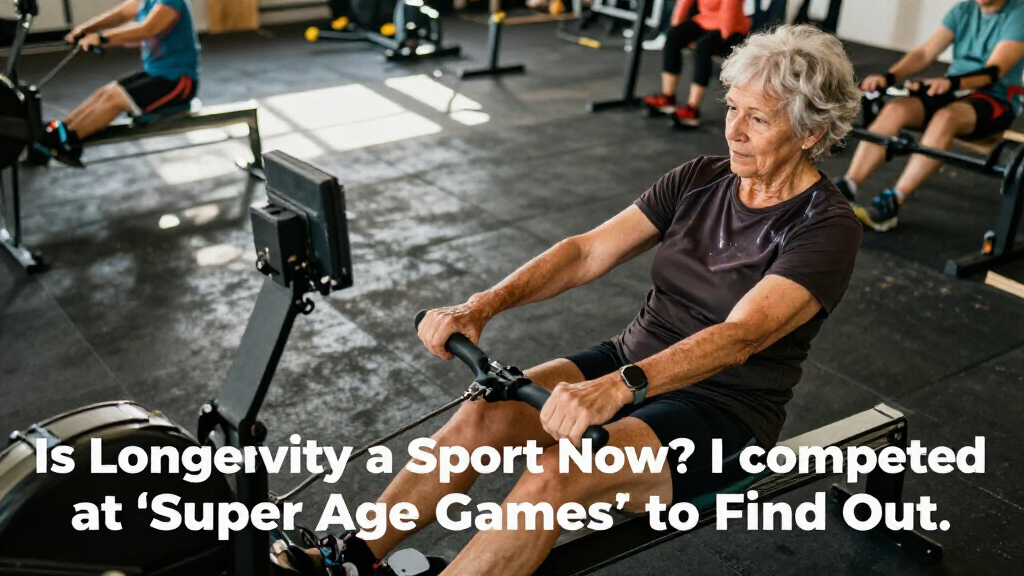
The inaugural Super Age Games brought about 500 amateur athletes, ranging from their 20s to their 80s, to New York City on Nov. 13 for eight tests of physical fitness, cognitive processing and social connection. The event’s organizers said participants’ age- and gender-relative scores, including a measure called “Super Age,” could offer insight into longevity-related measures; the available report does not establish that the results predict how long someone will live.

Turn your wind-down time into listening time
- Thousands of audiobooks, podcasts and originals
- Listen on your phone, tablet or Echo — also offline
- Cancel anytime
New York Times reporter Nick Heil took part the day before turning 60. The trials assessed physical traits including agility, aerobic fitness and balance, alongside cognitive processing speed and social connection. Participants received scores in each category relative to their age and gender. The “Super Age” score was based mainly on aerobic fitness, according to Heil’s report.
Founder David Stewart described the event as a way to give people a goal. Organizers presented the combined results as a way to examine performance on measures associated with longevity and potentially forecast health span and lifespan. That forecasting language is an organizer claim in the report, not a demonstrated outcome: the source material provides no validation data or evidence that the scores predict an individual’s future health or longevity.
The Games blended athletic events with a commercial longevity showcase. Sponsors at the event included Whoop, Altra and Braun, and attendees could try products such as massage boots and a device marketed as using magnets to burn fat and build muscle. Basic registration cost $400; a $1,400 Champions Pass included items such as shoes, a personalized training program and blood tests, the report said.
What the Scores Can Tell Participants
The event offers a public-facing example of how longevity culture is turning health-related measurements into a competitive experience. For participants, testing balance, aerobic fitness and agility may provide a structured snapshot of performance. But a score is not the same as a medical assessment, and the report does not show that the Games’ combined measures can reliably forecast an individual’s health span or lifespan.
The distinction matters because longevity claims can influence how people spend money and make health decisions. With commercial sponsors and paid products alongside the trials, readers should separate what the event measured from what its organizers say those measurements may predict. The report describes the format and claims, but does not provide independent evaluation of the scoring system or products.
Popular right now

Bose QuietComfort Wireless Noise-Cancelling Over-Ear Headphones, Cypress Green

Dyson V8 Cyclone Cordless Vacuum

eufy E25 Robot Vacuum and Mop with HydroJet Roller Mop, 20,000 Pa Suction
As an affiliate, we earn on qualifying purchases.
A Fitness Meet With Longevity Branding
The event was framed as a mix of a track meet, a Senior Olympics-style competition and a gathering for people interested in longevity. Its eight trials extended beyond conventional athletic performance by including cognitive processing speed and social connection. Participants were amateur athletes across a wide age range, rather than a group limited to older competitors.
Stewart said he had spent decades training and wanted to give people a goal. The report situates the Games within a growing longevity industry, pointing to sponsorships, product demonstrations and multiple ticket tiers. It does not supply a detailed account of how each test was administered, how the scores were weighted, or how the “Super Age” label was calculated beyond saying that it relied mainly on aerobic fitness.
“I’ve been training for 40 years, but for what? I wanted to give people a goal.”
— David Stewart, founder of the Super Age Games, as quoted by Nick Heil in The New York Times
How Predictive Are the Results?
The source material does not provide independent research showing that the Games’ scores can forecast a participant’s health span or lifespan. It also does not explain the scoring methodology in enough detail to assess how the eight trials are combined, how the age- and gender-relative comparisons are set, or how the “Super Age” measure should be interpreted. The report describes what participants did and what organizers said the scores could mean; it does not confirm the predictive claims.
It is also unclear whether the inaugural event’s results will be studied over time, whether organizers plan to revise the tests, or how participants are meant to use scores beyond the event. Product claims mentioned at the Games are not independently assessed in the supplied material.
Whether Scores Gain Follow-Up
The event has concluded, but the source material does not identify a next Games date or a planned follow-up study. The key next development would be more information from organizers about how scores are calculated and whether they will track participants over time to test the claims about forecasting health span or lifespan.
Until such evidence or details are available, the reported results are best understood as scores from a set of event trials, not as established predictions about an individual’s future health. The supplied report does not say whether participants received clinical interpretation or guidance after competing.
Key Questions
What happened at the inaugural Super Age Games?
About 500 amateur athletes gathered in New York City on Nov. 13, 2026, for eight trials testing physical fitness, cognitive processing speed and social connection.
What did the Games measure?
The trials included agility, aerobic fitness and balance, as well as cognitive processing speed and social connection. Participants were scored relative to their age and gender, and their “Super Age” score was based mainly on aerobic fitness, according to the report.
Do the scores predict how long someone will live?
Organizers said the combined scores could help forecast health span and lifespan, but the supplied report offers no validation evidence showing that they can predict an individual’s longevity.
How much did it cost to attend?
Basic registration cost $400. A $1,400 Champions Pass included additional items, including shoes, a personalized training program and blood tests, according to The New York Times report.
Source: nytimes.com