
TL;DR
A University of Southern Denmark study using PET scans in rats found that LSD, psilocybin and 2C-B produced different patterns of brain activity, both during their immediate effects and seven days later. The findings do not show that the drugs work as treatments in people or that one is better than another; human research is needed to establish whether the differences matter for care.
Researchers at the University of Southern Denmark found that LSD, psilocybin and 2C-B produced different patterns of brain activity in rats, with some differences still detectable seven days after dosing. The PET-scan study suggests psychedelics should not automatically be treated as one biologically uniform group, but it does not establish how the findings apply to people or whether they predict treatment outcomes.

Give the gift of listening to someone who needs a break
- Choose a 1-, 3-, 6- or 12-month membership
- They pick the audiobooks they love
- Easy to send by email
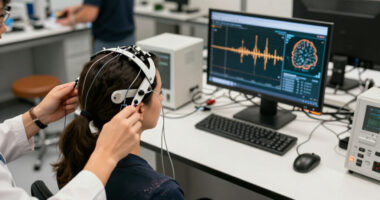
The researchers compared the three substances by monitoring brain activity and connectivity between brain regions with PET scans. They collected measurements while the drugs were active and again a week later. According to the study report, each substance produced a characteristic pattern, while relatively few changes were shared across all three.
LSD and 2C-B produced the greatest number of activity changes during their immediate effects, the researchers reported. The post-dose patterns also differed: the team associated 2C-B mainly with reward-related areas, LSD with regions linked to habits and motivation, and psilocybin with areas involved in emotion. These are findings about brain activity in rats, not evidence that the substances improve or worsen particular behaviors or conditions.
The study’s authors said the work does not rank the drugs or show that any one is more effective. It offers a biological basis for asking whether different substances might eventually suit different research or treatment aims. The report also says the researchers disclosed potential conflicts of interest: senior author Mikael Palner owns shares in Compass Pathways and AtaiBeckley and has had other professional relationships with companies in the field. The authors said those relationships did not influence the study.
Why Different Brain Patterns Matter
The results matter because medical research often discusses psychedelics as a broad category, even though substances in that group may produce different biological effects. If further work confirms distinct effects in people, researchers may need to study each drug separately rather than assume findings about one apply to another. That could shape how future trials are designed and which outcomes they measure.
For now, the practical significance is limited. The experiments were performed in rats, and brain activity patterns alone cannot show whether a drug treats depression, anxiety, addiction or another condition. The researchers described the possibility of matching substances to disorders as a question for future study, not a conclusion from this experiment. No patient benefit, safety advantage or treatment recommendation can be drawn from these results.
Popular right now

Bose QuietComfort Headphones (2nd Gen), Wireless Noise-Cancelling Over-Ear Headphones, Black

Ninja CREAMi 7-in-1 Ice Cream Maker, NC299AMZ

Dyson Cyclone V10 Origin Cordless Vacuum
As an affiliate, we earn on qualifying purchases.
How the Rat Comparison Was Done
Earlier research has often examined one psychedelic at a time, according to the report. This study directly compared LSD, psilocybin and 2C-B, a synthetic substance with psychedelic properties, using the same general approach: PET imaging in rats during the drugs’ immediate effects and at a follow-up point seven days later.
The work arrives amid growing medical interest in psychedelics, with substances being studied in clinical trials for conditions including depression, post-traumatic stress disorder and addiction. That wider research does not change what this rat experiment can establish: it maps differences in measured brain activity, but it does not test clinical effectiveness in patients. Funding came from the Independent Research Fund Denmark, the Novo Nordisk Foundation, the Lundbeck Foundation, Neuroscience Academy Denmark and the U.S. National Institutes of Health, according to the report.
“Psychedelic drugs are often discussed as if they work in the same way. But when we look at the brain, the differences are clear. Each drug appears to affect its own networks, and that is new knowledge.”
— Mikael Palner, senior author and associate professor at the University of Southern Denmark
What Rat Scans Cannot Establish
The central uncertainty is whether comparable differences occur in human brains. The study used rats, and its reported measurements do not establish how people experience the drugs, whether the activity changes persist beyond the seven-day follow-up, or whether they relate to clinical improvement or harm.
It is also not clear from the report how the observed patterns would translate into treatment choices, or whether one substance could be more appropriate for a particular diagnosis. The findings do not demonstrate that any of the three drugs is safe or effective for patients, and they do not show that one is superior. Human studies and clinical outcomes would be needed to answer those questions.
The Next Step Is Human Research
Further research will need to test whether the differences seen in rats also appear in people and whether they correspond to meaningful changes in symptoms or treatment outcomes. Clinical studies would also need to examine each substance’s effects and risks directly rather than assume that results transfer across the psychedelic category.
Until those studies provide evidence, the University of Southern Denmark findings are best understood as a preclinical comparison that can guide research questions. The report does not specify a timeline for human follow-up studies, so when such evidence may become available remains unclear.
Key Questions
What did the study find?
In rats, LSD, psilocybin and 2C-B produced distinct patterns of brain activity. The researchers reported differences both while the drugs were active and at a scan taken seven days later.
Were the findings from human participants?
No. The researchers used PET scans in rats. The study does not establish whether the same patterns occur in people.
Does the research show that one psychedelic is a better treatment?
No. The study did not test treatment effectiveness or compare patient outcomes. Its authors said the results do not establish that any of the substances is superior.
What could the findings mean for future research?
The results may support studying psychedelic substances individually rather than assuming they have interchangeable effects. Human research would be needed to determine whether the differences matter for specific conditions or clinical care.
Source: sciencedaily.com