
TL;DR

Turn your wind-down time into listening time
- Thousands of audiobooks, podcasts and originals
- Listen on your phone, tablet or Echo — also offline
- Cancel anytime
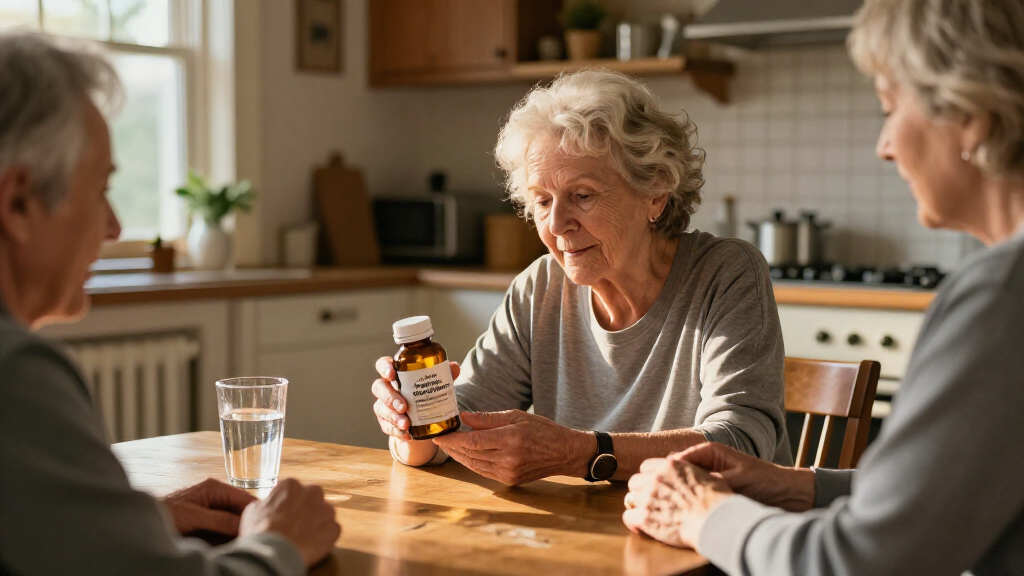
The phase III NOPARK trial found no clinical benefit from nicotinamide riboside in people with early Parkinson’s disease after 52 weeks. Participants taking the supplement had modestly worse scores on the primary measure than those receiving placebo, despite a marked rise in blood NAD levels.
A phase III trial found that nicotinamide riboside, an over-the-counter vitamin B3 supplement promoted for boosting NAD+, did not improve early Parkinson’s disease outcomes after 52 weeks. Participants assigned to the supplement had a modestly worse average score on the trial’s primary measure than those given placebo, a result that does not support using it to slow Parkinson’s progression.
The randomized NOPARK trial enrolled 410 people at 11 centers in Norway. Participants had been diagnosed with Parkinson’s within the previous two years and were assigned to take 500 milligrams of nicotinamide riboside twice daily or placebo for one year. The primary outcome was change in the Movement Disorder Society Unified Parkinson Disease Rating Scale, or MDS-UPDRS, which assesses motor symptoms and patients’ experiences of daily living.
At week 52, the supplement group’s total MDS-UPDRS scores had worsened by an average of 2.45 points. Scores in the placebo group trended toward improvement; the adjusted mean difference between groups was 2.72 points (95% confidence interval 0.47 to 4.98; P=0.02). The researchers also reported greater worsening of nonmotor symptoms in the supplement group. The trial found no significant difference in changes to cognitive scores.
The supplement did produce a biological effect: blood NAD levels rose substantially, with a mean between-group difference of 30.00 micromoles per liter at week 52. But that change did not correspond to clinical improvement. Imaging showed no evidence that the treatment slowed or accelerated changes in the dopamine system. Serious adverse events were reported in 8.3% of participants receiving nicotinamide riboside and 14.1% of those receiving placebo. One participant in the supplement group had cardiac arrest and died; the supplied report does not establish that the death was caused by treatment.
Why the Trial Challenges NAD Supplement Claims
Nicotinamide riboside is widely sold as a longevity supplement because it can raise levels of NAD-related compounds. The trial tested whether that biological change could also help people with early Parkinson’s, a progressive neurological condition. Its main finding is that a measurable rise in blood NAD did not translate into better clinical outcomes over the study period.
The result is relevant to people with Parkinson’s and consumers considering supplements for disease-related benefits. The investigators said the findings do not support nicotinamide riboside as a way to slow Parkinson’s. They also noted that the average difference on the primary scale was modest and below commonly cited thresholds for a minimum clinically important difference, while saying the direction of results across other analyses made the overall finding more robust. The study does not establish that the supplement worsens Parkinson’s in every patient or explain why the groups differed.
For readers, the distinction is between a supplement changing a laboratory marker and improving symptoms or daily function. NOPARK found the former, not the latter. The trial examined a specific dose, population and one-year period; it does not answer every question about other uses, doses or longer-term outcomes.
As an affiliate, we earn on qualifying purchases.
How NOPARK Tested the Supplement
Nicotinamide riboside is a form of vitamin B3 and a precursor used by the body in producing NAD+, a molecule involved in cellular energy metabolism, DNA repair and other processes. Animal research and smaller human studies had suggested that raising NAD might have potential in Parkinson’s, providing the rationale for a larger trial.
NOPARK enrolled people with relatively early disease: participants had a Hoehn and Yahr stage below 3, confirmatory dopamine-transporter imaging and stable dopaminergic treatment. The mean age was 66, and 66% of participants were men. The study excluded people with dementia, atypical parkinsonism, other neurodegenerative disorders, or recent high-dose vitamin B3 use. Median adherence to nicotinamide riboside was 99.6%, making poor adherence an unlikely explanation for the lack of benefit.
The placebo group’s scores did not show the expected degree of progression during the year. The researchers said this may partly reflect dopaminergic treatment. That feature, along with the trial’s one-year duration, matters when interpreting the comparison, but it does not change the reported primary result.
“Nicotinamide riboside clearly increased NAD metabolism, but this did not translate into clinical improvement.”
— Charalampos Tzoulis, principal investigator, in a statement
What the Trial Cannot Explain
The study does not explain why clinical scores were modestly worse in the nicotinamide riboside group, or whether the difference reflects a biological effect, an interaction with dopaminergic medication or another factor. The researchers raised both unfavorable effects of sustained NAD augmentation and a possible interaction with Parkinson’s medication as hypotheses; neither was demonstrated.
The trial had no washout phase, which limits the ability to separate treatment effects from other influences. The researchers also said dopamine-transporter imaging has limited sensitivity for detecting subtle changes over one year. The supplied report does not give enough information to determine whether the results apply to people with more advanced disease, those with different treatment histories, or use of other doses. Longer-term effects and the cause of the reported death also remain unestablished by these results.
Further NAD Studies Remain Planned
Nicotinamide riboside is still being studied. Niagen Bioscience has announced plans for a large randomized, placebo-controlled trial with Mass General Brigham focused on healthy-aging outcomes and related biomarkers. That planned study is not described as a Parkinson’s treatment trial, so its results would not directly resolve the questions raised by NOPARK.
For Parkinson’s, the next useful evidence would need to clarify whether the one-year result holds over a longer period, why the groups’ clinical scores diverged, and whether any subgroup benefits or harms can be identified. Until further trial evidence is available, NOPARK’s published findings do not support nicotinamide riboside as a means of slowing early Parkinson’s disease.
Key Questions
Did nicotinamide riboside help people with early Parkinson’s in the trial?
No clinical benefit was found on the primary outcome after 52 weeks. Scores worsened modestly in the supplement group compared with placebo.
Did the supplement raise NAD levels?
Yes. Blood NAD levels increased substantially in the treatment group, but the increase did not translate into clinical improvement in the trial.
Did the trial prove that nicotinamide riboside worsens Parkinson’s?
No. The group taking the supplement had modestly worse average scores than the placebo group, but the trial did not establish why the difference occurred or show that the supplement worsens disease in every person.
Does NOPARK settle whether nicotinamide riboside is safe?
No. The trial reported serious adverse events in both groups and one death in the supplement group, but the supplied results do not establish that the death was caused by treatment. The study’s findings concern its tested dose, participants and one-year period.
Source: rss
Halloween Picks
halloween
As an affiliate, we earn on qualifying purchases.