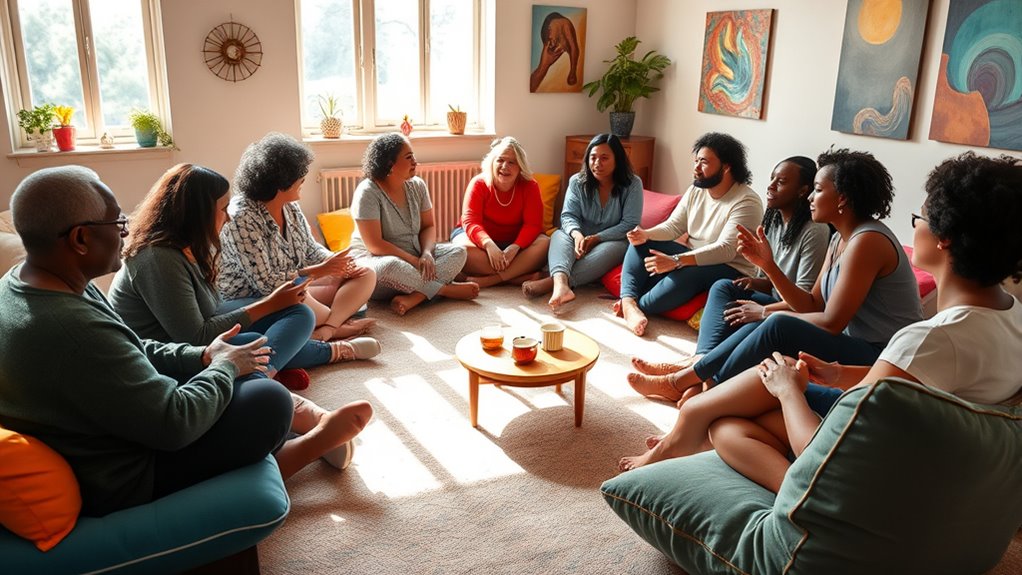

Support groups and peer forums are powerful tools that help you connect with others who understand your experiences. They create a safe space where you can share feelings, learn effective coping strategies, and receive ongoing support. By normalizing mental health struggles, these communities reduce shame and foster belonging. Building trust and relationships within these groups can strengthen your resilience and motivation. Keep exploring—there’s much more you can discover about how these spaces support your healing journey.
Key Takeaways
- Support groups connect individuals with shared experiences, fostering understanding and reducing mental health stigma.
- Peer forums normalize mental health struggles, encouraging honesty and openness.
- Building community relationships provides ongoing emotional support and resilience.
- Groups offer educational resources and practical coping strategies for mental health management.
- Active participation promotes empowerment, confidence, and recognition of recovery as a non-linear process.

Have you ever wondered how connecting with others who share your experiences can make a difference? When you join support groups or peer forums, you’re opening yourself up to a community that understands what you’re going through. These spaces can be powerful tools for breaking down mental health stigma, which often keeps people from seeking help or talking openly about their struggles. By sharing your story and listening to others, you realize you’re not alone, and that sense of belonging can be incredibly healing. It also helps you develop effective coping strategies, as you see firsthand what has worked for others facing similar challenges.
Support groups create a safe environment where you can express your feelings without judgment. When mental health stigma is prevalent, it’s easy to feel isolated or ashamed about your condition. But in peer forums, you discover that many people experience similar issues, and their openness encourages you to be honest about your own. This normalization reduces feelings of shame and empowers you to seek further help if needed. You also learn practical coping strategies from others who have navigated similar paths, whether it’s mindfulness techniques, medication management, or lifestyle adjustments. Hearing about different approaches broadens your options and helps you find what works best for you.
Support groups foster honesty, reduce shame, and share practical coping strategies for better mental health.
Participating actively in these groups fosters a sense of community that can boost your resilience. When you share your story and listen to others, you build trust and develop connections that extend beyond the forum. These relationships can become a source of ongoing support, providing encouragement during tough times. The collective wisdom gathered in peer forums often offers fresh perspectives, dispelling feelings of helplessness or hopelessness. As you observe others overcoming setbacks, you gain motivation and confidence to continue your own journey toward mental well-being. Additionally, engaging with community resources can connect you to local mental health services, further supporting your recovery.
Moreover, support groups serve as an educational resource, helping you better understand your condition and dispelling misconceptions associated with mental health. This knowledge equips you with more effective coping strategies, making your efforts to manage your mental health more targeted and informed. The shared experiences in these spaces remind you that recovery isn’t linear, and setbacks are a normal part of the process. Knowing you’re part of a community that understands the ups and downs can make your path to healing feel less lonely and more manageable.
In short, engaging with support groups and peer forums transforms your approach to mental health. It’s about more than just sharing; it’s about building a network of understanding, learning new coping strategies, and challenging the mental health stigma that often keeps you silent. This community-based approach empowers you to take control of your mental health journey, knowing you’re supported and understood every step of the way.
As an affiliate, we earn on qualifying purchases.
Frequently Asked Questions
How Do I Find a Support Group That Fits My Specific Needs?
To find a support group that fits your needs, start by using online directories that offer personalized matching options based on your specific circumstances. Check local resources like community centers, healthcare providers, or mental health clinics, which often have tailored support groups. Don’t hesitate to ask for recommendations from professionals or peers. This way, you’ll connect with groups that truly understand and support your unique situation.
Are Online Peer Forums as Effective as In-Person Groups?
Online peer forums can be quite effective, especially through virtual interactions that foster peer accountability. They offer flexibility and a sense of community from anywhere, making it easier to stay consistent. While in-person groups provide face-to-face connection, virtual forums still enable honest sharing and support. If you’re committed, these digital spaces can be a valuable part of your healing journey, complementing or even replacing in-person meetings.
What Should I Do if I Feel Uncomfortable Sharing in a Group?
If you feel uncomfortable sharing in a group, trust your instincts and set sharing boundaries. Remember, it’s okay to listen more and speak less initially. Focus on trust building gradually; you don’t have to reveal everything right away. Respect your comfort level, and consider talking privately with a facilitator if you need support. Your well-being comes first, and taking small steps helps create a safe space for you.
How Can I Ensure Confidentiality Within a Support Group?
You can guarantee confidentiality by asking about the group’s confidentiality policies and trusting your instincts. Trust-building strategies, like sharing only what you’re comfortable with and observing others’ respect for privacy, help create a safe environment. Remember, if someone breaches confidentiality, you should address it directly or speak with the group facilitator. Always prioritize your comfort and safety, and don’t hesitate to leave if confidentiality isn’t maintained.
Are There Support Groups for Rare or Less Common Issues?
Yes, there are support groups for rare or less common issues. You can find specialized resources and advocacy organizations that focus on these specific conditions. These groups often connect you with others facing similar challenges, providing understanding and support. Look online or contact relevant organizations to discover local or virtual support options tailored to your needs. Engaging with these groups can help you feel less isolated and better understood.
Conclusion
Joining support groups and peer forums is like finding a lighthouse in a storm—guiding you through tough times with shared strength and understanding. These communities remind you you’re not alone on your journey, offering hope and healing just when you need it most. By opening your heart and connecting with others, you create a web of support that lifts everyone higher. Embrace these spaces—they’re the bridges to brighter days ahead.