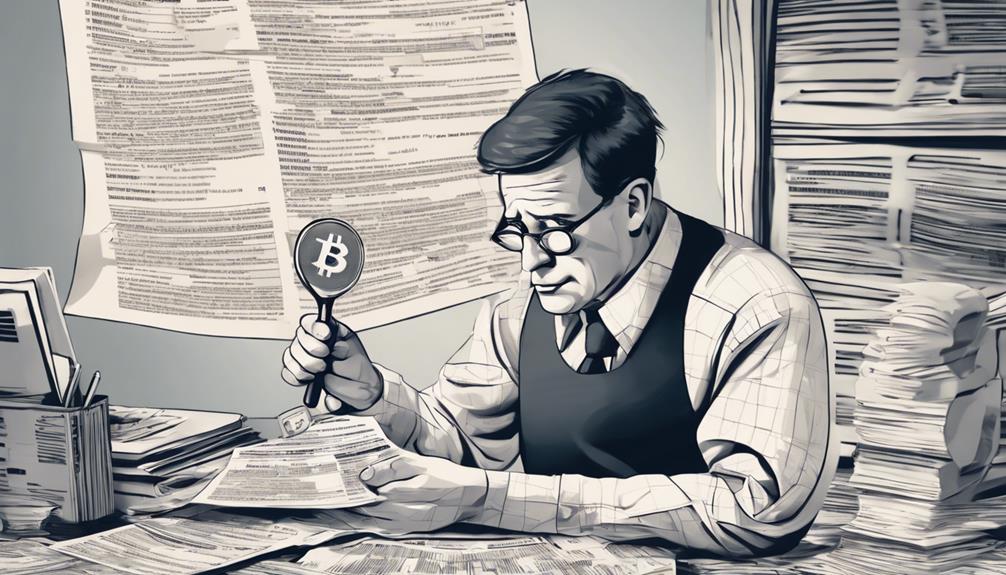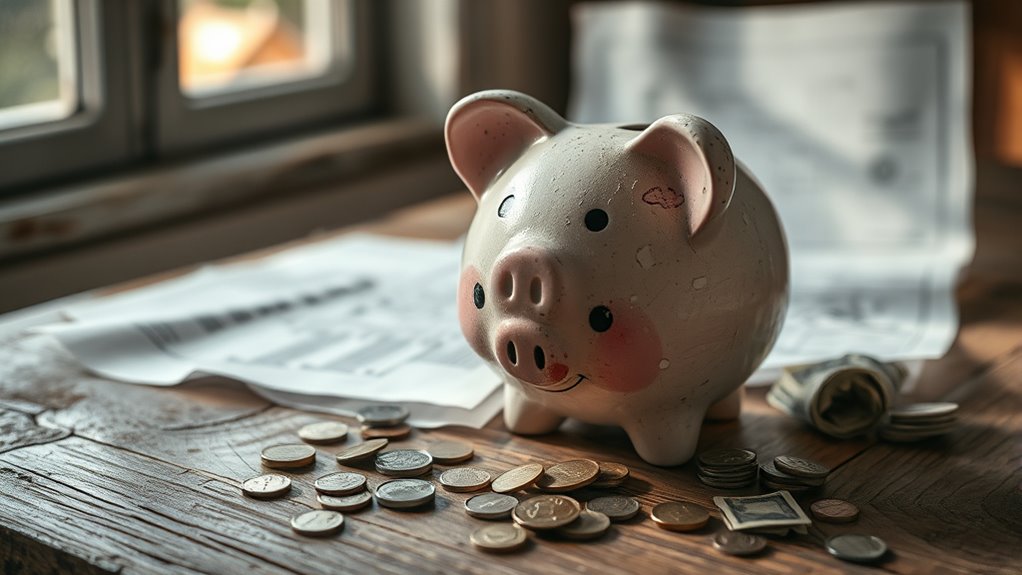

Starting from zero, focus on tracking your income and expenses to understand your finances. Set small savings goals, like $100 or $200, and automate transfers to a dedicated account. Look for quick wins by cutting unnecessary expenses or using saved money from cost-cutting. Celebrate each milestone to stay motivated. Building your emergency fund is a gradual process, but with consistent effort, you’ll create a safety net that offers peace of mind. Keep going to learn more.
Key Takeaways
- Begin by tracking all income and expenses to identify savings potential and create a realistic budget.
- Set small, achievable savings goals, such as $500 or $1,000, to build your emergency fund gradually.
- Automate regular transfers to a dedicated savings account to ensure consistent progress.
- Increase your income temporarily with side gigs or sell unused items to boost savings speed.
- Celebrate milestones and stay motivated by focusing on steady growth and maintaining financial discipline.

Building an emergency fund from scratch might seem intimidating, but it’s entirely achievable with a focused plan. The first step is understanding the importance of budgeting basics. Without a clear picture of your income and expenses, it’s impossible to determine how much you can realistically save each month. Take a close look at your financial picture: list all sources of income, then track your spending for at least a month. Identify areas where you can cut back—maybe dining out less or canceling unused subscriptions. This process helps you create a realistic budget that prioritizes saving for emergencies.
Once you have a handle on your budgeting basics, you can develop effective savings strategies. Start small if needed; even a modest amount saved regularly adds up over time. Set a specific, achievable goal—say, $1,000 or enough to cover a couple of months’ expenses. Automate your savings by setting up automatic transfers from your checking account to a dedicated emergency fund account. This way, you don’t have to think about it each month, and you’re less likely to skip saving altogether. Consistency is key, so aim to contribute at least a small amount every pay period.
In addition to automation, look for ways to boost your savings. Consider increasing your income temporarily—perhaps by taking on a side gig or selling items you no longer need. Redirect any windfalls, like tax refunds or bonuses, straight into your emergency fund. The more you can put aside early on, the faster your fund will grow, giving you peace of mind sooner. Also, understanding the importance of electric bikes and other alternative transportation options can help you save money on commuting costs, freeing up more funds for your emergency stash.
It’s also helpful to set mini-milestones along the way. Celebrate when you hit your first $500, then your $1,000 goal. These small victories keep you motivated and reinforce the habit of saving. Remember, building an emergency fund isn’t about perfection; it’s about making steady progress. If you encounter setbacks, don’t get discouraged. Adjust your budget if necessary, and keep pushing forward.
Finally, stay disciplined and avoid the temptation to dip into your emergency fund for non-emergencies. Keep your goal front and center, and remind yourself why this fund is crucial. Over time, as your savings grow, you’ll gain confidence and financial security. With consistent effort, following budgeting basics, and employing smart savings strategies, you’ll establish a solid emergency fund that provides safety and peace of mind when unexpected expenses arise.

ImoLaza 16-Zone Indoor Smart WiFi Sprinkler System Controller, Easy Install Irrigation Timer for Lawn & Garden, Water-Saving Automatic Sprinkler Timer/Controller with Mobile App, Compatible with Alexa
Zero Water Waste: ImoLaza uses hyperlocal weather data to monitor the weather in your location 24/7. It automatically…
As an affiliate, we earn on qualifying purchases.
As an affiliate, we earn on qualifying purchases.
Frequently Asked Questions
How Long Should It Take to Build an Emergency Fund From Scratch?
It typically takes several months to a year to build a solid emergency fund from scratch. Your savings timeline depends on your income and expenses, so prioritize paying off high-interest debt first. Aim to save at least three to six months’ worth of living costs. Consistently contribute a manageable amount each month, adjusting as your financial situation improves. Patience and discipline are key to reaching your emergency fund goal.
Is It Better to Save or Pay off Debt First?
You should prioritize paying off high-interest debt before saving, as studies show it can save you thousands in interest. However, having an emergency fund of at least $500 provides a safety net during unexpected expenses. Your savings strategy should balance debt prioritization with small, consistent savings. Once high-interest debt is under control, focus on building your emergency fund to prevent future reliance on debt.
What Are the Best Accounts for Emergency Fund Savings?
You should prioritize high-yield savings accounts or money market accounts for your emergency fund. These accounts offer better interest rates than regular savings accounts, helping your money grow safely and quickly. Look for accounts with no fees and easy access, so you can withdraw quickly in emergencies. Avoid risky investment options, as they’re not suitable for emergency funds, which need to be accessible and secure.
How Can I Save an Emergency Fund on a Low Income?
Struggling to save an emergency fund on a low income? Have you tried budgeting strategies that cut unnecessary expenses and prioritize saving? You can also explore side hustle ideas like freelancing or selling items you no longer need. Every small contribution adds up, so set a realistic goal and automate your savings. Remember, even tiny steps today can build a safety net for tomorrow. Keep at it—you’re capable of making it happen!
When Should I Start Using My Emergency Fund?
You should start using your emergency fund only when a genuine financial crisis arises, like unexpected medical bills or job loss. Your financial planning should include risk assessment, so you know when a situation is urgent enough to deplete your savings. Avoid using the fund for non-emergencies or minor expenses. Keep your focus on preserving it for true emergencies, ensuring you’re prepared for life’s unpredictable events.

SKYDUE Budget Binder, Money Saving Binder with Zipper Envelopes, Cash Envelopes and Expense Budget Sheets for Budgeting
Cash Envelopes System:1pcs PU leather money saving binder,8pcs A6 6-holes binder pockets,12pcs expense budget sheets,3 sheets of category…
As an affiliate, we earn on qualifying purchases.
As an affiliate, we earn on qualifying purchases.
Conclusion
So, you’ve got no emergency fund and think it’s impossible? Think again! With a little effort, you can turn that zero into something close to hero status—well, financially speaking. Remember, a tiny cushion beats no cushion at all. Before your next disaster strikes, start small, stay committed, and laugh in the face of emergencies. After all, who needs a safety net when you can just hope for the best? Spoiler: hope isn’t a plan.

Shadow Money Box for Travel Savings – Coin Bank for Adults – Vacation Jar – White Saving Box With Handle – Honeymoon Fund – Adventure Fund
Design: white shadow money box “Travel Fund” have a slot at the top for coins and a rose…
As an affiliate, we earn on qualifying purchases.
As an affiliate, we earn on qualifying purchases.

Remote Income Generators
As an affiliate, we earn on qualifying purchases.
As an affiliate, we earn on qualifying purchases.