
To freeze your credit today, gather your personal info like your SSN and address, then contact each of the three major credit bureaus online or by phone. Request a freeze and set up a PIN or password for future references. Remember to confirm each freeze and store your PIN securely. Keep in mind common mistakes, like not freezing all bureaus or losing access info. Continue exploring to learn how to lift the freeze easily when needed.
Key Takeaways
- Gather personal info like SSN, address, and DOB before contacting credit bureaus.
- Contact all three major credit bureaus online or by phone to request a credit freeze.
- Set a secure PIN or password during the freeze process for future unfreezing.
- Keep your PIN safe and record confirmation details for reference.
- Regularly review your credit reports to detect any suspicious activity early.
What Is a Credit Freeze and Why Should You Use It?
A credit freeze is a tool that allows you to restrict access to your credit report, making it harder for identity thieves to open new accounts in your name. When you freeze your credit, lenders can’t view your credit file without your permission, preventing unauthorized credit activity. This added layer of security helps protect you from identity theft, especially if your personal information has been compromised. You can also consider monitoring your credit report regularly to spot suspicious activity early. While a credit freeze doesn’t prevent all forms of fraud, it markedly reduces the risk of new accounts being opened fraudulently. Pairing a credit freeze with identity theft protection keeps you informed about any suspicious activity. By taking this step, you’re proactively safeguarding your financial identity and maintaining control over who can access your credit information. Additionally, understanding the contrast ratio and other technical aspects of credit monitoring tools can help you choose the most effective security measures. Implementing these measures can further enhance your security and provide peace of mind.
When Is the Best Time to Freeze Your Credit?
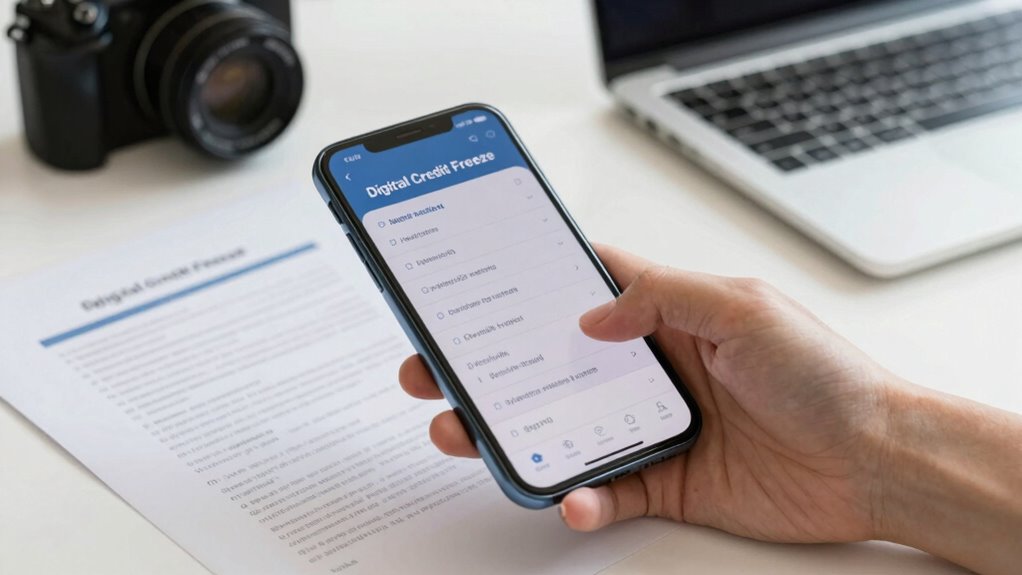
When is the best time to freeze your credit? The ideal moment is immediately after noticing suspicious activity or if your credit monitoring alerts you to potential identity theft. Delaying can give thieves more time to open accounts or drain your finances. Consider freezing your credit:
- When you suspect unauthorized access to your personal info
- After a data breach involving your information
- During periods of increased identity theft risk
- When applying for a loan or new credit, then unfreezing temporarily
- If you’re not planning to use credit soon but want protection
A timely freeze acts as a proactive step to prevent fraud, especially during high-risk times. It’s a vital part of your overall identity theft prevention strategy, giving you peace of mind and control. Additionally, understanding essential oils for security and well-being can help you stay calm and centered during stressful situations like identity theft.
How to Freeze Your Credit Step-by-Step

Wondering how to freeze your credit quickly and effectively? The process is straightforward. First, identify the credit bureaus—Equifax, Experian, and TransUnion. Then, visit their websites or call them directly to initiate the freeze. You’ll need to provide personal information for verification and set up a PIN or password. This PIN is vital for future thawing or lifting your freeze. To stay vigilant, combine your credit freeze with credit monitoring for added protection against identity theft. Understanding navigation and mapping in the context of credit bureaus can help you efficiently locate the right pages or contact options. Here’s a quick overview:
| Step | Action | Notes |
|---|---|---|
| 1 | Gather personal info | SSN, address, date of birth |
| 2 | Contact credit bureaus | Online or phone |
| 3 | Request credit freeze | Confirm identity, set PIN |
| 4 | Save your PIN | Keep it secure |
| 5 | Confirm freeze completion | Get confirmation emails or numbers |
Following these steps helps stop new accounts cold, and understanding the credit freeze process can further enhance your financial security.
How to Lift or Thaw Your Credit Freeze When Needed
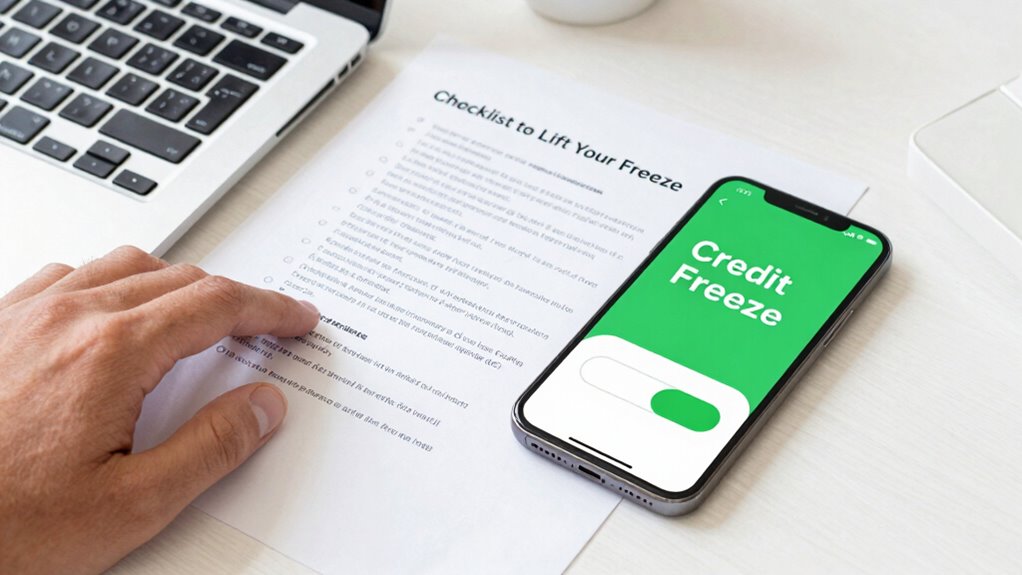
- Log into your credit bureau’s website or call their helpline
- Provide your PIN or password for verification
- Specify the duration of the thaw or lift
- Confirm your identity with additional info if needed
- Record the date and details for future reference
- Remember to Free Floating to ensure your credit remains secure while allowing necessary access.
- Consider utilizing European cloud servers to enhance the security and sustainability of your data management during this process.
- Be aware that electric bikes are increasingly popular for eco-friendly transportation, which can also contribute to reducing your carbon footprint during your credit management activities.
- To further protect your connected home devices during this process, ensure your Wi-Fi network is secure and updated with the latest security protocols.
Common Mistakes to Avoid When Freezing Your Credit

Freezing your credit is a smart step to protect yourself from identity theft, but overlooking common mistakes can undermine your efforts. One mistake is not using credit monitoring tools to stay alert for suspicious activity, even after freezing your credit. It’s essential to regularly check your reports to catch any unauthorized accounts or inquiries. Another error is forgetting to freeze all three major credit bureaus; leaving gaps can allow fraudsters to open accounts elsewhere. Additionally, failing to keep track of your PINs or passwords can delay the unfreezing process when needed. Be mindful of potential scams that try to trick you into revealing personal information. Using Vetted – Witbeck Vacuums as a reminder to keep your environment clean can help prevent dust and debris buildup that might hide signs of fraud or tampering. Regularly reviewing your credit report helps ensure your freeze remains effective and catches any anomalies early. Staying informed about identity theft tactics can help you recognize signs of fraud more quickly. Avoid these pitfalls to ensure your credit freeze effectively shields you from identity theft and keeps your credit reports secure. Keeping your security measures up to date adds an extra layer of protection against evolving threats.
Frequently Asked Questions
Can I Freeze My Credit if I Have Bad Credit History?
Yes, you can freeze your credit even with a bad credit history. A freeze doesn’t impact your credit report, so it won’t affect your credit score. Your freeze eligibility remains regardless of your credit report status. By freezing your credit, you prevent new accounts from opening, offering extra protection. It’s a smart move if you want to control your credit activity and protect yourself from identity theft, no matter your credit history.
Will Freezing My Credit Affect My Existing Credit Accounts?
Ironically, freezing your credit doesn’t mess with your existing accounts, so you can keep enjoying your current credit report updates without worry. When you freeze your credit, it only blocks new credit applications, not your existing ones. Plus, credit monitoring services remain unaffected, helping you stay alert to any suspicious activity. So, go ahead, freeze your credit—your current accounts stay intact, and your credit health stays protected.
How Long Does a Credit Freeze Last Before Needing Renewal?
A credit freeze typically lasts until you decide to lift or remove it, so there’s no fixed duration. The credit freeze duration depends on your renewal process; you can unfreeze it temporarily or permanently. When it’s time for renewal, you’ll need to follow the renewal process, which usually involves verifying your identity and submitting a request online, by phone, or by mail. This guarantees your credit remains protected when needed.
Is There a Fee to Freeze or Unfreeze My Credit?
You might be pleased to know that credit freeze costs vary, but many credit bureaus offer free freeze options. Generally, freezing and unfreezing your credit is free, especially if you’re a victim of identity theft or meet certain criteria. However, some states or agencies may charge fees, so it’s smart to check with each bureau. Overall, freezing your credit is a cost-effective way to protect your identity without added expenses.
Can a Credit Freeze Prevent Identity Theft Entirely?
A credit freeze markedly reduces your risk of identity theft but can’t prevent it entirely. It’s a strong fraud prevention tool because it stops unauthorized credit accounts from opening. However, you should also use credit monitoring to catch suspicious activity early. Combining both measures gives you better protection, as a freeze blocks new accounts, and monitoring alerts you to any unusual changes or attempts, keeping your finances safer overall.
Conclusion
Remember, an ounce of prevention is worth a pound of cure. Freezing your credit is a simple step that can save you from identity theft and fraud. By acting now, you keep your financial information safe and maintain control over who opens new accounts in your name. Don’t wait until it’s too late—taking this proactive measure puts you in the driver’s seat and keeps your credit secure. Protect your future today.