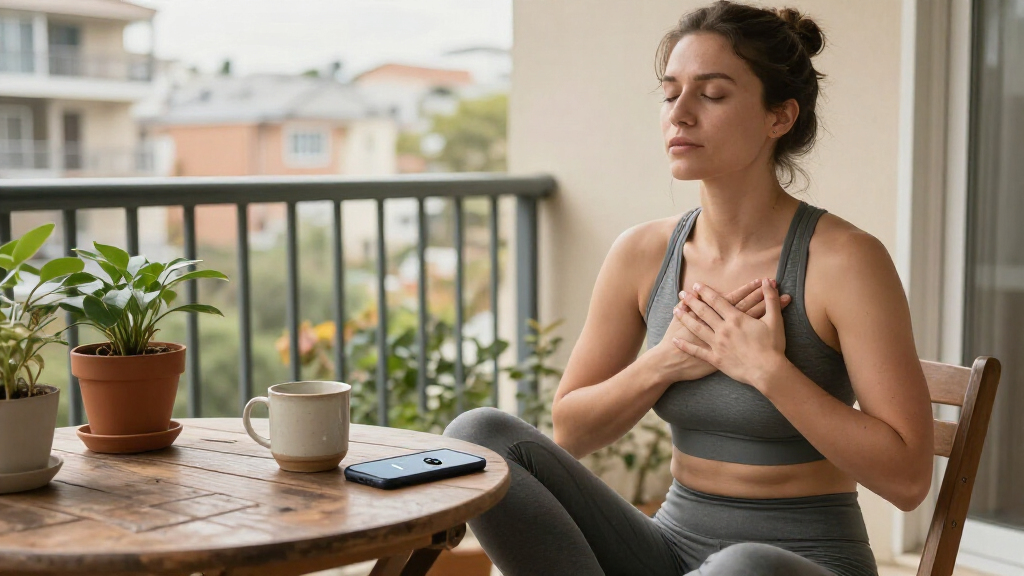

This guide helps you choose, organize, and try mental health self-care tools for everyday stress, low mood, or emotional overload. It is for beginners; you do not need prior mental health training. In about 30-45 minutes, you can create a simple toolkit and a plan for using it. The tools can support daily wellbeing, but they do not replace care from a qualified professional when symptoms are severe or persistent.

Turn your wind-down time into listening time
- Thousands of audiobooks, podcasts and originals
- Listen on your phone, tablet or Echo — also offline
- Cancel anytime

Reflect Orb Smart Biofeedback Device for Stress Relief, Mindfulness & Anxiety – Real-Time Heart Rate & Skin Conductance Tracking,…
- ✔ Feedback: Heart rate and skin conductance tracking with light cues
- ✔ Guidance: Guided breathing and meditation app
- ✔ Included membership: One year of premium app access

Peaceful Panda Breathing Trainer Light
- ✔ Dimensions: 3.5 x 4 x 6 inches
- ✔ Material: Soft silicone
- ✔ Breathing modes: Relaxed breathing at 4/6/8 and box breathing at 4/4/4/4

Kipcush Automatic Tibetan Singing Bowl Sound Machine – 11 Healing Tones, Touch-Control Night Light, Smart Timer & Memory, Plug-In…
- ✔ Sound selection: 11 tones: five bowl sounds, three harmonic blends, and three nature mixes
- ✔ Power: Plug-in adapter
- ✔ Timer: 15, 30, 60, or 90 minutes with auto shut-off
Difficulty: Beginner | Time: 30-45 minutes to set up; 5-20 minutes per use
What You’ll Need
Tools & Materials:
- Paper or a notes app
- A timer or clock
- A quiet or comfortable place, if available
- Optional: water, headphones, or a comforting object
Knowledge:
- No specialist knowledge is needed
- Be ready to notice how an activity affects you without judging the result
Set aside 30-45 minutes to choose and try tools. You can complete the steps in shorter sessions. Choose options that fit your health, mobility, culture, sensory needs, and circumstances. Skip any activity that makes you feel less safe or more distressed.
Reflect Orb Smart Biofeedback Device for Stress Relief, Mindfulness & Anxiety – Real-Time Heart Rate & Skin Conductance Tracking,…
The Reflect Orb earns the top spot because it makes a self-care session feel responsive: light cues reflect heart rate and skin conductance while we practice breathing or meditation. That connection can be useful for people who want more than a fixed rhythm and appreciate seeing a signal change as they settle in. It also includes a year of premium app content, giving us guided sessions and insights to structure a routine. Compared with Peaceful Panda’s two color-led breathing modes, Reflect offers a more adaptive, data-informed experience; compared with Kipcush, it actively guides practice instead of primarily supplying a sound backdrop.That extra depth comes with more complexity. We need to set it up with the app, and the premium content requires a paid subscription after the included year. Its battery can last up to two weeks, though usage affects that figure. Choose this if feedback and structured content help us engage; skip it if we want a fully self-contained, subscription-free breathing aid or simply prefer listening to ambient tones.
Pros:
- Real-time light feedback responds to heart rate and skin conductance.
- Includes one year of premium guided breathing and meditation content.
- Can run standalone after phone setup.
- Up to two weeks of battery life per charge, depending on use.
Cons:
- Premium app content requires a paid subscription after the included year.
- Battery life can shorten during intensive sessions.
- App setup adds more steps than the simple Peaceful Panda breathing prompts.
Best for: Adults who want guided mindfulness sessions and real-time physiological cues to support a structured personal routine.
Not ideal for: Buyers who want no app setup, no future subscription decision, or a simple sound machine or breathing prompt.
Bottom line: Reflect Orb is the strongest all-around choice when responsive feedback and guided content are central to how we want to practice.
“Reflect Orb is the strongest all-around choice when responsive feedback and guided content are central to how we want to practice.”
Peaceful Panda Breathing Trainer Light
For anyone who finds it hard to know when to inhale or exhale, Peaceful Panda turns paced breathing into a visual routine. Its color-coded prompts and two modes—relaxed breathing at 4, 6, or 8 counts and box breathing at 4/4/4/4—make the exercise easy to follow without relying on a phone once the session begins. The compact silicone body and night-light also suit a desk or bedside table. Compared with Reflect Orb, it is simpler and less dependent on an app; compared with Kipcush, it provides a clear breathing rhythm rather than a menu of sounds.The tradeoff is a narrower experience. There are only two brightness levels, and battery life is specified around 10 minutes of daily use before recharging, so frequent sessions make charging part of the routine. It can also feel too guided or light-focused for people who prefer sound or quiet. This is our approachable entry point for practicing a consistent breathing pattern, especially when a visible cue is more useful than tracking metrics.
Pros:
- Color cues make breathing timing straightforward to follow.
- Two breathing modes offer both relaxed pacing and box breathing.
- Rechargeable design avoids disposable batteries.
- Soft silicone body and night-light work well on a tabletop.
Cons:
- Two brightness settings provide limited customization.
- Battery-use guidance assumes about 10 minutes of daily use before recharging.
- Offers less variety than Reflect Orb’s app or Kipcush’s sound library.
Best for: Beginners who want a simple visual cue for short paced-breathing sessions at a desk or bedside.
Not ideal for: People who need extensive lighting adjustment, a broad library of meditation content, or sound-based relaxation.
Bottom line: Peaceful Panda is the clearest low-friction pick when our main goal is to practice paced breathing with a visible guide.
“Peaceful Panda is the clearest low-friction pick when our main goal is to practice paced breathing with a visible guide.”
Kipcush Automatic Tibetan Singing Bowl Sound Machine – 11 Healing Tones, Touch-Control Night Light, Smart Timer & Memory, Plug-In…
Kipcush is the sound-first choice in this group. Its 11 options span Tibetan bowl sounds, harmonic blends, and nature mixes, so we can shape a meditation or wind-down session around the kind of background we find settling. Touch controls and a timer make it straightforward to start a session and have the device switch off afterward. Unlike Peaceful Panda, it does not teach us a breathing cadence; unlike Reflect Orb, it does not provide body-responsive cues or an app-based program. Its distinct value is atmosphere and choice of tone.The compact tabletop form and adjustable color-changing light fit a bedroom, yoga area, or therapy room, but the device needs continuous plug-in power. That makes it less suitable for moving between rooms or practicing away from an outlet, and it is not the right pick if structured breathing prompts are what help us most. Choose Kipcush when sound helps us settle and we have a regular place to use it. Those who want portable guidance should look first at the rechargeable Panda or Reflect Orb.
Pros:
- 11 tones combine singing bowl sounds, harmonics, and nature mixes.
- Timer offers 15-, 30-, 60-, and 90-minute sessions with auto shut-off.
- Adjustable color-changing night light supports a calming room setup.
- Touch controls cover sound, volume, lighting, and timer functions.
Cons:
- Requires continuous plug-in power, limiting placement and portability.
- Sound selection does not provide the breathing guidance offered by Peaceful Panda.
- Lacks Reflect Orb’s body-responsive feedback and guided app sessions.
Best for: People who prefer meditation or bedtime routines built around varied sounds and a stationary tabletop setup.
Not ideal for: Buyers who need a portable device, direct breathing prompts, or real-time biofeedback.
Bottom line: Kipcush makes the most sense when a varied soundscape and timed session matter more than portability or active breathing guidance.
“Kipcush makes the most sense when a varied soundscape and timed session matter more than portability or active breathing guidance.”
As an Amazon Associate we earn from qualifying purchases.
Before You Start
Self-care tools are small actions that may help you regulate stress, meet basic needs, or reconnect with supportive people. They work differently for different people, and one activity may help on one day but not another. If you might harm yourself or someone else, cannot stay safe, or face an immediate crisis, contact local emergency services or a crisis service now. If symptoms disrupt daily life or keep returning, arrange support from a mental health professional or healthcare provider.
Step-by-Step Instructions
Step 1: Name the situation you want to support
Write down one or two situations when you would like extra support, such as feeling tense before work, getting stuck in worry at bedtime, or feeling isolated on weekends. Describe what you notice in plain terms: thoughts, feelings, body sensations, or actions. Keep the goal specific, such as “settle enough to begin my evening routine,” rather than expecting to feel happy or calm on demand.
Tip: Choose a recurring, manageable situation. If writing about it feels upsetting, pause and choose a less intense example.
Check: You have one or two clear situations and a practical goal for each.
Step 2: Check your immediate needs
Pause and ask yourself whether you need food, water, rest, movement, medication you already take as prescribed, privacy, or contact with someone supportive. Address a basic need if you can. Then rate your distress from 0 to 10, where 0 means none and 10 means the most intense you can imagine. This gives you a starting point; it is not a diagnosis or a score you need to improve.
Tip: If your distress feels overwhelming or you are unsure you can stay safe, seek direct human help instead of relying on a self-care exercise.
Check: You have identified any immediate practical need and recorded a starting distress rating.
Step 3: Choose a grounding tool
Select one brief activity that brings attention to the present. Try naming five things you see, four things you feel, and three things you hear, or slowly describe an ordinary object in your hand. Another option is to name the date, your location, and what you plan to do next. Spend two or three minutes on the activity, then notice whether your attention or distress changed.
Tip: Grounding should feel manageable, not like a test. If focusing on your body or senses feels uncomfortable, use an external focus, such as describing objects in the room.
Check: You have tried one grounding activity and can say whether it felt helpful, neutral, or unhelpful.
Step 4: Choose a body-based tool
Pick a gentle action suited to your body: stretch within a comfortable range, walk at an easy pace, relax your jaw and shoulders, or take a few unforced breaths. Try it for three to five minutes. If you use breathing, avoid holding your breath or forcing deep breaths; return to your normal breathing if you feel light-headed or uncomfortable.
Tip: Adapt movement to your energy, pain, disability, and surroundings. Rest is a valid choice when movement does not feel right.
Check: You have selected a body-based option you can adjust or stop, and noted how it felt.
Step 5: Choose a thought or attention tool
Write down the thought that is taking up the most space. Add two short lines: “What do I know for sure?” and “What is one kind, realistic next thought?” You might also set a five-minute timer to write freely, then close the note and return to your current task. The aim is to create a little room around a thought, not to force positive thinking or solve everything at once.
Tip: If writing increases rumination, stop and try an activity that uses your attention elsewhere, such as listening to a familiar song or sorting a few items.
Check: You have tried one attention or writing tool and identified whether you want to keep it.
Step 6: Choose a connection tool
Identify one person, group, or service you could contact when you want support. Write a short message you would be comfortable sending, such as “Could you keep me company for a few minutes?” or “I’m having a hard day; can we talk?” If you do not have a trusted contact, note a community service, peer line, clinician, or local crisis resource you can reach.
Tip: You can ask for a specific kind of help, such as listening, practical assistance, or company. You do not need to explain everything in one message.
Check: Your plan names at least one contact or support service and a simple way to reach it.
Step 7: Build a short toolkit and use plan
On one page or in one note, list the tools you tried and label each helpful, neutral, or unhelpful. Pick two or three that are easy to access, including one option for a difficult moment and one person or service to contact. Write when you might use each tool, how long you will try it, and what you will do if it does not help. Keep the plan somewhere you can find it, such as a phone note or a card in your bag.
Tip: Make the first action small. “Stand by the window for two minutes” is easier to start than a broad goal such as “fix my routine.”
Check: Your toolkit has two or three specific options, a use cue, and a next action if they are not enough.
Step 8: Review the result and adjust
After trying a tool, record what you did, how long you tried it, and your distress rating afterward. Compare the ratings as information, not a pass-or-fail score. Note other useful results too: completing a task, feeling less alone, or choosing to ask for help. After several uses, keep the options that fit and replace those that repeatedly feel unhelpful.
Tip: A tool can be worthwhile even if your feelings do not change right away; it may help you take a safe or practical next step.
Check: You have a brief record of what you tried and a clear decision to keep, adapt, or drop that tool.
Common Mistakes to Avoid
- Choosing too many tools and making the plan hard to use. — Start with two or three options and add another only when you know what is missing.
- Expecting a tool to remove difficult feelings immediately. — Set a modest goal, such as pausing, meeting a basic need, or taking one next step; record small changes as useful information.
- Continuing an exercise that increases distress or discomfort. — Stop, switch to a neutral activity, or contact someone supportive. Adapt or skip exercises that do not suit you.
- Treating self-care as a replacement for professional support. — Contact a healthcare or mental health professional when symptoms persist, worsen, or interfere with daily life.
Troubleshooting
Problem: You cannot decide which tool to try.
Solution: Start with a basic need check, then choose one brief option from grounding, gentle movement, writing, or contacting someone. Try it for a few minutes and record the result.
Problem: A breathing or body-focused exercise makes you feel worse.
Solution: Stop the exercise and let your breathing return naturally. Shift attention to external details, such as naming objects or listening to familiar sounds. Choose a different tool next time.
Problem: You try a tool but your distress rating does not fall.
Solution: Do not repeat it endlessly. Check for an unmet practical need, try a different option, or contact a supportive person. If distress is intense or ongoing, seek professional help.
Problem: You forget to use the toolkit when stress rises.
Solution: Keep the plan somewhere visible and attach one tool to a routine you already do, such as checking your phone after work. Use a reminder if it is helpful.
What Success Looks Like
Your toolkit is ready when it lists two or three specific tools, shows when and how to try them, and includes at least one person or service you can contact. You have tested at least one option and noted whether it helped, felt neutral, or made things harder. Success does not require eliminating distress; it means having a usable next step and knowing when to reach for more support.
Next Steps
Review your plan once a week or after a difficult moment. Keep tools that fit your life, change ones that are hard to access, and remove options that repeatedly increase distress. If low mood, anxiety, sleep problems, or other symptoms last, worsen, or disrupt daily activities, contact a qualified mental health professional or healthcare provider and share the notes you have kept. In an immediate safety crisis, contact local emergency or crisis support.
Frequently Asked Questions
How many self-care tools should I put in my toolkit?
Start with two or three that are easy to remember and available in your daily life. A short list is easier to use when you are stressed. Add options later if your notes show a need.
How often should I use a mental health self-care tool?
Use one when you notice a need, or try a small routine at a time that suits you. There is no required schedule. If a tool feels burdensome, shorten it or choose another.
What if self-care does not help?
Try a different tool, check for a practical need, or ask someone you trust for support. Self-care does not work the same way for everyone. If symptoms continue, get worse, or interfere with daily life, speak with a healthcare or mental health professional.
Can these tools replace therapy or medication?
No. Self-care can support wellbeing, but it is not a replacement for treatment recommended by a qualified professional. Do not change prescribed medication without discussing it with the prescriber.
What should I do if I might hurt myself?
Seek immediate help. Contact local emergency services or a crisis line, and tell a trusted person who can stay with you or help you reach care. If possible, move away from anything you could use to hurt yourself while you connect with support.