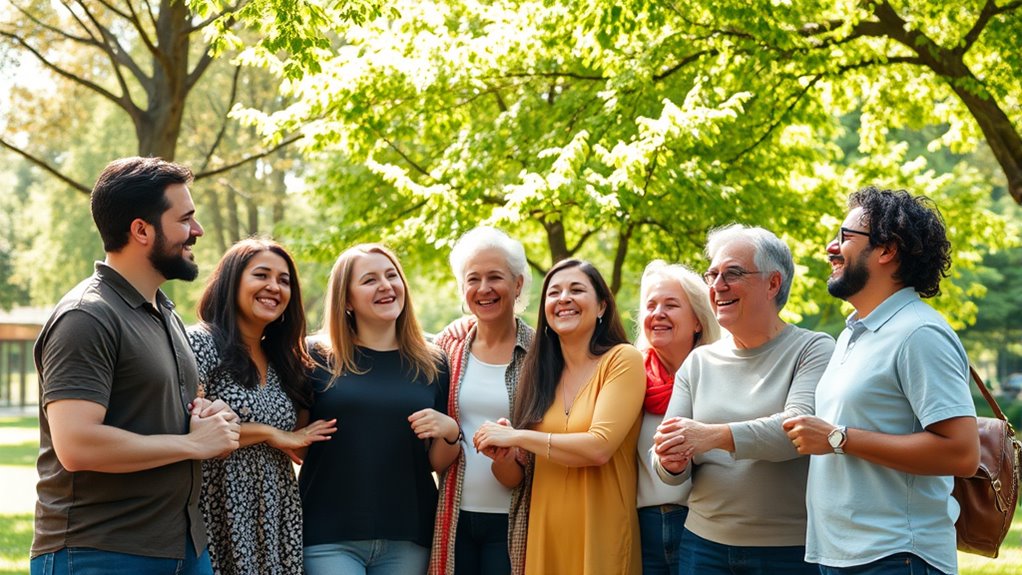

Finding safe people starts with observing how others listen, respect boundaries, and respond without judgment. Trust develops over time through consistency, honesty, and mutual kindness. Look for relationships where you feel heard, valued, and comfortable sharing your feelings. Supportive communities create safe spaces that foster genuine connections and emotional safety. As you explore, you’ll discover how to build stronger, trusting relationships that help you navigate life’s challenges more confidently. Keep going to uncover how to find and nurture these important connections.
Key Takeaways
- Observe how potential safe people listen actively and respect boundaries to assess their supportiveness.
- Build trust gradually through consistent, honest, and kind interactions over time.
- Look for individuals who create safe spaces that encourage open sharing without judgment.
- Pay attention to mutual respect and feeling heard, validated, and valued in relationships.
- Cultivate connections with those who demonstrate reliability and genuine care, fostering emotional safety.

Have you ever felt that facing challenges alone makes them harder to overcome? It’s a common feeling, and it highlights just how crucial community and support are in steering through tough times. When you surround yourself with people who genuinely care, they can help you carry the weight and remind you that you’re not alone. But finding those supportive individuals isn’t always straightforward. It begins with building trust and creating emotional safety, which are the foundation of any meaningful relationship. Without trust, vulnerability feels risky, and emotional safety becomes compromised. When you feel safe enough to share your worries, fears, and hopes, you open the door for authentic connection. This sense of safety encourages honesty and openness, which are essential for forming strong bonds with supportive people.
Building trust isn’t something that happens overnight. It requires consistency, honesty, and patience. When you show up authentically, follow through on your commitments, and listen without judgment, others start to see you as reliable and safe. Likewise, you need to be willing to extend that trust in return. Trust is mutual; it’s built through small acts of kindness, understanding, and respect over time. As trust deepens, emotional safety becomes more tangible. You begin to feel more comfortable expressing your feelings, fears, and vulnerabilities without fear of being judged or dismissed. When you’re emotionally safe, it’s easier to accept help, ask for advice, or simply share your experiences, knowing that your feelings are valued and understood.
Trust grows through consistency, honesty, and patience, fostering emotional safety and genuine connections.
Finding safe people involves more than just identifying trustworthy individuals; it’s about nurturing relationships where emotional safety can flourish. It’s okay to be discerning—trust takes time, and not everyone will be a supportive presence. Pay attention to how people respond when you open up. Do they listen actively? Do they respect your boundaries? Do they make you feel heard and validated? Those are signs of a safe person. Remember, emotional safety also means creating reciprocal relationships where both parties feel valued. Additionally, understanding the importance of nutrients retention in vegetable juices can serve as a metaphor for how trust and safety are preserved through consistent care. When you find those safe spaces, you’re more likely to seek support when needed, and you’ll feel empowered to be your authentic self.
Ultimately, community and support aren’t just about having people around; they’re about cultivating relationships rooted in trust and emotional safety. When you do this, you build a network that can uplift you during hardships and celebrate your successes. You’ll discover that facing challenges becomes less daunting when you’re supported by genuine, trustworthy people who make you feel safe enough to be vulnerable. That’s the true power of community—creating a space where you can thrive, knowing you’re not alone.
Frequently Asked Questions
How Can I Identify Genuine Supportive People?
You can identify genuine supportive people by observing trustworthiness indicators like honesty and consistency in their actions. Look for emotional availability—do they listen without judgment and show empathy? Notice if they respect your boundaries and follow through on promises. Trust your instincts and spend time around those who make you feel safe and understood. Genuine supporters uplift you and demonstrate kindness, making it clear they’re truly there for you.
What Are Signs of Toxic Relationships in a Community?
You notice signs of manipulation, like guilt-tripping or constant criticism, which indicate toxic relationships. For example, a friend who always makes you feel responsible for their problems shows unhealthy dependencies. In a community, if members constantly compete or undermine each other, it points to toxicity. These signs reveal a pattern of control and reliance that damages your well-being, so trust your instincts and set boundaries.
How Do I Build Trust Within a New Support Group?
To build trust within a new support network, actively listen and show genuine interest in others’ stories. Be consistent, reliable, and respectful, which encourages trust-building over time. Share your experiences honestly, but also respect boundaries. As you demonstrate empathy and openness, others will feel safe to do the same. This mutual support strengthens your support network, creating a foundation of trust that helps everyone feel more connected and secure.
What Should I Do if I Feel Isolated Despite Community Involvement?
Imagine you’re in a busy café, surrounded by chatter, but still feeling alone—that’s emotional distancing. If you feel isolated despite community involvement, it might be due to social burnout or emotional distancing. To break through, try small, authentic connections, set boundaries to prevent exhaustion, and give yourself permission to take breaks. Re-engaging gradually helps rebuild genuine bonds, turning the crowded café into a warm, welcoming space where you feel truly seen.
How Can I Maintain Boundaries With Supportive Individuals?
You should set boundaries by clearly communicating your limits and respecting personal space. Let supportive individuals know what you’re comfortable with and when you need time for yourself. Be consistent in enforcing these boundaries to maintain healthy relationships. Remember, setting boundaries isn’t about pushing people away but about protecting your well-being. By respecting your own needs, you create a safe space for genuine support while maintaining your emotional health.
Conclusion
Building a supportive community is essential for your well-being. Did you know that people with strong social connections are 50% more likely to recover faster from illness? By finding safe people who uplift and understand you, you create a foundation of trust and safety. Remember, you’re not alone—surround yourself with those who genuinely support you. Together, you can foster resilience and growth, turning community into your greatest strength.