

To handle escalation and rage, develop a safety plan that helps you recognize early warning signs like threats or physical cues. Use techniques such as deep breathing, counting to ten, or grounding exercises to keep yourself calm. Create space when needed, communicate clearly, and stay aware of your environment. Keep emergency contacts handy and know when to seek professional help. Learning these strategies will empower you to manage intense emotions effectively and stay safe.
Key Takeaways
- Develop a personalized safety plan that includes specific calming techniques like deep breathing and grounding exercises.
- Recognize early warning signs of escalation and take immediate steps to create physical or emotional space.
- Use calm, empathetic communication to de-escalate others and acknowledge their feelings.
- Keep emergency contacts and support resources easily accessible for quick intervention.
- Seek professional help if warning signs persist or escalate, prioritizing safety and emotional regulation.
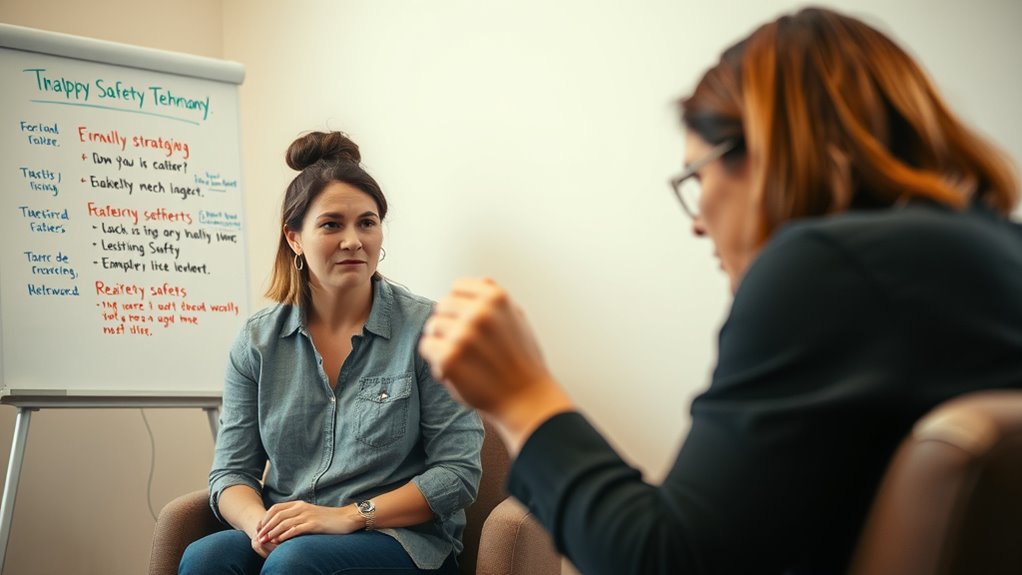
When emotions run high and anger begins to escalate, having a clear safety plan is essential to protect yourself and others. During moments of intense emotion, practicing emotional regulation is your most effective tool. It helps you stay grounded, prevents the situation from spiraling out of control, and allows you to respond thoughtfully rather than react impulsively. Your safety plan should include specific techniques like deep breathing, counting to ten, or grounding exercises that you can use immediately when you notice your anger rising. These strategies help you regain control and reduce the intensity of your emotions before they lead to harmful actions.
Having an anger safety plan with techniques like deep breathing and grounding helps you stay calm and prevent harm.
Crisis intervention skills are equally critical in these situations. Recognizing early signs of escalation and intervening calmly can make a significant difference. If you sense that your anger is reaching a dangerous level, step away from the situation if possible. Create physical space between you and others, and communicate clearly that you need a moment to cool down. This pause can prevent an altercation and give you time to apply your emotional regulation techniques. Remember, the goal of crisis intervention isn’t to suppress your feelings but to manage them effectively and prevent harm.
Your safety plan should also include practical steps to de-escalate others if they become aggressive. This might involve speaking in a calm, even tone, avoiding confrontational language, and showing empathy if someone is upset. Sometimes just acknowledging their feelings can reduce tension. If the situation seems beyond your control, having a predetermined way to seek help—whether calling a trusted friend, family member, or emergency services—ensures that support is readily available. It’s essential to have these contacts on speed dial or written down, so you can act swiftly if the situation worsens.
In addition, knowing when to seek professional crisis intervention is key. If you or someone else shows signs of losing control, such as threats of violence, physical aggression, or inability to calm down, don’t hesitate to reach out to mental health resources or emergency responders. Your safety plan should emphasize the importance of recognizing these warning signs early and acting decisively. Remember, it’s not a sign of weakness to seek help; it’s a responsible step to ensure everyone’s safety. Recognizing the importance of color accuracy in visual clarity can also help you create a more calming environment that reduces triggers for escalation. By integrating emotional regulation techniques, crisis intervention skills, and clear action steps into your safety plan, you’re better equipped to handle escalation and rage. This proactive approach not only protects you but also creates a safer environment for those around you.
Frequently Asked Questions
How Can I Recognize Early Signs of Escalation?
You can recognize early signs of escalation by paying attention to emotional cues and early warnings. Notice if their voice gets louder or faster, if they start clenching fists, or if their face shows tension. You might see them avoiding eye contact or displaying nervous habits. These signals indicate rising frustration or anger, so catching them early allows you to calmly intervene or create space to prevent escalation.
What Are Effective De-Escalation Techniques?
Think of de-escalation like steering a boat through choppy waters. You can calm the storm by practicing emotional regulation, staying calm yourself, and speaking softly. Use communication strategies such as active listening, validating feelings, and offering choices to help the person feel heard and respected. These techniques help redirect tension, promote understanding, and guide both of you toward calmer waters, making the situation safer for everyone involved.
How Do I Create a Personalized Safety Plan?
To create a personalized safety plan, start by developing emotional awareness so you can recognize early signs of escalation. Identify coping strategies that work for you, like deep breathing or stepping away. Write down specific steps to take when you feel overwhelmed, including contacts for support. Regularly review and adjust your plan to make sure it stays effective, empowering you to manage escalation and maintain safety.
When Should I Seek Professional Help?
When emotions run high and you feel overwhelmed, it’s time to seek professional help. If you struggle with emotional regulation or notice escalation turning dangerous, don’t wait until it’s too late. Crisis intervention can provide vital support, guiding you through difficult moments. Remember, it’s better to ask for help early than to let the storm pass without proper guidance. Seeking help shows strength, not weakness.
How Can I Support Someone Experiencing Rage?
You can support someone experiencing rage by offering emotional validation, letting them know you understand their feelings without judgment. Use calming strategies like speaking in a calm tone, encouraging deep breaths, or suggesting a quiet space. Show patience and listen actively, helping them feel heard and supported. Your presence and understanding can help de-escalate their emotions while guiding them toward healthier coping mechanisms.
Conclusion
So, now you’ve got a safety plan in place for when rage or escalation strikes—great. Ironically, it’s often during those intense moments that your plan matters most, yet it’s the last thing on your mind. Remember, staying safe isn’t about avoiding anger altogether but managing it wisely. Who knew that taking control in chaos could be your best defense? In the end, your calm might just surprise everyone—including yourself.