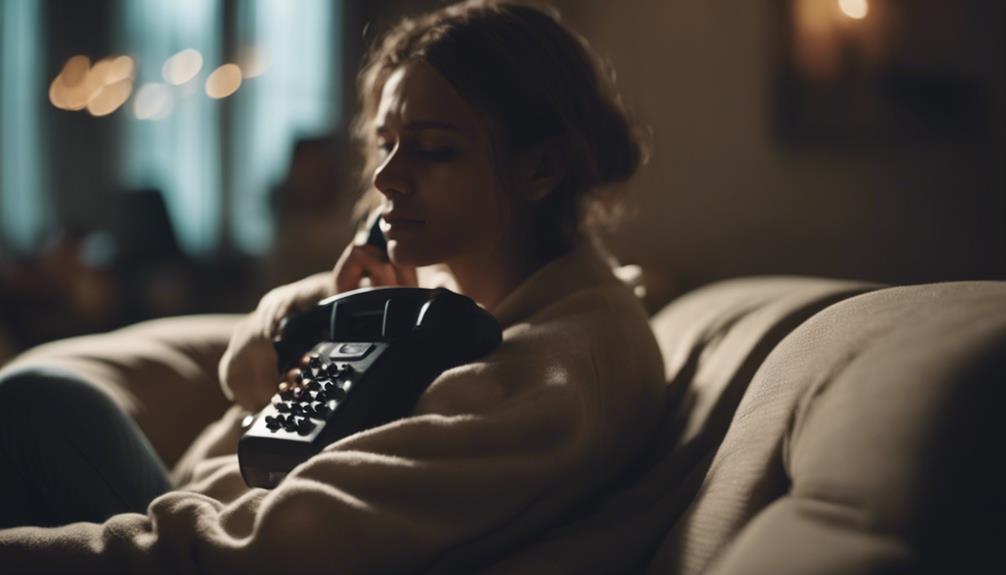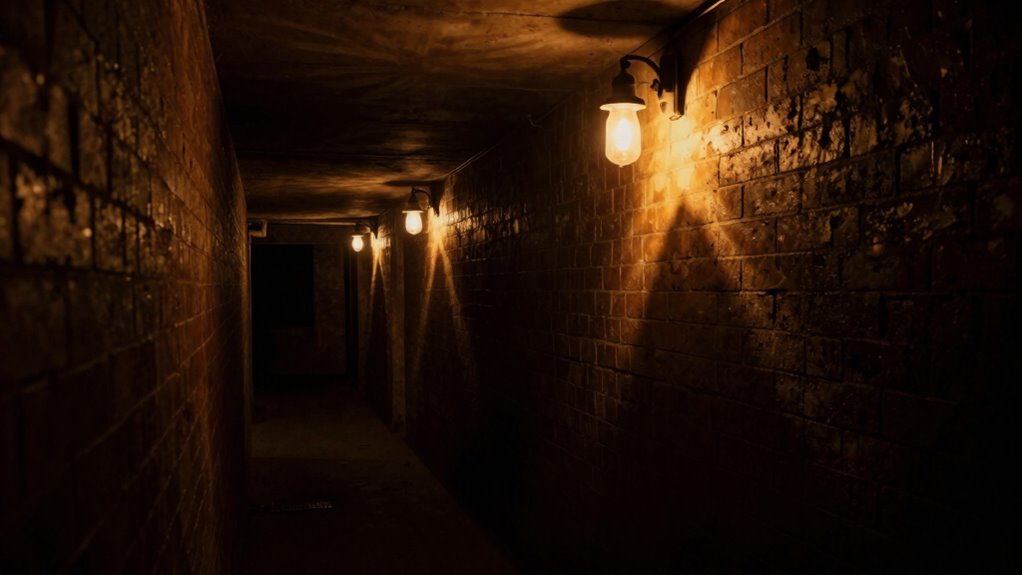

Your nervous system reacts strongly to darkness, often associating it with danger, which heightens anxiety and triggers stress responses. Mood lighting plays an essential role in shaping how safe and comfortable you feel, as soft, warm lights can signal safety and calm, while harsh or dim lighting might increase feelings of threat. By understanding this, you can use lighting to create environments that soothe your nervous system. Keep exploring to discover how thoughtful lighting choices can make a real difference.

Turn your wind-down time into listening time
- Thousands of audiobooks, podcasts and originals
- Listen on your phone, tablet or Echo — also offline
- Cancel anytime
Key Takeaways
- Darkness triggers threat perception and activates the fight-or-flight response, increasing anxiety levels.
- Mood lighting can mitigate fear by creating a sense of safety and emotional calm.
- Poor lighting design may reinforce feelings of vulnerability and environmental insecurity.
- Proper lighting balances brightness and warmth to support nervous system regulation and mental well-being.
- Understanding evolutionary links between darkness and danger guides effective, anxiety-reducing lighting choices.
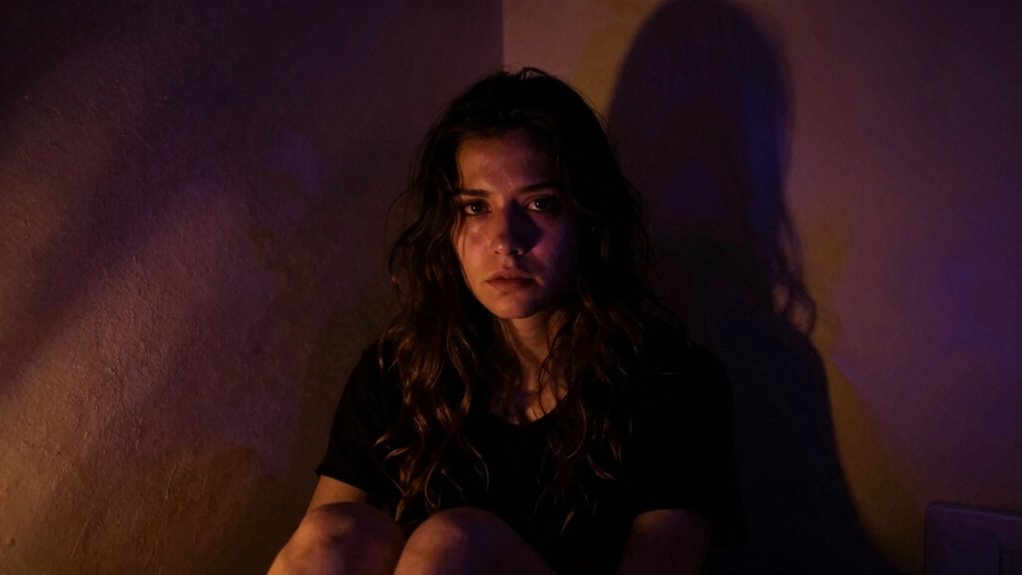
Mood lighting can profoundly influence your nervous system, shaping your emotions and overall mental state. The way light interacts with your environment isn’t just about aesthetics; it’s an essential component of lighting psychology that impacts your brain’s response to your surroundings. When you consider sensory regulation, you realize how indispensable lighting is in maintaining a sense of calm or alertness. Bright, harsh lights can trigger stress responses, while soft, warm lighting can promote relaxation. Your nervous system is highly sensitive to these cues, and the lighting choices you make can either soothe or stimulate your emotional reactions.
If you’re in a dimly lit room where the darkness feels overwhelming or threatening, your nervous system may interpret it as danger. Darkness has historically been associated with uncertainty and risk, which can activate your fight-or-flight response even if there’s no real threat present. Over time, this association can become ingrained, making you more prone to anxiety in low-light environments. Conversely, well-designed lighting that balances brightness with warmth can foster feelings of safety and comfort. This is where understanding lighting psychology becomes fundamental—your brain processes different lighting conditions to determine whether your environment is secure or risky.
Sensory regulation plays a pivotal role here. Your nervous system constantly seeks balance, and lighting is one of the key sensory inputs it uses to gauge safety and stability. When lighting is inconsistent or overly intense, your nervous system might become overwhelmed, leading to heightened stress levels. On the other hand, gentle, diffuse lighting can help regulate your sensory input, reducing anxiety and improving your overall mental state. This is why thoughtful lighting design isn’t trivial—it’s a deliberate effort to communicate safety and stability through visual cues.
Furthermore, recognizing the deep-rooted evolutionary associations that influence our perception of darkness can help in designing environments that minimize anxiety and promote well-being. By understanding how lighting psychology influences your sensory regulation, you empower yourself to craft spaces that support your mental health, instead of inadvertently triggering anxiety through poorly considered lighting choices.
As an affiliate, we earn on qualifying purchases.
Frequently Asked Questions
How Does Mood Lighting Affect Sleep Quality?
Mood lighting can considerably improve your sleep quality by supporting your circadian rhythm. Using warm, dim light before bed helps signal your brain it’s time to wind down, while light therapy in the morning boosts alertness. Proper lighting reduces stress and anxiety, making it easier to fall asleep and stay asleep. You’ll wake up feeling more refreshed, with your nervous system better aligned to natural sleep cues.
Can Lighting Choices Influence Anxiety Levels?
Yes, your lighting choices can influence anxiety levels by shaping your emotional response. When you opt for soft, warm lighting, it creates a calming atmosphere, reducing stress. Conversely, harsh or flickering lights can heighten anxiety, especially if your nervous system perceives darkness or bright flashes as threats. Thoughtful lighting design helps you feel safer and more relaxed, directly impacting your emotional state and overall well-being.
Are There Specific Colors That Calm the Nervous System?
Yes, certain colors can calm your nervous system. Color psychology suggests soft blues and greens promote relaxation, reducing anxiety. Light therapy often uses these calming hues to improve mood and ease stress. When you choose lighting with these gentle colors, you help signal safety to your brain, calming your nervous system. So, opt for soothing shades to create a peaceful environment that supports your emotional well-being.
How Quickly Can Lighting Change Impact Mood?
In the blink of an eye, lighting changes can markedly influence your mood. Adjusting lighting intensity and color temperature swiftly shifts your emotional state; bright, cool tones energize, while dimmer, warmer tones relax. This instant effect works like a well-timed telegram, guiding your nervous system away from danger signals. So, even in moments of stress, a quick change in lighting can help you feel more at ease or alert.
What Are the Best Lighting Options for Sensitive Nervous Systems?
For sensitive nervous systems, choose soft, warm ambient brightness to create a calming environment. Opt for fixtures placed strategically to avoid harsh shadows or glare, which can trigger discomfort. Dimmer switches are ideal, allowing you to adjust lighting levels easily. Avoid overly bright or cool-toned lights, and instead, use gentle, indirect illumination to promote relaxation and reduce stress. This thoughtful approach helps your nervous system feel secure and at ease.
Conclusion
Remember, your nervous system can associate darkness with danger, making mood lighting more complex than it seems. It’s fascinating that nearly 30% of people experience heightened anxiety in dim environments, meaning your choice of lighting directly impacts your sense of safety. So, next time you set the mood, consider how darkness might affect your emotions. Creating a balanced, comforting atmosphere can help ease those nervous responses, making your space truly welcoming rather than intimidating.
Halloween Picks
halloween
As an affiliate, we earn on qualifying purchases.