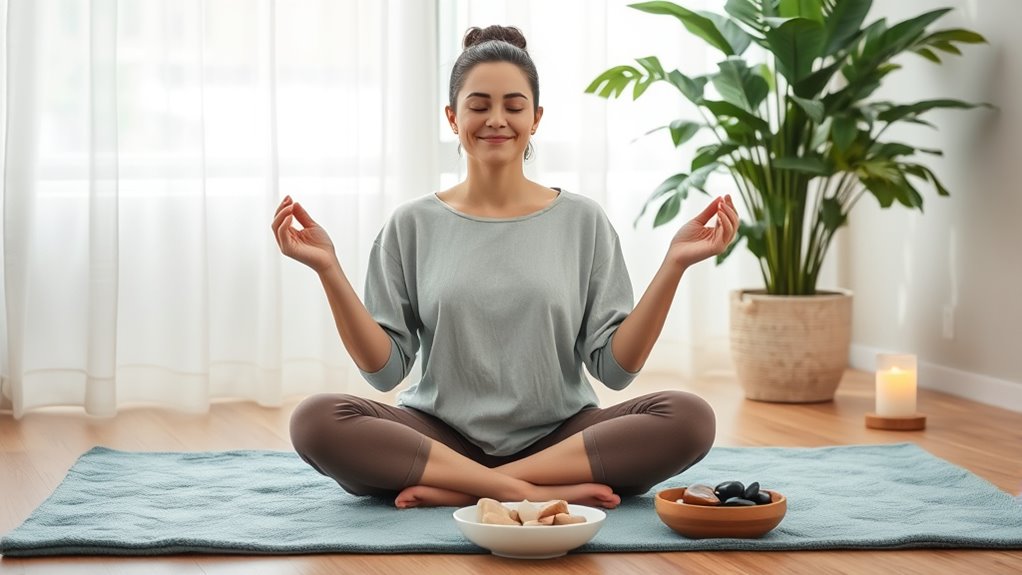
To calm your nervous system, focus on somatic tools like body awareness and breath regulation. Practice deep diaphragmatic breathing, slow inhales through your nose, and full exhales through your mouth to activate your parasympathetic nervous system. Try body scans or gentle movements to notice tension and release it. Incorporating these simple techniques regularly can help you respond calmly to stress. Keep exploring for more effective methods to support your resilience and well-being.
Key Takeaways
- Breathing techniques like diaphragmatic and box breathing activate the parasympathetic nervous system to promote calm.
- Body awareness exercises, such as body scans and gentle movements, help detect and release tension.
- Tuning into physical sensations fosters self-regulation and early identification of stress signs.
- Visualization and mindful attention to tension release support relaxation and emotional regulation.
- Regular somatic practice builds resilience, enabling quick calming responses during overwhelming moments.

When your nervous system feels overwhelmed, somatic tools can offer quick and effective relief. These methods focus on tuning into your body and using that awareness to calm your mind. Two of the most accessible and powerful tools are breathing techniques and body awareness exercises. By consciously engaging with your breath and paying close attention to physical sensations, you can interrupt the cycle of stress and restore a sense of calm.
Breathing techniques are a cornerstone of somatic self-regulation. When you notice yourself becoming anxious or tense, slowing down and controlling your breath can quickly shift your state. Try deep diaphragmatic breathing: inhale slowly through your nose, allowing your belly to rise, then exhale fully through your mouth. This activates your parasympathetic nervous system, which promotes relaxation. Another effective method is box breathing—inhale for four counts, hold for four, exhale for four, and hold again for four. These rhythmic patterns help regulate your heartbeat, reduce cortisol levels, and ground you in the present moment. The simplicity of breath work makes it an accessible tool you can use anytime, anywhere, to manage overwhelming feelings.
Body awareness exercises deepen your connection with your physical sensations, helping you identify areas of tension and release them intentionally. Start by scanning your body from head to toe, noting where you feel tightness, heat, or tingling. As you become more aware, gently guide your attention to those areas, breathing into them and imagining the tension melting away with each exhale. You might also try gentle movement or stretching, which encourages your nervous system to shift from a hyper-aroused state to one of calm. For example, slow, deliberate movements like shoulder rolls or spinal twists can release stored stress and foster a sense of safety in your body. These exercises foster a sense of agency and help you recognize early signs of stress before they escalate. Incorporating body awareness practices regularly can significantly improve your ability to respond calmly to stressors.
Integrating breathing techniques and body awareness exercises into your daily routine can make a significant difference in how you manage stress. The key is consistency—regularly practicing these tools builds resilience and allows you to access calm more quickly when needed. Remember, the goal isn’t to eliminate all tension but to cultivate a gentle, responsive relationship with your body. By doing so, you create a reliable toolkit that empowers you to navigate overwhelming moments with greater ease. Over time, these somatic practices become a natural part of your self-care, helping you maintain a balanced nervous system even amid life’s inevitable challenges.
Frequently Asked Questions
Can Somatic Tools Replace Therapy for Anxiety Management?
Somatic tools can’t fully replace therapy for anxiety management, but they can markedly enhance your mind-body connection and emotional regulation. These techniques help you become more aware of physical sensations, reducing anxiety symptoms. However, therapy offers personalized support, addressing underlying issues and providing guidance. Combining somatic tools with therapy creates a holistic approach, empowering you to manage anxiety more effectively while fostering long-term emotional resilience.
How Long Does It Take to See Results Using Somatic Techniques?
You might notice results in your nervous system regulation within a few sessions, but it varies based on your consistency and the specific techniques you use. As you strengthen the mind-body connection, you’ll likely experience calmer states more quickly over time. Keep practicing regularly; the more you engage in somatic tools, the faster you’ll see improvements in nervous system regulation and overall anxiety management.
Are Somatic Tools Effective for Children or Adolescents?
Yes, somatic tools can be effective for children and adolescents, especially when tailored to their developmental considerations. Child-centered approaches prioritize their unique needs, making techniques more engaging and easier to grasp. You’ll notice improvements in emotional regulation and stress reduction over time, often within a few sessions. By incorporating age-appropriate activities, you help young people build resilience and self-awareness in a supportive, developmentally sensitive way.
Do Somatic Practices Require Prior Physical Fitness or Flexibility?
No, somatic practices don’t require prior physical fitness or flexibility. You can start them regardless of your current physical condition. These tools are adaptable to your needs and gradually improve your flexibility and strength over time. You won’t need to push yourself to the limit; instead, focus on gentle, mindful movements that help calm your nervous system. Consistent practice makes progress easier and more natural.
Can Somatic Tools Be Used During a Panic Attack?
Yes, you can use somatic tools during a panic attack. Focus on breathing exercises to slow your breath and muscle release techniques to relax tense areas. These practices help you regain control and calm your nervous system quickly. You don’t need prior fitness or flexibility; simply listen to your body and gently apply the techniques. They’re effective tools for managing panic and restoring a sense of safety.
Conclusion
By exploring somatic tools, you open a doorway to calming your nervous system, like tuning a delicate instrument. These practices help you ride the waves of stress instead of being overwhelmed by them. Remember, your body holds the key to peace, waiting to be accessed with gentle awareness and movement. Embrace these tools as your allies, guiding you back to balance amidst life’s chaos, and watch your nervous system find its rhythm once more.