To make certain your weighted blanket calms rather than triggers you, choose one that’s the right size and about 10% of your body weight for comfortable pressure. Create a relaxing environment with dim lights, calming scents, and soothing breathing exercises. Use the blanket gradually, paying attention to how your body responds, and adjust as needed. If you want to find out more tips for maximizing comfort and safety, keep exploring these helpful strategies.
Key Takeaways
- Choose the correct weight (about 10% of your body weight) and ensure the blanket fits comfortably without restricting movement.
- Use calming breathing techniques and create a quiet, dim environment to enhance relaxation.
- Gradually introduce the blanket into your routine, monitoring for signs of discomfort or overstimulation.
- Select breathable, soothing fabric materials and avoid overheating during use.
- Regularly reassess comfort and adjust weight or routine to maintain calming effects and prevent triggers.
What Are Weighted Blankets and How Do They Work?
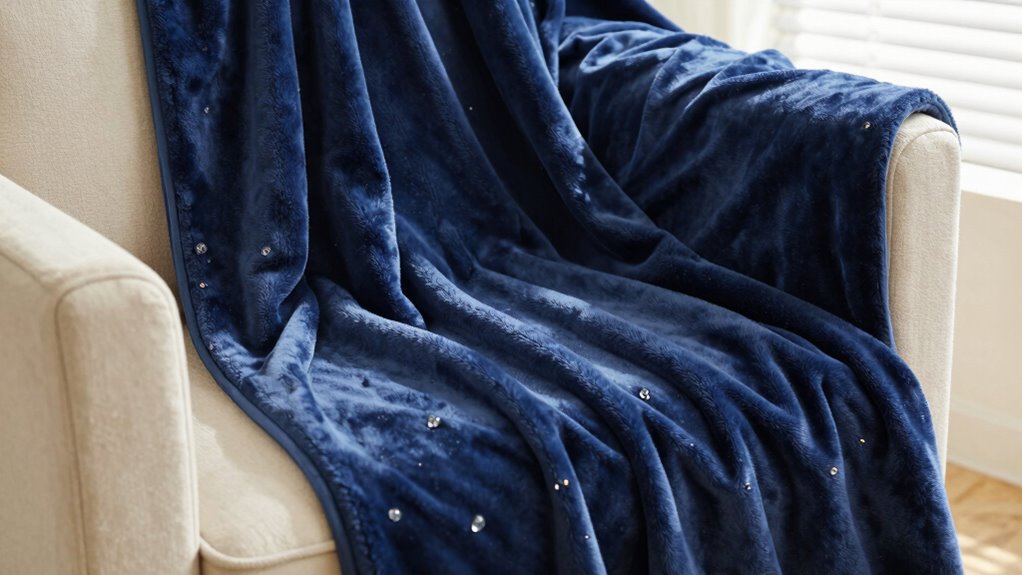
Weighted blankets are specially designed blankets filled with small weights, typically made of glass beads or plastic pellets. These weights provide gentle, even pressure that mimics a comforting hug, helping you feel more secure. When you use a weighted blanket, combining breathing techniques can enhance relaxation, slowing your heart rate and easing anxiety. As you settle in, incorporating aromatherapy scents like lavender or chamomile can deepen your calming experience. The scent’s soothing properties work together with the blanket’s gentle pressure to promote sleep and reduce stress. Proper calibration of the blanket’s weight and fit ensures maximum comfort and effectiveness. Additionally, understanding the safety guidelines for weighted blanket use can prevent discomfort or potential hazards. Being aware of weight options can help you select the most suitable blanket for your needs. By focusing on your breath and the calming aromas, you create a sensory environment that helps your mind and body unwind. Incorporating relaxation techniques such as meditation or mindfulness can further enhance the calming effects. For optimal results, it’s important to consider material quality when choosing your blanket, as this impacts comfort and durability. This simple combination makes weighted blankets an effective tool for relaxation and stress relief.
How to Choose the Right Weighted Blanket for You

Choosing the right weighted blanket starts with understanding your specific needs and preferences. Consider factors like size, weight, and fabric materials to guarantee comfort and effectiveness. Fabric materials impact breathability and feel—options include cotton, bamboo, and microfiber, each offering different textures and cooling properties. Color choices can also influence your mood and room aesthetics; neutral tones promote calm, while brighter shades energize. Here’s what to keep in mind:
- Appropriate weight (around 10% of your body weight)
- Breathable fabric materials for comfort
- Soft, allergy-friendly textures
- Color that matches your mood or room decor
- Ease of cleaning and maintenance
How to Prepare Your Body and Environment for Relaxation

Creating a calm environment and preparing your body are essential steps to maximize relaxation with your weighted blanket. Start by dimming the lights and eliminating noise to create a peaceful space. Use calming scents like lavender or chamomile to signal your brain that it’s time to relax. Incorporate breathing exercises, such as slow, deep inhales through your nose and gentle exhales, to help reduce tension and center your mind. Guarantee your body feels comfortable—adjust your clothing and position yourself so you can fully unwind. Avoid distractions like screens or bright lights. When your environment feels safe and your body is relaxed, you’ll enhance the blanket’s calming effects and set the stage for a more restful experience. Paying attention to air quality can further improve your comfort by reducing irritants that may interfere with relaxation. Ensuring good indoor air quality helps prevent discomfort and promotes a more soothing environment for relaxation.
How to Use Your Weighted Blanket Safely and Effectively

Choosing the right size and weight is key to using your weighted blanket safely and effectively. You should always follow guidelines for safe usage practices to prevent discomfort or safety issues. When used correctly, your blanket can provide comfort and relaxation without risks. Additionally, understanding safety precautions and proper techniques can help maximize benefits and minimize potential issues. Proper weight distribution ensures even pressure and reduces the risk of uneven tension that could cause discomfort. For added safety, consider the construction quality of the blanket to ensure durability and consistent weight distribution. Regularly cleaning and maintaining your weighted blanket according to manufacturer guidelines can also prolong its safety and performance.
Proper Blanket Sizing and Weight
To use your weighted blanket safely and effectively, selecting the right size and weight is vital. Your blanket should fit your body comfortably without hanging over the edges, so consider blanket dimensions that match your height and bed size. The weight category is essential; generally, choose a blanket that’s about 10% of your body weight for maximum comfort.
Here are key ideas to keep in mind:
- Make sure the blanket covers your entire torso comfortably
- Match blanket weight to your body weight
- Avoid blankets that are too heavy or too light
- Check manufacturer guidelines for weight categories
- Consider the size of your bed and personal preferences
Choosing correctly ensures the calming effect without discomfort or triggers.
Safe Usage Practices
Using your weighted blanket safely starts with understanding how to incorporate it into your routine correctly. Begin by practicing calming breathing techniques, such as deep, slow inhales and exhales, to help your body relax under the weight. Confirm the blanket isn’t too heavy, as excessive pressure can cause discomfort or restrict breathing. Focus on sensory integration by gradually increasing duration, allowing your senses to adapt without feeling overwhelmed. Always check for signs of overheating or discomfort, and remove the blanket if necessary. Keep the blanket snug but not tight, and avoid using it if you feel anxious, short of breath, or have underlying health conditions. Prioritize your comfort and safety to enjoy the calming benefits of your weighted blanket. Stay aware of how your body responds to ensure safe and effective use. Additionally, understanding kitchen science & materials can help you select the right weighted blanket with appropriate materials for your needs. Being mindful of the materials used can also influence comfort, durability, and safety.
Common Mistakes That Can Cause Anxiety or Discomfort

One common mistake that can cause anxiety or discomfort with weighted blankets is selecting the wrong weight or size. Incorrect sizing can lead to overstimulation or a feeling of restriction, which may trigger anxiety instead of calming you. Choosing a blanket that’s too heavy or too light can disrupt your comfort and sleep quality. To avoid this, keep these points in mind:
- Always match the blanket weight to your body weight and preferences
- Avoid oversized blankets that don’t fit your bed or body
- Don’t ignore your comfort signals during use
- Watch for signs of overstimulation, like feeling trapped or overwhelmed
- Adjust the weight if you feel discomfort or anxiety
- Understanding weighted blanket design can help you select the right fit and features for your needs. Additionally, paying attention to material breathability can enhance comfort and prevent overheating during use.
Proper sizing and awareness of overstimulation are key to making your weighted blanket a calming tool.
How to Adjust Your Use Over Time for Better Calm and Sleep
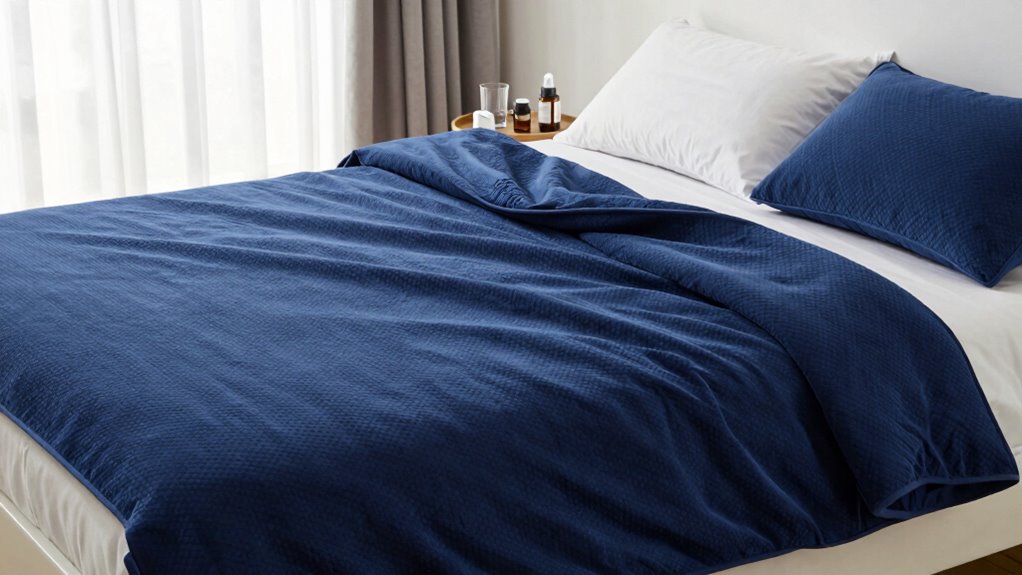
As you become more familiar with your weighted blanket, it’s important to adjust its use to optimize your calm and sleep quality. Start with a progressive adjustment, gradually increasing or decreasing the weight as needed to find the most calming sensation. Pay attention to how your body responds; if you feel too restricted or restless, tweak the weight or placement. Incorporate your weighted blanket into your routine gradually, making it a consistent part of your bedtime habits. Proper use and routine integration help your body associate the blanket with relaxation, improving its calming effects. Over time, this routine integration helps your body associate the blanket with relaxation, improving its calming effects. Regularly reassess your comfort and make small adjustments to ensure your experience remains soothing and supportive of better sleep. Using the right weighted blanket can significantly enhance your relaxation and sleep quality.
Frequently Asked Questions
Can Weighted Blankets Be Used for Children or Pets?
Yes, you can use weighted blankets for children and pets, but always prioritize safety. For children, choose child-safe blankets with appropriate weight and size, ensuring they’re never too heavy or restrictive. For pets, select a blanket that offers pet comfort without causing stress or overheating. Always supervise use, avoid covering their face, and consult a healthcare professional or veterinarian if you’re unsure about safety or suitability.
How Long Should I Initially Wear or Use the Blanket?
Start by following the duration guidelines for initial trial periods, which typically recommend using your weighted blanket for about 15 to 30 minutes at first. Pay attention to how you feel during and after use. If you’re comfortable, gradually increase the duration over several days, but avoid exceeding 1-2 hours initially. This approach helps you determine the right length for calming benefits without feeling overwhelmed.
Are There Specific Fabrics That Enhance Calming Effects?
Imagine wrapping yourself in a gentle breeze; calming textile choices and fabrics for relaxation do just that. Opt for soft, breathable materials like cotton, bamboo, or silk—these fabrics enhance calming effects by soothing your skin and reducing sensory overload. Avoid rough or synthetic textures, which can trigger discomfort. Choosing the right calming textile creates a cocoon of serenity, making your weighted blanket experience even more comforting and effective.
What Are Signs That My Weighted Blanket Is Too Heavy?
If your weighted blanket feels too heavy, you’ll notice increased pressure on your pressure points, leading to discomfort or pain. It might also trigger sensory overload, making it hard to relax or fall asleep. You may feel claustrophobic or overly restricted, and your muscles could tense up instead of relaxing. Always select a blanket that’s about 10% of your body weight to avoid these signs and guarantee calming comfort.
Can Weighted Blankets Help With Anxiety Unrelated to Sleep?
Yes, weighted blankets can help with anxiety relief and stress reduction even when you’re not sleeping. By providing gentle pressure, they stimulate your nervous system, promoting relaxation and calming your mind. You might find using it during stressful moments or meditation helpful. Just make certain the weight isn’t too heavy, and listen to your body’s cues. Regular use can lead to improved mood and a greater sense of calm throughout the day.
Conclusion
Think of your weighted blanket as a gentle hug that adapts with you. When I first tried one, I felt like a ship finally anchored in calm waters after a storm. With patience and the right choices, you’ll discover how it can soothe your mind without causing triggers. Just like tuning an instrument, adjusting your use over time guarantees your blanket becomes your personal sanctuary for relaxation and restful sleep.