If you’re facing harassment, threats, or abuse, you can request a restraining or protective order from the court to keep the person away. The process involves filing paperwork, providing evidence, and possibly attending a court hearing. Courts can issue temporary orders quickly, and violations can lead to penalties. Understanding when and how to seek these orders can effectively safeguard you—continue exploring to learn more about making your safety a priority.
Listen free for 30 days with Audible
Thousands of audiobooks and originals — cancel anytime.
As an affiliate, we earn on qualifying purchases.
Key Takeaways
- Restraining and protective orders are legal tools to prevent harassment, threats, or abuse by restricting an individual’s actions toward the protected person.
- They can be obtained by filing a court petition and providing evidence of harmful behavior, often requiring a court hearing.
- Orders are granted when there’s sufficient proof, and temporary orders can be issued quickly in urgent cases.
- Once granted, they legally require the individual to stay away and refrain from contact; violations can lead to penalties.
- Enforcement involves court compliance and possible police action if the order is violated.
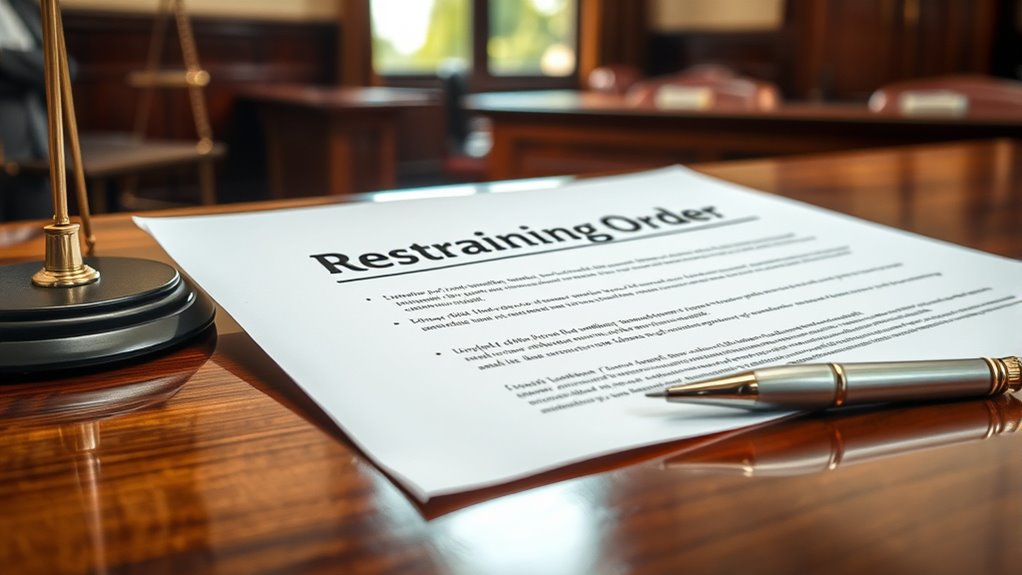
A restraining or protective order is a legal tool designed to keep someone who poses a threat away from you. If you’re experiencing harassment, threats, or abuse, obtaining such an order can be a vital step in ensuring your safety and peace of mind. These orders are specifically designed to prevent further contact or harm by legally restricting the individual’s actions toward you. To get one, you’ll need to navigate certain legal procedures, which vary depending on where you live but generally involve filing paperwork with the court, providing evidence of the harassment or threat, and possibly attending a hearing. The process might seem intimidating, but understanding the steps can help you act swiftly and confidently.
When it comes to harassment prevention, a protective order can be a powerful deterrent. It legally mandates the person to stay a certain distance away from you, your home, workplace, or other frequented locations. It can also prohibit any form of communication, whether in person, by phone, or through social media. Knowing your rights and the legal procedures involved guarantees you can take prompt action to stop harassment before it escalates. Filing for a protective order usually requires you to present evidence that shows a pattern of threatening or abusive behavior—such as threatening messages, witness statements, or police reports. Once the court grants the order, it becomes a legally enforceable document, and violating it can lead to arrest or other penalties.
The legal procedures involved in obtaining a protective order are designed to be accessible, but they do demand attention to detail and proper documentation. Many jurisdictions offer simplified processes for urgent cases, allowing you to get a temporary order quickly, which can later be extended into a longer-term solution after a hearing. It’s important to keep copies of all related documents and evidence to support your case. Additionally, some courts may require you to attend a hearing where both parties can present their side. During this process, you’ll have a chance to explain your situation and request specific protections.
As an affiliate, we earn on qualifying purchases.
Frequently Asked Questions
Can I Get a Restraining Order Without Police Involvement?
Yes, you can get a restraining order without police involvement. You can file a petition at your local courthouse to seek a peaceful resolution and protection. This process doesn’t require police to be involved initially, but they can assist if enforcement is needed later. During this time, emotional support from friends, family, or counselors can help you through the process and guarantee your safety and well-being.
How Long Does a Restraining Order Last?
A restraining order typically lasts for a temporary duration, usually around 10 days to several weeks, depending on your jurisdiction. You can request extensions if you need more protection; this involves filing a request and often attending a court hearing. Keep in mind that the exact length and extension procedures vary, so check local laws or consult an attorney to guarantee your order remains in effect as long as you need it.
Can I Modify or Extend a Protective Order?
You can absolutely modify or extend a protective order, and it’s easier than you might think. The process involves filing a request for modification or extension with the court, showing valid reasons for the change. You’ll need to follow specific extension procedures, which often include attending a court hearing. Don’t worry—if your circumstances change, courts are usually understanding and willing to adapt the order to keep you safe.
What Are the Penalties for Violating a Restraining Order?
If you violate a restraining order, you face serious legal consequences, including fines, arrest, or jail time. Enforcement procedures are initiated when law enforcement receives reports or witnesses the violation, leading to immediate action. You must understand that courts take these violations seriously to protect victims. Avoid consequences by strictly adhering to the order’s terms, and if you believe an order needs modification, consult a lawyer for proper legal procedures.
Do I Need a Lawyer to File for a Restraining Order?
Like a guiding lighthouse in turbulent waters, legal representation can help you navigate the storm of court procedures when filing for a restraining order. While you don’t always need a lawyer, having one can clarify complex steps and improve your chances of success. Consider consulting an attorney to make sure your case is properly prepared, especially if the situation involves intricate legal issues or potential opposition.
Conclusion
Understanding when and how to obtain a restraining or protective order can be lifesaving. These legal tools are designed to keep you safe and help you regain control. Don’t wait until things escalate—know your options and act promptly. Are you ready to take the steps necessary to protect yourself and your loved ones? Remember, your safety should always come first, and seeking help is a strong, courageous move.
Fall Picks
fall essentials
As an affiliate, we earn on qualifying purchases.