
Many people assume their love language is universal or overlook their partner’s needs, leading to misunderstandings. Relying only on words or neglecting actions can create distance. Forgetting to communicate clearly or ignoring how love languages evolve over time causes frustration. Misinterpreting cues or focusing solely on your style without considering theirs deepens disconnect. Expecting quick fixes or inconsistent efforts damages trust. Stay aware, open, and patient to strengthen your relationship—more insights await those willing to explore further.
Key Takeaways
- Assuming your love language is universal, ignoring cultural differences and individual preferences.
- Neglecting to communicate your needs clearly, leading to misunderstandings and unmet emotional needs.
- Overfocusing on your love language while ignoring your partner’s, causing imbalance and disconnection.
- Relying solely on words or gestures without consistent actions to demonstrate love.
- Failing to recognize that love languages can evolve, requiring ongoing dialogue and adaptation.
Assuming Your Love Language Is Universal

Many people assume that their own love language is the same as everyone else’s, but that’s a mistake. Cultural differences can shape how people express and interpret love, meaning what feels meaningful to you might not resonate with your partner. Language barriers also play a role, especially in multicultural relationships, making it harder to understand each other’s needs. You might prioritize words of affirmation, but your partner could value acts of service, simply because their cultural background emphasizes different expressions of affection. Assuming everyone shares your love language can lead to misunderstandings and frustration. To avoid this, recognize that love languages are influenced by cultural context and personal experiences, and take the time to learn what truly makes your partner feel loved. Understanding the 16PF traits can also help identify underlying personality differences that influence how love is expressed and received.
Ignoring Your Partner’s Primary Love Language

Ignoring your partner’s primary love language can cause significant misunderstandings and emotional distance. When you overlook how they feel most loved, communication breakdowns become inevitable, leading to frustration and resentment. To prevent this, pay close attention to their actions and responses. Recognize that:
- They may seem distant or unappreciative
- Small gestures might feel ignored
- They could withdraw emotionally
- Conflicts may escalate unnecessarily
- You might feel disconnected despite your efforts
Failing to meet their love language creates an emotional disconnect that’s hard to repair. By actively engaging with how they receive love best, you foster understanding and closeness. Remember, love languages aren’t just preferences—they’re essential to meaningful connection. Ignoring them only widens the gap. Additionally, understanding the importance of clear communication about needs and preferences can help bridge the gap and strengthen your relationship.
Relying Solely on Words When Actions Matter More

You might think words alone are enough to show love, but actions often speak louder. Relying only on verbal affirmations can lead to missed signals if nonverbal cues aren’t considered. Remember, genuine care shows up in actions just as much as in words. Paying attention to emotional intelligence can help ensure your actions truly reflect your feelings.
Overestimating Verbal Affirmations
While words can provide comfort and reassurance, relying solely on verbal affirmations can lead to misunderstandings in a relationship. Overestimating love language means believing that saying “I love you” or giving compliments is enough to meet your partner’s emotional needs. But words alone can fall short if not backed by actions. Remember, a verbal affirmation is meaningful only when it aligns with consistent behavior.
Consider these pitfalls:
- Thinking saying “I love you” replaces caring actions
- Overlooking nonverbal cues that show love
- Expecting words to fix underlying issues
- Ignoring your partner’s need for tangible support
- Assuming verbal affirmation alone sustains trust
Neglecting Nonverbal Cues
Verbal affirmations can feel meaningful, but they often aren’t enough on their own. Nonverbal signals, like body language, facial expressions, and gestures, are powerful forms of silent communication. When you rely solely on words, you might miss vital cues your partner is sending. For example, a smile or a touch can convey love and reassurance more effectively than words sometimes can. Ignoring these nonverbal cues can lead to misunderstandings or feelings of neglect, even if you’re saying the right things. To strengthen your connection, pay attention to your partner’s body language and respond accordingly. Recognize that actions and silent communication often speak louder than words, reinforcing what’s truly felt beneath the surface. Being aware of nonverbal cues can deepen understanding and foster a more empathetic relationship.
Forgetting to Communicate Your Needs Clearly

Many people assume that their partner automatically understands their needs, but failing to communicate them clearly often leads to misunderstandings and frustration. Clear communication is essential for expressing needs effectively. When you don’t articulate exactly what you want or need, your partner may guess wrong, leading to disappointment. To avoid this, be specific about your love language preferences and what actions make you feel appreciated. Incorporating effective communication strategies can further enhance how well your needs are understood. Remember:
- Don’t assume your partner knows what you’re thinking
- Use “I” statements to express your needs
- Be honest about what makes you feel loved
- Avoid vague or passive language
- Check in regularly to clarify and adjust your communication
Being intentional about clear communication helps your partner understand exactly how to meet your needs.
Neglecting to Recognize Changes in Love Languages Over Time

People often assume that their love language remains the same throughout a relationship, but over time, these preferences can shift. Evolving preferences are natural as you and your partner grow and face new relationship dynamics. If you overlook these changes, you might feel disconnected or misunderstood, even if you’ve communicated well in the past. Recognizing that love languages can evolve helps you stay attuned to your partner’s current needs. Regular check-ins and open conversations about how you prefer to give and receive love ensure you’re both on the same page. Staying aware of these shifts allows your relationship to adapt smoothly, preventing misunderstandings and strengthening your emotional connection over time. Additionally, understanding signs of spoilage in your shared communication can help you identify when emotional disconnects are occurring and address them promptly.
Overusing Gifts Without Genuine Thought

While giving gifts can be a meaningful way to show love, relying on them excessively without genuine thought can backfire. When you focus solely on material presents, your partner might feel like their love isn’t truly understood. Instead of meaningful surprises, gifts become just a habit, losing their impact. To avoid this, incorporate more thoughtful gestures that reflect your partner’s preferences.
A good understanding of love languages can help tailor your expressions of affection effectively. Consider these approaches:
- Personal notes or letters expressing your feelings
- Handcrafted items that show effort
- Planning unique experiences instead of physical gifts
- Small acts of kindness tailored to their needs
- Surprising them with favorite treats or activities
Misinterpreting Your Partner’s Expressions of Love

Gifts are just one way partners show love, but misreading these signals can lead to misunderstandings. Communication barriers and cultural differences often cause you to interpret your partner’s actions incorrectly. For example, what feels like a lack of affection might be their way of expressing love through acts of service or quality time. You might overlook subtle cues or misjudge gestures because your backgrounds shape how you see love. Without open dialogue, these misunderstandings grow, creating frustration. Additionally, understanding that love expressions can be influenced by different love languages helps in decoding intentions more accurately. It’s essential to recognize that love expressions vary widely and aren’t always obvious. By asking questions and learning about your partner’s love language, you can avoid assumptions and better understand their true intentions, fostering a more meaningful connection.
Focusing on Your Own Love Language at the Expense of Your Partner’s

Focusing solely on your own love language can unintentionally create gaps in your relationship. When you prioritize your preferred way of giving and receiving love, you risk neglecting your partner’s needs. This approach hinders mutual understanding and can lead to feelings of imbalance. To foster balanced affection, consider these points:
- Pay attention to your partner’s signals and preferences
- Communicate openly about what makes them feel loved
- Make an effort to give love in their preferred style
- Avoid assuming your way is the only effective one
- Regularly check in to ensure both needs are met
- Developing an awareness of different well-being techniques can help you support your partner’s emotional health more effectively.
Expecting Immediate Results From Love Language Efforts
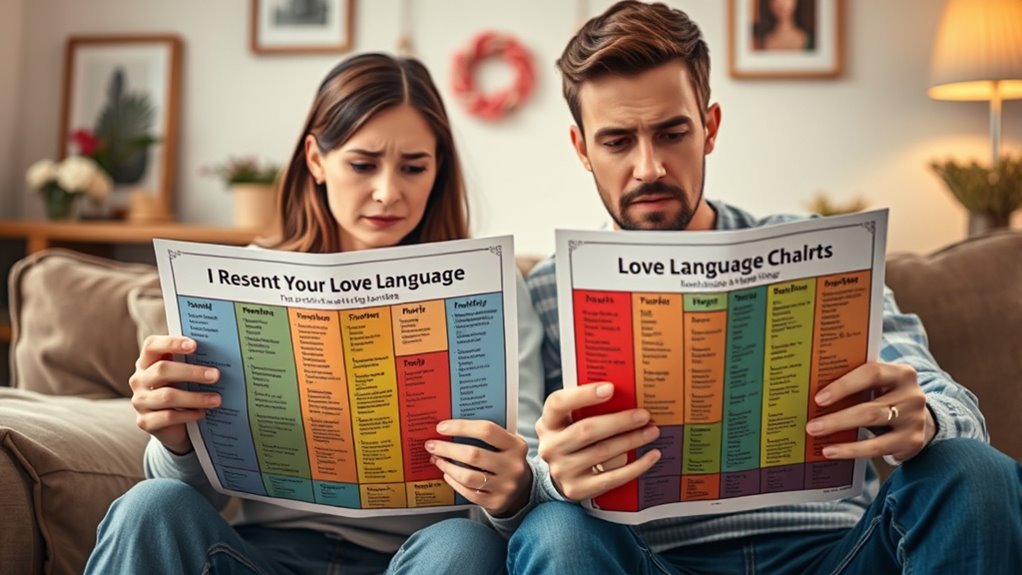
Expecting immediate results from your efforts to speak your partner’s love language can lead to frustration and disappointment. Relationships require patience in relationships, and change doesn’t happen overnight. It’s important to set realistic expectations about how quickly your partner will respond to your gestures. Love languages are about building trust and understanding over time, not quick fixes. When you expect instant results, you might feel discouraged if your efforts aren’t immediately appreciated. Instead, focus on consistent, genuine actions and give your partner space to respond naturally. Cultivating patience in relationships helps you stay motivated and prevents unnecessary frustration. Remember, meaningful change takes time, and with persistence, your efforts will gradually strengthen your connection. Decoding fan culture shows that understanding and patience are crucial for long-term engagement and success.
Failing to Maintain Consistency in Showing Affection

Failing to maintain consistency in showing affection can undermine the trust and stability you’ve worked to build. When your efforts fluctuate, it creates consistency challenges that can leave your partner feeling unsure or neglected. To improve affection maintenance, commit to regular gestures of love, even during busy times.
- Set reminders for daily affirmations or small acts of kindness
- Create routines that include quality time together
- Communicate openly about your efforts and challenges
- Recognize that inconsistency can stem from burnout or stress
- Celebrate small wins to reinforce positive habits
Frequently Asked Questions
How Can I Identify My Partner’s Secondary Love Languages?
To identify your partner’s secondary love languages, pay close attention to their communication styles and emotional needs. Notice what actions make them feel appreciated—whether it’s words of affirmation, acts of service, quality time, gifts, or physical touch. Observe how they respond to different gestures and listen carefully to their cues. Asking open-ended questions about what makes them feel loved can also reveal their secondary love language, fostering deeper connection.
What Are Effective Ways to Adapt When Love Languages Change?
When love languages change, you should prioritize open communication strategies and emotional adaptability. Talk with your partner about their evolving needs, and listen actively to understand their new preferences. Be flexible and willing to adjust your expressions of love, showing genuine support. Maintain ongoing dialogue to reinforce your connection, and stay receptive to changes, so you can meet each other’s emotional needs effectively over time.
How Do Cultural Differences Influence Love Language Preferences?
Cultural differences markedly influence love language preferences, often more than you realize. Cultural nuances shape how people express affection, so what feels natural in one culture might seem distant in another. Language barriers can also hinder understanding, making it harder to interpret love signals correctly. To bridge these gaps, you need to learn about your partner’s cultural background and communicate openly, ensuring that love expressions align despite differing traditions and norms.
Can Love Languages Evolve Over a Long-Term Relationship?
Yes, love languages can evolve over a long-term relationship. As you experience emotional growth, your preferences may shift, reflecting new needs or deeper understanding. To navigate this, you should use effective communication strategies, openly discussing changes with your partner. Being adaptable and attentive helps both of you grow together, ensuring your love languages stay aligned and strengthen your connection over time.
What if My Love Language Differs Significantly From My Partner’s?
What if your love languages differ markedly from your partner’s? It might create communication barriers and emotional misunderstandings, but don’t panic. You can bridge the gap by openly discussing your needs and practicing patience. Focus on small, intentional actions to show love in ways your partner values, even if they differ. Over time, this effort fosters understanding, strengthening your connection despite the initial differences.
Conclusion
By avoiding these common mistakes, you open the door to deeper understanding and genuine connection. Don’t assume your love language is universal, or ignore your partner’s needs. Instead, listen, communicate, and adapt as your relationship evolves. Love isn’t just about words or actions alone—it’s about balance, patience, and effort. When you’re mindful and consistent, the small shifts can create a love that’s stronger, clearer, and more fulfilling for both of you.