
If you notice your online relationship sparks quickly with excessive compliments, grand promises, and intense communication, you might be facing love-bombing. A narcissist often pushes for rapid commitment, flooding you with gifts and idealized images to create dependency. They may manipulate feelings with guilt trips, create urgency for future plans, and look for superficial validation. Recognizing these red flags can help you protect yourself—stay alert as you uncover more subtle tactics used to control and exploit.

Turn your wind-down time into listening time
- Thousands of audiobooks, podcasts and originals
- Listen on your phone, tablet or Echo — also offline
- Cancel anytime
Key Takeaways
- Rapidly escalated intimacy and declarations of love within days suggest love-bombing and manipulation.
- Excessive gifts and urgent commitments pressurize emotional dependence and create obligation.
- Superficial conversations avoid real vulnerability, masking insecurities and controlling tendencies.
- Deflecting criticism with defensiveness or hostility indicates narcissistic traits and emotional unavailability.
- Inconsistent empathy and grandiose self-presentation signal narcissistic tendencies and potential exploitation.
Signs of Excessive and Rapid Communication

Excessive and rapid communication often signals that someone is trying to fast-track emotional intimacy without allowing natural growth. You might notice conversations that stay superficial, avoiding deep or meaningful topics. Instead, they focus on idealized ideas or future plans, skipping personal vulnerability. Their profile may highlight perfection, like calling themselves the “ideal partner,” and they often use clichéd compliments or surface-level affirmations to seek validation. They demand constant attention through messages or social media interactions. You may experience an inconsistent messaging pattern—sometimes intensely engaged, then ghosting for hours or days, testing your boundaries. They respond ambiguously or suddenly show interest after long silence. This pattern is a red flag, signaling emotional manipulation and an attempt to control the pace of the relationship. Online dating platforms facilitate this behavior by enabling narcissists to quickly gather supply and manipulate victims through superficial interactions and inconsistent communication. Recognizing signs like inconsistent communication patterns can help you protect yourself from potential emotional harm. Furthermore, understanding how certain technologies and platforms are exploited can empower you to set healthy boundaries and avoid falling prey to manipulation. Being aware of manipulative tactics used in digital interactions can further help you identify and respond to red flags early. For example, narcissists may use fast-paced messaging to create a sense of urgency and dependency, making it harder to recognize their manipulative intent.
The Illusion of Perfect Compatibility and Idealization

When someone is love-bombing, they often create the illusion that you and they are perfectly compatible, even if the reality doesn’t support it. They exaggerate compatibility claims, using idealized language like “soulmate” to mask insecurities. This grandiosity attracts admiration and dependence, often rooted in low self-esteem. They craft an inauthentic persona, hiding genuine traits while amplifying desirable qualities, making it seem like you’re a perfect match. False emotional validation follows, with excessive compliments and mirroring interests to boost their self-worth and create dependency. They also make unrealistic promises and share future fantasies early on, giving the illusion of stability. All these tactics manipulate you into believing you’ve found a perfect partner, even though it’s built on inauthenticity and manipulation. Recognizing authenticity can help you better evaluate the true nature of your connection and protect yourself from potential manipulation. Additionally, understanding seasonal variations in behavior can reveal inconsistencies in their persona over time.
Pressure to Commit Quickly and Rushing the Relationship
Love-bombers often push for rapid commitment, making it feel urgent to solidify the relationship quickly. They claim deep emotional bonds early, sometimes within days, and push for labels like “boyfriend” or “soulmate” before you’re ready. They plan future milestones—marriage, moving in, or finances—at an accelerated pace to deepen dependency. Over-the-top romantic gestures, such as lavish gifts or grand dates, flood your inbox. They demand exclusivity fast, framing it as a test of love. Additionally, many resources and tools can help identify these red flags early on. Recognizing unique and wicked planters in your social circle can sometimes shed light on manipulative behaviors that mirror these love-bombing tactics. Being aware of coercive influence techniques can also help you spot when someone is trying to rush your decision-making process. Understanding the role of attention in building trust can reveal whether their focus is genuine or manipulative.
Isolation Tactics and Controlling Behavior

Isolation tactics and controlling behavior are powerful tools narcissists use to manipulate and dominate their partners. They criticize your friends and family to foster distrust, making you rely solely on them. They might fabricate conflicts with your social circle, claiming others resent or threaten your relationship, driving wedges between you. By framing the relationship as your only escape or true connection, they increase dependency. Guilt and demands discourage socializing outside the partnership, while they work to eliminate your support networks altogether. They enforce dependency through financial control, emotional validation, and manufactured crises, keeping you focused on their needs. Excessive communication, jealousy, and accusations further isolate you, making it difficult to see the manipulation and regain independence. Recognizing these tactics is essential for breaking free and restoring your social connections. Understanding vulnerable populations can help in identifying and addressing these abusive behaviors early on.
Excessive and Unsolicited Gifts as Emotional Leverage

Excessive and unsolicited gifts serve as a subtle but powerful form of emotional leverage in manipulative relationships. When someone showers you with expensive or frequent presents early on, it creates pressure to reciprocate and fosters a sense of indebtedness. These gifts often ignore your actual needs or preferences, instead reflecting the giver’s desire to shape your perception of love through materialism. Narcissists see generosity as a tool to secure loyalty and control, not genuine caring. In long-distance relationships, these gestures can replace meaningful emotional connection, making you feel valued primarily through possessions. Over time, this constant giving can lead to guilt or obligation, manipulating your feelings and keeping you stuck in a cycle of dependency and compliance. Recognizing Fokos as a form of emotional manipulation can help you better understand the underlying motives behind such behavior. Additionally, emotional manipulation can be subtle, making it difficult to recognize until it’s deeply ingrained. Understanding the role of materialism in these dynamics can help you identify the signs of exploitation early on. Being aware of website performance metrics and other indicators can also help you notice patterns of control and dependency that might develop.
Manipulative Strategies and Guilt-Tripping
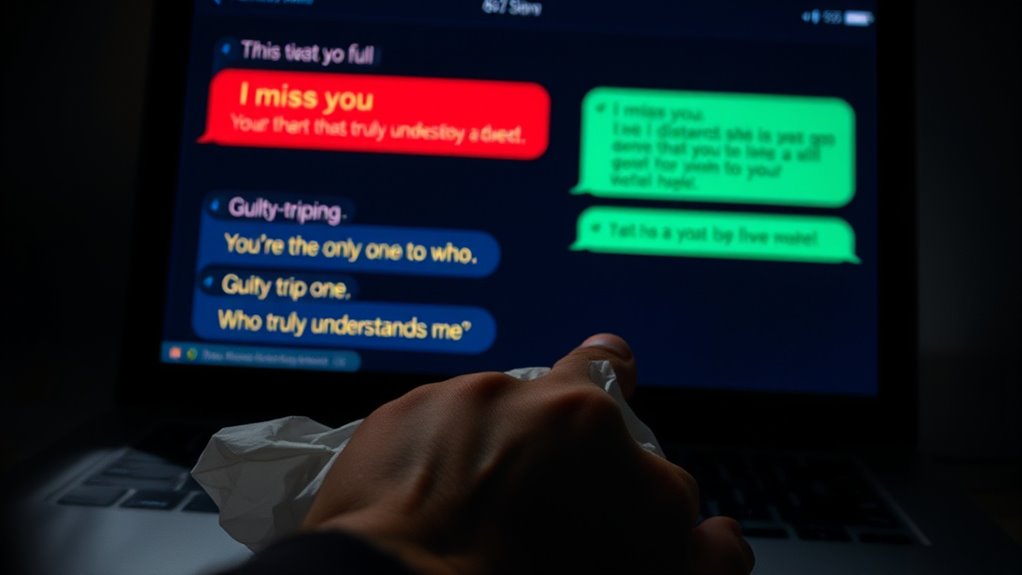
Manipulative strategies like guilt-tripping are powerful tools that keep you trapped in a cycle of compliance and emotional dependency. They exploit your empathy and sense of responsibility to control your actions. For example:
Manipulative guilt-tripping keeps you trapped, exploiting your empathy to control your actions and emotional dependence.
- Leveraging Empathy: They frame actions as “dealing with” their survival, making you feel guilty for not helping.
- Exaggerating Vulnerability: They portray themselves as victims of past trauma to elicit caretaking.
- Issuing Unreasonable Demands: They demand compliance as an act of love, like expecting more time or money.
- Deploying Self-Pity: They use phrases like “No one understands my pain” to isolate you and prevent outside support.
- Creating an Emotional Guilt Trap: They often remind you of past sacrifices or kindnesses, making you feel obligated to continue providing support through guilt. Recognizing the patterns of narcissistic manipulation can help you detach from these tactics and regain control over your emotional well-being.
Public Displays of Affection to Validate the Relationship

Public displays of affection are often used to validate the relationship and gain social approval. You might notice your partner broadcasting your bond on social media or over-the-top gestures to impress others. These actions can serve as tools to reinforce their image, rather than reflecting genuine intimacy. Additionally, narcissists may view PDA as a superficial performance and avoid authentic emotional connection, instead focusing on how others perceive their relationship to maintain their sense of superiority. Recognizing social validation tactics and vulnerabilities in online interactions can help protect personal boundaries and emotional well-being in these situations. Being aware of emotional distance indicators can also help identify when genuine connection is lacking.
Public Affection for Validation
Public displays of affection for validation often serve purposes beyond expressing love; they are tools for the narcissist to seek admiration and reinforce their control. They seek admiration from others to boost their image and manipulate your perception. Here are some red flags to watch for:
- Using PDA as a reward or punishment, granting affection only when you meet their expectations.
- Fluctuating affection levels, switching between over-the-top gestures and withdrawal to create confusion.
- Withholding PDA in public to assert dominance and make you crave private validation.
- Treating PDA as a performance, mainly to impress others or boost their status, rather than genuine affection.
- Monitoring reactions to PDA, and if they are more focused on external appearances than genuine connection, it could indicate manipulation. This focus on appearances often masks a lack of authentic emotional intimacy and is used to maintain power in the relationship. Additionally, such behaviors are integral to narcissistic tactics, aimed at controlling and diminishing your self-worth under the guise of love. Recognizing the role of AI-driven monitoring can help you understand how some narcissists may use technology to observe and manipulate your reactions even more covertly. Moreover, these tactics can be rooted in deeper psychological manipulation strategies that erode your confidence over time.
Social Media as Proof
Social media has become a powerful tool for narcissists to validate their relationships and project an idealized image to the world. They curate highlight reels, carefully selecting moments that showcase a perfect partnership, often avoiding authentic interactions to maintain control over their image. Frequent selfie posting emphasizes attractiveness and status, serving as a compensation for limited real-world social engagement. Narcissists use follower counts, geo-tags, and staged photos to artificially prove relationship legitimacy, even without real-life connection. Platforms like Instagram are preferred for their visual focus, allowing them to micro-manage their relationship narrative through Stories and superficial metrics like likes and followers. This behavior inflates perceived social desirability and masks the lack of genuine intimacy, making social media a key tool for narcissistic validation. Research indicates a modest but reliable positive correlation between narcissism and social media activity, especially in displaying romantic relationships which further underscores how narcissists leverage these platforms for validation. Additionally, social media’s curated nature enables narcissists to craft an illusion of perfect relationships, often at the expense of authentic connection.
Creating Urgency and Unrealistic Future Plans

You might notice them pushing for quick commitments or making promises about the future that seem too good to be true. They often set tight deadlines or create a sense of urgency to get you to decide faster than you’re comfortable with. These tactics can make it hard to see past the pressure and recognize unrealistic plans for what they are. Additionally, the physical distance allows them to craft an idealized version of themselves, making their promises appear more convincing and difficult to scrutinize. Reduced observation of daily actions can make it easier for them to maintain this facade without immediate accountability, especially when combined with selective communication that emphasizes only positive aspects. Furthermore, their manipulation often relies on illusion of intimacy, making it challenging to detect warning signs early on.
Pressuring for Quick Commitments
Pressuring for quick commitments often involves creating a sense of urgency through relentless messaging, love declarations, and demands for immediate responses. It makes you feel like time is running out and that you need to decide fast. Here are some common tactics:
- Floods you with romantic messages and constant calls, pushing for instant closeness.
- Declares you’re soulmates early and insists on exclusive labels right away.
- Invents shared goals and interests, making you believe your futures are already intertwined.
- Uses gifts or threats to create a sense of obligation, pressuring you to agree quickly.
- They often react negatively or become hostile if you hesitate or try to slow things down, which is a typical manipulation tactic to keep you compliant. This tactic is common among narcissists seeking to control the pace of the relationship.
This approach makes you feel pressured to commit before really knowing the person. It’s about rushing intimacy and creating dependence, not building a genuine connection.
Unrealistic Future Promises
Unrealistic future promises often serve as a powerful tool to create a sense of urgency and deepen emotional attachment quickly. You might hear about grand vacations, ideal living situations, or starting a family soon—promises that paint a picture of an idyllic life. They often romanticize hypothetical scenarios, like buying a house or traveling extensively, to foster strong emotional bonds. These promises rely on vague descriptions, such as “we’ll do amazing things,” to avoid concrete commitments. Manipulators may impose deadlines, insisting you decide immediately for “future happiness,” or create false scarcity, claiming opportunities will vanish. They blend these promises with emotional urgency, making you feel that quick decisions are essential. This tactic keeps you enthusiastic and eager, even when the promises are unrealistic or unattainable. Future faking involves making false promises about the future without the intention to fulfill them, which can lead to feelings of betrayal and long-term emotional damage.
Creating Time-Sensitive Decisions
Creating time-sensitive decisions is a common tactic in digital love-bombing that ramps up emotional pressure. It pushes you to act quickly, often without thinking through the consequences. Narcissists create urgency by:
- Demanding immediate responses or commitments, making you feel responsible for their happiness.
- Giving false promises about a future together to make you settle for less now.
- Threatening abandonment if you don’t comply with their timeline.
- Using emotional appeals or guilt trips to persuade you to make hasty choices.
- Exploiting the lack of physical proximity in online relationships to heighten the sense of immediacy and importance, making it harder for you to step back and assess the situation calmly.
This strategy manipulates your sense of security, forcing you to prioritize their needs over your own. It keeps you trapped in a cycle of uncertainty, questioning your judgment while they maintain control through urgency.
Recognizing Early Warning Signs of Narcissistic Tendencies
Recognizing early warning signs of narcissistic tendencies can help you protect yourself from emotional manipulation and unhealthy relationship dynamics. Watch for self-centered communication, where your partner dominates conversations with accomplishments and avoids discussing your needs. They may exaggerate achievements and use “we” language to manipulate perceptions of mutual importance. Manipulative tactics like love-bombing, insisting on urgent commitments, or guilt-tripping you signal red flags. Notice if they become defensive or angry when criticized, or withdraw rather than address issues. Inconsistent empathy and validation are also warning signs—they may show superficial interest, dismiss your feelings, or seek reassurance without reciprocating. Ultimately, observe for entitlement and grandiosity, such as demanding special treatment or belittling others to boost their ego. Recognizing these signs early can save you from deeper emotional harm. Narcissistic personality disorder involves a pervasive pattern of self-importance and a lack of empathy, making early detection crucial for protecting your emotional well-being.
Frequently Asked Questions
How Can I Tell if My Online Partner Is a Narcissist?
You can spot a narcissist online by paying attention to their behavior. They often dominate conversations, seek constant validation, and use flattery to manipulate. Watch for boundary testing, like invading your privacy or demanding access to your accounts. They might also show exaggerated online personas, switch between affection and coldness, or use guilt and gaslighting to control. Recognizing these signs helps you protect yourself from their emotional manipulation.
What Are the Long-Term Emotional Risks of Love-Bombing?
Long-term love-bombing leaves lasting emotional scars, fueling fears, frustrations, and future trust issues. You might feel confused, craving connection yet fearing betrayal. The cycle can cause deep despair, diminish self-esteem, and distort your perception of love. Over time, this manipulative pattern erodes emotional well-being, leaving you vulnerable to vulnerability, emotional exhaustion, and ongoing anxiety. Recognizing these risks helps you protect your peace and prioritize healthier, genuine relationships.
Can Love-Bombing Occur in Casual Online Interactions?
Yes, love-bombing can happen in casual online interactions. You might notice someone showering you with constant messages, overly flattering comments, or quick emotional intimacy, even if your relationship isn’t serious. They may push for quick commitments or try to control your responses. These tactics create a false sense of closeness, making you feel special. Be cautious of overly intense behavior early on—it often signals manipulative intentions.
How Do I Safely Distance Myself From a Manipulative Partner?
So, you want to distance yourself from a manipulative partner? Good plan—no one deserves emotional chaos. Start by setting firm boundaries: block their accounts, ignore excuses, and cut off contact. Protect your privacy, document everything, and don’t fall for guilt trips. Focus on self-care, lean on friends, and change routines to avoid traps. Remember, silence and consistency are your best allies in finally reclaiming your peace.
Are There Legal Ways to Address Online Harassment or Coercion?
You can take legal steps if you’re experiencing online harassment or coercion. Report the abuse to social media platforms and law enforcement, who can help you file for restraining orders or pursue criminal charges under laws like cyberstalking statutes. Keep records of all threatening messages or posts, and consider consulting an attorney to explore civil remedies or to understand your rights better. Acting swiftly can help protect you legally and emotionally.
Conclusion
Stay vigilant, for love shouldn’t feel like walking a tightrope. Narcissists often cast a dazzling illusion, trapping you in a web of false promises and fleeting affection. Trust your instincts—if something feels off, don’t ignore the red flags waving like warning flags in a storm. Guard your heart fiercely; true love is a steady lighthouse, not a flickering flame that could burn you. Keep your eyes open and your boundaries strong.
Fall Picks
fall essentials
As an affiliate, we earn on qualifying purchases.