With a narcissistic partner, social media becomes a tool for boosting their ego and controlling how others see them. They carefully craft posts, share exaggerated stories, and seek constant validation through likes and comments. This creates a false sense of perfection that can make you question your worth. They might criticize subtly or gaslight you online, all while maintaining a charming facade. Recognizing these tactics can help you regain confidence—if you look deeper, you’ll discover the subtle ways they manipulate perceptions.
Key Takeaways
- Narcissistic partners curate a perfect online persona to boost their ego and control perceptions.
- They seek constant validation through likes, comments, and social media approval to reinforce their superiority.
- Subtle manipulation tactics include indirect criticism and gaslighting via online interactions.
- Their social media presence often projects an idealized life, causing partners to doubt their self-worth.
- Recognizing these tactics helps set boundaries and reclaim confidence against superficial online validation.
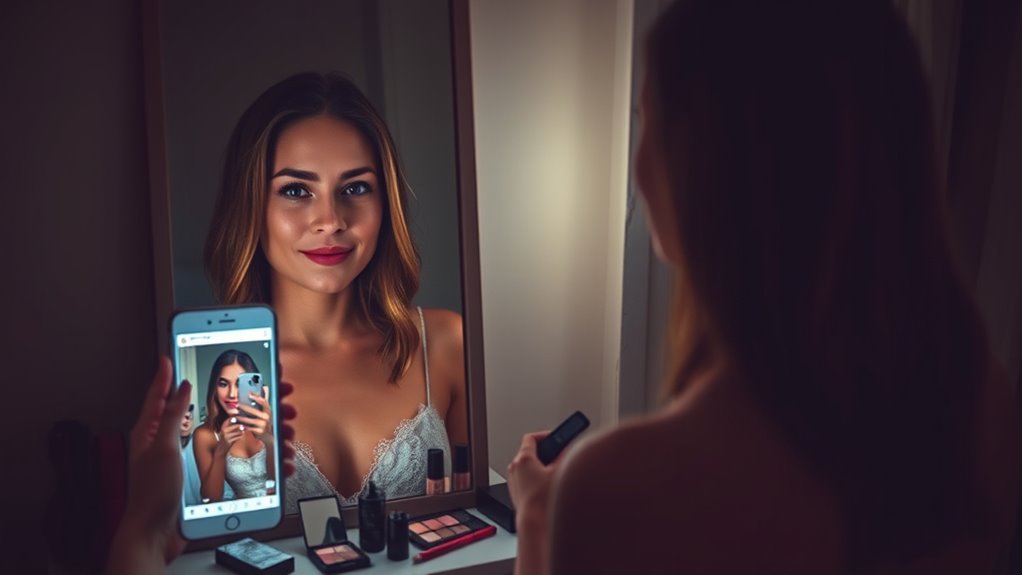
Have you ever wondered how a narcissistic partner can manipulate social media to boost their ego and control the narrative? It’s a common tactic they use to reinforce their sense of superiority and keep you feeling unsure of yourself. By carefully curating their online presence, they seek constant online validation, which inflates their self-esteem and keeps them in the spotlight. Their posts, comments, and interactions are strategically designed to garner admiration and attention, often at your expense. They might post flattering photos, boast about achievements, or share exaggerated stories to elevate their image. When they get a surge of likes or comments, it feeds their need for approval, making them feel powerful and justified in their behavior.
Narcissists manipulate social media to boost their ego and control your perception of reality.
This obsession with online validation severely impacts your self-esteem. When your partner’s social media activity revolves around projecting a perfect image, it’s easy to start questioning your own worth. You may find yourself trying to match their level of popularity or approval, which is exhausting and ultimately damaging. The constant comparison and their display of seemingly flawless lives can make you feel inadequate or invisible. They often use their online persona as a weapon—highlighting their successes while hiding their flaws—leaving you feeling like you’re never enough. Over time, this manipulation chips away at your confidence, leaving you more vulnerable to their control. Additionally, understanding the impact of color accuracy on overall image quality can help you recognize how curated online portrayals may distort reality and influence perceptions.
Narcissistic partners are masters at turning social media into a tool for emotional manipulation. They can subtly use comments or posts to send a message that reinforces their dominance or criticizes you, all while appearing innocent or charming online. They may also subtly imply that their online popularity or admiration is a reflection of their worth, which they use to justify their actions or dismiss your feelings. As you observe their online behavior, you might feel trapped, unsure of what’s real and what’s just a carefully crafted facade. Their ability to manipulate the narrative extends beyond posts—they often use social media to gaslight, making you doubt your perceptions or feelings.
In essence, a narcissistic partner’s social media tactics are designed to inflate their ego, control your perception of reality, and diminish your self-esteem. They thrive on the validation they receive online, which in turn fuels their sense of entitlement and superiority. Recognizing these tactics is the first step toward reclaiming your confidence and setting healthy boundaries. Remember, their social media presence isn’t an honest reflection of who they are, and your value isn’t defined by the likes or comments on their posts.
Frequently Asked Questions
How Can I Identify Narcissistic Behavior on Social Media?
You can spot narcissistic behavior on social media by noticing self-presentation tactics that focus heavily on showing off achievements or looks. Watch for attention-seeking behaviors like frequent posting, exaggerated claims, or fishing for compliments. If your partner consistently seeks validation, craves admiration, or dismisses others’ comments, these are signs. Recognizing these patterns helps you understand if their social media activity reflects narcissism.
What Are the Signs of Social Media Manipulation by a Narcissist?
You’ll notice signs of social media manipulation when your partner uses gaslighting tactics, making you doubt your perceptions or feelings online. They may emotionally exploit you by controlling your responses or isolating you through selective sharing. Watch for inconsistent stories, blame-shifting, and attempts to undermine your confidence publicly. If they twist situations or make you feel guilty for expressing yourself, it’s a clear sign they’re manipulating your emotions for their benefit.
How Does Narcissistic Jealousy Manifest Online?
Narcissistic jealousy manifests online through public displays of possessiveness and competitive posting. You might notice your partner constantly comparing themselves to others or trying to outshine someone else’s achievements. They may post intentionally provocative content or overly showcase their successes to garner admiration. This behavior aims to assert dominance and validate their self-worth, often making you feel overshadowed or insecure as they seek to elevate their status at your expense.
Can Social Media Help in Recovering From Narcissistic Abuse?
Imagine rebuilding a shattered mirror; social media can be your scaffolding. It connects you to support groups and online counseling, offering the strength to piece yourself back together. Through these digital sanctuaries, you find understanding, validation, and strategies to heal. While not a cure-all, social media’s community and resources empower you to reclaim your voice and confidence after narcissistic abuse, guiding your journey toward recovery and self-discovery.
What Privacy Measures Protect Victims of Narcissistic Partners Online?
You should prioritize privacy settings on your social media accounts to protect yourself from your narcissistic partner. Enable features like two-factor authentication and restrict who can see your posts, photos, and personal information. Consider using anonymity protection tools, such as pseudonyms or limited profile visibility, to keep your identity secure. These measures help create a safe online space, making it harder for your partner to access your private life or manipulate your digital presence.
Conclusion
Exploring social media with a narcissistic partner feels like walking on a delicate tightrope, where every post and comment is a carefully spun web of illusions. Their need for admiration paints a shimmering mirror, reflecting only what they want to see. As you observe this dance, remember to anchor yourself in your own truth. Ultimately, you deserve a space where genuine connection blossoms beyond the fleeting glow of curated images, guiding you toward clarity and peace.