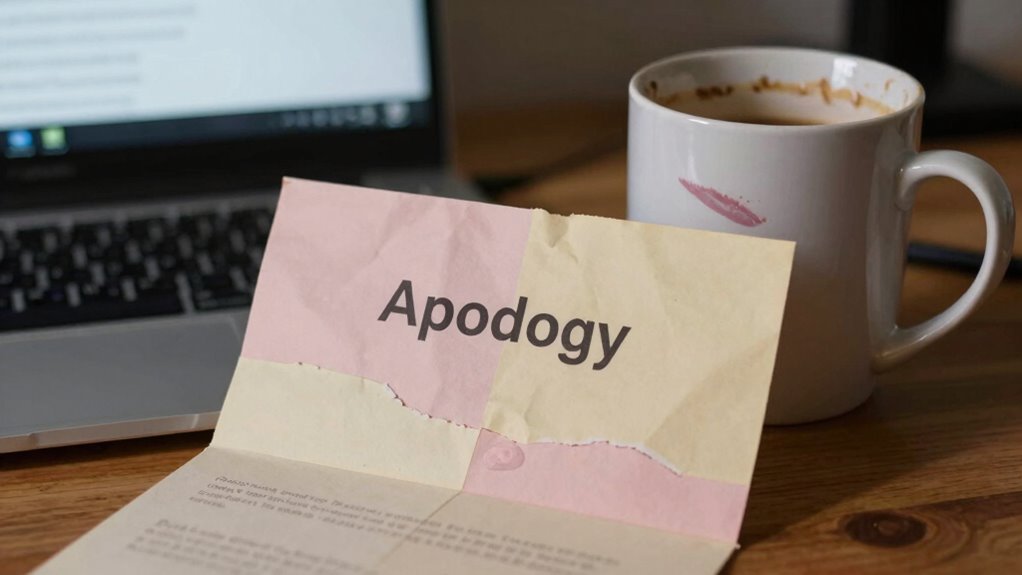
A passive-aggressive apology seldom solves anything because it masks true feelings and avoids taking responsibility. Instead of addressing the core issue, phrases like “Sorry if you took it that way” shift blame and create confusion. This type of apology can make conflicts worse and erode trust over time. To truly resolve issues, honest dialogue and accountability are essential. If you want to understand how to move beyond these patterns, keep exploring these dynamics.

Get self-care and calm essentials delivered free — and shop member deals
- Fast, free delivery on millions of items
- Access to Prime Big Deal Days deals on October 6–7
- Prime Video, Amazon Music and more included
Key Takeaways
- Passive-aggressive apologies often shift blame and avoid addressing core issues, preventing genuine resolution.
- They increase confusion and mistrust, making true reconciliation difficult.
- These apologies perpetuate emotional manipulation, escalating conflicts rather than resolving them.
- Recognizing insincere apologies is essential to prevent accepting unresolved issues.
- Genuine resolution requires honest communication, accountability, and boundary-setting to break the cycle.

Have you ever received an apology that felt more like a subtle dig than genuine remorse? It’s a common experience when someone offers a passive-aggressive apology, and it often leaves you more confused than comforted. Instead of truly addressing the issue, this kind of apology becomes a tool for emotional manipulation. The person delivering it might say, “Sorry if you took it that way,” or “Sorry, but I didn’t mean to upset you,” shifting the blame onto you rather than owning their behavior. This approach doesn’t resolve the conflict; it prolongs it by avoiding real accountability. Instead of fostering understanding, passive-aggressive apologies serve as a shield that prevents honest communication.
When you encounter this kind of apology, it often feels like a way to diffuse tension without making any real effort to mend the situation. It can escalate conflict, because instead of de-escalating, it fuels frustration. You might feel dismissed or invalidated, sensing that the other person isn’t genuinely sorry but is just trying to get the situation over with. This subtle form of emotional manipulation keeps you on the defensive, questioning whether they truly care or if they’re just trying to save face. It’s frustrating because it stalls any meaningful dialogue, leaving you stuck in a cycle where issues aren’t fully addressed, and the pattern of passive-aggressive behavior continues. Recognizing emotional manipulation is crucial for breaking this cycle and fostering healthier communication. A healthy conflict resolution depends on honest exchanges and accountability, which passive-aggressive apologies undermine.
This kind of apology rarely leads to resolution. Instead, it perpetuates conflict escalation, as small misunderstandings grow into larger rifts. If the person refuses to accept responsibility or use sincere language, the wounds don’t heal; they deepen. You might find yourself questioning whether the apology was genuine or just an attempt to silence you temporarily. Over time, passive-aggressive apologies can erode trust, making future conversations more guarded and tense. The cycle of emotional manipulation becomes ingrained, and genuine reconciliation feels further out of reach. Recognizing conflict escalation and the importance of accountability can help in addressing underlying issues more effectively. Developing skills like effective communication and setting boundaries are essential in breaking this destructive pattern. The key is recognizing this pattern and refusing to accept it as enough. When an apology feels insincere or veiled in passive-aggression, it’s a signal that true repair isn’t happening. Instead of engaging in conflict escalation, you can choose to set boundaries and demand honesty. A genuine apology requires accountability, not subtle digs or deflective language. Only then can you move toward real resolution, instead of being caught in the trap of passive-aggressive exchanges that solve nothing and deepen wounds.
assertive communication training book
As an affiliate, we earn on qualifying purchases.
As an affiliate, we earn on qualifying purchases.
Frequently Asked Questions
How Can I Tell if My Apology Is Passive-Aggressive?
You can tell if your apology is passive-aggressive by paying attention to your non-verbal cues and emotional tone. If your words sound sincere but your body language, like avoiding eye contact or fidgeting, suggests discomfort, it might be passive-aggressive. Also, notice if your tone feels sarcastic or dismissive. Being honest about your feelings and aligning your words with genuine emotion helps guarantee your apology comes across as sincere, not passive-aggressive.
What Are the Long-Term Effects of Passive-Aggressive Apologies?
Passive-aggressive apologies are like cracks in a fragile mirror—they distort trust over time. You might think they smooth things over, but they often lead to emotional manipulation and conflict escalation. Long-term, they build resentment and weaken bonds, making your relationships brittle. Instead of healing, these apologies chip away at connection, leaving a trail of unresolved tension. Ultimately, they create a cycle where genuine trust struggles to take root.
Can Passive-Aggressive Apologies Be Effective in Any Situation?
Passive-aggressive apologies rarely work, even when nonverbal cues suggest sincerity. They often create confusion rather than resolve issues, making the other person doubt your true intentions. If you want your apology to be effective, focus on genuine remorse and clear communication. When your nonverbal cues align with your words, it demonstrates sincerity, increasing the chances that your apology will be accepted and lead to real resolution.
How Do Cultural Differences Influence Passive-Aggressive Behavior?
Cultural nuances and communication styles shape passive-aggressive behavior more than you might think. In some cultures, indirectness is a sign of politeness, so passive-aggressive tactics sneak into everyday exchanges. You might find yourself unwittingly caught in a web of subtle jabs, believing you’re being polite, while others interpret your actions as hostility. Recognizing these cultural differences helps you decode intentions, avoiding misunderstandings veiled in diplomatic silence.
What Are Healthier Alternatives to Passive-Aggressive Apologies?
You can choose healthier alternatives by being genuine and direct in your apologies. Use clear verbal communication and non-verbal cues like maintaining eye contact and a sincere tone to show your remorse. Pay attention to apology timing—apologize promptly when appropriate, rather than delaying or avoiding it. This honesty fosters trust and understanding, helping resolve conflicts more effectively than passive-aggressive behaviors.
Conclusion
So, steer clear of silent snipes and sarcastic sorries. Instead, sincerely say what you mean and mend what went wrong. A genuine gesture garners growth, not grief, and fosters trust rather than tension. Remember, a true apology isn’t a passive play but a powerful path to peace. Practice patience, promote honesty, and pave the way for healthier harmony. Don’t plunge into denial—dare to deliver direct, decisive, and genuine deeds.
Halloween Picks
halloween
As an affiliate, we earn on qualifying purchases.