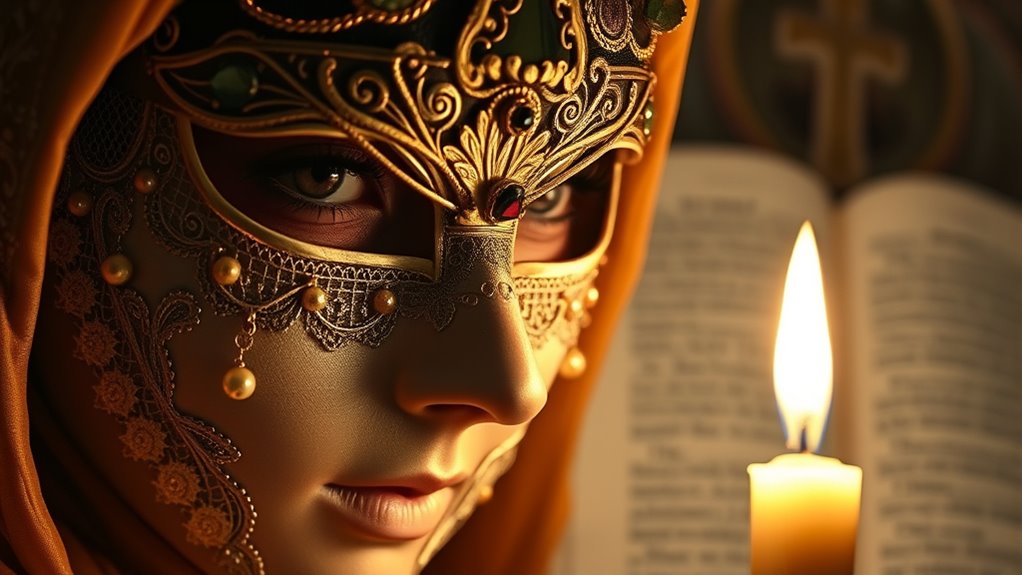

In covert narcissism, individuals often hide their true motives and insecurities behind a facade of religion and spirituality. They use these practices to project moral superiority, impress others, and manipulate those around them. Their outward display of piety masks a fragile ego craving admiration and control. They may judge others harshly and distort spiritual teachings to justify their behavior. Recognizing these signs helps you see through their masks—continue exploring to understand more about these subtle tactics.
Key Takeaways
- Covert narcissists use religious practices to conceal insecurities and project moral superiority.
- They manipulate others through self-righteousness, claiming spiritual authority to maintain control.
- Their words emphasize humility, but actions often show entitlement and self-centered motives.
- Recognizing superficial spiritual displays helps identify underlying narcissistic manipulation.
- Awareness of spiritual masking prevents undue influence and clarifies genuine versus superficial motives.

Many individuals with covert narcissism use religion and spirituality as masks to hide their true motives and insecurities. They often project an image of moral superiority, masking their self-centeredness behind a veneer of piety. This creates a form of self righteousness deception, where they appear morally upright and spiritually enlightened, but their actions reveal a different reality. They may quote scriptures, attend religious gatherings, or speak about their spiritual journey, all to reinforce their sense of spiritual superiority. Yet, beneath this façade, they’re primarily driven by the need for validation and admiration.
Covert narcissists use religion to mask insecurity and seek validation through superficial moral superiority.
This spiritual arrogance isn’t accidental; it’s a calculated tactic to elevate themselves above others. They view their spiritual practices as a way to stand out and be seen as morally superior, often belittling those who don’t share their beliefs or level of devotion. Their spiritual superiority becomes a tool for control, as they manipulate others by invoking religious authority or moral high ground. When challenged, they might dismiss criticism as a lack of faith or spiritual weakness, reinforcing their perceived moral ascendancy. This manipulation fuels their desire to maintain dominance and control in relationships, all under the guise of spiritual growth.
You may notice that their spiritual language often emphasizes humility, but their actions reveal entitlement and self-importance. They might judge others harshly, using their perceived spiritual insight as a weapon rather than a path to genuine growth. Their self righteousness deception keeps them convinced that they are morally and spiritually superior, which makes it difficult for others to see beyond their carefully crafted image. They may also twist religious teachings to justify their behavior, convincing themselves and others that their actions are divinely sanctioned. This distortion helps them maintain their spiritual facade, even when their true motives are self-serving.
Additionally, their reliance on self-righteousness deception can lead them to dismiss constructive criticism, further entrenching their distorted worldview. You should be cautious around these individuals because their spiritual veneer can be highly convincing. They use religion and spirituality not as tools for authentic connection or personal growth but as shields to hide insecurity and manipulation. Recognizing the signs of self righteousness deception and spiritual superiority can help you see through their mask. Remember, their spiritual display often masks a fragile ego craving admiration and control. When you’re aware of this, you’ll be better equipped to protect yourself from their influence and maintain clarity about their true intentions behind their religious or spiritual claims.
Frequently Asked Questions
How Can I Recognize Religious Masking in Covert Narcissists?
You can recognize religious masking in covert narcissists by observing how they use faith manipulation to control others. They often display a spiritual facade to appear righteous, but their actions reveal a need for admiration and power. Pay attention to inconsistent behavior, guilt-tripping, or when their spiritual language is used to justify selfish motives. If their spirituality feels more like a weapon than genuine devotion, it’s a sign of covert narcissistic masking.
What Are Common Signs of Spiritual Masking in Narcissistic Individuals?
Spiritual masking in narcissistic individuals is like a mask hiding their true face. You’ll notice they often display exaggerated spiritual authenticity, acting humble but seeking admiration. They may use spiritual language to mask their masking tendencies, giving off an aura of enlightenment while secretly craving control or validation. These signs reveal someone who’s more interested in appearances than genuine spiritual growth, making it tricky to see past their polished exterior.
Can Religious Masking Indicate a Hidden Narcissistic Personality?
Yes, religious masking can indicate a hidden narcissistic personality. When someone uses faith manipulation or spiritual deception, they often hide their true motives behind a facade of piety. If you notice someone exploiting spiritual beliefs to control or manipulate others, it’s a sign they might be masking narcissistic tendencies. Stay alert to their actions, as genuine faith shouldn’t involve deceit or exploitation for personal gain.
How Does Religious Masking Affect Victim Recovery Processes?
Religious masking can hinder your recovery by making it harder to recognize spiritual abuse and faith manipulation. When someone uses spiritual authority to manipulate, you might doubt your feelings or question your worth. This can delay healing, as you struggle to trust yourself. To recover, you need to identify these tactics, seek support outside the abusive environment, and rebuild your confidence beyond the false spiritual framework.
Are Certain Religions More Prone to Masking Behaviors?
Certain religions can be more prone to masking behaviors because they often involve faith manipulation and doctrinal confusion. You might find that some faith communities emphasize obedience and conformity, making it easier for covert narcissists to hide their true intentions. This environment fosters spiritual masking, which can trap you in confusion and emotional abuse. Recognizing these patterns helps you break free and seek healthier, clearer spiritual guidance.
Conclusion
Just as a lighthouse cloaked in fog can seem guiding but hides a treacherous shore, religious and spiritual masks can conceal a hidden ego. Behind the sacred light, covert narcissists navigate with subtle manipulations, cloaking themselves in virtue to hide their true intentions. Recognizing these masks is like piercing the fog—revealing the true landscape beneath. Stay vigilant, for beneath the sacred exterior, the true nature may quietly lurk, waiting to surface.