


Use this guide to choose a self-help book about narcissism, judge whether it fits your situation, and turn its ideas into a practical reading plan. It is for readers who are exploring their own behavior, trying to understand someone else’s behavior, or deciding how to handle a difficult relationship. No clinical training is needed. Plan about 1-2 hours to compare books and set up your approach, then several weeks to read and try the exercises.

Give the gift of listening to someone who needs a break
- Choose a 1-, 3-, 6- or 12-month membership
- They pick the audiobooks they love
- Easy to send by email

Stop Being a Narcissist: Easy Strategies to Break Negative Patterns in Relationships
- ✔ Format: Book
- ✔ Program length: 12 weeks
- ✔ Primary focus: Changing negative relationship patterns
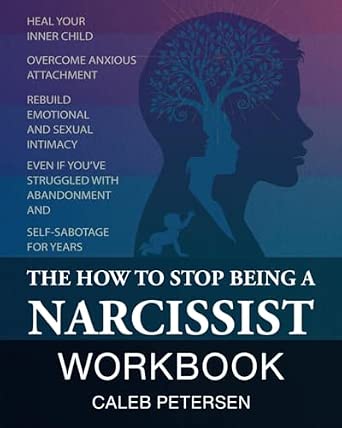
The How to Stop Being a Narcissist Workbook: Heal Your Inner Child, Overcome Anxious Attachment, and Rebuild Emotional and Sexual…
- ✔ Format: Workbook
- ✔ Primary themes: Inner-child healing and anxious attachment
- ✔ Relationship focus: Emotional and sexual intimacy

Enough! I Refuse to Be a Narcissist Anymore: How to Stop Being a Narcissist
- ✔ Format: Not specified
- ✔ Primary focus: Stopping narcissistic behaviors
- ✔ Program length: Not specified
Difficulty: Beginner | Time: 1-2 hours to choose a book and make a reading plan; several weeks to apply its exercises
What You’ll Need
Tools & Materials:
- A library card, bookstore, or access to book previews
- A notes app or notebook
- A few quiet reading sessions
Knowledge:
- A basic understanding of the situation or question you want the book to address
- Willingness to separate a clinical diagnosis from everyday descriptions of self-centered behavior
Books can offer education and reflection, but they cannot diagnose narcissistic personality disorder or replace mental health care. If you are reading about another person, you cannot confirm a diagnosis from a book or a list of traits. Focus on specific behavior and its effects on you.
Stop Being a Narcissist: Easy Strategies to Break Negative Patterns in Relationships
Among these three options, Stop Being a Narcissist gives readers the clearest outline of what they are choosing: a 12-week approach focused on relationship patterns, social skills, self-worth, and habit change. That makes it the strongest fit for someone who wants a defined period of work rather than a workbook whose exercises are not described or a general title with almost no supporting details. Its emphasis on behavior in relationships also connects the subject to day-to-day interactions instead of leaving the goal abstract.The structure is useful as a planning signal, but it does not tell us how the weeks are organized, what methods the book uses, or how much practice it requires. The available description also says little about the book’s format and contents beyond the broad themes and program length. Compared with the intimacy-centered workbook, this pick appears broader in scope and more explicitly time-bound; compared with Enough!, it offers substantially more information for a buyer to evaluate. We recommend it as the most legible starting point, while keeping expectations grounded in the limited details supplied.
Pros:
- States a 12-week program length.
- Targets relationship patterns and behavior change.
- Includes social skills and self-worth among its themes.
- Provides more information to compare than the other general-title option.
Cons:
- The available information does not explain the week-by-week structure.
- Format and detailed contents are not specified.
- The description does not establish clinical credentials or evidence base.
Best for: Readers who want a defined 12-week framework focused on relationship habits, social skills, and self-worth.
Not ideal for: Readers who need a detailed preview of chapter contents, exercises, or the specific method before choosing.
Bottom line: For readers who value a clearly stated timeframe and relationship focus, this is the most assessable choice in the lineup, though its methods remain unclear.
“For readers who value a clearly stated timeframe and relationship focus, this is the most assessable choice in the lineup, though its methods remain unclear.”
The How to Stop Being a Narcissist Workbook: Heal Your Inner Child, Overcome Anxious Attachment, and Rebuild Emotional and Sexual…
This workbook takes a more focused emotional route than Stop Being a Narcissist. Its title points to inner-child healing and anxious attachment, then connects those themes with rebuilding emotional and sexual intimacy. That makes it the most specifically framed option for readers who see their concerns through closeness, attachment, or self-sabotaging patterns. The workbook format also suggests a more participatory reading experience than a conventional book, although the supplied details do not describe its actual prompts or activities.That specificity is also a limitation: the title does not tell us whether it covers the wider range of relationship behaviors named in the first book, or how it approaches its emotional themes. The product title is truncated in the supplied data, and there is no further description or specifications to clarify its scope. Compared with the 12-week book, we have less evidence about pacing and structure; compared with Enough!, however, the stated themes offer a clearer sense of the intended reader. This is a plausible choice when intimacy and attachment are the reason you are shopping, provided you are comfortable choosing with significant gaps in the product information.
Pros:
- Identifies itself as a workbook.
- Names inner-child healing and anxious attachment as themes.
- Specifically addresses emotional and sexual intimacy.
- Offers a distinct focus from the relationship-habit emphasis of the top-ranked book.
Cons:
- The supplied title is truncated, leaving its full scope unclear.
- No product description or specifications were provided.
- The available information does not describe exercises, pacing, or methods.
Best for: Readers who want a workbook and are specifically interested in reflecting on attachment, inner-child themes, and intimacy.
Not ideal for: Readers seeking a clearly documented schedule, a full contents preview, or a broad behavior-change plan.
Bottom line: Choose this workbook when attachment and intimacy are your main concerns, but account for the limited information about its actual contents.
“Choose this workbook when attachment and intimacy are your main concerns, but account for the limited information about its actual contents.”
Enough! I Refuse to Be a Narcissist Anymore: How to Stop Being a Narcissist
Enough! I Refuse to Be a Narcissist Anymore is the most direct declaration in this group: its title addresses readers who want to stop narcissistic behaviors. Beyond that statement, though, the supplied product information offers no description, format, or specifications. We can identify its broad intention, but not whether it uses reflection, practical exercises, a structured program, or another approach.That puts it behind the 12-week book, whose relationship and habit-change themes are more clearly laid out, and behind the workbook, whose attachment and intimacy focus helps readers decide whether its subject matter fits. The limited details do not prove that Enough! is less useful; they do mean buyers have less to compare before choosing. It may suit a reader who is drawn to its straightforward framing and is willing to check a fuller listing before deciding. For someone who wants a known structure or a specific topic emphasis, the other two choices are easier to assess.
Pros:
- States its self-help focus directly in the title.
- Addresses readers seeking to stop narcissistic behaviors.
- Provides a broad alternative to the two more specifically framed approaches.
Cons:
- No product description was provided.
- Format, structure, and contents are unspecified.
- The available information does not support a more targeted recommendation.
Best for: Readers drawn to a plainly worded self-help title who are willing to review the full listing before buying.
Not ideal for: Readers who want a stated program, workbook format, subject breakdown, or other concrete details to compare.
Bottom line: Its direct title may catch the eye, but readers who need to understand the approach have stronger evidence to work with in the other two picks.
“Its direct title may catch the eye, but readers who need to understand the approach have stronger evidence to work with in the other two picks.”
As an Amazon Associate we earn from qualifying purchases.
Before You Start
Write down what you want help with before choosing a title. Your goal might be to notice and change your own patterns, understand narcissistic traits, set boundaries with a family member or partner, or recover from a harmful relationship. These goals call for different books. If you are in immediate danger or fear that setting a boundary could trigger violence, prioritize a safety plan and professional or local support over reading exercises.
Step-by-Step Instructions
Step 1: Define your reading goal
Write one sentence describing the problem you want the book to help with. Keep it focused on an outcome you can act on, such as “I want to respond less defensively when criticized” or “I want to set limits on unwanted calls.” If you are reading about someone else, describe what they do and how it affects you instead of assigning them a diagnosis.
Tip:A specific goal makes it easier to tell whether a book is useful. “Understand narcissism” is broad; “decide what boundary to set when conversations become insulting” gives you a practical direction.
Check: You have one clear sentence that describes the help you need.
Step 2: Choose a book that fits your goal
Review the title, description, contents, author information, and a sample chapter before committing. Choose a book that directly addresses your goal and explains the limits of self-help. For personal behavior change, look for reflection prompts and concrete exercises. For relationship concerns, look for guidance on communication, boundaries, and support. Prefer authors with relevant clinical or research expertise, and check whether their claims are presented carefully rather than as a way to diagnose people from afar.
Tip:Use a library copy or preview if possible. A dramatic title or a long list of traits does not show that a book is accurate or suitable for you.
Check: You can explain how the book connects to your goal and identify the kind of practical guidance it offers.
Step 3: Check the book’s limits and tone
Read the introduction and a chapter that covers the topic you care about. Check whether the author distinguishes traits from a clinical disorder, avoids claiming that every difficult person has the same motive, and acknowledges that relationships and mental health concerns differ. Notice whether the book encourages appropriate professional support when a problem is persistent, severe, or unsafe.
Tip:Be cautious if a book promises a quick cure, presents a checklist as a diagnosis, or tells you to make major relationship decisions based only on its pages.
Check: The advice feels specific and measured, and the author makes clear what the book cannot determine.
Step 4: Set a manageable reading plan
Choose two or three reading sessions each week, with enough time to read a section and pause. Start with the introduction, contents, and chapters tied to your goal. You do not have to read every chapter in order if the book is organized by topic, but do not skip cautions or exercises linked to the advice you plan to use.
Tip:Start with a short trial: read one chapter or section, then decide whether the language and approach help you think clearly. You can switch books if the fit is poor.
Check: Your plan includes specific reading times and a realistic amount to cover in each session.
Step 5: Take notes on actions, not labels
After each session, note one useful idea, one question, and one action to try. If the book discusses behavior by another person, record what happened, when it happened, and how you responded. If you are examining your own behavior, note the situation, your reaction, and a response you would like to practice next time. Avoid treating a label in the book as proof of a diagnosis.
Tip:Keep private notes if someone else may react badly to seeing them. Use a secure device or paper stored safely when privacy is a concern.
Check: Your notes connect the reading to a specific situation or behavior rather than just collecting labels.
Step 6: Try one low-risk exercise
Select one exercise that fits your goal and practice it in a situation that feels manageable. For example, pause before responding to criticism, use a short boundary statement, or prepare a calm way to end a circular conversation. Change one thing at a time so you can observe what happens. Do not use an exercise that could put you at risk or pressure another person to accept a diagnosis.
Tip:Write down the exact words you plan to use in advance. A simple statement such as “I’m willing to talk when we can speak without insults” is easier to remember under stress.
Check: You tried one specific action and recorded what happened, including whether it felt safe and useful.
Step 7: Review progress and decide what support you need
After a few weeks, compare your notes with the goal you set. Ask whether you understand the issue better, have a response you can use, or need a different kind of help. If the exercises increase distress, fail to address persistent problems, or raise questions about your own mental health, discuss them with a licensed mental health professional. Bring the book or notes if they help explain your concerns.
Tip:You do not have to finish a book that is upsetting, shaming, or poorly matched to your needs. Pause and seek qualified support if reading it makes it harder to function or feel safe.
Check: You have decided whether to continue, choose a better-matched resource, or seek support beyond self-help.
Common Mistakes to Avoid
- Using a book’s trait list to diagnose yourself or another person. — Treat traits as prompts for reflection, not a diagnosis. A qualified clinician evaluates a disorder in context.
- Choosing a book because its title promises a fast fix. — Check the author’s qualifications, sample pages, scope, and whether the advice offers realistic steps and states its limits.
- Trying too many strategies at once. — Practice one low-risk action at a time and record what changes.
- Using boundary advice without considering safety. — If a person may retaliate or become violent, seek safety support before confronting them or changing contact.
Troubleshooting
Problem: The book makes you feel blamed or ashamed.
Solution: Pause reading and check whether the author distinguishes accountability from shame. Consider a different resource or discuss your reaction with a mental health professional.
Problem: The book seems to describe someone you know exactly.
Solution: Do not treat the resemblance as proof of a disorder. Focus on the person’s concrete actions, their impact, and the choices available to you.
Problem: You cannot put the advice into practice during conflict.
Solution: Rehearse one short response while calm, write it where you can access it, and try it first in a lower-pressure situation. If the situation feels unsafe, prioritize support and safety.
Problem: You finish the book but still feel stuck.
Solution: Review your goal and notes, then consider whether a licensed therapist, support group, or a more focused book would better address the problem.
What Success Looks Like
You have selected a book that matches a specific goal, understand that it cannot diagnose anyone, and have a realistic reading plan. You have tried or scheduled one practical exercise and know how you will judge its effect. If the book does not fit, increases distress, or leaves persistent concerns unresolved, you have identified a next source of qualified support.
Next Steps
Keep using the exercises that are safe, practical, and helpful, and review your notes every few weeks. If your goal involves changing your own behavior, consider working with a licensed mental health professional for tailored guidance. If your goal involves another person, keep attention on observable behavior, boundaries, and your wellbeing. Replace the book if its claims feel extreme or its advice does not fit your circumstances.
Frequently Asked Questions
Can a self-help book tell me whether I have narcissistic personality disorder?
No. A book can help you reflect on behavior and learn about diagnostic concepts, but it cannot assess your history, circumstances, or mental health. Ask a licensed clinician for an evaluation if you are concerned.
Can I use a book to diagnose my partner or family member?
No. Descriptions in a book cannot confirm another person’s diagnosis. Use the material to understand patterns and decide what boundaries or support you need based on what the person actually does.
What should I do if a book’s advice does not feel safe?
Do not test advice that could lead to retaliation or harm. Speak with a trusted professional or local support service and plan around your safety before changing contact or confronting someone.
Should I read the whole book before trying an exercise?
Read the relevant chapter and any related cautions first. Start with one low-risk exercise, then review how it went before trying another.