The best therapy workbook for men overall is Man Therapy: Therapy the Way a Man Does It, which leads with a men-focused voice rather than a single clinical method. For a more structured start, the 28-Day CBT Workbook for Adults offers a defined practice schedule, while The Mental Health Mixtape for Black Men centers a more culturally specific perspective. The main tradeoff is between a workbook tailored to men’s experiences and one organized around a particular therapy approach, such as CBT, DBT, or ACT. Some books offer guided daily steps; others provide broader skills or reflective prompts that require more self-direction. Read on for the full breakdown and guidance on matching a workbook to your needs.

Turn your wind-down time into listening time
- Thousands of audiobooks, podcasts and originals
- Listen on your phone, tablet or Echo — also offline
- Cancel anytime
Key Takeaways
- Men-focused framing sets the lead pick apart: Man Therapy speaks directly to men, while most of the other titles are defined more by a therapy method or a specific concern.
- Structure varies widely: The 28-day and seven-week CBT books give readers a clearer practice timeline than broad skills manuals and open-ended journals.
- More techniques can mean more choice, not more guidance: The CBT, DBT, and ACT combination workbooks cover several approaches, but readers may need help deciding which exercises fit their situation.
- Focused needs call for focused workbooks: The anger-management title targets a specific challenge, while RO DBT addresses overcontrol rather than serving as a general-purpose skills guide.
- Audience fit is more than a gender label: The Black men-focused workbook offers a distinct cultural lens, while general men’s journals and emotional toolkits take broader approaches.
| Man Therapy: Therapy the Way a Man Does It |  | Best for a Men-Focused Starting Point | Title: Man Therapy: Therapy the Way a Man Does It | Audience: Men, as indicated by the title | Format: Not provided | VIEW LATEST PRICE | See Our Full Breakdown |
| The Men’s Emotional Toolkit: A No-BS Guide to Anxiety, Burnout, and Building Real Mental Strength for Modern Men |  | Best for Anxiety and Burnout | Series: The Men’s Toolkit Series | Audience: Modern men | Format: Not specified | VIEW LATEST PRICE | See Our Full Breakdown |
| Mental Health Journal for Men: Creative Prompts, Practices, and Exercises to Bolster Wellness |  | Best for Reflective Journaling | Title: Mental Health Journal for Men: Creative Prompts, Practices, and Exercises to Bolster Wellness | Audience: Men | Format: Journal | VIEW LATEST PRICE | See Our Full Breakdown |
| Cognitive Behavioral Therapy Workbook for Men |  | Best for Practical Anxiety Skills | Format: Workbook | Intended audience: Men | Therapy approach: Cognitive behavioral therapy (CBT) | VIEW LATEST PRICE | See Our Full Breakdown |
| CBT, DBT & ACT: The Complete 3-in-1 Workbook |  | Best for Exploring Multiple Therapy Approaches | Format: Workbook | Program length: 12 weeks | Therapy approach 1: Cognitive behavioral therapy (CBT) | VIEW LATEST PRICE | See Our Full Breakdown |
| 28-Day CBT Workbook for Adults: A Practical Guide to Cognitive Behavioral Therapy |  | Best for Short Daily Sessions | Format: Workbook | Program duration: 28 days | Intended audience: Adults | VIEW LATEST PRICE | See Our Full Breakdown |
| ACT, CBT & DBT Workbook: A Guide to Overcoming Anxiety and Depression |  | Best for Multiple Therapy Approaches | Format: Workbook | Therapy approach: Acceptance and Commitment Therapy (ACT) | Therapy approach: Cognitive Behavioral Therapy (CBT) | VIEW LATEST PRICE | See Our Full Breakdown |
| Retrain Your Brain: Cognitive Behavioral Therapy in 7 Weeks: A Workbook for Managing Depression and Anxiety |  | Best for a Longer CBT Plan | Format: Workbook | Approach: Cognitive behavioral therapy (CBT) | Program duration: 7 weeks | VIEW LATEST PRICE | See Our Full Breakdown |
| Anger Management Workbook for Men: Take Control of Your Anger and Master Your Emotions |  | Best for Men Focused on Anger | Format: Workbook | Audience: Men | Topic: Anger management | VIEW LATEST PRICE | See Our Full Breakdown |
| The Dialectical Behavior Therapy Skills Workbook: Practical DBT Exercises for Mindfulness, Interpersonal Effectiveness, Emotion Regulation, and Distress Tolerance |  | Best for Practical DBT Skills | Format: Workbook | Approach: Dialectical Behavior Therapy (DBT) | Exercise type: Practical DBT exercises | VIEW LATEST PRICE | See Our Full Breakdown |
| Mental Health Workbook for Men: Exercises to Improve Your Emotional, Psychological, and Social Well-Being |  | Best Men-Focused Starting Point | Format: Workbook | Intended audience: Men | Primary focus: Mental health | VIEW LATEST PRICE | See Our Full Breakdown |
| The Mental Health Mixtape for Black Men: A Holistic Workbook and Journal |  | Best for Black Men’s Reflection | Format: Holistic workbook and journal | Intended audience: Black men | Focus: Mental wellness | VIEW LATEST PRICE | See Our Full Breakdown |
| The Radically Open Dialectical Behavior Therapy Workbook: Skills to Overcome Perfectionism, Anxiety, Depression, and Other Disorders of Overcontrol |  | Best for Overcontrol and Perfectionism | Format: Workbook | Therapy approach: Radically open dialectical behavior therapy | Primary topic: Overcontrol | VIEW LATEST PRICE | See Our Full Breakdown |
| The Complete DBT Skills Manual: 3 Books in 1 | 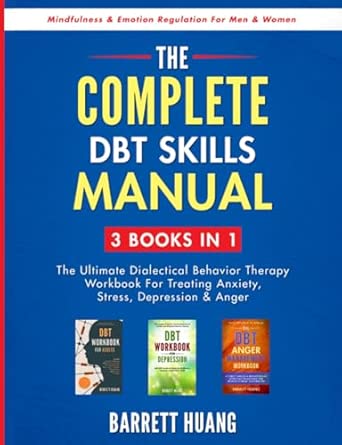 | Best Broad DBT Skills Manual | Format: Workbook | Therapy approach: Dialectical behavior therapy (DBT) | Structure: 3 books in 1 | VIEW LATEST PRICE | See Our Full Breakdown |
| therapy workbooks for men | Format | Therapy approach | Focus area |
|---|---|---|---|
| Man Therapy: Therapy the Way a | Not provided | Not specified | — |
| The Men’s Emotional Toolkit: A | Not specified | Not specified | — |
| Mental Health Journal for Men: | Journal | Not specified | — |
| Cognitive Behavioral Therapy W | Workbook | Cognitive behavioral therapy (CBT) | — |
| CBT | Workbook | — | — |
| 28-Day CBT Workbook for Adults | Workbook | — | Anxiety |
| ACT | Workbook | Acceptance and Commitment Therapy (ACT) | Anxiety |
| Retrain Your Brain: Cognitive | Workbook | — | Managing depression |
| Anger Management Workbook for | Workbook | — | — |
| The Dialectical Behavior Thera | Workbook | — | — |
| Mental Health Workbook for Men | Workbook | — | — |
| The Mental Health Mixtape for | Holistic workbook and journal | — | — |
| The Radically Open Dialectical | Workbook | Radically open dialectical behavior therapy | — |
| The Complete DBT Skills Manual | Workbook | Dialectical behavior therapy (DBT) | — |
More Details on Our Top Picks
Man Therapy: Therapy the Way a Man Does It
Man Therapy: Therapy the Way a Man Does It is the most directly men-oriented title in this group, which may appeal to readers who want a resource framed specifically around men rather than a general therapy method. The limitation is that no description or workbook details are available here, so I can’t verify its exercises, topics, or structure. That makes it harder to compare its practical depth with Cognitive Behavioral Therapy Workbook for Men, which explicitly targets anxiety and negative thought patterns. It also offers less visible guidance than The Men’s Emotional Toolkit, whose title names anxiety and burnout. I’d treat this as a possible fit for readers drawn to its direct framing, but not as a proven skills-based program without more information.
Pros:- Title explicitly frames the material around therapy for men
- May feel more directly addressed to men than general-audience workbooks
- Could suit readers looking for a men-centered entry point
Cons:- No description or content details are available to verify its methods or exercises
- The title alone does not identify specific mental health topics or a program structure
Best for: Men who are specifically seeking a therapy resource with a men-centered framing and are willing to check the book’s contents before choosing
Not ideal for: Readers who need confirmed exercises, a named therapy approach, or a clearly stated focus on a specific concern
- Title:Man Therapy: Therapy the Way a Man Does It
- Audience:Men, as indicated by the title
- Format:Not provided
- Therapy approach:Not specified
- Topics:Not specified
- Program length:Not provided
Our verdict“Choose this only if its men-focused framing appeals to you and you can verify the contents before buying.”
The Men’s Emotional Toolkit: A No-BS Guide to Anxiety, Burnout, and Building Real Mental Strength for Modern Men
The Men’s Emotional Toolkit earns its place by naming two common concerns—anxiety and burnout—and pitching emotional well-being in language aimed at modern men. That clear focus makes it easier to match to a reader’s needs than Man Therapy: Therapy the Way a Man Does It, whose available details don’t specify its subject matter. But the listing gives no exercises, therapy model, or format, so I can’t tell whether this is a hands-on workbook or a more general guide. Readers who want an identified method may prefer Cognitive Behavioral Therapy Workbook for Men, which specifically describes work on anxiety and negative thought patterns. This is a promising topic-led option, though its practical depth remains uncertain from the supplied information.
Pros:- Names anxiety and burnout as central concerns
- Aims to support emotional well-being and mental strength
- Written with modern men as its intended audience
Cons:- Specific exercises and chapter contents are not provided
- Format and therapeutic approach are unspecified
Best for: Men looking for a resource explicitly focused on anxiety, burnout, and emotional well-being in modern life
Not ideal for: Readers who want a confirmed workbook format, named therapy approach, or detailed exercise plan
- Series:The Men’s Toolkit Series
- Audience:Modern men
- Format:Not specified
- Primary focus:Anxiety and burnout
- Additional focus:Emotional well-being and mental strength
- Therapy approach:Not specified
Our verdict“Pick this if anxiety and burnout are your main concerns, but choose a more clearly specified workbook if you need structured exercises.”
Mental Health Journal for Men: Creative Prompts, Practices, and Exercises to Bolster Wellness
Mental Health Journal for Men takes a more open-ended route than Cognitive Behavioral Therapy Workbook for Men: its described mix of creative prompts, practices, and exercises supports personal reflection without claiming a specific therapy method. That can suit someone who wants regular writing and wellness activities rather than a defined anxiety-management sequence. Compared with The Men’s Emotional Toolkit, it gives a clearer indication of how readers may engage—through prompts and exercises—but it does not name a particular concern such as burnout or anxiety. The tradeoff is less visible structure around a targeted outcome. I’d choose it for a flexible journaling habit, not as a substitute for a workbook whose stated purpose is to address a specific symptom or teach a named approach.
Pros:- Includes creative prompts for personal reflection
- Combines prompts with practices and exercises
- Frames the material around mental health and personal wellness
Cons:- No specific therapy approach is identified
- The supplied description does not specify a program length or targeted symptom focus
Best for: Men who want creative prompts and practical exercises to support a personal wellness journaling routine
Not ideal for: Readers seeking a structured CBT plan, a defined program length, or targeted guidance for a specific condition
- Title:Mental Health Journal for Men: Creative Prompts, Practices, and Exercises to Bolster Wellness
- Audience:Men
- Format:Journal
- Activities:Creative prompts, practices, and exercises
- Focus:Personal wellness
- Therapy approach:Not specified
Our verdict“Choose this for a flexible, men-focused journaling practice rather than a method-specific treatment workbook.”
Cognitive Behavioral Therapy Workbook for Men
Cognitive Behavioral Therapy Workbook for Men is the clearest fit for readers who want a defined method and a focused problem area: it names CBT, anxiety management, and negative thought patterns. That gives it a more concrete skills-based role than Mental Health Journal for Men, which emphasizes creative reflection and general wellness. It is also more specific than The Men’s Emotional Toolkit, whose listed details don’t identify a therapy model or exercises. The tradeoff is its narrow scope: the supplied description centers on anxiety and thought patterns, not a broad range of emotional concerns. Its men-specific audience may feel well targeted to some readers, while others may prefer a general CBT workbook. No chapter plan or program length is provided, so the degree of structure remains unclear.
Pros:- Clearly identifies CBT as its approach
- Targets anxiety management and negative thought patterns
- Uses a practical workbook format
- Written specifically for men
Cons:- Its described focus is narrower than a multi-topic wellness journal
- No program length or detailed exercise sequence is provided
Best for: Men who want a practical CBT-oriented workbook focused on anxiety and changing unhelpful thought patterns
Not ideal for: Readers seeking a broad wellness journal, multiple therapy modalities, or confirmed details about a step-by-step schedule
- Format:Workbook
- Intended audience:Men
- Therapy approach:Cognitive behavioral therapy (CBT)
- Primary focus:Anxiety management
- Additional focus:Negative thought patterns
- Stated aim:Build mental strength and regain a sense of control
Our verdict“Choose this for a men-focused, CBT-based approach to anxiety and unhelpful thought patterns, provided its scope matches your needs.”
CBT, DBT & ACT: The Complete 3-in-1 Workbook
CBT, DBT & ACT: The Complete 3-in-1 Workbook stands apart by bringing three approaches together in a 12-week program. That breadth may help readers who want to explore different tools for anxiety, depression, and confidence-building, rather than follow the single-method focus of Cognitive Behavioral Therapy Workbook for Men. It is not described as men-specific, though, so it offers less direct audience framing than the other men-focused titles here. The three-method format also asks readers to work across a broader set of concepts; someone who wants a straightforward journaling routine may find Mental Health Journal for Men a more natural fit. I’d favor this for structured variety, while recognizing that the supplied details don’t explain how the weeks are divided or how much space each method receives.
Pros:- Introduces three distinct approaches: CBT, DBT, and ACT
- Organized as a 12-week program
- Addresses anxiety and depression
- Includes confidence-building among its stated aims
Cons:- Not identified as specifically written for men
- The supplied details do not explain the weekly structure or depth of each approach
Best for: Readers who want a time-bounded workbook introducing CBT, DBT, and ACT for anxiety, depression, and confidence
Not ideal for: Men who specifically want a workbook written for a male audience or readers who prefer one therapy method at a time
- Format:Workbook
- Program length:12 weeks
- Therapy approach 1:Cognitive behavioral therapy (CBT)
- Therapy approach 2:Dialectical behavior therapy (DBT)
- Therapy approach 3:Acceptance and commitment therapy (ACT)
- Topics:Anxiety and depression
- Additional aim:Build confidence
Our verdict“Choose this if you want a 12-week introduction to three therapy approaches and are comfortable with a non-men-specific workbook.”
28-Day CBT Workbook for Adults: A Practical Guide to Cognitive Behavioral Therapy
The 28-day structure and 15-minute daily sessions make this a practical starting point for men who want a defined routine without setting aside a large block of time. Its focus on anxiety, depression, and self-esteem is broader than the anger-specific Anger Management Workbook for Men, but it is not tailored specifically to men. Compared with Retrain Your Brain, its four-week schedule offers a shorter commitment, while providing less time for gradual practice. The tradeoff is that progress depends on returning to the exercises regularly, and the workbook format alone may not offer enough support for someone who wants guidance from a therapist or more explanation of each technique. I’d choose it for a manageable daily habit, not as a substitute for individualized care.
Pros:- A defined 28-day schedule gives daily practice a clear endpoint.
- 15-minute sessions are easier to fit into a busy routine than longer workbook sessions.
- Addresses anxiety, depression, and self-esteem in one workbook.
Cons:- Designed for adults generally rather than men specifically.
- The short program may leave readers wanting more time to practice CBT skills.
- Regular participation is needed to get value from the daily format.
Best for: Adults, including men new to CBT, who want brief daily exercises and a month-long structure for working on anxiety, depression, or self-esteem.
Not ideal for: Readers seeking a workbook written specifically for men, in-depth therapist guidance, or a longer program for practicing skills over time.
- Format:Workbook
- Program duration:28 days
- Intended audience:Adults
- Daily session length:15 minutes
- Approach:Cognitive behavioral therapy (CBT)
- Focus area:Anxiety
- Focus area:Depression
- Focus area:Self-esteem
Our verdict“Choose this workbook if you want a brief, month-long CBT routine; choose Retrain Your Brain for a longer practice period.”
ACT, CBT & DBT Workbook: A Guide to Overcoming Anxiety and Depression
For men who want several ways to work with difficult thoughts and feelings, this workbook combines ACT, CBT, and DBT and offers more than 180 exercises. That range gives it a different role from the focused, single-approach 28-Day CBT Workbook for Adults: it may suit readers who want options rather than a short, prescribed daily sequence. Its stated focus includes anxiety, depression, and personal growth, so it reaches beyond symptom management. The tradeoff is that the available details do not explain how the exercises are organized or how to choose among the three approaches. It also is not described as men-specific, and its breadth may feel like too much for someone who would rather follow one clear method, such as the CBT plan in Retrain Your Brain.
Pros:- Combines ACT, CBT, and DBT rather than relying on one approach.
- More than 180 exercises offer a wide range of practice options.
- Addresses anxiety, depression, and personal growth.
Cons:- The available product details do not describe the exercise sequence or how to select exercises.
- The breadth of approaches may be less straightforward than a single-method workbook such as Retrain Your Brain.
- Not identified as a workbook written specifically for men.
Best for: Men comfortable choosing among different self-guided exercises who want ACT, CBT, and DBT tools for anxiety, depression, and personal growth.
Not ideal for: Readers who want a clearly timed beginner program, a men-specific workbook, or instructions that focus on one therapy method at a time.
- Format:Workbook
- Therapy approach:Acceptance and Commitment Therapy (ACT)
- Therapy approach:Cognitive Behavioral Therapy (CBT)
- Therapy approach:Dialectical Behavior Therapy (DBT)
- Number of exercises:More than 180
- Focus area:Anxiety
- Focus area:Depression
- Additional focus:Personal growth
Our verdict“Pick this for variety across three therapy approaches, but choose a single-method workbook if you want a more defined path.”
Retrain Your Brain: Cognitive Behavioral Therapy in 7 Weeks: A Workbook for Managing Depression and Anxiety
Retrain Your Brain is the clearest pick here for men who want to follow one approach over seven weeks rather than sample several therapies. Its CBT focus and structured program give readers more time for practice than the 28-day CBT workbook, while keeping the subject matter centered on depression and anxiety. That makes it a stronger fit for someone who prefers a gradual, single-method routine; the tradeoff is a longer commitment and no stated focus on anger, relationships, or men’s experiences specifically. Unlike the ACT, CBT & DBT Workbook, it does not offer exercises across three therapy approaches. I’d choose this for a steady CBT course, but not for someone who wants a short starter plan or a broader menu of skills.
Pros:- A seven-week program provides a longer practice window than the 28-day CBT workbook.
- Stays focused on CBT rather than mixing several therapy approaches.
- Targets both depression and anxiety with practical exercises.
Cons:- Requires a longer commitment than the 28-day workbook.
- Does not offer the ACT and DBT options included in the ACT, CBT & DBT Workbook.
- Not described as men-specific and does not list anger as a focus.
Best for: Men who want a structured, seven-week CBT workbook focused on practicing skills for depression and anxiety.
Not ideal for: Readers who need a short program, want several therapy approaches in one book, or specifically seek material written for men.
- Format:Workbook
- Approach:Cognitive behavioral therapy (CBT)
- Program duration:7 weeks
- Focus area:Managing depression
- Focus area:Managing anxiety
- Exercise type:Practical CBT exercises
Our verdict“Choose this if you want a gradual, seven-week CBT plan for anxiety and depression rather than a shorter or multi-approach workbook.”
Anger Management Workbook for Men: Take Control of Your Anger and Master Your Emotions
This is the most directly men-specific option in this group, with anger management and emotional self-control at its center. That focus sets it apart from the broader anxiety-and-depression work in Retrain Your Brain and the multiple-approach format of ACT, CBT & DBT Workbook. For a buyer whose main concern is anger, a dedicated workbook may feel more relevant than adapting general CBT exercises to that goal. The limitation is the thin product information: the provided details do not identify its methods, exercise types, or program length. I would not assume it teaches a particular therapy approach or offers a structured course. It makes the most sense when the topic and intended audience are the main priorities, rather than when a buyer needs detailed evidence of the workbook’s contents.
Pros:- Specifically intended for men, unlike the adult-focused CBT options in this group.
- Keeps attention on anger management rather than dividing space among several concerns.
- Workbook format offers a self-guided option for emotional self-control.
Cons:- The available product information does not describe its exercises or contents.
- No therapy approach or program length is specified.
- Its stated topic is narrower than workbooks that also address anxiety and depression.
Best for: Men seeking a workbook specifically centered on anger management and emotional self-control.
Not ideal for: Readers who want a clearly described therapy method, a stated program schedule, or detailed information about the exercises before choosing.
- Format:Workbook
- Audience:Men
- Topic:Anger management
- Topic:Emotional self-control
- Product detail available:Specific exercises and contents are not provided
- ASIN:1623157307
Our verdict“Choose this when a men-focused anger workbook is your priority, but opt for a better-documented title if you need to know the methods first.”
The Dialectical Behavior Therapy Skills Workbook: Practical DBT Exercises for Mindfulness, Interpersonal Effectiveness, Emotion Regulation, and Distress Tolerance
This workbook centers on four DBT skill areas: mindfulness, interpersonal effectiveness, emotion regulation, and distress tolerance. That makes it a skills-focused choice for men who want practice across emotional and relationship situations, rather than the anxiety-and-depression emphasis of Retrain Your Brain. Compared with the ACT, CBT & DBT Workbook, it offers a narrower therapy focus, which may make it a better fit for readers specifically seeking DBT exercises instead of a mix of approaches. The tradeoff is that the supplied product data does not specify a schedule, audience, or amount of material, so buyers cannot tell how the exercises are paced. It also is not identified as men-specific. I’d choose it for its defined DBT skill areas, not for a tailored men’s program.
Pros:- Covers four distinct DBT skill areas, including relationship effectiveness and distress tolerance.
- Practical exercises support active skills practice rather than topic coverage alone.
- A focused DBT alternative to workbooks that combine multiple therapy approaches.
Cons:- The supplied product details do not state a schedule or program length.
- Not described as specifically designed for men.
- Does not include the ACT and CBT approaches offered by the multi-therapy workbook.
Best for: Men looking for practical DBT exercises across emotional regulation, mindfulness, distress tolerance, and interpersonal skills.
Not ideal for: Readers who want a men-specific workbook, a stated course length, or a program combining DBT with CBT and ACT.
- Format:Workbook
- Approach:Dialectical Behavior Therapy (DBT)
- Exercise type:Practical DBT exercises
- Skill area:Mindfulness
- Skill area:Interpersonal effectiveness
- Skill area:Emotion regulation
- Skill area:Distress tolerance
Our verdict“Choose this for practical DBT skills across emotional and interpersonal challenges, but not if you need a men-specific or time-structured program.”
Mental Health Workbook for Men: Exercises to Improve Your Emotional, Psychological, and Social Well-Being
A broad, men-focused entry point is the main reason I’d place this workbook ahead of more specialized options. Its stated scope spans emotional, psychological, and social well-being, with exercises intended to turn those areas into active reflection rather than passive reading. Compared with The Mental Health Mixtape for Black Men, it is presented for men generally, rather than centering a specific community and combining workbook activities with journaling. It is also less clinically specific than The Radically Open Dialectical Behavior Therapy Workbook, which targets overcontrol-related challenges. That breadth may suit readers who want a general starting point, but the description does not identify a therapy method or particular concerns the exercises address. I’d choose it for wide-ranging self-reflection, not as a targeted guide for a defined diagnosis or treatment approach.
Pros:- Designed specifically around men’s mental health
- Addresses emotional, psychological, and social well-being
- Includes exercises for active reflection
- Broad scope can suit readers unsure which area to work on first
Cons:- The product details do not name a therapy approach
- Specific exercises and the depth of coverage are not described
- Its broad focus may be less useful for readers seeking targeted support
Best for: Men looking for exercises across emotional, psychological, and social well-being without starting with a named therapy method.
Not ideal for: Readers seeking a workbook centered on a specific concern such as overcontrol, or a clearly identified therapy framework and structured skills program.
- Format:Workbook
- Intended audience:Men
- Primary focus:Mental health
- Well-being areas:Emotional, psychological, and social
- Content type:Exercises
- ASIN:1638782563
Our verdict“Choose this for a general, exercise-based starting point on men’s mental well-being; choose a specialized workbook for a defined concern or therapy method.”
The Mental Health Mixtape for Black Men: A Holistic Workbook and Journal
Its specific audience and mixed workbook-journal format distinguish this pick from the broader Mental Health Workbook for Men. The description centers mental wellness for Black men and names activities related to depression and anxiety, alongside personal reflection. That combination may appeal to readers who want room to write as well as complete guided activities, rather than a workbook described only as exercises. Compared with The Complete DBT Skills Manual: 3 Books in 1, it is more explicitly tailored to Black men’s wellness, while the DBT manual is presented as a skills resource for men and women across several concerns. The tradeoff is that the available details do not identify a therapy framework, the specific activities, or how the journal and workbook sections are organized. I’d pick it for its audience focus and reflective format, not for a clearly defined clinical program.
Pros:- Specifically designed around mental wellness for Black men
- Combines workbook activities and journaling
- Addresses depression and anxiety
- Makes personal reflection part of the stated approach
Cons:- The provided details do not identify a therapy framework
- Specific activities and their sequence are not described
- The available information does not clarify how much of the book is guided practice versus journaling
Best for: Black men who want a mental wellness resource that combines guided activities with personal journaling around depression, anxiety, and reflection.
Not ideal for: Readers who need a named therapy method, detailed skills sequence, or a workbook whose specific exercises are described in advance.
- Format:Holistic workbook and journal
- Intended audience:Black men
- Focus:Mental wellness
- Topics:Depression and anxiety
- Content:Activities and personal reflection
- ASIN:B0991CGWFM
Our verdict“Choose this if audience-specific framing and space for written reflection matter more to you than a clearly named therapy program.”
The Radically Open Dialectical Behavior Therapy Workbook: Skills to Overcome Perfectionism, Anxiety, Depression, and Other Disorders of Overcontrol
A specific focus on overcontrol gives this workbook a clearer purpose than the general men’s mental-health options in this roundup. It presents radically open dialectical behavior therapy skills for challenges that include perfectionism, anxiety, and depression, making it the more targeted choice compared with Mental Health Workbook for Men. That specificity can help readers who recognize rigid or perfectionistic patterns and want to work with a named therapy approach. It is not described as men-only, however, so its fit here is based on the concerns it addresses rather than a male-specific perspective. Compared with The Complete DBT Skills Manual: 3 Books in 1, this workbook focuses on radically open DBT and overcontrol, while the other takes a broader DBT skills remit across anxiety, stress, depression, and anger. The tradeoff is a narrower topic range and no stated detail about exercise structure.
Pros:- Uses a named therapy approach: radically open dialectical behavior therapy
- Targets overcontrol-related challenges
- Includes perfectionism, anxiety, and depression among its stated concerns
- Offers a more focused alternative to general men’s mental-health workbooks
Cons:- The stated focus is narrower than a broad DBT manual
- The product details do not specify its intended audience by gender
- Specific exercises and the structure of the skills program are not described
Best for: Men who identify with perfectionism or other overcontrol patterns and want workbook skills based on radically open DBT.
Not ideal for: Readers seeking a workbook written specifically for men, or a broad skills manual covering a wider range of everyday concerns.
- Format:Workbook
- Therapy approach:Radically open dialectical behavior therapy
- Primary topic:Overcontrol
- Other stated topics:Perfectionism, anxiety, and depression
- Content:Therapy skills
- ASIN:1648480780
Our verdict“Choose this over a general men’s workbook if perfectionism and overcontrol are your main concerns and you want a radically open DBT focus.”
The Complete DBT Skills Manual: 3 Books in 1
Broad DBT coverage makes this the most general skills-focused option in this set. It is described as a workbook for anxiety, stress, depression, and anger, and is intended for both men and women. Compared with The Radically Open Dialectical Behavior Therapy Workbook, it covers a wider mix of concerns rather than centering overcontrol and perfectionism; that makes it a more natural fit for someone who wants to work across several emotions and challenges. It is also less specifically tailored to men’s experience than either Mental Health Workbook for Men or The Mental Health Mixtape for Black Men. The title signals three books in one, but the available details do not explain the sections, exercise types, or length. I’d choose it for breadth within DBT, while readers who need a male-focused perspective or a clearly mapped program may prefer another pick.
Pros:- Covers anxiety, stress, depression, and anger
- Presents DBT skills in workbook format
- Intended for both men and women
- Offers broader stated topic coverage than the overcontrol-focused RO-DBT workbook
Cons:- The product details do not specify the workbook’s length
- Specific exercises and the arrangement of its three books are not described
- Its general audience may offer less male-specific framing
Best for: Men and women seeking a DBT workbook that addresses several concerns, including anxiety, stress, depression, and anger.
Not ideal for: Men who specifically want a workbook framed around men’s experiences, or readers who need a described exercise plan and clear details about the manual’s structure.
- Format:Workbook
- Therapy approach:Dialectical behavior therapy (DBT)
- Structure:3 books in 1
- Intended audience:Men and women
- Topics:Anxiety, stress, depression, and anger
- ASIN:177487024X
Our verdict“Choose this for a broad DBT workbook spanning several concerns; look elsewhere if you need men’s-specific framing or details about the exercise sequence.”

How We Picked
I compared these therapy workbooks for men by the problem each title is designed to address, the therapy approach it names, and how clearly a reader can begin using it independently. I also looked at whether the workbook offers a defined schedule, focused exercises, broad reflection prompts, or a manual-style reference format. Those differences affect whether a book suits a first-time workbook reader, someone seeking a specific skill set, or a reader who wants a culturally attentive perspective.
The ranking gives priority to clear audience fit and practical usability, not to the number of therapy acronyms on a cover. That puts Man Therapy first for its direct men-focused framing, while structured CBT options rank well for readers who want a plan. Multi-method workbooks and extensive DBT manuals can offer wider coverage, but they may ask more of readers who are unsure where to start. Specialized titles rank highest for their intended concern and lower as all-purpose choices.
| therapy workbooks for men | Format | Therapy approach | Focus area |
|---|---|---|---|
| Man Therapy: Therapy the Way a | Not provided | Not specified | — |
| The Men’s Emotional Toolkit: A | Not specified | Not specified | — |
| Mental Health Journal for Men: | Journal | Not specified | — |
| Cognitive Behavioral Therapy W | Workbook | Cognitive behavioral therapy (CBT) | — |
| CBT | Workbook | — | — |
| 28-Day CBT Workbook for Adults | Workbook | — | Anxiety |
| ACT | Workbook | Acceptance and Commitment Therapy (ACT) | Anxiety |
| Retrain Your Brain: Cognitive | Workbook | — | Managing depression |
| Anger Management Workbook for | Workbook | — | — |
| The Dialectical Behavior Thera | Workbook | — | — |
| Mental Health Workbook for Men | Workbook | — | — |
| The Mental Health Mixtape for | Holistic workbook and journal | — | — |
| The Radically Open Dialectical | Workbook | Radically open dialectical behavior therapy | — |
| The Complete DBT Skills Manual | Workbook | Dialectical behavior therapy (DBT) | — |
Factors to Consider When Choosing Therapy Workbooks For Men
Before choosing a workbook, match its format and focus to what you can realistically use. A title that sounds relevant may still be a poor fit if its exercises feel too broad, its pace is too demanding, or it assumes you already know a therapy method.
Choose a focus before choosing a therapy acronym
Start by naming the kind of work you want to do: managing anxious thoughts, handling intense emotions, improving communication, or building a regular reflection habit. CBT, DBT, and ACT are not interchangeable labels, and a workbook’s title may mention a method without making its exercises equally useful for every concern. If you have a particular problem in mind, a focused workbook can make it easier to keep your practice relevant. A broad emotional wellness journal may suit you better if your goal is to notice patterns rather than follow a treatment-style sequence. A common mistake is choosing the title with the most techniques, then feeling stuck because it offers too many directions. When the concern is severe or getting worse, a workbook is not a substitute for care from a qualified professional.
Decide how much structure you will actually use
A dated or week-by-week plan can turn practice into a routine, but it can also feel like homework if your schedule is unpredictable. Open-ended prompts give you more flexibility and may be easier to revisit, though they put more responsibility on you to choose what to write about. Consider whether you prefer short, repeatable tasks or longer sessions that ask for more reflection. A planned schedule is useful only if you can return to it without treating a missed day as failure. If consistency is difficult, pick a format that lets you resume at any point rather than one that makes progress feel all-or-nothing. Look for a workbook whose instructions are clear enough that you can start a first exercise without having to research the method separately.
Check whether the language and perspective feel usable
Workbooks aimed at men may use a direct, informal voice, but that style is not automatically right for every reader. Pay attention to whether the wording feels respectful and relatable rather than dismissive of vulnerability or overly focused on toughness. Cultural perspective can also shape whether examples and prompts feel personally relevant; a title written for a specific community may offer a different experience from a general men’s wellness book. Read sample pages when available, especially if you are new to self-guided mental health material. A mismatch in voice can make even well-designed exercises harder to stick with. Choose for the perspective you want, not simply for a label on the cover.
Balance a focused workbook against a broad manual
A focused book usually makes one kind of practice easier to follow, while a broad manual can serve as a reference across multiple situations. Wider coverage is not always an advantage: if you are beginning, several methods and long skill lists may leave you unsure which exercise to try first. On the other hand, a manual can make sense if you already know the framework you want to practice and value having related skills in one place. Check whether the book explains how to choose and apply exercises, rather than only presenting a large collection of them. Do not assume a three-in-one title replaces professional guidance or teaches every method with equal depth. The best tradeoff depends on whether you need direction or a library of options.
Match the workbook to your support and privacy needs
Think about where and when you will write, and whether you are comfortable keeping personal notes in a physical book. A journal format may invite private reflection, while a skills workbook may be more useful for a planned session or discussion with a therapist. If you are already receiving care, ask whether a self-help workbook fits the goals you and your clinician have set. Some exercises can bring up difficult memories or feelings, so it helps to know who you can contact if you feel overwhelmed. Do not choose a book solely because it promises a complete path through a complex concern. A workbook works best as a tool you can use safely and at a pace that fits your circumstances.
Frequently Asked Questions
Should I choose a men-specific workbook or a general CBT or DBT workbook?
Choose a men-specific book if its tone, examples, or audience framing makes it easier for you to engage with the exercises. Choose a method-focused workbook if you want to practice a particular set of skills and its instructions are clear to you. Those are different kinds of fit: a book can speak directly to men without being the strongest guide to a specific therapy method, and a general workbook can still be useful to a male reader. Check sample pages for voice and exercise style before deciding. If you are working with a therapist, ask which format fits your goals.
Can I start a CBT, DBT, or ACT workbook without prior therapy?
Many self-help workbooks are written for independent readers, but the amount of explanation and guidance varies. A clearly paced workbook may be easier to begin than a broad manual that assumes you can choose among many skills. Read the introduction and a sample exercise to see whether the book explains the purpose of each activity and how to use it. If you find yourself unsure which method or exercise applies to you, a clinician can help you make sense of the material. Self-guided workbooks do not replace professional care when symptoms are intense or interfere with daily life.
Is a multi-method workbook better than a single-method workbook?
Not by default. A multi-method book gives you more kinds of exercises in one place, but the extra choice can make it harder to build a consistent practice. A single-method workbook may provide a clearer path if you want to work within CBT, DBT, or another named approach. Think about whether you need breadth or direction before choosing. If you already know the skills you want, wider coverage may be convenient; if you are just starting, a focused book can reduce decision fatigue. A larger collection is useful only when its organization helps you find and apply the right exercise.
How do I choose between a journal and a structured workbook?
Choose a journal if you want prompts for reflection and prefer to set your own pace or topics. Choose a structured workbook if you want explanations, skill practice, or a sequence that helps you work through a defined area. Some readers benefit from both, but buying multiple books before you know what format suits you can create more work than support. Consider how much time you can set aside and whether you like writing freely or following instructions. If open-ended prompts leave you unsure what to do, a guided workbook may be a better starting point.
When should I use a workbook with a therapist instead of on my own?
Working with a therapist can help when the workbook raises difficult feelings, when you are unsure how to interpret an exercise, or when your needs are more complex than self-help can address. A clinician can also help you select relevant skills rather than trying every activity in a broad manual. Independent use may suit general reflection or practice between appointments, provided the exercises feel manageable. If your symptoms are worsening, disrupting daily life, or creating a safety concern, seek professional support rather than relying on a workbook alone. You can bring a book you are considering to a therapist and ask whether it fits your care plan.
Conclusion
For the strongest all-around men-focused starting point, choose Man Therapy: Therapy the Way a Man Does It. Readers who want a defined practice schedule should look first at the 28-Day CBT Workbook for Adults; it is also my best pick for beginners who prefer step-by-step guidance. For a value-minded choice, I would favor a focused workbook that matches one clear need over a larger manual with methods you may not use. Readers seeking broader skills coverage can choose a multi-method workbook or DBT manual, while those looking for a culturally specific perspective may prefer The Mental Health Mixtape for Black Men. For a particular concern, select the anger-management workbook for anger skills or the RO DBT workbook for overcontrol-related patterns. The right choice is the one whose perspective, structure, and exercises fit the work you are ready to do.