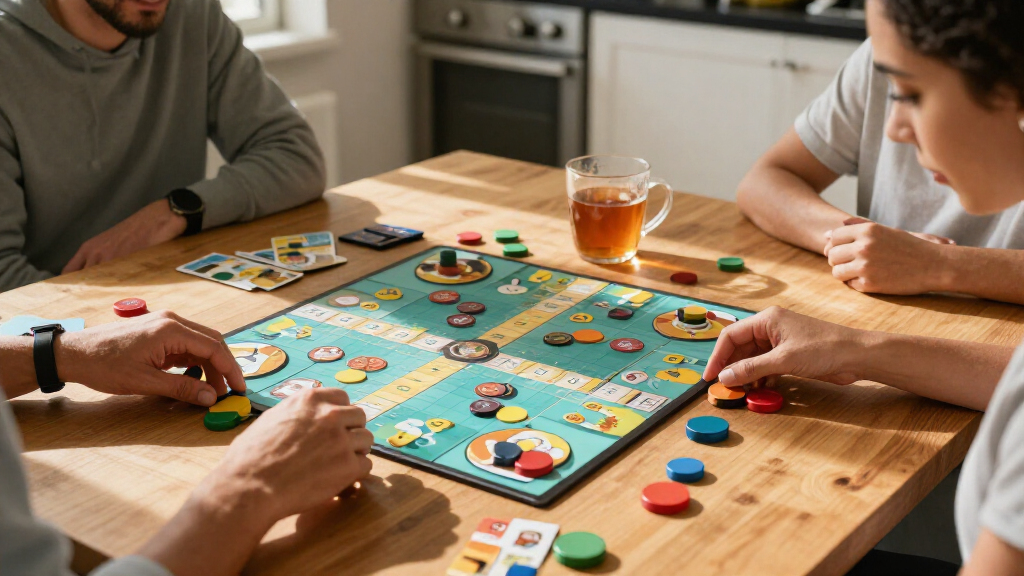

The best psychology-themed board games make conversation, self-awareness, or social perception part of the play rather than a lecture. Wavelength is my best overall pick for its accessible mind-reading premise, while Plunge stands out for guided conversation and Unconscious Mind for players seeking a more involved strategy game. The main tradeoff is between light party play and activities aimed at emotional learning or self-improvement; deeper prompts can be rewarding, but they also ask more of a group. Age, comfort with personal topics, and whether you want a game or a guided discussion all shape the right choice. Read on for the full breakdown of all 15 options and how their different approaches compare.

Turn your wind-down time into listening time
- Thousands of audiobooks, podcasts and originals
- Listen on your phone, tablet or Echo — also offline
- Cancel anytime
Key Takeaways
- Psychology can mean very different kinds of play: Wavelength focuses on reading other players, while CBT 123 and Fake Out! target specific learning or impulse-control goals.
- The most accessible option is not necessarily the most therapeutic: Wavelength suits casual groups, whereas therapy-themed and emotional-awareness games are better matches for guided, purposeful sessions.
- Conversation games depend on group comfort: Plunge and Dive In invite sharing, so they may work better with willing participants than with guests who prefer playful, low-disclosure prompts.
- Age and facilitation matter: Several options are aimed at children or teens, and adults should check whether the language and activities fit their group rather than assuming one game serves everyone.
- More strategy changes the experience: Unconscious Mind offers a heavier game-night direction than prompt-led options, while simpler card and dice formats make it easier to focus on discussion.
| ThinkPsych Fake Out! Impulse Control Card Game |  | Best for Executive-Function Practice | Players: 1–6 | Age range: 10 years and up | Playing time: 15 minutes | VIEW LATEST PRICE | See Our Full Breakdown |
| Plunge Science-Based Conversation Card Game |  | Best for Guided Connection | Age range: 14 years and up | Brand: Generic | Included components: Cards | VIEW LATEST PRICE | See Our Full Breakdown |
| Therapy: The Second Session Board Game |  | Best Psychology-Themed Party Game | Players: 3–6 | Recommended age: 13 years and up | Brand: Pressman | VIEW LATEST PRICE | See Our Full Breakdown |
| Breaking Barriers Down: Emotional Awareness and Social Skills Game |  | Best for Emotion-Focused Discussion | Brand: Therapy U | Included components: Game board, cards, dice, tokens | Number of players: 6 | VIEW LATEST PRICE | See Our Full Breakdown |
| Head Rush Social Skills and Mindfulness Card Game |  | Best for Mindfulness and Social-Emotional Learning | Brand: Therapy U | Recommended age: 12 years and up | Number of cards: 108 | VIEW LATEST PRICE | See Our Full Breakdown |
| ThinkPsych Dive In Social Emotional Learning Conversation Dice Game |  | Best for Guided Emotional Conversations | Age range: 6 years and up | Players: Listed for 6 players | Included components: 52 cards and 8 wooden dice | VIEW LATEST PRICE | See Our Full Breakdown |
| Side Effects Strategic Card Game |  | Best for Dark Humor and Player Interaction | Players: 2–8 | Recommended age: 14 years and up | Playtime: 10–30 minutes | VIEW LATEST PRICE | See Our Full Breakdown |
| PlayTherapySupply CBT 123 Cognitive Behavioral Therapy Card Game for Kids and Teens |  | Best for Introducing CBT to Kids | Players: 2–4 | Recommended age: 7–15 years | Playing time: About 15–20 minutes | VIEW LATEST PRICE | See Our Full Breakdown |
| Better Me Self-Improvement Board Game |  | Best for Goal-Setting Conversations | Players: 2–8 | Recommended age: 13 years and up | Theme: Personal development | VIEW LATEST PRICE | See Our Full Breakdown |
| Wavelength: A Mind-Reading Party Game |  | Best for Reading the Room | Players: 2 to 12+ | Recommended age: 14 years and up | Playing time: 30 minutes | VIEW LATEST PRICE | See Our Full Breakdown |
| Horrible Therapist: Extra Horrible Edition Card Game |  | Best for Adult Party Humor | Game type: Adult party card game | Players: 3–8 | Recommended age: 17 years and up | VIEW LATEST PRICE | See Our Full Breakdown |
| Connect More Social Skills Board Game for 2–6 Players |  | Best for Guided Reflection | Brand: Therapy U | Players: 2–6 | Recommended age: 8 years and up | VIEW LATEST PRICE | See Our Full Breakdown |
| The Awkward Yeti Anxiety Attack Board Game |  | Best for Talking About Anxiety | Players: 2–6 | Recommended age: 8 years and up | Playing time: 25–45 minutes | VIEW LATEST PRICE | See Our Full Breakdown |
| Lucky Duck Games Unconscious Mind |  | Best for Strategy Fans | Brand: Lucky Duck Games | Genre: Strategy | Players: 1–4 | VIEW LATEST PRICE | See Our Full Breakdown |
| Psychological Social Perception Board Game |  | Best for Reading the Group | Brand: PlayMonster | Players: 3–6 | Recommended age: 8 years and up | VIEW LATEST PRICE | See Our Full Breakdown |
| psychology themed board game | Players | Recommended age | Included components | Material |
|---|---|---|---|---|
| ThinkPsych Fake Out! Impulse C | 1–6 | — | 100 game cards, 18 strike tokens, 6 player reference cards, rulebook | Cardstock |
| Plunge Science-Based Conversat | — | — | Cards | — |
| Therapy: The Second Session Bo | 3–6 | 13 years and up | — | — |
| Breaking Barriers Down: Emotio | — | 0–7 years | Game board, cards, dice, tokens | Cardboard, paper |
| Head Rush Social Skills and Mi | — | 12 years and up | — | Cards |
| ThinkPsych Dive In Social Emot | Listed for 6 players | — | 52 cards and 8 wooden dice | — |
| Side Effects Strategic Card Ga | 2–8 | 14 years and up | — | Cardboard |
| PlayTherapySupply CBT 123 Cogn | 2–4 | 7–15 years | — | Cardstock |
| Better Me Self-Improvement Boa | 2–8 | 13 years and up | Cards and goal journal sheet | Cardstock |
| Wavelength: A Mind-Reading Par | 2 to 12+ | 14 years and up | 1 plastic device, 84 Wavelength cards, 42 Advanced cards, 1 rulebook, and 3 scoring tokens | — |
| Horrible Therapist: Extra Horr | 3–8 | 17 years and up | — | Cardstock |
| Connect More Social Skills Boa | 2–6 | 8 years and up | Wood grid, dice, 250 reflection cards, game guide, and colored discs | — |
| The Awkward Yeti Anxiety Attac | 2–6 | 8 years and up | Cards | Paper |
| Lucky Duck Games Unconscious M | 1–4 | 12 years and up | Meeting and map boards, player boards, cards, tiles, tokens, markers, dials, meeples, rulebooks, and other game components | — |
| Psychological Social Perceptio | 3–6 | 8 years and up | Board, 250 cards, 6 magnetic scoring tiles, 6 character pieces, and scoring trophy | — |
More Details on Our Top Picks
ThinkPsych Fake Out! Impulse Control Card Game
Fake Out! puts impulse control at the center of play: players respond to green GO cards, freeze on red STOP cards, and manage a three-strike limit. That quick stop-and-react loop gives it a more focused cognitive-skill angle than Therapy: The Second Session, which mixes life-stage questions, guessing, and inkblot interpretation for a broader party-game feel. Designed by psychologists, Fake Out! also targets visual attention, working memory, and cognitive flexibility, so it can suit home, classroom, or therapy activities. Its 15-minute playing time and compact box make it easy to bring out for a short round. The tradeoff is that its rapid reactions may frustrate players who prefer reflective conversation, and the age-10 recommendation rules out younger children.
Pros:- Gameplay directly practices impulse control through GO and STOP cues
- Also targets visual attention, working memory, and cognitive flexibility
- Supports 1–6 players, making it usable for solo practice or groups
- Compact format and 15-minute playing time suit short sessions
Cons:- Fast-paced reaction demands may not suit every player
- Recommended for ages 10 and up, limiting use with younger children
Best for: Families, educators, and therapists seeking a short, structured activity for players aged 10 and up to practice attention and impulse control.
Not ideal for: Groups looking for a relaxed discussion game or younger children who may find fast reaction cues challenging.
- Players:1–6
- Age range:10 years and up
- Playing time:15 minutes
- Included components:100 game cards, 18 strike tokens, 6 player reference cards, rulebook
- Material:Cardstock
- Dimensions:5.5 x 4 inches
- Language:English
- Model:FO-01
Our verdict“Choose Fake Out! for brief, active executive-function practice; pick Therapy: The Second Session instead for a more varied social party game.”
Plunge Science-Based Conversation Card Game
Plunge is the conversation-first choice in this lineup, using psychology-inspired questions and guided listening to prompt empathy, trust, and closer communication. Unlike ThinkPsych Fake Out!, it does not ask players to react quickly or practice a defined executive-function loop; its value comes from how people listen and respond to one another. That makes it a flexible fit for couples, friends, family gatherings, colleagues, or larger groups, with no preparation required. The format can help a group move beyond small talk without needing a board, scorekeeping, or elaborate rules. The tradeoff is right in its design: players seeking conventional turns, tactical choices, or a clear win condition may find Plunge less like a board game and more like a facilitated discussion.
Pros:- Guided response system encourages active, empathetic listening
- Suitable for couples, families, colleagues, and groups
- Requires no preparation before play
- Psychology-inspired prompts center communication and connection
Cons:- Conversation is the main activity rather than conventional gameplay
- The provided product data does not specify player count or playing time
Best for: Couples, friends, or workplace groups who want psychology-inspired prompts and a guided structure for more attentive conversation.
Not ideal for: Players who want competitive mechanics, a defined objective, or a traditional board-game experience.
- Age range:14 years and up
- Brand:Generic
- Included components:Cards
- Unit count:1
- Model name:Plunge
- Manufacturer:Applied Psychology Games
- Manufacturer part number:PL001
Our verdict“Choose Plunge when meaningful, guided conversation matters more than competition or a traditional game structure.”
Therapy: The Second Session Board Game
Therapy: The Second Session makes psychology its party-game theme: players roll dice, answer questions about different life stages, predict how others will respond, and interpret inkblots while racing toward the finish. That mix gives it more variety and a clearer competitive structure than Plunge, which centers on guided conversation rather than a race to win. It is a good fit for groups comfortable sharing opinions and making playful guesses about one another. The questions and challenges can spark surprising exchanges, though the guessing element means players are often interpreting other people rather than exploring their own reactions in depth. It also requires at least three players, so it is less flexible than ThinkPsych Fake Out!, which supports solo play and smaller groups.
Pros:- Combines questions, prediction, and inkblot interpretation
- Provides a clear race-to-the-finish objective
- Designed for group interaction with 3–6 players
- Psychology theme is woven into multiple kinds of challenges
Cons:- Requires at least three players
- Some challenges depend on guessing other players’ responses
- The party format may offer less focused practice of a specific psychological skill than Fake Out!
Best for: Groups of three to six teens or adults who want a social race game built around life questions, perception, and playful interpretation.
Not ideal for: Solo players, pairs, or groups who prefer low-pressure conversation over guessing how other people think.
- Players:3–6
- Recommended age:13 years and up
- Brand:Pressman
- Genre:Family
- Edition:Standard Edition
- Dimensions:9.8 x 9.8 x 2.8 inches
- Weight:2.7 pounds
- Theme:Psychology
- Model number:3630
Our verdict“Pick Therapy: The Second Session for a group party built around psychology-themed guessing and questions, not for solo or two-player sessions.”
Breaking Barriers Down: Emotional Awareness and Social Skills Game
Breaking Barriers Down centers play on 208 questions about anger, fear, sadness, and joy, giving it the clearest emotion-specific focus among these five options. Compared with Plunge, which uses guided listening to build connection across many kinds of conversations, this game directs discussion toward naming and expressing particular feelings. Its stated uses at home, in classrooms, and in therapy or counseling settings make it relevant for adults guiding a group as well as families. The main drawback is a confusing age listing: the product data gives a recommended range of 0–7 years, which may not match the needs of older players or professional settings. The listed player count is six, so it also appears less adaptable to small groups than Fake Out! or Plunge.
Pros:- Includes 208 questions across anger, fear, sadness, and joy
- Prompts emotional awareness and expression
- Listed for home, classroom, and therapy or counseling use
- Includes a board, cards, dice, and tokens
Cons:- The listed recommended age of 0–7 years may not suit all intended players
- Product data specifies six players rather than a flexible range
- Discussion prompts may feel less game-like than the race and reaction mechanics in Therapy: The Second Session or Fake Out!
Best for: Parents, teachers, and counselors seeking emotion-focused question prompts for a group of six, with adult guidance suited to the setting.
Not ideal for: Buyers who need a clearly defined age recommendation for older children, teens, or adults, or who want flexible player-count information.
- Brand:Therapy U
- Included components:Game board, cards, dice, tokens
- Number of players:6
- Number of questions:208
- Recommended age:0–7 years
- Material:Cardboard, paper
- Package dimensions:3.5 x 2.5 x 1 inches
- Educational objective:Develop emotional intelligence, self-awareness, and social skills
Our verdict“Choose Breaking Barriers Down for structured discussion of specific emotions, but check the age listing against the group you plan to support.”
Head Rush Social Skills and Mindfulness Card Game
Head Rush takes a broad social-emotional learning approach, aiming to support mindfulness, self-awareness, and communication through a 108-card format. Compared with Breaking Barriers Down, which is organized around questions about four named emotions, Head Rush presents itself as a wider activity for social skills and mindfulness rather than an emotion-specific discussion tool. Its age recommendation of 12 and up makes it a better fit for teens and older groups than the age range listed for Breaking Barriers Down. There is a practical limitation, though: it calls for at least three players, so it will not suit a solo user or a pair looking for a compact conversation activity. The product data also does not describe the card mechanics, which leaves buyers with less detail about how sessions unfold.
Pros:- Targets mindfulness, self-awareness, communication, and social-emotional learning
- Includes 108 cards in a box format
- Recommended for ages 12 and up, making it suited to teen groups
- Compact listed package dimensions support easy storage
Cons:- Requires at least three players
- The product data does not explain the card mechanics or session structure
- Its broad learning goals provide less emotion-specific guidance than Breaking Barriers Down
Best for: Educators, families, and youth-group leaders seeking a card-based social-emotional learning activity for three or more players aged 12 and up.
Not ideal for: Solo players, pairs, or buyers who want clearly described turn-by-turn rules or focused prompts about particular emotions.
- Brand:Therapy U
- Recommended age:12 years and up
- Number of cards:108
- Number of players:3 or more
- Material:Cards
- Package type:Box
- Package dimensions:2.5 x 3.5 x 0.06 inches
- Item weight:7.84 ounces
- Educational objective:Social and emotional learning
Our verdict“Choose Head Rush for a teen or adult group seeking broad social-emotional prompts, but look elsewhere for solo play or detailed emotional topic guidance.”
ThinkPsych Dive In Social Emotional Learning Conversation Dice Game
Dive In is the most directly guided option in this group for practicing emotional awareness and listening. Its eight dice and 52 cards create more than 450 question combinations, giving parents, teachers, or therapists ways to prompt discussion without relying on improvised questions. Compared with CBT 123, which links thoughts, feelings, and behaviors through scenarios and sets, Dive In puts more emphasis on open-ended conversation and social interaction. Two play levels offer some room to adjust the activity, though the listed age range starts at six, so it is not aimed at preschoolers. The tradeoff is that this is more of a structured conversation activity than a strategy-focused game, and its listed capacity of six players may limit larger groups. Choose it for purposeful discussion, not competitive gameplay.
Pros:- More than 450 possible question combinations support repeat sessions.
- Targets listening, self-expression, emotional awareness, and social skills.
- Two levels of play allow some adjustment to the group.
- Wooden dice and cards suit home, classroom, and therapy use.
Cons:- The listed capacity of six players may not fit larger classrooms or gatherings.
- Its conversation-first format offers less tactical gameplay than Side Effects.
- The age guidance excludes younger children who may benefit from simpler prompts.
Best for: Parents, educators, and youth therapists seeking ready-made prompts to help children ages six and up practice listening, self-expression, and emotional awareness in groups of up to six.
Not ideal for: Buyers seeking a competitive board game, activities for children under six, or a format for groups larger than six.
- Age range:6 years and up
- Players:Listed for 6 players
- Included components:52 cards and 8 wooden dice
- Question combinations:More than 450
- Play levels:Two
- Educational objective:Enhance social and emotional learning
- Dimensions:3.5 x 3.15 x 3 inches
- Item weight:0.3 kg
Our verdict“Choose Dive In for guided social-emotional discussion with children, but pick a more gameplay-driven option if conversation prompts alone will not hold your group’s interest.”
Side Effects Strategic Card Game
Side Effects is the lineup’s most tactical and deliberately irreverent take on mental-health themes. Players match Drug cards to Disorders while opponents interfere, and Episode cards add twists that can overturn a plan. That direct player conflict sets it apart from Dive In, which uses prompts to encourage supportive conversation, and from CBT 123, which is designed around therapeutic concepts for younger players. Here, mental-health terminology is part of a darkly comic card-game premise rather than a guided learning exercise. The short 10–30-minute playtime and rules described as easy to learn make it accessible to groups, but the humor may be uncomfortable for some players, and interference can make progress feel out of your control. I’d choose it for adults and teens who want strategic table talk, not for a sensitive or counseling-focused session.
Pros:- Combines simple-to-learn rules with tactical card choices.
- Opponent actions and Episode cards create unpredictable interaction.
- Short listed playtime works for groups wanting a compact game session.
- Striking illustrations can prompt lively table talk.
Cons:- Dark humor about mental health may alienate or upset some players.
- Opponent interference can undo plans and frustrate players who prefer control.
- The 14-and-up age guidance makes it unsuitable for younger family groups.
Best for: Groups of teens and adults who enjoy quick, interactive card games, tactical disruption, and dark humor about mental-health themes.
Not ideal for: Families with younger children, players seeking respectful therapeutic discussion, or anyone uncomfortable with jokes involving mental-health disorders and medication.
- Players:2–8
- Recommended age:14 years and up
- Playtime:10–30 minutes
- Game type:Card game
- Material:Cardboard
- Designers:Jade Shames and Ben Bronstein
- Gameplay elements:Drug cards, Disorder cards, and Episode cards
- Award recognition:SXSW Gamer’s Voice Award finalist
Our verdict“Pick Side Effects for a quick, confrontational card game with dark humor, but choose CBT 123 or Dive In for a more supportive psychology-focused activity.”
PlayTherapySupply CBT 123 Cognitive Behavioral Therapy Card Game for Kids and Teens
CBT 123 gives its psychology theme a clear teaching focus: helping children connect thoughts, feelings, and behaviors. Set collection and acted-out scenarios turn those ideas into a short activity, while the downloadable worksheet can extend the discussion beyond the cards. Compared with Dive In, which offers a wider range of open conversation prompts, this game is more structured around a specific CBT framework. It is also more explicitly therapeutic than Wavelength, whose clues reveal how players interpret broad concepts but do not teach a clinical model. At about 15–20 minutes, it can fit a counseling session or a brief family activity. The tradeoff is a small player count and a counseling-oriented feel that may not suit a casual game night; its intended age range also stops at 15.
Pros:- Makes the connection between thoughts, feelings, and behaviors the central learning goal.
- Scenario acting and set collection give the concepts an active format.
- A 15–20-minute session can fit into a short appointment or family activity.
- Downloadable worksheet offers a way to continue the discussion.
Cons:- The two-to-four-player limit excludes larger groups.
- Its therapy-oriented structure may feel out of place at a casual party.
- The recommended age range is limited to 7–15 years.
Best for: Parents, counselors, and therapists seeking a short, structured CBT activity for children and teens ages 7–15, especially in groups of two to four.
Not ideal for: Large families or party groups, adults seeking a substantial strategy game, or players who would rather avoid counseling-style activities.
- Players:2–4
- Recommended age:7–15 years
- Playing time:About 15–20 minutes
- Game type:Card game
- Edition:Updated Version 2.0
- Material:Cardstock
- Language:English
- Educational objective:Teach connections between thoughts, feelings, and behaviors
- Package dimensions:3.6 x 1 x 2.7 inches
Our verdict“Choose CBT 123 for a brief, focused introduction to CBT with children, but opt for Dive In for broader conversation or Wavelength for a less therapeutic party game.”
Better Me Self-Improvement Board Game
Better Me is the strongest fit here for groups that want psychology-adjacent play to lead into personal goals. Its prompts, mindfulness exercises, and accountability activities cover five areas—Heart, Mind, Tangibles, People, and Body—and a goal journal sheet links play with real-world commitments. That makes it more action-oriented than Dive In, which centers on conversation prompts, and more personal than Wavelength, where players infer one another’s thinking through clues. The broad 2–8-player range can accommodate couples, families, and groups, but the format depends on people being willing to discuss personal topics. Its 13-and-up recommendation also rules out younger children. I’d favor it for a reflective gathering with follow-through in mind, not a group that wants a light, low-disclosure game night.
Pros:- Combines conversation with mindfulness, goal setting, and accountability.
- Five personal-development areas give groups several routes into discussion.
- The goal journal sheet links gameplay with commitments outside the session.
- Listed for two to eight players, making it usable for couples or groups.
Cons:- Personal prompts may feel uncomfortable for players who do not want to share openly.
- The recommended age of 13 and up limits use with younger children.
- Its reflective, goal-focused format may feel less playful than Wavelength or Side Effects.
Best for: Couples, families with teens, and small groups who want prompts that connect mindfulness and personal reflection to concrete goals and follow-up.
Not ideal for: Players who prefer private, low-disclosure activities, families with children under 13, or groups looking primarily for tactical competition.
- Players:2–8
- Recommended age:13 years and up
- Theme:Personal development
- Focus areas:Heart, Mind, Tangibles, People, and Body
- Included components:Cards and goal journal sheet
- Material:Cardstock
- Dimensions:10 x 10 x 2.75 inches
- Weight:3.2 pounds
- Batteries required:No
Our verdict“Choose Better Me when your group wants reflective conversation to produce real-life goals, and skip it if personal sharing would dampen the session.”
Wavelength: A Mind-Reading Party Game
Wavelength explores social perception through a simple challenge: give a clue that helps teammates place an idea on a spectrum, then see how closely their interpretation matches yours. It is the least explicitly therapeutic game in this group, but its focus on shared meaning and perspective makes it a natural choice for buyers interested in how people think differently. Unlike Better Me, it does not ask players to set personal goals or disclose private experiences; compared with Side Effects, it favors cooperative interpretation over disrupting opponents. The one-minute learning curve and capacity for 2 to 12 or more make it well suited to gatherings. Still, the listed 30-minute playtime and group-dependent guessing mean it is less compelling for solo play or for buyers seeking direct lessons in emotional skills or psychology.
Pros:- Works for groups of two to 12 or more, making it adaptable to gatherings.
- Rules are described as learnable in about a minute.
- Spectrum clues prompt players to compare interpretations and explain their thinking.
- No batteries are required for the included plastic device.
Cons:- The group-based clue format offers little for solo play.
- The listed 30-minute playtime may be longer than some groups want for a party activity.
- Its psychology connection is indirect compared with CBT 123 or Dive In.
Best for: Hosts and families with teens who want a quick-to-learn group game about interpreting clues, comparing perspectives, and reading shared social cues.
Not ideal for: Solo players, small groups seeking a therapy-focused activity, or buyers who want direct instruction in CBT or emotional skills.
- Players:2 to 12+
- Recommended age:14 years and up
- Playing time:30 minutes
- Included components:1 plastic device, 84 Wavelength cards, 42 Advanced cards, 1 rulebook, and 3 scoring tokens
- Materials:Acrylic, cardboard, cardstock, paper, and plastic
- Language:English
- Batteries required:No
- Dimensions:10.25 x 10.25 x 2.75 inches
- Weight:1.12 kg
Our verdict“Pick Wavelength for a lively group exercise in shared interpretation, but choose a therapy-focused title if you want explicit emotional-learning content.”
Horrible Therapist: Extra Horrible Edition Card Game
Horrible Therapist turns therapy into a comic-writing contest: players combine Question, Answer, and Treatment cards to build punchlines, not practice clinical skills. Its large deck gives groups plenty of combinations, while the simple format makes it easier to teach at a party than the strategy-focused Unconscious Mind. The Oatmeal artwork reinforces the irreverent tone, and the card format is convenient for travel. The tradeoff is central to its appeal: this is adult comedy using therapy as a setup, so it is a poor fit for sensitive groups or anyone seeking thoughtful emotional reflection. It also needs at least three players, unlike the two-player option Connect More. I’d choose it for laughter among adults, not for a therapeutic or educational discussion.
Pros:- Large Question, Answer, and Treatment decks create many possible comic combinations
- Quick-to-learn party format
- Original artwork by The Oatmeal
- Portable card format suits game nights and travel
Cons:- Adult humor may not work for every group
- Requires at least three players
- Comedy takes priority over meaningful psychological discussion
Best for: Adult friend groups seeking a quick, irreverent party game with therapy-themed jokes and plenty of card combinations.
Not ideal for: Families with younger children, groups uncomfortable with adult humor, or anyone looking for a serious psychology or coping-skills activity.
- Game type:Adult party card game
- Players:3–8
- Recommended age:17 years and up
- Included cards:80 Question, 158 Answer, and 200 Treatment cards
- Material:Cardstock
- Edition:Extra Horrible Edition
- Brand:Exploding Kittens
- Model year:2024
Our verdict“Choose this for adult groups who want therapy-themed comedy, but pick Connect More for reflective conversation instead.”
Connect More Social Skills Board Game for 2–6 Players
Connect More pairs a familiar four-in-a-row objective with reflection prompts, giving conversation a gentle structure rather than asking players to invent topics themselves. That makes it a more direct fit for social-skills practice than Horrible Therapist, whose therapy theme serves adult comedy. With 250 reflection cards and space for up to six players, it can support repeated family or group sessions across age ranges. The simple grid also gives quieter players something to focus on while they answer. Its main tradeoff is that the prompts are the point: buyers who want a strategic board game may find the matching mechanic secondary. It is intended for indoor play and needs at least two people, so it is less flexible than solo-capable Unconscious Mind.
Pros:- Reflection prompts give conversation a clear starting point
- Combines discussion with an easy-to-understand four-in-a-row objective
- Accommodates two to six players and a broad age range
- Includes 250 reflection cards and a wooden grid
Cons:- The core matching mechanic may feel light to strategy-focused players
- Requires at least two players
- Designed for indoor use
Best for: Families, educators, and small groups who want a low-pressure game to prompt communication and self-reflection across ages.
Not ideal for: Solo players or game groups seeking substantial strategy, competitive depth, or an outdoor activity.
- Brand:Therapy U
- Players:2–6
- Recommended age:8 years and up
- Included components:Wood grid, dice, 250 reflection cards, game guide, and colored discs
- Weight:1.3 pounds
- Dimensions:7 × 9.5 × 0.5 inches
- Educational objective:Communication
- Usage:Indoor
- Game type:Board game
Our verdict“Pick Connect More when guided conversation matters more than complex strategy or comedic play.”
The Awkward Yeti Anxiety Attack Board Game
Anxiety Attack makes emotions part of the game’s movement: trigger and defuse cards shift players between safety and an anxiety spiral, while those in the spiral remain active as “Misery.” That no-elimination structure keeps the table involved, and references to triggers and coping skills give the humor a more specific psychology connection than the personality-guessing in Psychological Social Perception. Its 25–45-minute play window is also a lighter commitment than Unconscious Mind. The tone is not gentle throughout, though: dark jokes and potty humor may make some players uncomfortable, and the game is best with three or more despite allowing two. I’d choose it for groups willing to talk about anxiety through comedy, not for a clinical or solemn treatment of the subject.
Pros:- Trigger and defuse cards connect play to emotional themes and coping skills
- No player elimination keeps everyone involved
- Suitable for a broad age range starting at eight
- Shorter play session than the strategy-heavy Unconscious Mind
Cons:- Dark themes and potty humor may not suit every group
- Best with three or more players
- Humorous treatment may not meet the needs of players seeking serious mental-health discussion
Best for: Families with older children or mixed-age groups who want a humorous, active way to start conversations about anxiety and coping.
Not ideal for: Players sensitive to dark or potty humor, groups seeking a serious mental-health resource, or two-player households wanting the best group experience.
- Players:2–6
- Recommended age:8 years and up
- Playing time:25–45 minutes
- Included components:Cards
- Language:English
- Theme:Humor
- Material:Paper
- Artist:Nick Seluk
- Edition:Science Humor Edition
Our verdict“Choose Anxiety Attack for an active, humorous anxiety-themed conversation game, provided the group is comfortable with its jokes.”
Lucky Duck Games Unconscious Mind
Unconscious Mind is the most strategy-driven psychology-themed pick here. Its Freud-era psychoanalytic setting frames worker placement, engine building, cards, and rondels, with cascading board effects rewarding players who plan how their actions connect. That makes it a very different experience from the prompt-led Connect More or the quick comedy of Horrible Therapist: the psychology supplies the setting, while the main appeal is managing a layered strategy system. Solo play is a meaningful advantage for buyers who do not always have a group. The tradeoff is time and complexity; a session can run up to two hours, so it asks for more attention than the conversation and party games in this roundup. I’d pick it for strategy players first, and psychology fans second.
Pros:- Supports solo play as well as groups of up to four
- Combines worker placement, engine building, and rondel mechanics
- Cascading player-board effects reward connected planning
- Uses a distinct historical psychoanalytic setting
Cons:- Sessions can last up to 120 minutes
- Multiple interlocking mechanics demand more attention than the party and reflection games
- The psychology theme frames strategic play rather than serving as direct social-skills practice
Best for: Strategy-game players interested in a psychoanalytic setting, layered engine building, and the option to play solo.
Not ideal for: Casual groups seeking a short, conversation-led psychology game or players who prefer simple rules and brief sessions.
- Brand:Lucky Duck Games
- Genre:Strategy
- Players:1–4
- Recommended age:12 years and up
- Playing time:60–120 minutes
- Edition:Standard Edition
- Included components:Meeting and map boards, player boards, cards, tiles, tokens, markers, dials, meeples, rulebooks, and other game components
Our verdict“Choose Unconscious Mind if you want a substantial strategy game with a psychoanalytic setting, not a quick psychology discussion game.”
Psychological Social Perception Board Game
Psychological Social Perception makes its central skill—judging how well you know someone—part of the scoring. Players estimate how strongly others identify with pairs of traits on a 1–10 scale, so the conversation grows from comparing interpretations rather than answering a set of reflection prompts. That gives it a more social-guessing feel than Connect More, while its accessible party format is far less involved than Unconscious Mind. The 250 cards provide many trait pairings, but the game depends on players having some basis for reading one another. It may fall flat among strangers or groups reluctant to share opinions. I’d choose it for friends and family who enjoy talking about personality, not for people looking for clinical psychology content or a solo experience.
Pros:- Simple rules make it accessible for casual game nights
- Trait-pair cards prompt discussion about personality and perception
- Supports groups of three to six
- 250 cards offer many possible trait combinations
Cons:- Gameplay relies on knowing or accurately interpreting other players
- Requires at least three players
- Personality guessing may feel awkward for groups uncomfortable sharing opinions
Best for: Friends, families, and established groups who enjoy personality conversations and guessing how others see themselves.
Not ideal for: Solo players, groups of fewer than three, or strangers who may not know one another well enough to make informed guesses.
- Brand:PlayMonster
- Players:3–6
- Recommended age:8 years and up
- Genre:Party
- Included components:Board, 250 cards, 6 magnetic scoring tiles, 6 character pieces, and scoring trophy
- Language:English
- Dimensions:10.5 × 10.5 × 0.1 inches
- Model number:26139
Our verdict“Pick this for a familiar group that enjoys comparing personality impressions, and choose Connect More for more guided reflection.”
How We Picked
I compared these 15 games by how clearly their play connects to psychology: social perception, emotional awareness, communication, behavior, self-reflection, or therapy-informed ideas. I also considered who can comfortably take part, how much explanation or facilitation a game may need, whether it suits repeat play, and how well its format matches its stated purpose. A game marketed around psychology did not rank highly on theme alone; the play needed to give buyers a clear reason to choose it over a general party or strategy game.
The ranking favors options with a clear audience and a usable balance between engaging play and the psychological aim. Broadly accessible social play earns an edge for mixed groups, while specialized games can be better fits when buyers have a defined learning or discussion goal. I also account for tradeoffs: personal prompts may not suit every group, child-focused activities may feel limited for adults, and heavier strategy can pull attention away from discussion. Product information supplied for this roundup names the games but does not establish every rule or component detail, so I avoid claiming unverified mechanics or therapeutic outcomes.
| psychology themed board game | Material | Brand |
|---|---|---|
| ThinkPsych Fake Out! Impulse C | Cardstock | — |
| Plunge Science-Based Conversat | — | Generic |
| Therapy: The Second Session Bo | — | Pressman |
| Breaking Barriers Down: Emotio | Cardboard, paper | Therapy U |
| Head Rush Social Skills and Mi | Cards | Therapy U |
| ThinkPsych Dive In Social Emot | — | — |
| Side Effects Strategic Card Ga | Cardboard | — |
| PlayTherapySupply CBT 123 Cogn | Cardstock | — |
| Better Me Self-Improvement Boa | Cardstock | — |
| Wavelength: A Mind-Reading Par | — | — |
| Horrible Therapist: Extra Horr | Cardstock | Exploding Kittens |
| Connect More Social Skills Boa | — | Therapy U |
| The Awkward Yeti Anxiety Attac | Paper | — |
| Lucky Duck Games Unconscious M | — | Lucky Duck Games |
| Psychological Social Perceptio | — | PlayMonster |
Factors to Consider When Choosing Psychology Themed Board Games
Before choosing a psychology-themed game, decide what you want the group to do: laugh over social guesses, practice a skill, talk about feelings, or play a strategy game with a psychology setting. Those goals call for different levels of structure and personal disclosure.
Match the game to the outcome you want
Start with the intended outcome, not the psychology label on the box. A social-perception game can make a lively party activity without teaching a formal skill, while a CBT-oriented title signals a more specific learning focus. If you want a relaxed evening, a game that turns perspective-taking into a shared challenge may fit better than one built around personal reflection. For a classroom, family activity, or facilitated session, look for prompts and activities that directly support the skill you want to practice. A common mistake is buying a therapeutic-sounding game and expecting it to replace professional care or instruction. Treat these games as play and conversation tools, not clinical treatment.
Check the group’s comfort with personal sharing
Conversation depth is a design choice, and the group’s comfort level can matter more than the topic itself. Some players enjoy discussing emotions or personal experiences; others would rather answer imaginative questions or make guesses about how friends think. For a new group, choose a format that allows light answers and lets participants pass without awkwardness. Avoid assuming that family members or close friends will welcome intimate prompts simply because they know one another well. When buying for a gathering, consider who may feel put on the spot and whether the game can stay enjoyable without disclosure. A psychology theme works best when participation feels invited rather than demanded.
Choose for age, language, and facilitation needs
Age guidance is only one part of fit; reading level, emotional vocabulary, and the need for an adult facilitator also matter. A child-focused social-skills game may give younger players helpful structure but feel simplistic to teens or adults. Conversely, adult conversation prompts can be hard for children to interpret or answer comfortably. For classrooms, therapy-adjacent settings, or family play across ages, check whether the activity can be explained in plain language and adapted to different abilities. Buyers sometimes focus on the advertised age range and overlook how much reading, discussion, or coaching the game asks from its players. Choose a title that matches the group’s actual communication skills, not just its ages.
Decide whether you want discussion or a full game-night system
Card and dice formats often make it easier to start a prompt and move into conversation, while a more strategic board game can provide a fuller arc of decisions and turns. Neither format is automatically better: short prompt-based play can leave a group wanting more structure, and a complex game can give less room for open discussion. Think about how much time your group wants to spend learning rules before the psychological theme comes into play. If players mainly want to connect, a simple format may keep attention on each other. If they want a hobby-style game night, strategic depth may matter more than the number of discussion prompts. Do not choose solely by the word “board game”; check whether the format suits the occasion.
Look for replay value that fits your group
Replayability can come from new prompts, different players’ perspectives, changing strategic choices, or simply enjoying the same activity with a new group. A conversation deck may feel fresh when used among people who answer differently, but less so if the same players quickly exhaust its questions. A strategy game can offer repeat decisions without requiring personal stories, which may suit groups that prefer gameplay variety. Before buying, ask how often the same people will play and whether the game’s appeal depends on novelty or on an evolving group dynamic. A large prompt collection does not guarantee a good fit if the prompts are too personal or too repetitive for your setting. Match replay style to how your group actually gathers.
Know when a specialized game is worth choosing
A focused title can be the better choice when you have a specific audience or purpose, such as practicing emotional awareness or introducing CBT concepts. That focus can also narrow its usefulness for casual gatherings, so think about whether the game will come out often enough to justify a dedicated role on your shelf. For mixed-use homes, a more flexible social game may serve more occasions even if it is less targeted. Buyers should also separate a game’s educational framing from proof of a particular outcome; a product title alone cannot establish effectiveness. Pay for specialization when its subject and format fit a real need in your group. Otherwise, versatility and easy participation may matter more than a narrow theme.
Frequently Asked Questions
Can a psychology-themed board game be used as therapy?
These games can prompt conversation, practice, or reflection, but a game is not a substitute for assessment or care from a qualified professional. A therapy-themed or CBT-labeled title may offer structured activities, yet its name alone does not establish clinical effectiveness. If you are choosing one for a therapy setting, review the actual rules and prompts with the clinician who knows the participants. For home use, frame it as a shared activity rather than a treatment plan. That distinction helps keep expectations realistic and avoids putting pressure on players to disclose or resolve personal concerns during play.
Which type is safest for a group that does not know each other well?
For a new group, favor games centered on playful interpretation or low-stakes choices over prompts that ask for personal stories. Wavelength is a strong fit for social guessing because players can engage with one another without making private disclosures the point of play. Before starting any conversation game, explain that passing or giving a light answer is acceptable. This helps participants set their own boundaries and keeps the activity welcoming. If the group includes coworkers, students, or people with uneven power dynamics, avoid making vulnerability a condition of participation.
Are these games appropriate for children and teens?
Some of the listed titles are explicitly aimed at children or teens, including CBT 123, Fake Out!, and Head Rush, while other options are more naturally suited to adult or mixed social groups. Check each product’s age guidance, reading demands, and emotional content before buying. A game intended to build social or emotional skills may still need an adult to explain prompts and help keep discussion respectful. Teens may also prefer a game that feels like a real game rather than a lesson, so match the format to their interests. When in doubt, review the rules and sample prompts with the young players’ caregiver or facilitator.
Should I choose a conversation game or a strategy game?
Choose a conversation-led game if your main goal is to get people talking, share perspectives, or practice communication. Choose a strategic option such as Unconscious Mind if your group wants sustained decisions and a more traditional game-night structure alongside the psychological theme. The tradeoff is attention: prompt-led games leave more room for discussion, while strategy can keep players focused on play. Consider the patience and preferences of the least experienced person at the table, not only the most enthusiastic player. If you are unsure, choose the format that best matches what your group already enjoys doing together.
What should I check before buying a psychology game for a classroom or group session?
Check the player count, age guidance, session length, reading level, and whether the activities require adult facilitation. Also review whether prompts can be skipped or adapted, since a classroom may include students with different comfort levels and communication needs. Ask whether the game supports your learning goal directly or only shares a broad psychology theme. For repeated sessions, consider how the material will stay useful after the group has seen the prompts once. A title that works well at home may need additional planning in a structured setting, so read the rules before treating it as a ready-made lesson.
Conclusion
For the best overall fit, I recommend Wavelength for groups that want an easy social-perception hook without centering the game on personal disclosure. For value, I’d look first at a simple card or dice option such as Fake Out! or Dive In when its specific audience and goal match your needs; a straightforward format can be easier to bring out regularly. For a premium-feeling, strategy-led game night, Unconscious Mind is the clearest choice in this lineup, while its heavier play makes it less suitable for groups seeking quick conversation. Beginners should start with Wavelength, since its premise is approachable for a mixed group. For specific needs, choose CBT 123 for a child- or teen-focused CBT activity, Plunge for guided conversation, or Breaking Barriers Down for emotional awareness and social skills. The right pick depends less on the word “psychology” and more on whether your group wants party play, purposeful practice, or strategic depth.
Halloween Picks

Vexalify 11-Inch Halloween Pumpkin Fog Machine with Bluetooth Speaker and 12-Color LED Lights

Panefright Halloween Window Projector

HOPOCO Halloween Pumpkin Fog Machine with 12 LED Colors & 4 Light Modes
As an affiliate, we earn on qualifying purchases.