
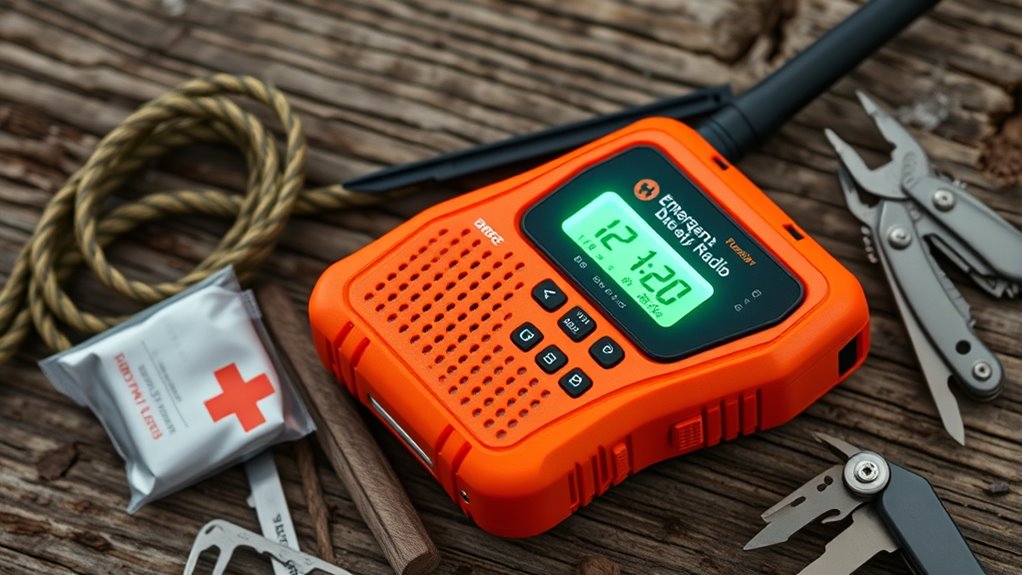

Emergency radios vary most in how reliably they deliver weather alerts, how practical their backup power is, and whether their controls are easy to use under stress. My best overall pick is the Midland ER310, a focused choice for buyers who prioritize a dedicated emergency-radio design; the Raynic stands out for shortwave reception and a siren, while the 12,000mAh models appeal to shoppers who want more phone-charging capacity on paper. The tradeoff is that extra features can add bulk or complexity, and hand-crank or solar charging should be treated as backup rather than a full substitute for a charged battery. I compare all 15 options by alert access, power choices, usability, and useful emergency features. Continue reading for the full breakdown and guidance on which tradeoffs fit your preparedness plan.

Turn your wind-down time into listening time
- Thousands of audiobooks, podcasts and originals
- Listen on your phone, tablet or Echo — also offline
- Cancel anytime
Key Takeaways
- The Midland ER310 is my best overall pick because it is a clearly identified emergency-radio model, while several alternatives are differentiated mainly by large battery claims and bundled extras.
- 12,000mAh appears across multiple listings, but battery capacity alone does not tell you how long the radio will run or how much phone charge remains after radio use.
- The Raynic is the standout for broader reception features, with AM/FM/SW/NOAA listed alongside a flashlight and SOS siren; buyers who only need local weather alerts may not need SW.
- Accessories are not the same as radio capability: the survival blanket and paracord bracelet in one bundle add preparedness items, not stronger reception or a more useful charging system.
- Charging flexibility is common, but charging speed is not established by the listings. Solar and hand-crank inputs are best treated as emergency reserves, with USB charging as the practical way to prepare the battery beforehand.
| Hand Crank Emergency Radio 10000mAh Weather Radio with AM/FM/NOAA, Orange |  | Best Compact Power Backup | Battery capacity: 10,000mAh | Radio bands: AM, FM, NOAA | Power sources: Solar, hand crank, USB Type-C | VIEW ON AMAZON | See Our Full Breakdown |
| NOAA Weather Radio with 12000mAh Power Bank, Emergency Portable Radio with Hand Crank & Solar, AM/FM, SOS, Flashlight, Reading Light for Camping & Emergencies |  | Best for Extended Outages | Battery capacity: 12,000mAh | Radio bands: AM/FM, NOAA WX | NOAA presets: 7 | VIEW ON AMAZON | See Our Full Breakdown |
| Emergency Hand Crank Solar Radio with 10000mAh Battery, NOAA Weather Alerts, Flashlight, Thermal Blanket, and Survival Paracord Bracelet |  | Best for a Survival Kit | Battery capacity: 10,000mAh | Charging methods: Hand crank, solar panel, USB | Weather channels: 7 NOAA channels | VIEW ON AMAZON | See Our Full Breakdown |
| Raynic Emergency Weather Radio with Solar Hand Crank, AM/FM/SW/NOAA Alert, 5000mAh Battery, Flashlight, and SOS Siren |  | Best for Broad Band Coverage | Battery capacity: 5,000mAh / 18,500mWh | Radio bands: AM, FM, SW, NOAA | Charging options: Solar, hand crank, AC adapter, USB-C, AAA batteries, internal rechargeable battery | VIEW ON AMAZON | See Our Full Breakdown |
| Emgykit Hand Crank Emergency Radio with AM/FM/NOAA, Flashlight, and SOS Alarm |  | Best Simple, Lightweight Pick | Battery capacity: 2,000mAh | Radio bands: AM, FM, NOAA | Power sources: Hand crank, solar panel, USB-C | VIEW ON AMAZON | See Our Full Breakdown |
| Hand Crank Emergency Radio with Solar Charging and Built-In Cables |  | Best for Charging Mixed Devices | Battery capacity: 2,000mAh | Power sources: USB-C, hand crank, solar, AAA batteries | Radio bands: AM/FM/weather band; 7-band | VIEW ON AMAZON | See Our Full Breakdown |
| Leaton Hand Crank Emergency Weather Radio with 10,000mAh Battery |  | Best for a Larger Battery in a Compact Radio | Battery capacity: 10,000mAh | Radio bands: AM 520–1710kHz, FM 87–108MHz, NOAA 162.400–162.550MHz | Charging methods: USB-C, solar, hand crank | VIEW ON AMAZON | See Our Full Breakdown |
| Midland ER310 Emergency Crank Weather Radio, AM/FM, Red/Black |  | Best for Automatic Weather Alerts | Model: ER310-MFN | Radio bands: AM/FM | Power sources: Solar, hand crank, six included AA batteries | VIEW ON AMAZON | See Our Full Breakdown |
| Emergency Radio with Hand Crank, Solar Charging, NOAA, AM/FM, and 12,000mAh Battery |  | Best for High Capacity and Outdoor Readiness | Battery capacity: 12,000mAh | Radio bands: NOAA weather, AM/FM | Charging options: Solar, hand crank, USB-C | VIEW ON AMAZON | See Our Full Breakdown |
| Esky Emergency Hand Crank Radio with Flashlight and NOAA Weather Alert |  | Best Lightweight Backup | Battery capacity: 2,000mAh | Charging modes: USB, solar, hand crank | Radio bands: AM/FM/NOAA | VIEW ON AMAZON | See Our Full Breakdown |
| 12000mAh Emergency Weather Radio with Hand Crank, Solar Charging, Flashlight, and SOS Alarm |  | Best for Lighting and Signal Features | Battery capacity: 12,000mAh | Radio bands: 7 NOAA weather channels, AM 520–1710 kHz, FM 87.5–108 MHz | Power options: USB-C, solar, hand crank, 3 AAA batteries | VIEW ON AMAZON | See Our Full Breakdown |
| NITIGO Weather Radio with 10000mAh Battery, Emergency Radio with USB, Solar, Hand Crank Charging, LED Flashlight, SOS Alarm |  | Best for Flexible Nighttime Lighting | Battery capacity: 10,000mAh | Charging methods: USB, solar, hand crank | Radio bands: NOAA weather, AM/FM | VIEW ON AMAZON | See Our Full Breakdown |
| FosPower A1 NOAA Emergency Weather Radio with Solar and Hand Crank, Orange |  | Best Compact Grab-and-Go Pick | Model: FOSPWB-2376 | Radio bands: AM/FM/weather band | Power sources: Solar, hand crank, AAA batteries, USB | VIEW ON AMAZON | See Our Full Breakdown |
| Emergency Weather Radio, 12000mAh Solar Hand Crank NOAA Radio, Army Green |  | Best for Rugged Outdoor Kits | Battery capacity: 12,000mAh | Radio bands: NOAA, AM, FM | Power sources: Solar, hand crank, USB-C, AAA | VIEW ON AMAZON | See Our Full Breakdown |
| 12000mAh Solar Emergency Hand Crank Radio with NOAA, AM/FM, Flashlight, and Phone Charger |  | Best for Phone Charging | Battery capacity: 12,000mAh lithium battery | Radio bands: NOAA, AM, FM | NOAA frequency: 162 MHz | VIEW ON AMAZON | See Our Full Breakdown |
| emergency radio | Radio bands | Battery capacity | Water resistance |
|---|---|---|---|
| Hand Crank Emergency Radio 100 | AM, FM, NOAA | 10,000mAh | Water resistant |
| NOAA Weather Radio with 12000m | AM/FM, NOAA WX | 12,000mAh | — |
| Emergency Hand Crank Solar Rad | — | 10,000mAh | — |
| Raynic Emergency Weather Radio | AM, FM, SW, NOAA | 5,000mAh / 18,500mWh | IPX3 |
| Emgykit Hand Crank Emergency R | AM, FM, NOAA | 2,000mAh | — |
| Hand Crank Emergency Radio wit | AM/FM/weather band; 7-band | 2,000mAh | Described as waterproof; rating unspecified |
| Leaton Hand Crank Emergency We | AM 520–1710kHz, FM 87–108MHz, NOAA 162.400–162.550MHz | 10,000mAh | IPX6 |
| Midland ER310 Emergency Crank | AM/FM | — | Not water resistant |
| Emergency Radio with Hand Cran | NOAA weather, AM/FM | 12,000mAh | IPX6 |
| Esky Emergency Hand Crank Radi | AM/FM/NOAA | 2,000mAh | — |
| 12000mAh Emergency Weather Rad | 7 NOAA weather channels, AM 520–1710 kHz, FM 87.5–108 MHz | 12,000mAh | Listed as waterproof |
| NITIGO Weather Radio with 1000 | NOAA weather, AM/FM | 10,000mAh | — |
| FosPower A1 NOAA Emergency Wea | AM/FM/weather band | — | Water resistant |
| Emergency Weather Radio | NOAA, AM, FM | 12,000mAh | Water-resistant |
| 12000mAh Solar Emergency Hand | NOAA, AM, FM | 12,000mAh lithium battery | Water resistant |
More Details on Our Top Picks
Hand Crank Emergency Radio 10000mAh Weather Radio with AM/FM/NOAA, Orange
This model balances a 10,000mAh battery with solar, hand-crank, and USB-C charging, giving it more backup capacity than the Emgykit radio’s 2,000mAh battery without moving into the larger format of the 12,000mAh NOAA Weather Radio. AM, FM, and NOAA reception cover everyday broadcasts and weather updates, while the built-in flashlight and SOS alarm add practical emergency functions. At 530 g and just over five inches long, it is a manageable option for a go-bag or campsite. The tradeoff is its 2-watt maximum output, which may not carry as well in a noisy area, and its water resistance is not waterproof protection. I’d choose it for a compact kit, not for extended phone charging or heavy rain exposure.
Pros:- 10,000mAh battery offers more reserve capacity than the Emgykit’s 2,000mAh battery.
- Solar, hand-crank, and USB-C charging provide options when one power source is unavailable.
- AM, FM, and NOAA bands cover general listening and weather information.
- Compact dimensions and a built-in flashlight suit go-bags and outdoor kits.
Cons:- 2-watt maximum output may be limiting in loud or open settings.
- Battery capacity may not support extended charging of other devices.
- Water resistant does not mean waterproof.
Best for: Campers and household preparedness planners who want a compact radio with a larger battery and several ways to recharge it.
Not ideal for: Buyers who need a loud radio for group listening, substantial phone charging over several days, or a fully waterproof unit.
- Battery capacity:10,000mAh
- Radio bands:AM, FM, NOAA
- Power sources:Solar, hand crank, USB Type-C
- Maximum output power:2 watts
- Water resistance:Water resistant
- Dimensions:5.31 × 2.28 × 2.68 in
- Weight:530 g
- Display:LED
Our verdict“Choose this compact pick if you want a 10,000mAh emergency radio with multiple charging methods, but not if loud output or waterproofing is a priority.”
NOAA Weather Radio with 12000mAh Power Bank, Emergency Portable Radio with Hand Crank & Solar, AM/FM, SOS, Flashlight, Reading Light for Camping & Emergencies
Among these five, this radio is the strongest fit when longer run time and lighting matter more than pack size. Its 12,000mAh battery is larger than the 10,000mAh units in the orange Hand Crank Emergency Radio and the survival-kit radio, and the listed battery life reaches about 60 hours for radio use. A 5W stereo speaker, seven NOAA presets, a flashlight, and a separate reading light make it more useful as a household outage station than a bare-bones travel radio. Solar, hand crank, AC, and three AAA batteries give it varied backup paths. The cost of that capacity is bulk: the compact orange model is easier to stow or carry. The listed solar charging speed also depends on available sunlight, and the many functions may be less straightforward for someone who wants simple controls.
Pros:- 12,000mAh battery and listed radio runtime of about 60 hours support longer use.
- 5W stereo speaker offers more output than the 2W orange radio.
- Flashlight and reading light serve different needs during a blackout.
- Solar, hand crank, AC, and AAA battery inputs provide multiple backup options.
Cons:- Larger size is less convenient for compact go-bags and lightweight camping.
- Solar charging performance depends on sunlight conditions.
- Multiple functions may feel complicated to users seeking simple operation.
Best for: Households preparing for multi-day outages who want a longer-running radio with dedicated area lighting and several backup power options.
Not ideal for: Ultralight hikers or users who prefer a simple, small radio; its larger feature set and size may be inconvenient.
- Battery capacity:12,000mAh
- Radio bands:AM/FM, NOAA WX
- NOAA presets:7
- Speaker power:5W stereo
- Solar panel:8500mm² monocrystalline
- Input methods:Solar, hand crank, AC, 3 AAA batteries
- Listed radio battery life:About 60 hours
- Light output:600LM flashlight and reading light
Our verdict“Pick this for a home outage kit where battery reserve and useful lighting outweigh compact size and simpler controls.”
Emergency Hand Crank Solar Radio with 10000mAh Battery, NOAA Weather Alerts, Flashlight, Thermal Blanket, and Survival Paracord Bracelet
This set is aimed at buyers who want more than a radio in their emergency bag: the thermal blanket and survival paracord bracelet add shelter and utility items alongside a 10,000mAh battery, flashlight, and SOS alarm. Its hand-crank, solar, and USB charging options resemble the orange Hand Crank Emergency Radio, while the included kit supplies more non-radio gear than that simpler model. Seven NOAA channels provide weather coverage, but the product data gives less detail about speaker output, water resistance, or operating runtime than the 12,000mAh NOAA Weather Radio. I would treat the extra tools as a convenience for assembling a basic kit, not as a substitute for dedicated, higher-quality survival equipment. The listed 55g weight also deserves verification against the full kit before choosing it for a weight-sensitive pack.
Pros:- Includes a thermal blanket and paracord bracelet with compass, knife, whistle, and fire rod.
- 10,000mAh battery is larger than the Emgykit radio’s 2,000mAh capacity.
- Hand-crank, solar, and USB charging cover several power situations.
- Seven NOAA channels, flashlight, and SOS alarm add emergency-focused functions.
Cons:- Product data does not specify speaker output or battery runtime.
- No water-resistance rating is provided in the supplied specifications.
- The listed 55g weight may not reflect the radio and included accessories together.
Best for: Preparedness beginners assembling a basic emergency bag who value bundled shelter and utility items alongside NOAA reception.
Not ideal for: Buyers who need clearly documented radio runtime, detailed durability or water-resistance information, or a carefully weight-optimized kit.
- Battery capacity:10,000mAh
- Charging methods:Hand crank, solar panel, USB
- Weather channels:7 NOAA channels
- Additional tools:Thermal blanket; paracord bracelet with compass, knife, whistle, and fire rod
- Emergency alert:SOS alarm
- Lighting:Built-in flashlight
- Listed weight:55 g
Our verdict“Choose this bundled option if you are building a starter survival kit, but favor a better-documented radio when reception performance and runtime are your main concerns.”
Raynic Emergency Weather Radio with Solar Hand Crank, AM/FM/SW/NOAA Alert, 5000mAh Battery, Flashlight, and SOS Siren
The Raynic stands apart through AM, FM, shortwave, and NOAA reception, giving radio listeners more band options than the AM/FM/NOAA-only orange model or the Emgykit. Its large HD LCD and digital tuning are useful when you want to identify stations and manage settings, while six charging options—including AC, USB-C, solar, hand crank, and AAA batteries—give it unusual flexibility for a home emergency station. That breadth comes with a smaller 5,000mAh battery than the other high-capacity radios here, so it is a weaker choice for repeated phone charging. At 1.2 pounds, it remains portable, though not as minimal as a compact radio. Its IPX3 rating covers limited splashes, not immersion or sustained exposure to heavy rain.
Pros:- AM, FM, shortwave, and NOAA bands offer broader listening options than NOAA-only weather coverage.
- Six charging options include AC, USB-C, solar, hand crank, and AAA batteries.
- Large HD LCD helps with station tuning and radio settings.
- Flashlight, reading lamp, SOS siren, and USB device charging add outage utility.
Cons:- 5,000mAh capacity is lower than the 10,000mAh and 12,000mAh radios in this group.
- IPX3 protection is limited to splashing and is not a waterproof rating.
- AAA batteries are not included.
Best for: Radio listeners and households who want shortwave alongside NOAA alerts, a readable display, and several ways to power the unit.
Not ideal for: Users prioritizing a large power bank or protection from heavy rain; its 5,000mAh battery and IPX3 rating limit those uses.
- Battery capacity:5,000mAh / 18,500mWh
- Radio bands:AM, FM, SW, NOAA
- Charging options:Solar, hand crank, AC adapter, USB-C, AAA batteries, internal rechargeable battery
- Display:Large HD LCD
- Weight:1.2 lb
- Dimensions:6.8 × 3.7 × 2.9 in
- Water resistance:IPX3
- Connectivity:USB Type-C, 3.5mm headphone jack
Our verdict“Choose the Raynic if shortwave reception and flexible power options matter more than maximum battery capacity or strong water protection.”
Emgykit Hand Crank Emergency Radio with AM/FM/NOAA, Flashlight, and SOS Alarm
The Emgykit is the straightforward choice for a small emergency kit: it covers AM, FM, and NOAA, adds a 3W flashlight and an SOS alarm, and weighs just 0.51 pounds. Its hand crank, solar panel, and USB-C input offer useful backup charging without the larger feature set of the Raynic, which adds shortwave, a display, and more power inputs. The main compromise is clear: a 2,000mAh battery is far smaller than the 10,000mAh orange radio’s capacity, so phone charging should be treated as a limited backup rather than a central purpose. The listed radio output is only 1 watt, another reason this model suits personal or close-range listening better than a group. I’d pick it for simplicity and portability, not long outages or high-volume use.
Pros:- Lightweight 0.51-pound design is easy to keep in a vehicle or small go-bag.
- Hand crank, solar, and USB-C provide three charging methods.
- 3W, 140-lumen flashlight and over-80dB SOS alarm add practical emergency functions.
- AM, FM, and NOAA reception cover essential broadcast types.
Cons:- 2,000mAh battery offers much less reserve than the 10,000mAh orange radio.
- Listed 1-watt radio output may be limited for group listening.
- Phone charging capacity is modest.
Best for: Drivers, casual campers, and preparedness beginners who want a light radio with essential weather bands, a flashlight, and an SOS alarm.
Not ideal for: Households planning for prolonged outages or buyers who expect frequent phone charging, extended runtime, or louder group listening.
- Battery capacity:2,000mAh
- Radio bands:AM, FM, NOAA
- Power sources:Hand crank, solar panel, USB-C
- Flashlight:3W, 140 lumens, 3 LEDs
- SOS alarm:Over 80 dB
- Dimensions:5.16 × 2.09 × 2.6 in
- Weight:0.51 lb
- Radio output:1 watt
Our verdict“Choose the Emgykit for a lightweight, simple emergency radio, but step up to a larger-battery model for extended outages or device charging.”
Hand Crank Emergency Radio with Solar Charging and Built-In Cables
I’d pick this model when a household’s emergency kit needs to accommodate more than one kind of phone cable. Its built-in Lightning, USB-C, and Micro USB cables reduce the chance of searching for the right lead during an outage, while USB-C, solar, hand-crank, and AAA power give it several ways to stay usable. It also combines NOAA weather, AM/FM, a flashlight, six reading LEDs, and an SOS alarm in a compact body. Compared with the Leaton 10,000mAh, it offers more built-in device connectors and lighting features, but lists a much smaller 2,000mAh battery. I’d treat its hand crank and solar panel as backup options, not a dependable way to keep a phone charged. The waterproof claim also lacks a stated rating, so I wouldn’t choose it for wet conditions.
Pros:- Four stated power sources: USB-C, hand crank, solar, and AAA batteries
- Built-in cables support Lightning, USB-C, and Micro USB devices
- Receives AM, FM, and NOAA weather broadcasts
- Combines a three-mode flashlight, six reading LEDs, and an SOS alarm
Cons:- The 2,000mAh battery is smaller than the Leaton’s 10,000mAh capacity
- AAA batteries are not included
- Waterproof rating is unspecified
Best for: Households with a mix of Lightning, USB-C, and Micro USB devices that want an emergency radio with several light sources.
Not ideal for: Buyers prioritizing a large battery for phone charging or a clearly specified water-resistance rating.
- Battery capacity:2,000mAh
- Power sources:USB-C, hand crank, solar, AAA batteries
- Radio bands:AM/FM/weather band; 7-band
- Built-in cables:Lightning, USB-C, Micro USB
- Lighting:Three-mode flashlight; six LED reading lights
- Additional features:SOS alarm, extended antenna
- Dimensions:6.49 x 1.9 x 2.9 in
- Display:Analog
- Water resistance:Described as waterproof; rating unspecified
Our verdict“Choose it for cable convenience and multiple lighting options, but skip it if battery capacity or verified water protection matters most.”
Leaton Hand Crank Emergency Weather Radio with 10,000mAh Battery
The Leaton is a sensible pick for someone who wants a relatively compact radio with more stored power than the Hand Crank Emergency Radio with Built-In Cables. Its 10,000mAh battery and 5V/1A USB output can provide emergency phone charging, while USB-C, solar, and hand-crank charging offer alternatives when an outlet is unavailable. The flashlight, reading lamp, and compass round out a useful outdoor kit. Its main limitation is how it handles weather alerts: NOAA stations require manual tuning, with no automatic or location-based alert function. That makes the Midland ER310 a better fit for people who want scanning and alerts rather than checking the radio themselves. IPX6 protection covers water jets, but the product information cautions against heavy rain or immersion, so this isn’t a radio to treat as waterproof.
Pros:- 10,000mAh battery provides more stored capacity than several compact radios in this lineup
- USB-C, solar, and hand-crank charging options
- Includes an LED flashlight, reading lamp, and compass
- IPX6 water resistance is useful for splash-prone outdoor use
Cons:- NOAA broadcasts require manual tuning; automatic and location-based alerts are not supported
- 5V/1A USB output and conversion losses limit phone charging
- IPX6 protection does not mean it is suitable for immersion
Best for: Campers and outage-prepared households who want a compact radio with a larger battery for occasional phone charging.
Not ideal for: Buyers who need automatic NOAA alerts, reliable phone charging for extended use, or protection against immersion.
- Battery capacity:10,000mAh
- Radio bands:AM 520–1710kHz, FM 87–108MHz, NOAA 162.400–162.550MHz
- Charging methods:USB-C, solar, hand crank
- USB output:5V/1A
- NOAA alerts:Manual tuning; no automatic or location-based alerts
- Water resistance:IPX6
- Dimensions and weight:6.3 x 3.5 x 3.1 in; 1.1 lb (500g)
- Lighting:Three-mode LED flashlight; 1.3W reading lamp
- Included:USB-C cable, user manual
Our verdict“Pick the Leaton for a compact radio with a relatively large battery, not for automatic weather alerts or heavy-duty phone charging.”
Midland ER310 Emergency Crank Weather Radio, AM/FM, Red/Black
For emergency readiness, the ER310’s strongest distinction is not battery size or a crowded feature list; it’s NOAA weather scanning and alerts. That can make it a better match than the Leaton 10,000mAh, which requires manual tuning, for someone who wants the radio to monitor weather broadcasts. The ER310 also accepts solar power, hand cranking, and six included AA batteries, so its operation doesn’t depend on one charging method. An SOS flashlight and ultrasonic dog whistle add signaling options, though those features won’t matter to every buyer. The tradeoff is protection: unlike the IPX6 Leaton and the 12,000mAh IPX6 radio in this group, Midland lists this model as not water resistant. Its six-AA requirement also calls for keeping spare batteries ready.
Pros:- NOAA weather scan and alert feature
- Can run on solar, hand crank, or six included AA batteries
- SOS flashlight and ultrasonic dog whistle provide signaling options
- Listed weight is 16 ounces
Cons:- Not water resistant
- Requires six AA batteries when using that power option
- Product details do not specify battery capacity or a rechargeable battery size
Best for: Households that prioritize NOAA scanning and alerts and can store spare AA batteries with their emergency supplies.
Not ideal for: People who expect to use a radio in wet outdoor conditions or want a built-in high-capacity rechargeable battery.
- Model:ER310-MFN
- Radio bands:AM/FM
- Power sources:Solar, hand crank, six included AA batteries
- Weather function:NOAA weather scan and alert
- Display:LED
- Features:SOS flashlight, ultrasonic dog whistle
- Dimensions:9.61 x 2.95 x 6.85 in
- Weight:16 oz
- Water resistance:Not water resistant
Our verdict“Choose the ER310 when automatic weather monitoring matters more than water protection or a large built-in battery.”
Emergency Radio with Hand Crank, Solar Charging, NOAA, AM/FM, and 12,000mAh Battery
This radio makes the most sense for buyers who want a larger stated battery and splash protection in one emergency unit. Its 12,000mAh capacity exceeds the Leaton’s 10,000mAh and the 2,000mAh listed for the built-in-cable radio, giving it more stored energy for radio use and emergency phone charging. A 5W flashlight, 12-LED reading lamp, and 120dB SOS alarm also make it more of a lighting-and-signaling station than a bare radio. It accepts USB-C, solar, and hand-crank charging, with IPX6 water resistance for outdoor conditions. The compromise is alert handling: like the Leaton, NOAA broadcasts require the radio to be on and tuned, unlike the Midland ER310’s scan-and-alert feature. Solar charging also depends on suitable sunlight.
Pros:- 12,000mAh battery is the largest stated capacity among these five products
- USB-C, solar, and hand-crank charging options
- Combines a 5W flashlight, 12-LED reading lamp, and 120dB SOS alarm
- IPX6 water-resistant design
Cons:- NOAA broadcasts require the radio to be powered on and tuned to a station
- Solar charging depends on available sunlight
- At 1.6 pounds, it is heavier than the 1.1-pound Leaton
Best for: Outdoor users and households seeking a higher-capacity radio with multiple lights, an audible SOS alarm, and splash protection.
Not ideal for: People who need automatic NOAA alerts, a lighter carry, or dependable solar charging in shaded or poor-weather conditions.
- Battery capacity:12,000mAh
- Radio bands:NOAA weather, AM/FM
- Charging options:Solar, hand crank, USB-C
- Flashlight output:5W
- Reading lamp:12 LEDs
- SOS alarm:120dB
- Water resistance:IPX6
- Dimensions and weight:6.81 x 2.91 x 4.76 in; 1.6 lb
- Speaker:57mm
Our verdict“Choose this model for a larger battery and well-equipped outdoor lighting, but pick the Midland ER310 if automatic NOAA alerts are your priority.”
Esky Emergency Hand Crank Radio with Flashlight and NOAA Weather Alert
The Esky is the straightforward backup choice here: its USB, solar, and hand-crank charging give it several ways to take power, and its AM/FM/NOAA reception, flashlight, and SOS alarm cover basic emergency needs. The listed 2,000mAh battery is closer to the built-in-cable model’s capacity than to the Leaton’s 10,000mAh or the 12,000mAh radio, so I’d view phone charging as a limited backup rather than a central reason to buy it. The stated 140-lumen light is a useful point of difference for visibility, but the product data doesn’t provide dimensions, weight, or battery-runtime figures. That makes it harder to compare for packability and planning than the Midland ER310, whose weight and alert features are specified. It suits a simple emergency kit, not buyers who need detailed alert behavior or extended power reserves.
Pros:- USB, solar, and hand-crank charging options
- Receives AM/FM and NOAA broadcasts
- 140-lumen LED flashlight
- Combines radio, light, and SOS alarm in a portable design
Cons:- 2,000mAh battery is much smaller than the Leaton’s and the 12,000mAh model’s stated capacities
- Dimensions, weight, and battery runtime are not specified
- Hand-crank effort may be needed when other power sources are unavailable
Best for: People assembling a basic home or camping emergency kit who want a radio, flashlight, and SOS alarm with three charging methods.
Not ideal for: Buyers who need a documented lightweight size, longer phone-charging reserve, or clear details about NOAA alert operation and battery runtime.
- Battery capacity:2,000mAh
- Charging modes:USB, solar, hand crank
- Radio bands:AM/FM/NOAA
- Light output:140 lumens
- Features:Flashlight, SOS alarm
- Dimensions:Not specified
- Weight:Not specified
Our verdict“Pick the Esky as a basic multi-power backup, but choose a higher-capacity model if phone charging or longer operation is a priority.”
12000mAh Emergency Weather Radio with Hand Crank, Solar Charging, Flashlight, and SOS Alarm
This model is a strong fit for households that want an emergency radio to support more than listening: it pairs NOAA, AM, and FM reception with a 300-lumen flashlight, a 250-lumen reading light, and a 115 dB SOS siren. Its 12,000mAh battery and four power options give it more backup flexibility than the compact FosPower A1, whose power bank is 2,000mAh. The tradeoff is that the larger capacity and multiple lights make this a more feature-heavy choice, not the simplest radio to stash in a small kit. NOAA alerts also require the unit to be on and tuned to the weather band, so it should not be treated as an always-on alert receiver. It is listed as waterproof, but a wall adapter is not included.
Pros:- 12,000mAh battery and USB-C, solar, hand-crank, and AAA power options provide several ways to keep the radio running.
- 300-lumen flashlight and 250-lumen reading light serve different lighting needs.
- 115 dB SOS siren adds a prominent distress signal.
- Receives NOAA weather, AM, and FM broadcasts.
Cons:- NOAA alerts require the radio to be on and tuned to the weather band.
- Wall adapter is not included.
- The feature-rich design may be less suited to buyers prioritizing a small, simple emergency radio.
Best for: Households that want a high-capacity radio with bright separate lighting and a loud SOS signal for outages or emergency kits.
Not ideal for: Buyers who need a radio that monitors NOAA alerts while switched off, or who want a compact model with a wall adapter included.
- Battery capacity:12,000mAh
- Radio bands:7 NOAA weather channels, AM 520–1710 kHz, FM 87.5–108 MHz
- Power options:USB-C, solar, hand crank, 3 AAA batteries
- Flashlight:300 lumens
- Reading light:250 lumens
- SOS siren:115 dB
- FM listening time:Up to 60 hours at 50% volume
- Dimensions:4.7 × 2.9 × 6.8 in
- Water resistance:Listed as waterproof
Our verdict“Choose this if bright dedicated lights and a loud SOS siren matter as much as weather reception and backup power.”
NITIGO Weather Radio with 10000mAh Battery, Emergency Radio with USB, Solar, Hand Crank Charging, LED Flashlight, SOS Alarm
The NITIGO’s most distinctive detail is its 180-degree rotating reading lamp, which can direct light toward a map, bedside area, or work surface rather than only forward. Its 10,000mAh battery, USB, solar, and hand-crank charging cover common emergency power needs, while NOAA and AM/FM reception make it useful beyond a single storm alert. Compared with the 12,000mAh model in this roundup, it gives up some stated battery capacity and specified light output, but adds a 3.5mm headphone jack for private listening. The main compromise is less certainty about rugged use: no water-resistance rating is supplied, and the product information warns that audio can vary with signal strength. I’d favor it for home preparedness over wet or rough outdoor trips.
Pros:- 10,000mAh battery with USB, solar, and hand-crank charging.
- Rotating reading lamp can aim light where it is needed.
- Receives NOAA weather, AM, and FM broadcasts.
- 3.5mm headphone jack supports private listening.
Cons:- No water-resistance or waterproof rating is specified.
- Audio quality may vary with signal strength.
- Less stated battery capacity than the 12,000mAh models in this group.
Best for: Home users who want a weather radio with a repositionable reading lamp, headphone listening, and multiple backup charging methods.
Not ideal for: Campers or emergency-kit buyers who need a stated water-resistance rating or detailed brightness and runtime figures.
- Battery capacity:10,000mAh
- Charging methods:USB, solar, hand crank
- Radio bands:NOAA weather, AM/FM
- Reading lamp:180-degree rotating
- Flashlight:LED
- SOS alarm:Yes
- Headphone jack:3.5mm
Our verdict“Pick the NITIGO for home use if an adjustable reading lamp and headphone jack matter more than a documented weather-resistant build.”
FosPower A1 NOAA Emergency Weather Radio with Solar and Hand Crank, Orange
The FosPower A1 takes a different approach from the larger-capacity radios here: it is a lightweight, water-resistant 310 g unit with a modest 2,000mAh power bank, rather than a high-capacity phone-charging hub. That makes it easier to pack in a go-bag or keep close at hand, while solar, hand-crank, USB, and AAA power give it useful backup choices. The flashlight, four-LED reading light, and SOS alarm cover basic outage needs. Compared with the 12,000mAh model from this roundup, it offers far less stored power for charging devices, so I would not choose it as the household’s main phone-power reserve. Its four-AAA requirement for battery operation also means keeping spare cells with the radio.
Pros:- Compact 310 g design is easier to pack than the larger 12,000mAh radios.
- Solar, hand crank, USB, and AAA power provide multiple backup routes.
- Water-resistant construction suits more outdoor use than models with no stated resistance.
- Includes NOAA, AM/FM reception, an SOS alarm, flashlight, and four-LED reading light.
Cons:- 2,000mAh power bank is much smaller than the 10,000–12,000mAh capacities offered by other picks.
- Battery operation requires four AAA batteries.
- The 1W flashlight and basic reading light offer fewer specified lighting capabilities than higher-output alternatives.
Best for: Go-bag builders and hikers who want a compact, water-resistant NOAA radio with basic lighting and several power options.
Not ideal for: Buyers who expect a large phone-charging reserve or want to avoid carrying spare AAA batteries.
- Model:FOSPWB-2376
- Radio bands:AM/FM/weather band
- Power sources:Solar, hand crank, AAA batteries, USB
- Power bank capacity:7,400mWh (2,000mAh)
- Battery requirement:4 AAA batteries
- Flashlight:1W
- Speaker output:2W
- Water resistance:Water resistant
- Dimensions and weight:6.2 × 2.1 × 2.9 in; 310 g
Our verdict“Choose the FosPower A1 if packability and water resistance matter more than high-capacity phone charging.”
Emergency Weather Radio, 12000mAh Solar Hand Crank NOAA Radio, Army Green
This army-green model is the outdoor-leaning pick in this set, with water-resistant and shock-resistant construction alongside a 12,000mAh battery, solar charging, and a hand crank. Those durability claims make it a more natural fit for a camping kit than the NITIGO, which provides no water-resistance information. It also lists USB-C and AAA power, plus a flashlight, reading lamp, and SOS alarm, covering the basics for a power outage or time outdoors. The tradeoff is that its product details leave important comparisons unresolved: there is no speaker-power figure, lighting output, or runtime information. I’d choose it for the ruggedness claims, not because the available specifications prove it outperforms the more fully documented 12,000mAh alternatives.
Pros:- Listed as both water-resistant and shock-resistant for outdoor-kit use.
- 12,000mAh battery with solar, hand-crank, USB-C, and AAA power options.
- Includes a flashlight, reading lamp, and SOS alarm.
- Receives NOAA, AM, and FM broadcasts.
Cons:- No speaker-power or listening-runtime figures are provided.
- Flashlight and reading-lamp brightness are not specified.
- Product information gives little detail about device-charging compatibility.
Best for: Campers and outdoor emergency-kit owners who value stated water and shock resistance alongside solar and hand-crank backup power.
Not ideal for: Buyers who need published figures for brightness, speaker output, or listening runtime before choosing a radio.
- Battery capacity:12,000mAh
- Radio bands:NOAA, AM, FM
- Power sources:Solar, hand crank, USB-C, AAA
- Solar panel area:8,500mm²
- Water resistance:Water-resistant
- Shock resistance:Shock-resistant
- Lighting and alarm:Flashlight, reading lamp, SOS alarm
- Size:Portable; dimensions not specified
Our verdict“Choose this model for its stated ruggedness and multiple power inputs, but skip it if detailed performance figures guide your purchase.”
12000mAh Solar Emergency Hand Crank Radio with NOAA, AM/FM, Flashlight, and Phone Charger
Among the 12,000mAh radios in this group, this model gives the clearest case for keeping phones powered: it specifies dual USB outputs, a 5W speaker, and a 1.6-pound weight. Solar, hand-crank, USB-C, and three AAA batteries add backup choices, while two brightness levels for both the flashlight and reading lamp make the lighting more adaptable than the FosPower A1’s basic 1W flashlight. Its tradeoff is that the product data provides no charging-time or runtime measurements, so the battery capacity alone cannot tell you how long it will run the radio or replenish a phone. It is also listed as water-resistant, not waterproof. I’d pick it over the rugged army-green model when phone charging and clearer audio specifications matter more than stated shock resistance.
Pros:- 12,000mAh lithium battery and dual USB outputs support emergency phone charging.
- USB-C, solar, hand crank, and three AAA batteries provide several power options.
- 5W speaker output is specified, unlike the army-green 12,000mAh option.
- Flashlight and reading lamp each offer two brightness levels.
Cons:- No radio runtime or charging-time measurements are provided.
- Listed as water-resistant rather than waterproof.
- At 1.6 pounds, it is heavier than the 310 g FosPower A1.
Best for: Households or campers who want a high-capacity emergency radio with specified USB phone-charging outputs and adjustable lighting.
Not ideal for: Buyers who need documented radio runtime, charging times, or a waterproof rating for severe weather exposure.
- Battery capacity:12,000mAh lithium battery
- Radio bands:NOAA, AM, FM
- NOAA frequency:162 MHz
- Power sources:Solar panel, hand crank, USB-C input (5V/2A), 3 AAA batteries
- USB outputs:Dual USB outputs
- Lighting:LED flashlight and reading lamp, each with two brightness levels
- Speaker output:5W
- Dimensions and weight:6.8 × 4.7 × 2.9 in; 1.6 lb
- Water resistance:Water resistant
Our verdict“Choose this model if phone charging and specified speaker output are priorities, and you can accept missing runtime data.”

How We Picked
I compared the 15 listed radios through the needs that matter during outages: access to NOAA weather information, available AM/FM or shortwave reception, battery and charging options, visibility and emergency signaling, and how understandable the product’s role is from its listed features. I gave more weight to a coherent emergency-radio setup than to a long list of bundled extras. Battery capacity, solar panels, and hand cranks can add flexibility, but a stated capacity does not by itself establish real-world runtime, phone-charging output, or recharge speed.
The ranking favors models with a clear emergency-radio purpose and a useful balance of core functions. The Midland ER310 leads as the most distinctly identified dedicated option; Raynic ranks for its broader band selection and SOS signaling, while high-capacity combinations are better for buyers focused on backup charging. Simpler or less fully specified listings rank lower because buyers have less information to compare reception, controls, or power performance. I treat the listed features as claims, not as proof of tested performance, and advise checking the exact model details before purchase.
Factors to Consider When Choosing Emergency Radios
Choosing an emergency radio is less about collecting the most features and more about deciding what must work when normal power and mobile service are unreliable. I would start with the alerts you need, then check how you will keep the radio charged and whether someone else in your household can operate it quickly.
Prioritize alert access over extra bands
For many households, NOAA weather alerts matter more than having every available radio band. AM and FM can provide local news and general broadcasts, while shortwave may expand listening options but is not a replacement for nearby official alerts. Check whether the product listing describes alert functionality clearly rather than relying on a NOAA label alone. Think about where you live: local hazards, terrain, and reception conditions can affect which stations are useful. A radio with more bands may be a sensible preference for some users, but it can also add settings that a less experienced user will need to learn. I would choose the simplest model that covers the broadcasts you actually expect to use.
Treat hand crank and solar as reserves
A crank and small solar panel can help maintain access when outlets are unavailable, but neither should be assumed to recharge a large battery quickly. Cranking takes sustained effort, and solar input depends on usable sunlight and panel exposure. A common mistake is to buy a radio with multiple backup inputs and leave it uncharged until an emergency. Charge it through its regular supported input before storing it, then learn how its reserve methods work. If you expect long outages, consider how you will provide light and communication power after the radio’s own battery is depleted. Backup charging is most valuable as a safety net, not as the main charging plan.
Read battery capacity as one part of the power picture
Listings in this group include 5,000mAh, 10,000mAh, and 12,000mAh battery claims, but those figures do not directly translate into a fixed runtime or a full phone charge. Radio use, lighting, sirens, battery condition, and conversion losses all affect usable power. Before choosing a large-capacity model, look for clear information about charging outputs and whether the radio can operate while charging. If your main goal is emergency phone charging, a dedicated power bank may be more predictable than relying on a multifunction radio. If your priority is listening for updates, favor a model whose core radio operation suits your needs rather than selecting by capacity alone.
Choose controls the household can use
In an outage, a familiar, legible interface can matter more than another feature on the box. Check whether the listing makes tuning, alert activation, volume, and flashlight controls easy to identify. If several people may need the radio, choose controls that do not depend on one person remembering a complicated sequence. A siren or SOS button can be useful for signaling, but it should not be confused with a way to contact emergency services. Before storing the radio, show household members how to tune it and check alerts. Practice also reveals whether the radio’s size and controls suit the person expected to carry or operate it.
Match the light and signal features to your setting
A built-in flashlight can reduce the number of items you need to locate during a power outage, while a reading light may be useful for checking written instructions or maps. An SOS siren is more relevant for outdoor use or situations where attracting attention matters than for routine home listening. These features draw from the same limited battery, so consider whether you would use them often enough to justify the added complexity. For a home kit, a separate lantern may provide more practical room lighting than a small radio light. For a camping kit, compactness and a clear emergency signal may carry more weight. Choose accessories based on likely use rather than the length of the feature list.
Plan for reception and storage before an emergency
Radio reception depends on location, building materials, antenna placement, and nearby broadcast coverage; a feature list cannot guarantee a clear signal in every home. Check local alert and broadcast options, then test the radio in the rooms where you might shelter. Store it somewhere accessible rather than buried in a packed kit, and keep any required cables with it. Periodically check the battery and follow the maker’s storage guidance, since rechargeable batteries can lose charge over time. If you need information during severe weather, keep a second way to receive alerts when possible. A radio that is charged, reachable, and familiar is more useful than one with extra functions that have never been checked.
Frequently Asked Questions
Is a 12,000mAh emergency radio a better choice than a 5,000mAh model?
Not automatically. A larger stated battery capacity may provide more reserve, but actual radio runtime and phone-charging output also depend on the device’s power use and conversion efficiency. The listed Raynic model has a 5,000mAh battery and broader band information, while several other listings claim 10,000mAh or 12,000mAh. Choose the larger capacity if backup charging is a priority and the output details suit your devices. For weather listening, clear alert operation and usable controls may matter more than the largest number.
Can I rely on a hand crank or solar panel to keep my phone charged during a long outage?
I would not make either input the main phone-charging plan. Cranking requires effort, and the solar charging rate depends on sunlight, panel size, and placement; the supplied listings do not establish charging speeds. These methods can add reserve power when conventional charging is unavailable, but they may not restore a phone quickly enough for regular use. Charge the radio in advance and conserve phone battery by limiting nonessential use. If phone access is a priority, consider a separate charged power bank as part of the same kit.
Do I need shortwave reception on an emergency radio?
Shortwave can expand the range of broadcasts a radio can receive, which may interest listeners who want more than local AM/FM programming. It is not required for every emergency plan, and it does not replace a working NOAA alert feature or locally useful broadcasts. The Raynic listing is the one in this group that specifically includes AM/FM/SW/NOAA. If your main need is weather information and nearby updates, prioritize straightforward alert access and reception where you live. Select shortwave when its broader listening options match a real use case for you.
Should I buy a radio with an SOS siren or a survival accessory bundle?
An SOS siren may help attract attention when you are outdoors or separated from other people, but it does not summon help by itself. Bundled items such as a thermal blanket or paracord bracelet can add value if they fit your existing emergency kit, yet they do not improve the radio’s reception or power performance. I would first compare alert access, charging options, and controls. Then decide whether the signaling feature or accessories fill a gap you would otherwise need to address. Avoid paying attention to bundle size at the expense of the radio’s core functions.
What should I check before storing an emergency radio for months?
Start by charging the battery according to the maker’s instructions and checking how the radio tunes, receives alerts, and operates its light. Store the charging cable with the unit and keep the radio somewhere accessible and dry. Rechargeable batteries can lose charge while stored, so set a reminder to check the battery periodically rather than assuming it will be ready. Test reception in the location where you plan to keep or use the radio, since walls and local coverage can change the signal. A brief check before severe-weather season can catch problems while you still have time to address them.
Conclusion
My best overall recommendation is the Midland ER310 for buyers seeking a clearly identified emergency-radio model. For broader reception and signaling, the Raynic is the more distinctive choice, while a 10,000mAh or 12,000mAh listing may suit buyers who place greater emphasis on backup power and phone charging. As a best-value direction, I would choose a simpler radio that covers the alerts and charging methods you need rather than pay for accessories you will not use; the listings here do not provide enough verified performance detail to name a value winner by runtime. For beginners, favor straightforward AM/FM/NOAA operation and practice with the controls before storing the radio. For campers or outdoor users, weigh the Raynic’s shortwave and siren features, or choose a bundle only if its extra supplies match your kit. I would not assign a best premium pick from these listings alone, since they do not establish a clear premium build or performance advantage. The best choice is the one you can keep charged, operate quickly, and use to receive information where you expect to shelter.