
Narcissistic parents rewrite family history to control how others see them and to hide their past mistakes or neglect. They distort memories, deny events, and gaslight family members to manipulate perceptions and maintain their sense of superiority. This rewriting strategy keeps their image intact and makes it harder for you to understand your true family story. If you want to uncover how these tactics affect your identity and healing process, keep exploring further.
Key Takeaways
- Narcissistic parents rewrite family history to preserve their inflated self-image and maintain control over perceptions.
- They distort or deny past events to hide mistakes, neglect, or faults.
- Rewriting memories manipulates emotional perceptions, making others doubt their own experiences.
- It prevents accountability and sustains the parent’s authority within the family.
- The pattern is passed down, creating generational trauma and emotional confusion.
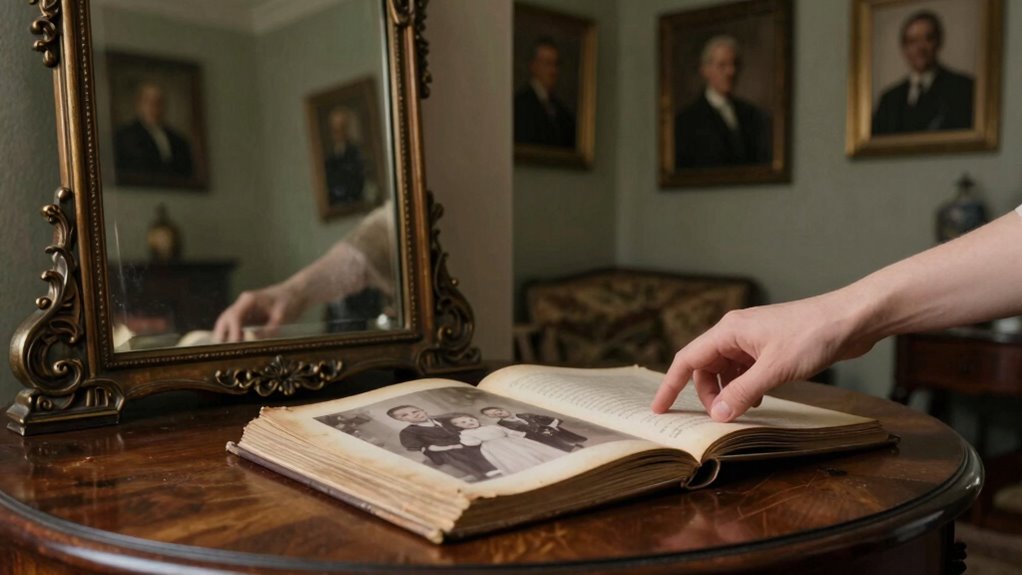
When narcissistic parents control the narrative, they often rewrite family history to suit their own image, leaving others feeling confused and betrayed. They do this because they want to preserve their sense of superiority and control, but it also serves to erase any evidence of past mistakes or neglect. By shaping the story, they can manipulate how you see yourself and your family, which can deeply impact your understanding of your identity. This rewriting isn’t just about changing facts; it’s about controlling the emotional landscape of your memories, often through memory manipulation. They may deny or distort events, making you question what you remember and feel. This distortion can create a fog of uncertainty that isolates you from your own experiences and feelings. Recognizing these tactics is crucial for breaking free from their influence.
Over generations, this behavior contributes to the cycle of generational trauma**. When a narcissistic parent rewrites family history, it’s not just about hiding their faults; it’s about controlling the narrative to avoid accountability. This pattern gets passed down, as children learn to accept or perpetuate the distorted stories to gain approval or avoid conflict. As a result, trauma isn’t just stored in individual memories but becomes embedded in the family’s collective history**, making it harder for the next generation to recognize the wounds or break free from the cycle. The stories told become selective, often emphasizing the parent’s version of events while dismissing or minimizing others’ perspectives.
Generational trauma persists as families pass down distorted stories to avoid accountability and control the narrative.
Memory manipulation plays a crucial role in this process. Narcissistic parents may gaslight family members, making them doubt their perceptions and feelings. They might insist that certain events never happened or that others are misremembering. This tactic effectively silences dissent and keeps the family history aligned with the parent’s narrative. Over time, this manipulation can cause you to question your own memory, leading to confusion about what’s real and what’s not. It becomes a way for the parent to maintain control, even long after the events occurred. You might find yourself unsure of the truth, carrying unresolved feelings that stem from these distorted memories. Understanding these patterns can help you regain clarity and emotional stability.
Ultimately, rewriting family history isn’t just about lying; it’s a manipulative tool that sustains narcissistic control and perpetuates trauma. Recognizing this pattern can be the first step toward reclaiming your story and healing from the confusion and betrayal that such rewriting breeds. You deserve to see your past clearly, free from manipulation, and to break the cycle of generational trauma.
therapeutic journal for family trauma
As an affiliate, we earn on qualifying purchases.
As an affiliate, we earn on qualifying purchases.
Frequently Asked Questions
How Do Narcissistic Parents Manipulate Family Memories?
Narcissistic parents spin a web of illusion, manipulating your memories like a puppeteer pulling strings. They use gaslighting tactics to distort your reality, making you doubt your perceptions. Through subtle memory suppression, they erase or rewrite family moments, replacing truth with their version. This emotional chess game keeps you uncertain, as they control the narrative, ensuring their image remains untarnished, and your memories serve their needs.
Can Family History Be Restored After Distortion?
Yes, you can restore family history after distortion, but it takes effort. You need to confront generational trauma and acknowledge memory distortion caused by narcissistic parents. Talk to relatives who remember the truth, gather authentic records, and document your own experiences. Rebuilding accurate family history involves patience and persistence, helping you heal and preserve genuine stories. Ultimately, restoring history empowers you to break free from past manipulations.
What Are Signs of Rewritten Family Narratives?
Rewritten family narratives are like a broken mirror, reflecting a distorted image of the past. You might notice signs like conflicting stories, selective memory, or denial of certain events. These distortions often stem from generational trauma, where honest memories get twisted to serve a parent’s narrative. Recognizing these signs helps you understand how memory distortion influences family history and can guide you toward healing and authentic remembrance.
How Does Rewriting Family History Affect Children’s Identities?
Rewriting family history influences your identity development by shaping how you see yourself and your roots. When narcissistic parents distort past events, you might struggle with feelings of confusion or inadequacy, as your sense of truth gets blurred. This can perpetuate generational trauma, causing you to carry unresolved issues. As a result, your personal growth may be hindered, making it harder to establish a genuine sense of self and healthy relationships.
Is Therapy Effective for Uncovering Altered Family Stories?
Yes, therapy can be effective for uncovering altered family stories. Through a targeted therapy approach, you can address memory distortion caused by narcissistic parents’ rewriting of history. Therapists help you explore your memories, recognize inconsistencies, and differentiate your experiences from false narratives. This process allows you to reconstruct a more accurate family history, empowering you to heal emotional wounds and build a stronger, authentic sense of self.
memory recovery workbook
As an affiliate, we earn on qualifying purchases.
As an affiliate, we earn on qualifying purchases.
Conclusion
Understanding that narcissistic parents often rewrite family history helps you see their need for control and admiration. It’s startling to realize that studies show up to 70% of adult children of narcissists experience identity confusion or self-doubt. By recognizing these patterns, you can begin to untangle the false narratives and reclaim your true story. Remember, your history isn’t defined by their distortions—your perspective and truth matter most in your journey toward healing.
emotional healing books for family betrayal
As an affiliate, we earn on qualifying purchases.
As an affiliate, we earn on qualifying purchases.
cognitive behavioral therapy tools
As an affiliate, we earn on qualifying purchases.
As an affiliate, we earn on qualifying purchases.