

Books on narcissistic personality disorder generally split into two camps: science-heavy clinical guides written for professionals and students, and survivor-focused self-help aimed at people healing from narcissistic relationships. The best overall pick, It’s Not You by Ramani Durvasula, earns the top spot because it balances accessible psychology with a clear recovery path for partners, adult children, and coworkers of narcissists. Rethinking Narcissism by Craig Malkin stands out for readers who want nuance about the narcissism spectrum rather than a one-note warning label, while The Four Types of Narcissism delivers strong value if you want a structured breakdown of narcissist subtypes without academic jargon. The main tradeoff you will face is depth versus readability: the clinical volumes offer rigor but assume background knowledge, and the survivor books read fast but sometimes oversimplify diagnosis. Read on for the full breakdown of where each book excels and where it falls short.

Turn your wind-down time into listening time
- Thousands of audiobooks, podcasts and originals
- Listen on your phone, tablet or Echo — also offline
- Cancel anytime
Key Takeaways
- Survivor-oriented titles dominated the top of the ranking because most readers searching for NPD books are healing from a relationship, not studying for a license.
- It’s Not You ranked best overall by pairing validation with practical exit and boundary strategies, while most competitors do one or the other well.
- The clinical picks (the Cluster B workbook, the gene-environment title, and the Cluster B clinical text) are strong references but poor first books — they assume psychological vocabulary.
- Covert narcissism coverage is thin across the category; The Covert Passive-Aggressive Narcissist fills a gap the mainstream titles barely touch.
- Faith-based and relationship-preservation readers are poorly served by most titles, making Understanding and Loving a Person with NPD the clear niche choice for that audience.
| It’s Not You: Identifying and Healing from Narcissistic People |  | Best Overall | Format: Paperback / Hardcover / Audiobook / eBook | Primary Focus: Recognizing narcissistic people and personal recovery | Intended Audience: Survivors of narcissistic relationships | VIEW LATEST PRICE | See Our Full Breakdown |
| The Four Types of Narcissism: Understanding Narcissistic Personality Disorder and Recovery Strategies | 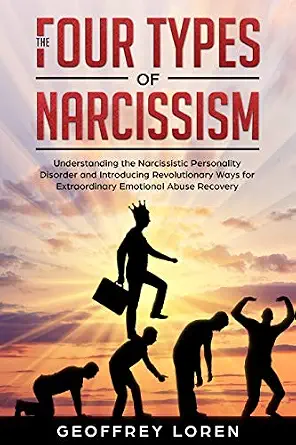 | Best for Typology and Frameworks | Format: Paperback / eBook | Primary Focus: Narcissism typology plus abuse recovery | Framework: Four types of narcissism | VIEW LATEST PRICE | See Our Full Breakdown |
| Personality Disorders and Mental Illnesses: The Truth About Psychopaths, Sociopaths, and Narcissists |  | Best Broad Mental Health Primer | Format: Paperback / eBook | Primary Focus: Overview of psychopathy, sociopathy, narcissism, and related conditions | Scope: Broad — multiple personality disorders | VIEW LATEST PRICE | See Our Full Breakdown |
| Rethinking Narcissism: The Secret to Recognizing and Coping with Narcissists |  | Best Psychological Perspective | Format: Paperback / Hardcover / eBook / Audiobook | Primary Focus: Narcissism spectrum, recognition, and coping strategies | Author Background: Clinical psychologist | VIEW LATEST PRICE | See Our Full Breakdown |
| Narcissistic Abuse: A Therapist’s Guide to Identifying, Escaping, and Healing from Toxic and Manipulative People |  | Best for Escape Planning | Format: Paperback / Hardcover / eBook / Audiobook | Primary Focus: Identifying, escaping, and healing from narcissistic abuse | Author Background: Therapist | VIEW LATEST PRICE | See Our Full Breakdown |
| The Everything Guide to Narcissistic Personality Disorder |  | Best for Everyday Coping Across Contexts | Format: Paperback | Primary Audience: General readers coping with NPD in others | Focus Areas: Work, home, and family relationships | VIEW LATEST PRICE | See Our Full Breakdown |
| Antisocial, Narcissistic, and Borderline Personality Disorders |  | Best for Students and Clinicians | Format: Hardcover/paperback academic text | Primary Audience: Mental health professionals and students | Disorders Covered: Antisocial, narcissistic, borderline | VIEW LATEST PRICE | See Our Full Breakdown |
| Understanding and Loving a Person with Narcissistic Personality Disorder |  | Best Faith-Based Support Choice | Format: Paperback/ebook | Primary Audience: Christian family members and partners of people with NPD | Framework: Biblical wisdom plus practical psychology | VIEW LATEST PRICE | See Our Full Breakdown |
| Antisocial, Borderline, Narcissistic and Histrionic Workbook |  | Best Professional Treatment Workbook | Format: Paperback workbook | Primary Audience: Mental health professionals; clients in treatment | Disorders Covered: Antisocial, borderline, narcissistic, histrionic | VIEW LATEST PRICE | See Our Full Breakdown |
| The Nature and Nurture of Narcissism |  | Best Science-Deep Read on Causes | Format: Ebook/paperback | Primary Audience: Researchers, students, and scientifically curious readers | Core Topic: Gene-environment interaction in NPD development | VIEW LATEST PRICE | See Our Full Breakdown |
| The Covert Passive-Aggressive Narcissist: Recognizing the Traits and Finding Healing After Hidden Emotional and Psychological Abuse |  | Best for Hidden Abuse Survivors | Format: Paperback and digital editions | Focus Area: Covert passive-aggressive narcissism | Primary Themes: Hidden emotional abuse, psychological abuse recognition, healing and recovery | VIEW LATEST PRICE | See Our Full Breakdown |
| narcissistic personality disorder book | Format | Tone |
|---|---|---|
| It’s Not You: Identifying and | Paperback / Hardcover / Audiobook / eBook | Validating, recovery-oriented |
| The Four Types of Narcissism: | Paperback / eBook | Structured, strategy-driven |
| Personality Disorders and Ment | Paperback / eBook | Educational, explanatory |
| Rethinking Narcissism: The Sec | Paperback / Hardcover / eBook / Audiobook | Psychological, balanced |
| Narcissistic Abuse: A Therapis | Paperback / Hardcover / eBook / Audiobook | Professional, guidance-oriented |
| The Everything Guide to Narcis | Paperback | Professional and reassuring |
| Antisocial | Hardcover/paperback academic text | — |
| Understanding and Loving a Per | Paperback/ebook | — |
| Antisocial | Paperback workbook | — |
| The Nature and Nurture of Narc | Ebook/paperback | — |
| The Covert Passive-Aggressive | Paperback and digital editions | — |
More Details on Our Top Picks
It’s Not You: Identifying and Healing from Narcissistic People
Of the books in this roundup, this is the one I’d point most readers toward first. Where The Four Types of Narcissism spends most of its pages on classification, It’s Not You keeps the focus where survivors actually need it: recognition and recovery. The title itself captures the book’s central value — it repeatedly returns to the message that the abuse was never the reader’s fault, which is a framing many competing titles underplay. Compared with Rethinking Narcissism, it is less academic and far more emotionally direct, making it the stronger pick for someone in the aftermath of a relationship rather than someone studying the theory. The tradeoff is real, though: readers wanting clinical depth, diagnostic frameworks, or a research-heavy treatment of narcissistic personality disorder will find it thinner than the more scholarly options here.
Pros:- Practical, actionable healing strategies rather than abstract theory
- Clear guidance on recognizing narcissistic behavior patterns early
- Emotionally validating tone that directly addresses self-blame
- Accessible enough to read while in crisis
- Broadly applicable across romantic, family, and workplace relationships
Cons:- Light on clinical detail and formal diagnostic frameworks
- Minimal supplementary material or structured exercises compared with workbook-style alternatives
Best for: Readers freshly out of a relationship with a narcissistic partner, parent, or friend who need validation and a practical healing roadmap
Not ideal for: Students, clinicians, or readers wanting a diagnostic or research-based treatment of NPD — this is a recovery book, not a textbook
- Format:Paperback / Hardcover / Audiobook / eBook
- Primary Focus:Recognizing narcissistic people and personal recovery
- Intended Audience:Survivors of narcissistic relationships
- Tone:Validating, recovery-oriented
- Approach:Practical strategies plus behavioral recognition
- Clinical Depth:Moderate — accessible, not academic
- Relationship Types Covered:Romantic, family, friendships
Our verdict“If you only buy one book on this list to begin healing from a narcissistic relationship, make it this one.”
The Four Types of Narcissism: Understanding Narcissistic Personality Disorder and Recovery Strategies
This is the pick for readers who learn best by categorizing what they’ve lived through. Its typology approach — breaking narcissism into four distinct types — gives readers a vocabulary that It’s Not You deliberately skips in favor of emotional support. That structure is genuinely useful: once you can name whether you’re dealing with a covert or grandiose pattern, the recovery strategies land with more precision. Compared with Rethinking Narcissism, which also presents narcissism as a spectrum, this book leans harder into emotional abuse recovery methods and less into self-assessment of the reader’s own traits. The drawback is credibility friction — with no customer ratings and thin author visibility, buyers are taking more of a chance here than with the big-name titles in this lineup. It also assumes the reader already suspects abuse rather than helping them figure it out from scratch.
Pros:- Clear four-type framework that makes confusing behavior patterns legible
- Recovery strategies paired to each narcissism type for more targeted healing
- Strong focus on emotional abuse recovery, not just diagnosis
- Shorter and more digestible than academic alternatives
Cons:- No customer ratings or reviews available to gauge reader reception
- Lacks supplementary materials such as exercises or workbooks
- Typology can feel oversimplified compared with spectrum-based approaches
Best for: Readers who already know they’ve been abused and want a structured framework to categorize the narcissist’s behavior type before choosing recovery strategies
Not ideal for: First-time readers still unsure whether their relationship qualifies as abusive, or anyone who relies on reviews and established author credentials before buying
- Format:Paperback / eBook
- Primary Focus:Narcissism typology plus abuse recovery
- Framework:Four types of narcissism
- Intended Audience:Readers recovering from emotional abuse
- Tone:Structured, strategy-driven
- Clinical Depth:Moderate — explanatory, not textbook-level
- Customer Feedback:Limited — few ratings available
Our verdict“A strong second book for readers who want structure and labeling after a more emotionally supportive first read.”
Personality Disorders and Mental Illnesses: The Truth About Psychopaths, Sociopaths, and Narcissists
Every roundup needs one wide-angle option, and this is it. Instead of drilling into narcissism alone, it situates NPD alongside psychopathy, sociopathy, and other conditions — context that narrower picks like The Four Types of Narcissism don’t attempt. That breadth makes it a solid starting point for readers who aren’t yet sure which disorder they’re actually confronting, which is a surprisingly common situation. It also pairs naturally with Antisocial, Narcissistic, and Borderline Personality Disorders elsewhere in this guide for readers who want even more diagnostic coverage. The flip side of breadth is depth: anyone deep in a narcissistic relationship will find the healing content thin compared with It’s Not You, and the vague publication details mean quality control is harder to verify. Treat it as orientation, not therapy.
Pros:- Covers multiple disorders, giving useful comparative context
- Clarifies commonly confused terms like psychopath versus sociopath versus narcissist
- Accessible introductory language for non-clinicians
- Good starting point before committing to a specialized title
Cons:- Shallow on any single disorder, including narcissism
- Sparse author and publication details make credibility harder to judge
- No practical recovery or coping strategies
Best for: Curious readers, students, and family members trying to understand the differences between narcissism, psychopathy, and sociopathy before choosing a specialized book
Not ideal for: Abuse survivors needing recovery guidance — the healing content is minimal compared with dedicated recovery titles
- Format:Paperback / eBook
- Primary Focus:Overview of psychopathy, sociopathy, narcissism, and related conditions
- Scope:Broad — multiple personality disorders
- Intended Audience:General readers and mental health learners
- Tone:Educational, explanatory
- Clinical Depth:Introductory
- Recovery Content:Minimal
Our verdict“Buy this to understand the landscape of personality disorders — not to heal from any one of them.”
Rethinking Narcissism: The Secret to Recognizing and Coping with Narcissists
Most books in this category treat narcissism as something that happens to the reader. This one, written by a psychologist, takes a different angle: narcissism exists on a spectrum that includes healthy narcissism, and understanding that spectrum changes how you cope with — and recognize — the narcissists in your life. That framing is the book’s biggest differentiator versus The Four Types of Narcissism, which sorts others into boxes without asking where the reader sits on the continuum. It also digs into why simple labels fail, which makes it the most intellectually honest pick in this lineup. The tradeoff is emotional: readers in acute crisis may find the measured, analytic tone less comforting than the validation-first approach of It’s Not You. It’s also weaker as a step-by-step escape manual for those actively trying to leave a toxic relationship.
Pros:- Written by a credentialed psychologist, giving it clinical grounding
- Spectrum-based model is more nuanced than rigid type-based books
- Includes practical coping strategies, not just theory
- Addresses healthy narcissism — a topic most titles ignore
Cons:- Measured, analytic tone may feel cold to readers seeking emotional support
- Not structured as a crisis or escape guide for active abuse situations
Best for: Analytically minded readers who want a credentialed psychologist’s framework for understanding narcissism as a spectrum, including their own traits
Not ideal for: Readers in acute emotional crisis who need validation and immediate coping support rather than theory
- Format:Paperback / Hardcover / eBook / Audiobook
- Primary Focus:Narcissism spectrum, recognition, and coping strategies
- Author Background:Clinical psychologist
- Framework:Spectrum model of narcissism
- Intended Audience:Analytical readers, students, and those coping with narcissists
- Tone:Psychological, balanced
- Recovery Content:Coping strategies rather than abuse recovery
Our verdict“The best choice for readers who want to genuinely understand narcissism as a psychologist sees it — spectrum, nuance, and all.”
Narcissistic Abuse: A Therapist’s Guide to Identifying, Escaping, and Healing from Toxic and Manipulative People
Where It’s Not You leads with healing, this title leads with the full arc: identify, escape, then heal. That sequencing matters. For readers still inside a manipulative relationship, the middle step — getting out safely and decisively — is the one most books shortchange, and a therapist-authored guide gives it professional weight. Compared with The Four Types of Narcissism, this book offers stronger clinical authority but less structural typology, so the two actually pair well together. Its coverage of manipulation tactics like gaslighting and guilt cycles is more actionable than the broad educational overview in Personality Disorders and Mental Illnesses. The main drawback: because it’s guidance-oriented rather than narrative, it reads more like working with a therapist on paper than like a comforting companion — some readers will want that, and others will find it impersonal.
Pros:- Covers the full sequence: identifying, escaping, and healing
- Therapist-authored with professional insight into manipulation tactics
- Practical guidance for readers still in toxic relationships
- Strong on recognizing gaslighting and covert manipulation
Cons:- Instructional tone feels clinical rather than emotionally supportive
- Sparse detail on supplementary features like exercises or workbooks
- Redundant for readers who have already left the relationship
Best for: Readers currently entangled with a manipulative or toxic person who need a professional’s roadmap for getting out, not just recovering afterward
Not ideal for: Readers past the escape stage who want emotional validation and narrative support — the clinical, instructional tone may feel impersonal
- Format:Paperback / Hardcover / eBook / Audiobook
- Primary Focus:Identifying, escaping, and healing from narcissistic abuse
- Author Background:Therapist
- Intended Audience:Anyone in or leaving a toxic relationship
- Structure:Sequential: identify, escape, heal
- Tone:Professional, guidance-oriented
- Special Strength:Manipulation tactic recognition
Our verdict“The strongest pick for anyone still trapped in a manipulative relationship who needs a professional’s plan for getting out.”
The Everything Guide to Narcissistic Personality Disorder
Where most titles in this roundup zero in on one relationship or one recovery angle, The Everything Guide to Narcissistic Personality Disorder earns its place by covering work, home, and family settings in a single volume. Compared with It’s Not You, which leans heavily on healing from a narcissistic partner or parent, this guide treats NPD as something you might encounter in a boss, a sibling, or a coworker — a wider net that suits readers juggling multiple difficult relationships. The tone is professional but reassuring, which makes dense clinical material feel approachable. The tradeoff is depth: because it spans so many contexts, none gets the granular attention that a dedicated recovery book provides. Casual readers may also find sections text-heavy without the exercises a workbook like the Cluster B Workbook offers.
Pros:- Covers workplace, family, and romantic contexts in one volume
- Expert-authored with a calm, reassuring tone
- Accessible to readers without a psychology background
- Balances explanation of NPD with coping strategies
Cons:- Spreads itself thin across settings, limiting depth on any one
- Denser and less exercise-driven than workbook-style alternatives
Best for: Readers dealing with narcissistic behavior in multiple areas of life — a difficult manager, a parent, and a spouse — who want one reference instead of three books
Not ideal for: Readers focused solely on escaping or healing from narcissistic abuse in one intimate relationship; a targeted title like Narcissistic Abuse will serve them better
- Format:Paperback
- Primary Audience:General readers coping with NPD in others
- Focus Areas:Work, home, and family relationships
- Tone:Professional and reassuring
- Approach:Psychoeducation plus coping advice
- Exercises Included:No
- Clinical Depth:Moderate — accessible but thorough
Our verdict“Pick this if you need one broadly applicable guide to managing narcissistic people wherever they show up in your life.”
Antisocial, Narcissistic, and Borderline Personality Disorders
This is the most clinically oriented entry in the lineup, examining narcissism alongside antisocial and borderline pathology with academic rigor. Unlike Rethinking Narcissism, which translates research into self-help language, this title stays in diagnostic and treatment territory — characteristics, etiology, and therapeutic strategies — making it a better fit for a counseling student than someone in an unhappy marriage. It sits closer to the Cluster B Workbook on the clinical spectrum, but where that book is exercise-driven, this one is conceptual and explanatory. The drawback is immediacy: no detailed case studies means the theory rarely feels grounded in lived experience, and general readers will find the vocabulary a barrier rather than a bridge.
Pros:- Rigorous coverage of three personality disorders in one academic text
- Includes management and therapy strategies, not just descriptions
- Useful as a course or licensing-exam supplement
- Written at a professional standard with research grounding
Cons:- Sparse case studies make the material feel abstract
- Technical language alienates readers without clinical training
Best for: Psychology students, trainee therapists, and clinicians who need a structured academic overview of Cluster B disorders for coursework or practice
Not ideal for: Partners or adult children of narcissists seeking emotional validation and practical coping tools — the register is textbook, not support group
- Format:Hardcover/paperback academic text
- Primary Audience:Mental health professionals and students
- Disorders Covered:Antisocial, narcissistic, borderline
- Content Type:Characteristics, causes, and treatment
- Reading Level:Clinical/academic
- Exercises Included:No
- Case Studies:Limited
Our verdict“A textbook-style reference that belongs on a clinician’s shelf, not on a nightstand for emotional recovery.”
Understanding and Loving a Person with Narcissistic Personality Disorder
This title occupies a distinct lane: it’s the only entry in the roundup approaching NPD through a biblical framework, pairing scriptural wisdom with psychological boundary-setting. Compared with The Covert Passive-Aggressive Narcissist, which centers on recognizing manipulation and healing after abuse, this book pushes toward empathy and sustained compassion — a stance that resonates with readers committed to staying in relationship with a difficult family member rather than exiting. That framing is also its main tradeoff: readers looking for permission to distance themselves, or those outside the Christian tradition, will find the theological scaffolding doesn’t map onto their situation. It also assumes some familiarity with psychological concepts, so complete newcomers may want a primer first.
Pros:- Integrates faith-based wisdom with practical boundary tools
- Rare focus on empathy without surrendering self-protection
- Short and readable for a spiritually oriented audience
- Directly addresses staying in relationship, not just leaving
Cons:- Biblical framing limits relevance for non-religious readers
- Assumes baseline psychological knowledge that beginners may lack
- Lighter on clinical substance than secular alternatives
Best for: Christian readers who want to love and support a narcissistic family member while protecting their own boundaries and faith-based identity
Not ideal for: Secular readers or those recovering from severe narcissistic abuse who need distance-first strategies rather than compassion-first ones
- Format:Paperback/ebook
- Primary Audience:Christian family members and partners of people with NPD
- Framework:Biblical wisdom plus practical psychology
- Core Themes:Empathy, boundaries, compassion
- Reading Level:Accessible but assumes some psychology background
- Exercises Included:No
- Stance:Staying in relationship with boundaries
Our verdict“The right choice only if a Christian lens is central to how you approach a narcissistic loved one.”
Antisocial, Borderline, Narcissistic and Histrionic Workbook
Among the clinical titles in this roundup, this is the one built for doing rather than reading. Where Antisocial, Narcissistic, and Borderline Personality Disorders explains the theory, this workbook converts it into structured treatment exercises spanning all four Cluster B disorders — the broadest diagnostic coverage on this list. Therapists get ready-to-use strategies for sessions; motivated clients get a framework for understanding their own patterns. The catch is supervision: several exercises genuinely benefit from professional guidance, so it functions best as a companion to therapy rather than a self-directed fix. It also lacks the consumer polish of titles like The Four Types of Narcissism — no hand-holding, no narrative warmth, just clinical tools. Sparse reviews and thin product details make it a purchase to verify against your therapist’s recommendation.
Pros:- Covers all four Cluster B disorders, the widest scope here
- Concrete treatment exercises rather than abstract theory
- Practical for session planning and client homework
- Useful for individuals researching their own diagnosis
Cons:- Many exercises need professional supervision to apply well
- Little reader feedback available to gauge real-world usefulness
- Clinical tone offers no emotional support component
Best for: Therapists treating Cluster B clients, and clients already in therapy who want structured between-session work
Not ideal for: Self-help readers without therapeutic support — the material assumes professional context to be used safely
- Format:Paperback workbook
- Primary Audience:Mental health professionals; clients in treatment
- Disorders Covered:Antisocial, borderline, narcissistic, histrionic
- Content Type:Treatment strategies and structured exercises
- Best Used With:Professional therapeutic guidance
- Reading Level:Clinical
- Consumer Reviews:Limited availability
Our verdict“A working tool for the therapy room — buy it with your clinician’s input, not as a standalone self-help fix.”
The Nature and Nurture of Narcissism
Every other book here asks how to cope with narcissism; this one asks where it comes from. The Nature and Nurture of Narcissism digs into gene-environment interaction, explaining how heredity and upbringing combine to produce narcissistic traits — a genuinely different purchase rationale than It’s Not You or any recovery-focused pick. For readers who find coping advice hollow without understanding origins, or for students writing papers on etiology, this fills a gap nothing else in the lineup touches. The tradeoff is utility: there are no practical applications, exercises, or relationship strategies inside. Pair it with a hands-on title rather than expecting it to do both jobs. The technical writing also demands patience from readers without a science background.
Pros:- Unique focus on genetic and environmental causes of NPD
- Integrates biology and psychology for a fuller etiological picture
- Fills a gap no other roundup title covers
- Valuable for academic research and citation
Cons:- No practical coping tools or relationship advice whatsoever
- Dense scientific prose challenges general readers
- Newer title with limited reader feedback to gauge reception
Best for: Curious readers, students, and professionals who want a scientific explanation of how narcissism develops rather than coping tips
Not ideal for: Anyone in an active crisis with a narcissistic person who needs immediate boundaries and recovery strategies first
- Format:Ebook/paperback
- Primary Audience:Researchers, students, and scientifically curious readers
- Core Topic:Gene-environment interaction in NPD development
- Perspective:Scientific and biological
- Practical Exercises:None
- Reading Level:Technical
- Focus:Etiology over coping strategies
Our verdict“Buy this to understand why narcissism exists — pair it with a coping guide, because it won’t help you manage tomorrow’s argument.”
The Covert Passive-Aggressive Narcissist: Recognizing the Traits and Finding Healing After Hidden Emotional and Psychological Abuse
Most books in this roundup tackle narcissism broadly, but this one zeros in on a specific and often missed problem: covert, passive-aggressive narcissism. Where Rethinking Narcissism spends much of its energy on the louder, grandiose type, this book is built for readers whose partner or parent never raged or boasted — the abuse was quiet, deniable, and hard to name. That focus is its greatest strength and its main limitation.
The second half moves from recognition into healing strategies, which puts it closer to It’s Not You in tone, though it leans harder into psychological concepts and terminology. Readers wanting structure will find the framework useful; readers wanting lived stories may feel something is missing. Compared with Narcissistic Abuse: A Therapist’s Guide, it is narrower in scope but deeper on this one subtype. The tradeoff is clear: specificity over breadth, and theory over case examples.
Pros:- One of the few books dedicated specifically to covert passive-aggressive narcissism rather than the grandiose stereotype
- Explains why this form of abuse is so hard to recognize, validating readers who doubted their own perceptions
- Balances trait recognition with concrete healing and recovery strategies
- Shorter and more focused than broader guides like The Everything Guide to Narcissistic Personality Disorder
Cons:- Heavy on psychological concepts that can feel academic without a therapy background
- Lacks detailed case studies, so readers who learn from real examples may struggle to connect
- Too narrow to serve as a general reference on narcissistic personality disorder
Best for: Survivors of subtle, long-term emotional manipulation who suspect covert narcissism but have never been able to label what was happening
Not ideal for: Readers who want detailed real-life case studies or a broad overview of all narcissism types — its narrow focus and concept-heavy style will disappoint
- Format:Paperback and digital editions
- Focus Area:Covert passive-aggressive narcissism
- Primary Themes:Hidden emotional abuse, psychological abuse recognition, healing and recovery
- Approach:Trait identification plus recovery strategies
- Depth:Focused deep-dive on a single narcissism subtype
- Case Studies:Limited; primarily concept-driven
- Audience:Abuse survivors and those supporting them
Our verdict“Buy this if you need to identify and recover from hidden, passive-aggressive narcissistic abuse — skip it if you want a broad, story-driven overview of NPD.”

How We Picked
I evaluated each book against the criteria that actually determine whether a reader finishes and benefits from it: audience fit (survivor, family member, student, or clinician), practical utility (does it give recognizable examples, scripts, or recovery steps), scientific grounding (accurate DSM-aligned framing versus pop-psychology labeling), and readability for someone with no psychology background. I also weighed how honestly each author handles the hardest question in this category — whether to stay in the relationship or leave — because books that dodge that decision leave readers stuck.
The ranking logic follows a simple principle: books that serve the most common reader, someone coping with a narcissistic person in their life, rank highest. Clinical references rank lower not because they are weaker — several are more rigorous than the winners — but because they serve a narrower buyer. Where two books cover similar ground, the one with clearer structure, better concrete guidance, and fewer filler chapters won the position. Every pick retains a defined role, so a clinical buyer or a faith-oriented reader still has an obvious match on this list.
| narcissistic personality disorder book | Tone |
|---|---|
| It’s Not You: Identifying and | Validating, recovery-oriented |
| The Four Types of Narcissism: | Structured, strategy-driven |
| Personality Disorders and Ment | Educational, explanatory |
| Rethinking Narcissism: The Sec | Psychological, balanced |
| Narcissistic Abuse: A Therapis | Professional, guidance-oriented |
| The Everything Guide to Narcis | Professional and reassuring |
| Antisocial | — |
| Understanding and Loving a Per | — |
| Antisocial | — |
| The Nature and Nurture of Narc | — |
| The Covert Passive-Aggressive | — |
Factors to Consider When Choosing Narcissistic Personality Disorder Books
Choosing a book in this category is easy to get wrong because the covers and titles often look interchangeable while the contents serve completely different readers. Before you buy, match the book to your actual situation and goal.Know Who the Book Is For: Survivor, Student, or Clinician
The single most common mistake is buying a clinical text when you needed emotional support, or vice versa. Survivor-focused books prioritize validation, boundary-setting, and recovery, and they read quickly. Academic and clinical titles use DSM terminology, cite studies, and assume you already understand personality disorder basics. If you are in an active crisis — a fresh breakup, ongoing family conflict — a clinical text can feel cold and useless. If you are a counseling student or a therapist building a reference shelf, a self-help book will frustrate you with its generalities. Flip through the introduction before buying: the author usually states their intended audience in the first few pages, and that statement is more reliable than the marketing copy on the back cover.
Grandiose Versus Covert Narcissism Coverage
Many popular books describe only the loud, grandiose narcissist: the boastful, domineering personality everyone recognizes. But a large share of real-world narcissistic abuse comes from covert or vulnerable narcissists, who present as victims, use guilt and silent treatment, and are far harder to identify. Check the table of contents for chapters on covert, vulnerable, or passive-aggressive narcissism before purchasing. Books that skip this subtype can leave readers doubting themselves, because their experience does not match the textbook caricature. If you suspect hidden manipulation rather than overt arrogance, prioritize a title dedicated to covert traits even if it means owning two books instead of one.
Practical Tools Versus Pure Understanding
Some readers want to comprehend the disorder; others need scripts for the next conversation with a difficult parent or partner. Books heavy on theory explain why narcissists behave as they do but leave you without a plan, while action-oriented books give boundary scripts, exit checklists, and communication strategies with less depth on origins. Neither approach is wrong, but buying the wrong one wastes your reading time. A useful heuristic: if you have recently discovered the problem, start with a validation-plus-strategy book. Once stabilized, move to a deeper psychology title. Workbooks with exercises sit in between and suit readers who learn by doing rather than reading.
Beware of Pop-Psychology Labeling
This category attracts authors who label every difficult person a narcissist, which can be both inaccurate and harmful to your decisions. Stronger books ground their claims in the narcissism spectrum, acknowledging that traits exist on a continuum and that only a clinician can diagnose a personality disorder. Books that encourage you to diagnose your spouse or parent definitively should raise a flag. Look for authors with clinical credentials or research backgrounds, and for writing that distinguishes narcissistic traits from the full disorder. The best titles empower you to respond to behavior patterns regardless of the label, which is healthier than armchair diagnosis. This distinction also matters legally in custody situations, where armchair labels can backfire.
Faith, Values, and Relationship Goals
Not every reader wants to leave the relationship. Some buyers are committed to staying — for religious reasons, children, or hope of change — and the mainstream survivor literature, which often leans toward exit strategies, can feel alienating. Faith-integrated titles frame boundaries and compassion as compatible rather than contradictory, which secular books rarely attempt. The honest tradeoff: these books can underemphasize safety planning in abusive situations, so readers facing severe manipulation may need to supplement them. Decide your goal before choosing, because a book that assumes you are leaving will not help you stay well, and a book built for staying will not help you exit safely.
Price, Format, and Reread Value
Most books in this category are inexpensive, so format matters more than cost. Audiobooks suit validation-focused titles you will absorb once, but they work poorly for workbooks and reference texts you need to annotate. Clinical guides earn their price through reread value as references, while a short self-help book you finish in a weekend may deliver its full worth immediately. If you are on a budget, one strong generalist book plus one subtype-specific book covers more ground than three overlapping generalists. Avoid buying a stack of similar survivor titles at once — redundancy is the most common money-waster in this niche.
Frequently Asked Questions
Can a book actually help me deal with a narcissist, or do I need therapy?
A good book can validate your experience, teach you to recognize manipulation patterns, and give you boundary scripts — all of which meaningfully reduce confusion and self-blame. What a book cannot do is diagnose the other person, hold you accountable while you practice new responses, or support you through a dangerous separation. Many readers use books as a first step and then bring specific questions to a therapist, which is the most effective sequence. If you are dealing with severe abuse, financial control, or custody issues, pair your reading with professional support rather than relying on the book alone. The titles ranked highest here complement therapy well but do not replace it.
Which book should I start with if I just realized my partner or parent may be a narcissist?
Start with It’s Not You, because it leads with validation and then moves into practical coping strategies, which is the sequence most newly-aware readers need. Rethinking Narcissism is a strong second read once you are stabilized, since it introduces the spectrum concept and prevents you from over-labeling everyone in your life. Avoid beginning with the clinical texts on this list — they are accurate but emotionally flat for someone still processing shock. Also resist starting with covert-narcissism titles unless you are certain the covert pattern fits, because the early reading stage is about grounding yourself, not confirming worst-case theories. One well-matched first book beats three bought in a panic.
Are these books useful if I think I might have narcissistic traits myself?
Some are, and some will actively discourage you. Rethinking Narcissism is the best fit for self-examination because it frames narcissism as a spectrum everyone sits on, which reduces shame and defensiveness. The survivor-oriented titles are written for people harmed by narcissists, so reading them as self-help can feel like an accusation marathon. If you are genuinely concerned about meeting criteria for the disorder, a book can help you understand the territory, but only a clinician can assess you properly. Use the spectrum-based books to build self-awareness, and treat the diagnosis-focused texts as education rather than a mirror.
What is the difference between the clinical Cluster B books and the self-help ones?
The clinical titles — the Cluster B workbook, the treatment-strategy text, and the gene-environment research book — are written for therapists, students, and serious students of psychology. They use diagnostic criteria, treatment modalities, and research citations, and they describe what narcissism is with precision. Self-help books describe what narcissism feels like to live with and what to do about it, which is a completely different job. A therapist buying a survivor memoir will find it useless, and a hurting spouse buying a treatment workbook will find it impenetrable. Neither type is superior; they simply answer different questions, and most buyers should know which question they are asking before checkout.
Do any of these books help with covert or passive-aggressive narcissists specifically?
Yes, and this is a genuine gap in the broader category. Most generalist NPD books focus on grandiose, overt narcissism, which leaves readers dealing with guilt-tripping, silent treatment, and victim-playing behaviors without a map. The Covert Passive-Aggressive Narcissist addresses this subtype directly, explaining why covert abuse is so hard to identify and why victims often doubt their own perceptions. If your situation involves quiet manipulation rather than loud entitlement, that book should be your first or second purchase, even before a generalist title. Combining it with a broader book like It’s Not You gives you both the specific pattern and the general recovery framework.
Conclusion
For best overall, It’s Not You is the pick I would hand most readers — it validates, explains, and guides in one volume. For best value, The Four Types of Narcissism covers subtype identification at a lower commitment of time and money than nearly anything comparable. The premium/clinical tier belongs to the Antisocial, Borderline, Narcissistic and Histrionic Workbook and its companion text, which suit practitioners and students rather than casual readers. For beginners, Rethinking Narcissism is the gentlest, least alarmist on-ramp to the subject. Specific needs round out the list: The Covert Passive-Aggressive Narcissist for hidden manipulation, Understanding and Loving a Person with NPD for faith-oriented readers staying in the relationship, The Nature and Nurture of Narcissism for research depth, and Narcissistic Abuse: A Therapist’s Guide for escaping active manipulation. Match the book to your situation, not the bestseller rank, and you will get far more from whichever title you choose.
Halloween Picks
halloween
As an affiliate, we earn on qualifying purchases.