TL;DR

Turn your wind-down time into listening time
- Thousands of audiobooks, podcasts and originals
- Listen on your phone, tablet or Echo — also offline
- Cancel anytime
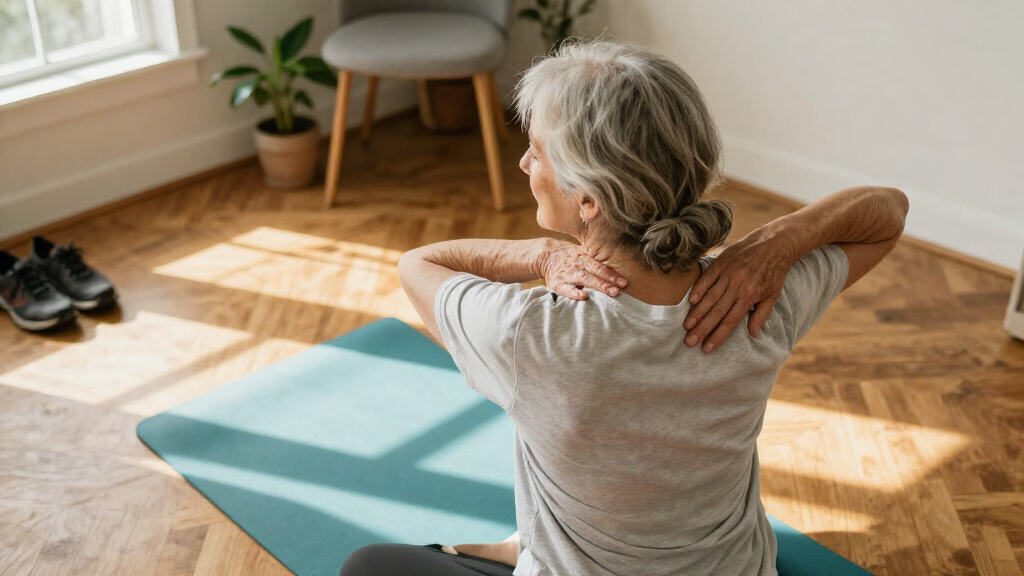
A Sixty and Me report argues that stiffness after 60 is not always explained by age alone: prolonged sitting and repeating a narrow range of movements may contribute. Its author describes gentle movement followed by stability and strength work, but the report is based on teaching experience, not a clinical study.
A Sixty and Me report says stiffness after 60 may be linked not only to aging but also to long periods of sitting and repeatedly moving in a limited range of directions. The account comes from a Pilates instructor describing observations from her classes; it is not a clinical study establishing the causes of stiffness or showing that a particular routine will treat it.
The report’s author, who says she has taught Pilates to women over 55 for more than 10 years, describes stiffness as common among her students. In her experience, people who have spent more time sitting—after a long drive, a weekend of reading or extra computer work—often arrive feeling stiffer. She says some of that stiffness eases when they begin moving, while acknowledging that not all of it does.
The explanation offered is that everyday routines often involve prolonged sitting and repetitive movements, such as walking forward, reaching for nearby objects and bending over household tasks. The author suggests that less-used movements, such as reaching overhead or leaning sideways, may feel less familiar. She identifies the neck, shoulders, upper back, hips and spine as areas where her students commonly notice stiffness. These are her observations, not findings from a study cited in the report.
For class, she says, the sequence is slow, easy movement first, followed by work on stability around joints and then strength. She reports that students often say they feel looser after class, and notice a difference when they miss a week. The article also describes a short seated routine, but advises moving comfortably, not pushing into pain, and checking with a doctor before trying something new when an injury or health condition is present.
How Daily Movement May Matter
The report’s practical point is that a person’s usual activity patterns may be one factor worth noticing when stiffness appears. If symptoms tend to follow a long stretch of sitting, gentle movement may feel different from immediately attempting forceful stretching. That observation may help readers think about when stiffness occurs, rather than treating age as the sole explanation.
However, the report does not establish that sitting causes a particular person’s symptoms or that movement will resolve them. Stiffness can have different causes, and the account does not assess individual readers. Its suggestions are general, low-intensity examples, not a diagnosis or a substitute for professional guidance about persistent symptoms, pain, injury or an underlying condition.
gentle stretching bands for seniors
As an affiliate, we earn on qualifying purchases.
As an affiliate, we earn on qualifying purchases.
What the Instructor Observed
The source is a first-person report by a Pilates instructor published by Sixty and Me under the title “Why You Feel Stiffer After 60, and Why It’s Not Just Age.” The instructor draws on more than a decade of teaching women over 55 and contrasts class observations with a common assumption she describes hearing: that stiffness is simply part of getting older.
The article does not provide research citations, participant numbers, measurements or a comparison group. Its account is best understood as an instructor’s experience and explanation, rather than evidence that limited movement accounts for stiffness generally. It also recognizes that some stiffness may accompany aging and does not claim that movement removes every cause.
Limits of the Report’s Evidence
The report does not specify when it was published, cite clinical research or provide data measuring stiffness before and after movement. It is therefore unclear how broadly the instructor’s class observations apply, how much sitting contributes compared with other factors, or which activities may suit a particular person.
It also does not explain how readers should distinguish ordinary stiffness from symptoms that need medical assessment. The author advises people with an injury or health condition to check with a doctor before starting a new routine, but the report does not offer individualized guidance. The cause of any one reader’s stiffness cannot be determined from this article.
Practical Steps and Medical Guidance
The report suggests trying a few minutes of comfortable movement after sitting or in the morning: slow neck turns, shoulder rolls, seated cat-cow movements and alternating knee lifts. It recommends a sturdy chair, a slow pace and a range that feels comfortable. These are suggestions from the article, not a prescribed treatment plan.
Readers can observe whether stiffness follows particular routines, but should not push through pain. The source advises consulting a doctor before starting something new when an injury or health condition is involved. The report provides no research follow-up or scheduled next development; its broader question—how much everyday movement patterns explain stiffness—remains unanswered by the material supplied.
Key Questions
Does the report say stiffness after 60 is caused by sitting?
No. The instructor says she often sees more stiffness among students who have been sitting, but this is her teaching experience, not proof that sitting caused their symptoms.
What movements does the article suggest?
It lists slow neck turns, shoulder rolls, seated cat-cow movements and alternating knee lifts. The report advises using a comfortable range and not pushing into pain.
Does movement ease stiffness for everyone?
The author says some stiffness eases when her students start moving, but adds that not all of it does. The report does not establish how people generally respond.
When does the report recommend checking with a doctor?
It advises people with a specific injury or health condition to consult a doctor before starting something new. The article does not provide an individual assessment or explain every situation that may need medical care.
Source: rss
Halloween Picks
halloween
As an affiliate, we earn on qualifying purchases.