
TL;DR

Turn your wind-down time into listening time
- Thousands of audiobooks, podcasts and originals
- Listen on your phone, tablet or Echo — also offline
- Cancel anytime
A Tiny Buddha contributor describes using body awareness, naming physical sensations and slow breathing to create a pause between an anxiety trigger and a reaction. The account is personal experience, not evidence that the approach works for everyone or a substitute for professional care.
Tiny Buddha has published a first-person essay on recognizing physical signs of anxiety and pausing before reacting, describing how its author uses body awareness and breathing when familiar situations trigger alarm. The account offers a personal coping approach, not a clinical study or proof that the method will work for everyone.
The writer says anxiety persisted after leaving a marriage in which they had learned to anticipate conflict. Later, cues such as a raised voice, a delayed text or a partner going quiet could bring on a racing heart, tight chest and shallow breathing, even when the writer did not believe there was an immediate danger. The essay describes these reactions as patterns the writer came to understand through health-counselor training and study of attachment theory.
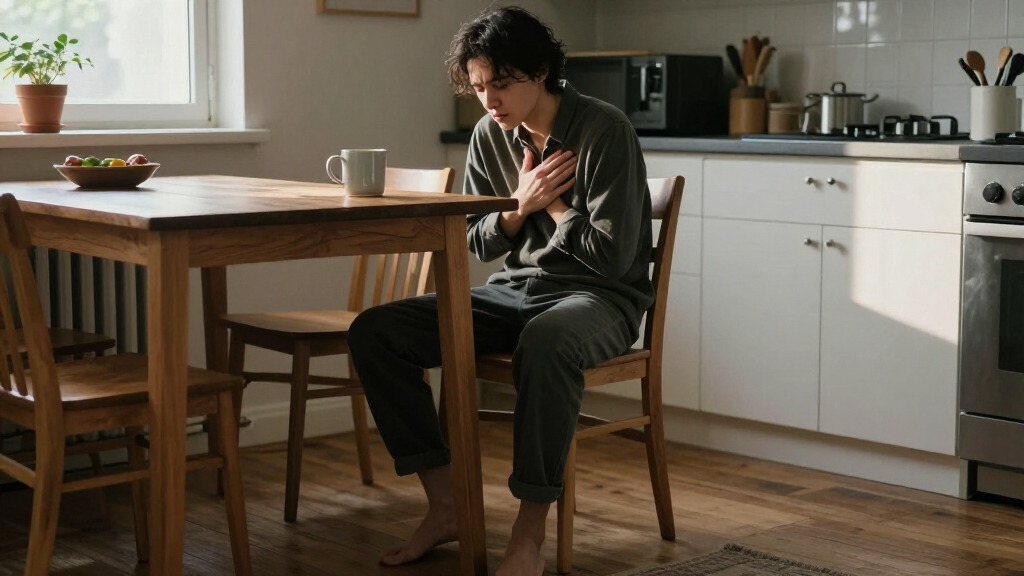
The approach begins with noticing sensations before interpreting them. The author describes putting a hand on the chest or another grounding spot, identifying what is happening—such as tense shoulders or held breath—and taking slow breaths. The writer also tries to distinguish the present situation from earlier experiences, rather than immediately apologizing, seeking reassurance or trying to smooth things over. They say practice gradually created a longer pause in which they could choose how to respond.
The essay recommends delaying an immediate response when there is no urgent problem to address. It does not present a tested protocol, provide evidence about outcomes across a group of people or claim that breathing alone resolves anxiety. Its central message is that noticing a reaction may create room for a considered choice, while the account remains one person’s experience.
A Pause Before the Response
The essay speaks to readers who experience anxiety as an automatic physical reaction and then judge themselves for how they respond. Its practical focus is on the interval between a trigger and an action: noticing a sensation may help a person avoid treating an assumption—such as believing that silence means anger—as confirmed fact. That distinction can matter in relationships, where an urgent attempt to fix a problem can happen before anyone knows whether a problem exists.
The writer’s story also makes clear that the change described was gradual. The author says the pause grew over time, rather than disappearing at once. Readers should understand the advice as a personal account, not a guarantee or a replacement for care from a qualified mental-health professional. People whose anxiety is persistent or interfering with daily life may want to discuss their circumstances with a professional.
As an affiliate, we earn on qualifying purchases.
From Past Alarm to Present Cues
In the essay, the author connects current reactions to experiences in a previous marriage and says the anxiety continued after that relationship ended. A raised voice or a delayed reply could prompt the same bodily alarm as before, even in circumstances the writer described as safe. This is the writer’s interpretation of their own experience, informed, they say, by later training and reading about attachment.
The article contrasts trying to reason away anxiety with paying attention to the body as the reaction unfolds. It invokes a quotation attributed to psychiatrist Bessel van der Kolk—“Physical self-awareness is the first step in releasing the tyranny of the past”—but offers no research review or detailed explanation of the evidence behind its broader statements about nervous-system change. Its advice is most accurately read as a practical reflection, not a comprehensive account of anxiety or attachment.
““Notice before you narrate.””
— Tiny Buddha essay author
Limits of One Personal Account
The source is a first-person essay and does not report a clinical trial, expert review or measured outcomes. It does not establish how often the described techniques help, whether they are suitable for different causes or levels of anxiety, or how they compare with professional treatment. The essay’s publication date is also not provided in the supplied material.
It remains unclear whether the author’s interpretation of their reactions would apply to other readers. Anxiety can have different causes and effects; a short breathing pause is not presented here as a diagnosis or treatment plan. The article does not specify what readers should do if their distress worsens or the techniques feel unhelpful.
Applying the Pause Safely
The essay leaves readers with a small practice to try in the moment: notice one physical cue, name it without assigning a cause, and take a few slow breaths before deciding what to do. The author presents repetition and time—not an immediate fix—as part of their own experience. The source gives no follow-up reporting or scheduled next development.
Anyone considering the approach should treat it as general self-reflection rather than individualized care. If anxiety is persistent, severe or disrupting daily activities, a qualified mental-health professional can help assess appropriate options. The essay does not advise readers to delay action when there is a genuine immediate safety concern.
Key Questions
What does the Tiny Buddha essay recommend doing when anxiety rises?
The author suggests noticing a bodily cue, such as a tight chest or shallow breath, naming it without immediately explaining it, and taking slow breaths before responding.
Does the article say this method works for everyone?
No. It describes one person’s experience and does not provide clinical research or evidence that the approach will work for every reader.
How long does it take to create a pause before reacting?
The author says the pause developed gradually over time but gives no set timeline. The essay does not establish how long it might take for someone else.
Is breathing a substitute for professional mental-health care?
The essay does not establish that breathing replaces professional care. Readers experiencing persistent or disruptive anxiety can consult a qualified mental-health professional about their needs.
Source: rss
Halloween Picks
halloween
As an affiliate, we earn on qualifying purchases.