

Choosing between a self-care journal and a mental health journal comes down to what you want writing to do for you. Self-care journals tend to prompt routines such as rest, gratitude, boundaries, and small acts of care. Mental health journals tend to focus more directly on feelings, stressors, thoughts, and patterns over time. The labels are not standardized, so actual prompts matter more than the cover: either format may include mood tracking or habit planning.

Turn your wind-down time into listening time
- Thousands of audiobooks, podcasts and originals
- Listen on your phone, tablet or Echo — also offline
- Cancel anytime

Worry for Nothing: Guided Anxiety Journal
- ✔ Brand: Four Progress
- ✔ Pages: 128
- ✔ Dimensions: 8.25 × 5.87 inches
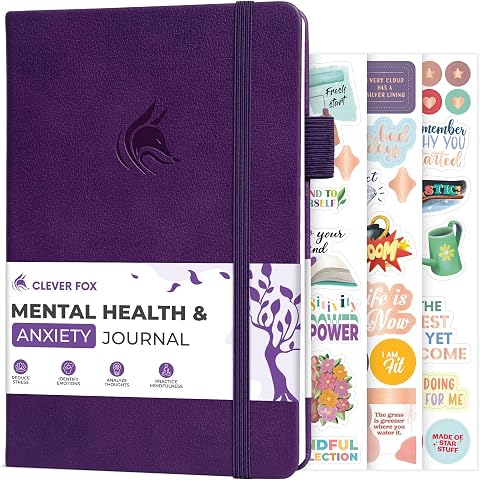
Clever Fox Mental Health and Anxiety Journal
- ✔ Brand: Clever Fox
- ✔ Format: A5; approximately 5.8 × 8.3 inches
- ✔ Cover: Purple eco-leather; listing also specifies leather

Fuck It: A Guided Self-Love and Gratitude Journal for Women
- ✔ Journal focus: Self-love and gratitude
- ✔ Format: Guided prompts and exercises
- ✔ Intended audience: Women
Choose a self-care journal if you want a lighter, practical nudge toward steadier routines. Choose a mental health journal if you want more structure for noticing and reflecting on emotional experiences. Neither replaces professional care, and a journal that feels too demanding is unlikely to become a useful habit.
At a Glance
| Criteria | Self-Care Journal | Mental Health Journal | Winner |
|---|---|---|---|
| Primary focus | Daily wellbeing and self-care actions | Mood, thoughts, stress, and emotional patterns | Depends |
| Typical prompt style | Short prompts about needs, gratitude, rest, and boundaries | Reflective questions, mood logs, or guided exercises | Depends |
| Emotional depth | Usually gentle and present-focused | Often more direct and introspective | B |
| Routine and habit support | Often includes check-ins and small action plans | May track patterns, with less emphasis on lifestyle routines | A |
| Flexibility | Often easy to use selectively | Can feel more structured or focused | A |
| Best use case | Building a sustainable personal care routine | Making sense of recurring emotions or triggers | Depends |
| Value | Worth paying for prompts and layout you will use consistently | Worth paying for clear, usable guidance rather than a clinical-sounding label | Depends |
Worry for Nothing: Guided Anxiety Journal
Worry for Nothing earns the top spot because its CBT-based worksheets give anxious reflection a defined task: track a worry, notice its triggers, and work toward a healthier thought pattern. That focus makes it a more direct mental-health tool than Fuck It, whose self-love and gratitude approach is broader and more tone-driven. It is also a simpler choice than Clever Fox for readers who mainly want worksheets rather than a bundle of tracking and carrying extras.The discreet black linen-style cover is a practical advantage for someone who prefers a journal that does not announce its subject. At about 5 7/8 by 8 1/4 inches, it can travel more easily than a full-size notebook, and the described 100 gsm paper is intended to handle gel pens. The tradeoff is longevity: the listing describes a soft cover, and 60 two-page worksheets may not provide enough variety for someone who wants an open-ended, long-term daily journal. We would choose it for focused exercises rather than unlimited pages of free writing.
Pros:
- CBT-based worksheets focus reflection on worries, triggers, and thought patterns.
- Discreet cover design avoids overt mental-health wording.
- Compact format is convenient to carry.
- Described 100 gsm paper is suitable for gel pens.
Cons:
- The 60 two-page worksheets may feel limited for extended use.
- Soft-cover construction may be less protective than a hardbound journal.
Best for: Readers who want discreet, guided CBT-style exercises to examine worries and identify triggers.
Not ideal for: People who want a large writing area, an open-ended journal, or a confirmed durable hardbound construction.
Bottom line: We recommend Worry for Nothing first for focused, portable anxiety journaling, provided its finite worksheet format suits your routine.
“We recommend Worry for Nothing first for focused, portable anxiety journaling, provided its finite worksheet format suits your routine.”
Clever Fox Mental Health and Anxiety Journal
Clever Fox is the most routine-oriented option in this group. Its CBT prompts are paired with emotion and trigger tracking, so it can suit readers who want to notice patterns across entries as well as reflect on an individual worry. Compared with Worry for Nothing, it adds a user guide, stickers, elastic closure, and pen loop; those details make it feel more like a ready-to-carry journaling kit. Compared with the more free-spirited Fuck It, its purpose is plainly mental-health and anxiety reflection.The 120 gsm paper is the thickest paper specification supplied here, and the closure and pen loop help keep the journal together with a writing tool. Its 5.8 by 8.3 inch A5 format stays portable, but the same compactness can be limiting if we want room for long entries or diagrams. The listing’s binding is unspecified, so we cannot confidently assess how well it may hold up over repeated use. Pick it when tracking and convenient handling matter; skip it if spacious pages or a clearly specified binding are priorities.
Pros:
- Combines CBT prompts with emotion and trigger tracking.
- 120 gsm paper is described as thick, with an eco-leather cover.
- Pen loop and elastic closure support carrying it as a daily kit.
- Includes a user guide and stickers.
Cons:
- A5 pages may be too small for long entries or expansive exercises.
- Binding type is not specified in the supplied details.
- Its tracking-focused format may feel more structured than readers seeking a casual gratitude journal want.
Best for: Readers who want a compact anxiety journal with CBT prompts, emotion tracking, and carry-friendly accessories.
Not ideal for: Writers who need generous page space or want clear information about the binding before choosing.
Bottom line: We’d choose Clever Fox when daily tracking and practical accessories matter more than having a larger writing surface.
“We’d choose Clever Fox when daily tracking and practical accessories matter more than having a larger writing surface.”
Fuck It: A Guided Self-Love and Gratitude Journal for Women
Fuck It earns a distinct place because it makes self-reflection feel candid and playful rather than clinical. Its prompts and exercises center self-love, gratitude, letting go of negativity, and celebrating personal wins. That can be a better emotional fit for readers who find anxiety worksheets too formal or who want a positive daily reflection habit. In comparison, Worry for Nothing and Clever Fox are more explicitly organized around anxiety and CBT-style thought work; this journal is the choice when tone and self-acceptance are the draw.The direct language is also its clearest limitation. A title with profanity may feel energizing to some readers, but awkward to use at work, around family, or in a shared space. The supplied listing does not specify page count, paper weight, size, or binding, which makes it harder to judge portability and durability against the two more fully described alternatives. We would treat it as a prompt-led self-love journal, not as a structured anxiety workbook. Readers seeking specific tools for tracking triggers or examining thought patterns should favor one of the CBT-focused picks.
Pros:
- Provides structured prompts for self-reflection and gratitude.
- Humor may make a regular journaling habit feel more approachable.
- Exercises focus on self-love, celebrating oneself, and releasing negativity.
Cons:
- Profanity-forward title and tone will not suit every reader or setting.
- The supplied details do not specify dimensions, page count, paper weight, or binding.
- Its broad self-love focus offers less explicit anxiety tracking than the CBT journals.
Best for: Women who enjoy candid humor and want guided prompts for gratitude and self-acceptance.
Not ideal for: Readers who prefer discreet titles, gender-neutral framing, or structured CBT exercises for anxiety.
Bottom line: Choose Fuck It for an outspoken, humor-led self-love routine, but look to the CBT journals for more direct anxiety-focused structure.
“Choose Fuck It for an outspoken, humor-led self-love routine, but look to the CBT journals for more direct anxiety-focused structure.”
As an Amazon Associate we earn from qualifying purchases.
Key Differences
The clearest distinction is the journal’s intended job. A self-care journal usually helps turn broad intentions into manageable actions: check in, notice what you need, and choose something supportive. A mental health journal more often makes feelings and thought patterns the subject of the writing. That focus can help readers who want to identify recurring stressors, but it may ask for more emotional attention.
In practice, the boundary is porous. Some self-care journals track moods, and some mental health journals include sleep, gratitude, or routine prompts. Look at a sample page before buying. A strong fit is one whose prompts feel useful rather than obligatory, whose privacy suits your situation, and whose format you can keep using when energy is low.
Price is secondary to fit. Paying more can make sense for durable materials, accessible design, or thoughtfully sequenced prompts. It is poor value if the journal’s framework feels restrictive or its exercises are more intense than you want. A basic notebook can serve either purpose when you already know what you want to write.
Detailed Comparison
Primary focus (moderate difference)
Self-Care Journal wins for translating wellbeing into everyday choices; Mental Health Journal wins for directing attention toward emotional experiences. The gap is moderate because titles are inconsistent, but the focus changes what you are likely to write about. Pick based on whether you want action planning or emotional reflection.
Typical prompt style (moderate difference)
Self-care prompts often ask what would help today or what boundary needs attention. Mental health prompts more often ask what you felt, what preceded it, and what thoughts accompanied it. Neither style wins universally; the difference is moderate. A reader seeking quick check-ins may prefer A, while someone seeking guided reflection may prefer B.
Emotional depth (Mental Health Journal wins — moderate)
Mental Health Journal generally wins for depth because its prompts are more likely to examine mood, stress, and recurring reactions. The gap is moderate, not absolute: some self-care journals include substantial reflection. B may be more useful for pattern awareness, but A can feel easier to return to during a difficult week.
Routine and habit support (Self-Care Journal wins — moderate)
Self-Care Journal generally wins by connecting reflection with practical routines such as rest, movement, or asking for support. The gap is minor to moderate, depending on the product. This matters for readers who want writing to lead to small, repeatable actions rather than remain solely introspective.
Flexibility (Self-Care Journal wins — minor)
Self-Care Journal often wins slightly because gentle daily prompts can be skipped or answered briefly without losing the thread. Some mental health journals have dated trackers or sequential exercises that reward regular use but can create pressure. The gap is minor; undated formats in either category can be flexible.
Best use case (major difference)
There is no overall winner. A suits someone trying to create a kinder, more consistent routine; B suits someone who wants to observe emotions and triggers. This is a major fit difference: the same prompt can feel motivating to one reader and intrusive to another. Choose the journal whose sample pages match your purpose.
Value (minor difference)
Neither category automatically offers better value. A is worthwhile when its practical prompts help you follow through; B is worthwhile when its reflective structure helps you write with more clarity. The gap is minor compared with fit. Pay more only for features you will use, such as an undated layout, clear guidance, or accessible formatting.
Self-Care Journal: Pros and Cons
Pros:
- Encourages practical acts of care and routine building
- Often approachable for short or inconsistent writing sessions
- Can connect reflection to boundaries, rest, and daily needs
Cons:
- May feel broad or repetitive if you want deeper emotional prompts
- Some versions emphasize positivity in ways that may not fit every mood
- The label alone does not guarantee useful or well-designed prompts
Mental Health Journal: Pros and Cons
Pros:
- More directly supports reflection on moods and stressors
- May help organize observations about recurring emotional patterns
- Guided questions can help when a blank page feels difficult
Cons:
- More introspective prompts may feel demanding at times
- Tracking can become another task if the format is rigid
- A journal is not a substitute for professional assessment or care
Who Should Choose What
Choose Self-Care Journal if:
- You want a gentle daily check-in that can lead to practical self-care actions.
- Your main goal is to build routines around rest, boundaries, or personal needs.
- You prefer brief prompts and want the freedom to skip days without falling behind.
Choose Mental Health Journal if:
- You want to reflect more directly on mood, stress, or recurring thoughts.
- You find guided questions more helpful than an open notebook.
- You are comfortable writing about difficult feelings and want a format organized around that reflection.
Skip both if: Skip guided journals if their prompts feel pressuring or too personal; use a plain notebook or another form of support that better suits your needs.
Value for Money
Paying more is worthwhile only when the specific journal offers something you will use: prompts that fit your goals, a layout you can keep up with, readable design, or durable construction. A higher price does not make a journal more effective, and a mental health label does not mean the contents are clinically validated. For many readers, an affordable undated journal or plain notebook is better value than a premium format that creates pressure to write every day.
Choose A for value when practical self-care guidance is the feature that will keep you writing. Choose B when focused reflection is what you would otherwise struggle to structure. If both samples feel equally usable, buy the less expensive one and spend the difference on a format you will actually keep within reach.
Final Verdict
For readers who want a low-pressure way to support everyday wellbeing, choose a Self-Care Journal. For readers who specifically want to examine feelings and stress patterns, choose a Mental Health Journal. The biggest deciding factor is the kind of writing you want to return to: action-oriented care or emotional reflection. Most people seeking a general wellbeing habit should start with A, while B is the clearer choice for focused introspection. Check sample prompts before paying a premium, and choose neither if the structure feels burdensome.
Frequently Asked Questions
Can a self-care journal help with mental health?
It can support reflection and routines that contribute to wellbeing, but it is not a treatment or substitute for professional help. Choose prompts that feel supportive and manageable.
Is a mental health journal better for tracking moods?
Often, yes: many are organized around mood logs or emotional reflection. Check the actual pages, since some self-care journals also include mood tracking.
Should I write in my journal every day?
No. Use it at a pace that feels sustainable. An undated journal or a notebook with flexible prompts can help avoid turning writing into an obligation.
Is an expensive guided journal worth it?
Only if its prompts, layout, or construction add value you will use. A plain notebook can work just as well when you already have a reflection routine.