Create a self-care journal that helps you notice how you feel, identify what you need, and choose one manageable action to support your mental health. This guide is for beginners; you can use a notebook or a private digital document, and no journaling experience is needed. Plan for 20-30 minutes to set it up and 5-10 minutes for each entry.

Turn your wind-down time into listening time
- Thousands of audiobooks, podcasts and originals
- Listen on your phone, tablet or Echo — also offline
- Cancel anytime

Worry for Nothing: Guided Anxiety Journal
- ✔ Brand: Four Progress
- ✔ Pages: 128
- ✔ Dimensions: 8.25 × 5.87 inches

Fuck It: A Guided Self-Love and Gratitude Journal for Women
- ✔ Format: Guided journal
- ✔ Intended audience: Women
- ✔ Prompt focus: Self-love, gratitude, and personal growth
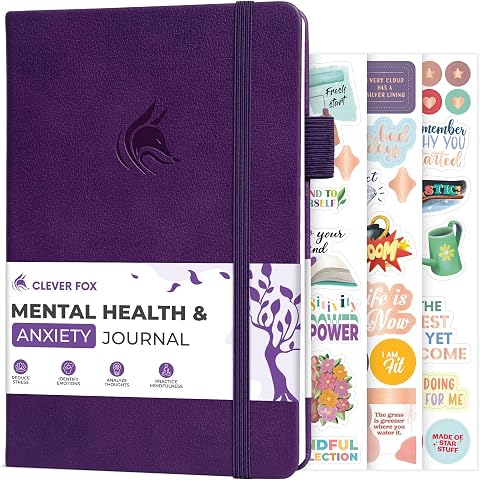
Clever Fox Mental Health and Anxiety Journal
- ✔ Brand: Clever Fox
- ✔ Size: A5; approximately 5.8 × 8.3 inches
- ✔ Color: Purple
A journal can support reflection, but it is not a diagnosis or a substitute for professional care. Keep the routine flexible: a brief, honest entry is more useful than trying to write perfectly or every day.
Difficulty: Beginner | Time: 20-30 minutes to set up; 5-10 minutes per entry
What You’ll Need
Tools & Materials:
- A notebook and pen, or a private digital document
- A quiet place where you can write for a few minutes
- A timer, optional
Knowledge:
- No prior journaling experience is needed
- Be willing to describe feelings without judging them
Choose a format you can access easily and store privately. If writing about difficult experiences tends to intensify distress, keep entries brief and focus on present needs, grounding, or contacting support. You can skip any prompt.
Worry for Nothing: Guided Anxiety Journal
Worry for Nothing earns the top spot because its prompts are built around worries, triggers, and changing thought patterns—the most direct match for readers searching specifically for mental health self-care. Its CBT-based worksheets give each entry a purpose, which can help when a blank page feels hard to approach. The black linen cover is described as discreet and professional, making it easier to carry or leave out than a journal with a conspicuous mental health title.Compared with the Clever Fox journal, this option is also compact and anxiety-focused, but its 100 gsm paper is lighter than Clever Fox’s listed 120 gsm stock, and it does not list accessories such as a pen loop or elastic closure. Its 60 two-page worksheets provide a defined course of use, but that also means less room for ongoing guided work than someone may want from a long-term journal. The supplied details call it a soft cover despite describing a linen hardcover, so we would not assume it offers the rigidity of a confirmed hardbound book. For readers who want focused prompts and a low-key appearance, those limits may be acceptable; people who prefer open-ended writing or a longer guided program may find it restrictive.
Pros:
- CBT-based worksheets focus on worries, triggers, and thought patterns.
- Discreet black cover avoids prominent anxiety wording.
- Portable dimensions suit journaling at home or on the go.
- 100 gsm paper is described as suitable for gel pens.
Cons:
- The 60 two-page worksheets may not support a long-term guided routine.
- Cover descriptions conflict, and a soft cover may be less protective than a rigid hard cover.
Best for: Readers who want discreet, CBT-oriented prompts to track worries and triggers in a portable format.
Not ideal for: People seeking an open-ended journal, extensive long-term worksheets, or a clearly specified durable hard cover.
Bottom line: We recommend Worry for Nothing for its focused anxiety worksheets and discreet design, while noting its finite worksheet set and unclear cover construction.
“We recommend Worry for Nothing for its focused anxiety worksheets and discreet design, while noting its finite worksheet set and unclear cover construction.”
Fuck It: A Guided Self-Love and Gratitude Journal for Women
For readers who find earnest wellness language off-putting, Fuck It makes a clear tonal break from the two anxiety journals. Its humor-infused prompts encourage self-love, gratitude, and letting go of negativity, potentially making reflection feel less formal and more inviting. The product is tailored to women’s personal growth, so its framing may feel more relevant to readers who want that perspective than the general anxiety-focused approach of Worry for Nothing or Clever Fox.This is the lineup’s best fit when a lighter voice matters more than structured anxiety tracking. The tradeoff is that its stated focus is broader self-acceptance and gratitude, not a specific CBT worksheet system for identifying anxious thought patterns. Unlike the other two entries, the supplied details do not specify page count, dimensions, paper weight, or cover construction; we therefore cannot compare its portability or writing feel on equal terms. Its explicit title is part of the appeal for some readers and a practical drawback for others—it may not suit shared spaces, workplaces, or anyone who prefers a discreet journal. Choose it for an irreverent prompt style, and skip it if you want neutral language or targeted anxiety exercises.
Pros:
- Structured prompts support daily reflection and gratitude.
- Humor offers a less formal entry point to journaling.
- Focuses on self-love and personal growth for women.
Cons:
- Explicit language may not suit every reader or setting.
- Product information provided does not specify page count, size, paper, or cover details.
- Its described focus is less specific to anxiety management than the CBT-oriented alternatives.
Best for: Women who want guided gratitude and self-love prompts with an irreverent, humorous tone.
Not ideal for: Readers who need CBT-style anxiety tracking, prefer discreet titles, or want clearly listed physical specifications.
Bottom line: We would choose Fuck It for an entertaining self-love routine, but readers seeking targeted anxiety worksheets should look to either CBT-focused pick.
“We would choose Fuck It for an entertaining self-love routine, but readers seeking targeted anxiety worksheets should look to either CBT-focused pick.”
Clever Fox Mental Health and Anxiety Journal
Clever Fox shares Worry for Nothing’s anxiety-management focus, using CBT prompts to help identify triggers, reframe negative thoughts, and track emotions. Its appeal is the more equipped package: 120 gsm paper, a pen loop, elastic closure, stickers, and a user guide are all listed. Those extras can make it easier to keep the journal together and ready for a routine, while the purple cover gives it a more colorful look than Worry for Nothing’s understated black design.Compared with our top pick, Clever Fox offers thicker paper and more organization details, but the A5 size may leave less room for readers who like long entries. Binding is listed as unknown, so the elastic closure and eco-leather cover alone do not tell us how well the journal will hold up with frequent use. The description also mentions a money-back guarantee; because that is a purchase policy rather than a journaling feature, we do not use it to determine fit. This is a sensible option for someone who wants anxiety prompts plus accessories in a compact package. Writers who need larger pages, or who prioritize a clearly specified binding, should compare its format carefully with Worry for Nothing.
Pros:
- CBT prompts address triggers, negative thoughts, and emotion tracking.
- 120 gsm paper is thicker than the paper listed for Worry for Nothing.
- Pen loop and elastic closure help keep a portable journaling kit together.
- Includes a user guide and stickers.
Cons:
- A5 pages may feel small for long entries.
- Binding type is unspecified, leaving durability uncertain.
- Its compact format may not suit readers who want more room than Worry for Nothing provides.
Best for: Readers who want CBT-style anxiety prompts in a compact journal with thicker paper and built-in organization features.
Not ideal for: People who prefer generous writing space or want clearly stated binding details before choosing.
Bottom line: We favor Clever Fox when thicker paper and practical accessories matter, provided its compact A5 writing area works for your style.
“We favor Clever Fox when thicker paper and practical accessories matter, provided its compact A5 writing area works for your style.”
As an Amazon Associate we earn from qualifying purchases.
Before You Start
Pick a time that fits your routine, such as after breakfast or before bed. You do not need to write daily; start with two or three entries a week. Use plain language, short lists, or checkboxes. Avoid treating the journal as a scorecard: feelings can change for many reasons, and a difficult day does not mean you have failed.
If you feel at risk of harming yourself or someone else, or you cannot stay safe, contact local emergency services or a crisis support service now. A journal is not immediate crisis support.
Step-by-Step Instructions
Step 1: Choose a private format
Select a notebook, notes app, or document that you can use without extra effort. If you choose a digital format, use a device or account with a passcode and avoid shared documents. If you choose paper, decide where you will keep it so other people are unlikely to read it.
Tip: Use the simplest format you already have. Buying supplies is not a requirement.
Check: You have a specific place to write and know how you will keep entries private.
Step 2: Set a small routine
Choose a realistic frequency and time limit. For example, write on Monday, Wednesday, and Friday for five minutes, or make one short entry when you notice stress building. Set a reminder if that helps, but leave room to miss a session without needing to catch up.
Tip: A routine should support you, not add another task to feel guilty about.
Check: You have a starting schedule that feels manageable for the next two weeks.
Step 3: Create a repeatable entry
At the top of each entry, write the date and answer these prompts in a few words: “What am I feeling?”, “What might be affecting me?”, and “What do I need right now?” If naming a feeling is difficult, describe a body sensation or choose a broad word such as calm, tense, low, or restless.
Tip: You can leave any prompt blank. Do not force an explanation when you are unsure what caused a feeling.
Check: Your entry records a date, a current feeling or sensation, and a possible need.
Step 4: Choose one supportive action
Write one action you can take today that matches your need. Make it specific and small: drink a glass of water, step outside for five minutes, text a trusted person, stretch, eat something, or pause a non-urgent task. If you need support from someone else, write who you will contact and when.
Tip: Choose an action within your control. “Feel better” is a wish; “take a short walk after lunch” is an action.
Check: You have named one concrete action and a reasonable time to try it.
Step 5: Record what happened
After trying the action, add a brief note about what you did and how you felt afterward. The result does not need to be positive. Record useful details such as whether it was easy to start, whether it helped a little, or what got in the way.
Tip: Do not judge yourself if you could not do the action. Note the obstacle and choose a smaller version or ask for help.
Check: Your entry includes an observation about the action, without labeling the day as a success or failure.
Step 6: Review patterns once a week
Set aside five to ten minutes once a week to reread recent entries. Look for repeated feelings, situations that drain or restore you, and actions that were practical. Write down one pattern and one adjustment to try next week, such as moving a task, planning a break, or contacting someone earlier.
Tip: Look for clues, not proof. A few entries can suggest a pattern, but they cannot explain every cause of a mood change.
Check: You can name at least one observation or decide that you need more time before a pattern is clear.
Step 7: Adjust the journal to fit
After two weeks, check whether the format and schedule are helping. Shorten entries, change prompts, reduce the frequency, or pause if journaling feels burdensome. Keep prompts that help you make a useful choice, and remove ones that lead you into unhelpful rumination.
Tip: You can use a single sentence or a mood-and-needs checklist on busy days.
Check: Your journal feels usable, and you know how to simplify or change it when needed.
Common Mistakes to Avoid
- Trying to write a long, polished entry every day. — Set a five-minute limit and use short answers or bullet points. Consistency can mean a few entries a week.
- Using the journal to criticize yourself for feelings or missed routines. — Describe what happened in neutral language, then ask what support might help. Feelings are information, not a personal failure.
- Expecting one entry or action to resolve a complex problem. — Use entries to notice needs and choose a next step. Seek support from a qualified professional for ongoing or severe distress.
- Writing sensitive details somewhere other people can access. — Choose a private storage location, use a device passcode for digital entries, and leave out details you do not need to record.
Troubleshooting
Problem: You do not know what to write.
Solution: Start with a body sensation, a one-word mood, or a simple fact about the day. Then answer, “What would make the next hour a little easier?”
Problem: Writing makes you feel more upset or stuck in a painful memory.
Solution: Stop that entry. Orient to the present by naming what you can see and hear, take a break, or contact someone you trust. Try future-focused prompts about current needs instead. If this keeps happening, discuss another approach with a mental health professional.
Problem: You keep forgetting to journal.
Solution: Attach one short entry to an existing routine, such as lunch or brushing your teeth. Put the notebook where you will see it, or set a gentle reminder. If the reminder creates pressure, remove it and write when useful.
Problem: You do not notice a clear pattern after a week.
Solution: Keep entries brief and continue for another couple of weeks if the process feels helpful. There may be no simple pattern, and that is a valid result. Focus on what you need in the moment.
What Success Looks Like
Your journal is working as a practical self-care tool when you can make brief entries without needing special supplies, identify a feeling or need more often, and name a manageable action or source of support. Over time, you may notice recurring stressors or helpful routines. You do not need to feel better after every entry, write on a perfect schedule, or find a pattern for the journal to be useful.
Next Steps
Continue with the schedule that feels sustainable and review entries weekly or every other week. If a concern keeps returning, bring a few notes to a therapist, doctor, or other qualified professional; share only what you are comfortable sharing. Remove sensitive digital entries you no longer want to keep, and store paper entries securely. If journaling consistently increases distress, pause it and try another way to check in, such as a brief conversation with someone you trust.
Frequently Asked Questions
How often should I write in a mental health self-care journal?
Start with two or three brief entries a week, or write when you notice a change in your stress or mood. Adjust the frequency to fit your life. Missing an entry does not require catching up.
What should I write if I cannot name my feelings?
Describe what you notice physically or what happened recently. Try “my shoulders feel tight,” “I have low energy,” or “I feel unsettled.” You can leave the cause uncertain and focus on what might help now.
Should I reread every entry?
No. Review only when it feels useful, such as once a week. If rereading leads to harsh self-judgment or rumination, stop and use the journal for present-focused check-ins instead.
Can a self-care journal replace therapy?
No. Journaling may help you reflect and prepare for conversations, but it does not diagnose or treat mental health conditions. Contact a qualified professional if distress persists, disrupts daily life, or feels difficult to manage alone.
What if journaling makes me feel worse?
Stop writing and take a grounding break or contact someone you trust. Try shorter, present-focused prompts later, or pause journaling. If distress continues or you feel unsafe, seek professional or urgent local support.