
The best self-help books for narcissistic abuse offer different kinds of support: It’s Not You is my best overall pick for making sense of harmful relationship patterns, while Healing from Hidden Abuse stands out for its staged recovery framework and Whole Again for rebuilding a sense of self. A workbook may suit readers who want structured exercises, whereas a reflective guide may feel gentler when concentration is limited. Some books focus on recognizing abuse, others on trauma recovery, boundaries, or practical next steps, so the right choice depends on where you are now. These books can support reflection, but they do not replace qualified care or immediate safety planning. Read on for the full breakdown and help matching a book to your needs.

Turn your wind-down time into listening time
- Thousands of audiobooks, podcasts and originals
- Listen on your phone, tablet or Echo — also offline
- Cancel anytime
Key Takeaways
- The strongest all-around choices balance recognition and recovery: It’s Not You addresses patterns and healing, while Healing from Hidden Abuse gives recovery a staged structure.
- Workbooks ask for more active participation: The 51-day workbook and guided workbook offer prompts and tasks, which can help readers seeking routine but may feel demanding during acute distress.
- Trauma-focused approaches are not interchangeable: Recovering from Narcissistic Abuse uses somatic exercises, making it a more specific fit than broad relationship-recovery guides.
- Several picks address related experiences beyond narcissistic abuse: Titles covering gaslighting, codependency, complex PTSD, or other toxic relationships may offer range but can be less narrowly focused.
- The best starting point depends on the immediate need: Readers seeking recognition may prefer a guide to identifying patterns; those focused on identity, self-esteem, or daily practice may prefer recovery-centered books.
| Recovery from Gaslighting, Narcissistic Abuse, Codependency, and Complex PTSD |  | Best for Readers Facing Overlapping Challenges | Format: 3-in-1 | Topics: Gaslighting, narcissistic abuse, codependency, complex PTSD | Additional themes: Emotional regulation, mindfulness, independence, self-care | VIEW LATEST PRICE | See Our Full Breakdown |
| Self-Healing from Narcissistic Abuse Workbook: 51 Days of Actions, Affirmations, and Activities to Reclaim Your Authentic Self |  | Best for Structured Daily Practice | Format: Workbook | Duration: 51 days | Contents: Actions, affirmations, and activities | VIEW LATEST PRICE | See Our Full Breakdown |
| The Covert Passive-Aggressive Narcissist: Recognizing the Traits and Finding Healing After Hidden Emotional and Psychological Abuse |  | Best for Understanding Covert Abuse | Format: Book | Focus: Covert passive-aggressive narcissism | Subject: Hidden emotional and psychological abuse | VIEW LATEST PRICE | See Our Full Breakdown |
| Recovering from Narcissistic Abuse: Somatic Healing Exercises to Safely Release Stored Trauma |  | Best for a Body-Focused Approach | Format: Book | Subject: Recovery from narcissistic abuse | Approach: Somatic healing exercises | VIEW LATEST PRICE | See Our Full Breakdown |
| Healing from Hidden Abuse: A Journey Through the Stages of Recovery from Psychological Abuse |  | Best for a Stage-Based Recovery Overview | Format: Not specified | Subject: Recovery from psychological abuse | Organization: Stages of recovery | VIEW LATEST PRICE | See Our Full Breakdown |
| Power: Surviving and Thriving After Narcissistic Abuse |  | Best for Multiple Perspectives | Format: Collection of essays | Subject: Malignant narcissism | Recovery focus: Recovery from emotional abuse | VIEW LATEST PRICE | See Our Full Breakdown |
| Recovery from Narcissistic Abuse, Gaslighting, Codependency, and Complex PTSD: 4-Book Workbook and Guide |  | Best for Broad, Multi-Topic Coverage | Format: 4 books in 1 | Type: Workbook and guide | Topic: Narcissistic abuse | VIEW LATEST PRICE | See Our Full Breakdown |
| Narcissistic Abuse Recovery: The 11 Laws to Self-Mastery |  | Best for a Self-Mastery Focus | Format: Guide | Framework: 11 laws to self-mastery | Topic: Narcissistic abuse recovery | VIEW LATEST PRICE | See Our Full Breakdown |
| It’s Not You: Identifying and Healing from Narcissistic People |  | Best for Recognition and Healing | Format: Book | Subject: Identifying narcissistic people | Recovery focus: Healing from effects of relationships | VIEW LATEST PRICE | See Our Full Breakdown |
| Guided Workbook Recover from Narcissistic Abuse: Practical Strategies to Break the Trauma Bond, Rebuild Identity, Restore Self-Esteem & Live Life Your Way | 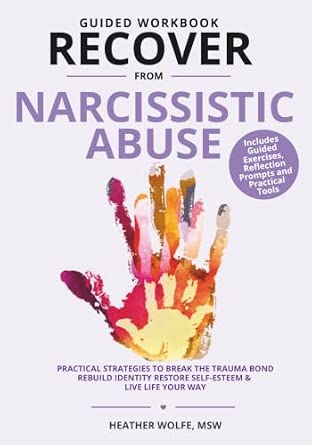 | Best for Hands-On Recovery Work | Format: Workbook | Language: English | Focus: Recovering from narcissistic abuse | VIEW LATEST PRICE | See Our Full Breakdown |
| Whole Again: Healing Your Heart and Rediscovering Your True Self After Toxic Relationships and Emotional Abuse |  | Best for Rebuilding Your Sense of Self | Title: Whole Again: Healing Your Heart and Rediscovering Your True Self After Toxic Relationships and Emotional Abuse | ASIN: B07L4G11P9 | Subject: Healing after toxic relationships and emotional abuse | VIEW LATEST PRICE | See Our Full Breakdown |
| Psychopath Free (Expanded Edition): Recovering from Emotionally Abusive Relationships with Narcissists, Sociopaths, and Other Toxic People |  | Best for Naming Abusive Relationship Patterns | Title: Psychopath Free (Expanded Edition): Recovering from Emotionally Abusive Relationships with Narcissists, Sociopaths, and Other Toxic People | ASIN: 0425279995 | Edition: Expanded Edition | VIEW LATEST PRICE | See Our Full Breakdown |
| Disarming the Narcissist: Surviving and Thriving with the Self-Absorbed |  | Best for Readers Still Dealing with a Narcissistic Person | Title: Disarming the Narcissist: Surviving and Thriving with the Self-Absorbed | ASIN: 1684037700 | Subject: Narcissism and self-absorbed people | VIEW LATEST PRICE | See Our Full Breakdown |
| You Can Thrive After Narcissistic Abuse: A System for Recovering from Toxic Relationships |  | Best for Readers Who Want a Recovery Framework | Title: You Can Thrive After Narcissistic Abuse: A System for Recovering from Toxic Relationships | ASIN: 1786781662 | Subject: Recovery from narcissistic abuse and toxic relationships | VIEW LATEST PRICE | See Our Full Breakdown |
| Narcissistic Abuse: A Therapist’s Guide to Identifying, Escaping, and Healing from Toxic and Manipulative People |  | Best for Recognition, Exit, and Recovery in One Guide | Title: Narcissistic Abuse: A Therapist’s Guide to Identifying, Escaping, and Healing from Toxic and Manipulative People | ASIN: B0CV2W1RZ7 | Subject: Narcissistic abuse and manipulative people | VIEW LATEST PRICE | See Our Full Breakdown |
| self help books for narcissistic abuse | Format | ASIN | Subject | Topic |
|---|---|---|---|---|
| Recovery from Gaslighting | 3-in-1 | B09HPGQTXX | — | — |
| Self-Healing from Narcissistic | Workbook | B0CXCDBKCK | Recovery from narcissistic abuse | — |
| The Covert Passive-Aggressive | Book | 099862134X | Hidden emotional and psychological abuse | — |
| Recovering from Narcissistic A | Book | B0HKSJ38SW | Recovery from narcissistic abuse | — |
| Healing from Hidden Abuse: A J | Not specified | 0997829087 | Recovery from psychological abuse | — |
| Power: Surviving and Thriving | Collection of essays | 1945796324 | Malignant narcissism | — |
| Recovery from Narcissistic Abu | 4 books in 1 | B0BGBCNJ7G | — | Narcissistic abuse |
| Narcissistic Abuse Recovery: T | Guide | B0FRZMHMXT | — | Narcissistic abuse recovery |
| It’s Not You: Identifying and | Book | B0C6YLS58Y | Identifying narcissistic people | — |
| Guided Workbook Recover from N | Workbook | 1069860441 | — | — |
| Whole Again: Healing Your Hear | Book | B07L4G11P9 | Healing after toxic relationships and emotional abuse | — |
| Psychopath Free | Book | 0425279995 | Recovery from emotionally abusive relationships | — |
| Disarming the Narcissist: Surv | Book | 1684037700 | Narcissism and self-absorbed people | — |
| You Can Thrive After Narcissis | Book | 1786781662 | Recovery from narcissistic abuse and toxic relationships | — |
| Narcissistic Abuse: A Therapis | Book | B0CV2W1RZ7 | Narcissistic abuse and manipulative people | — |
More Details on Our Top Picks
Recovery from Gaslighting, Narcissistic Abuse, Codependency, and Complex PTSD
This three-in-one resource suits readers whose recovery involves more than identifying narcissistic abuse alone. Its stated coverage of gaslighting, codependency, and complex PTSD links relationship patterns with trauma-related concerns, while mindfulness, emotional regulation, independence, and self-care point toward practical areas for reflection. Compared with The Covert Passive-Aggressive Narcissist, which centers on recognizing hidden abusive behavior, this book casts a wider net across recovery topics. That breadth may help readers who want several connected subjects in one place, but it also means it may feel less focused than a book devoted to one pattern or method. The available description does not specify exercises, chapter structure, or the depth of coverage, so readers seeking a clearly defined program may prefer the 51-day structure of Self-Healing from Narcissistic Abuse Workbook.
Pros:- Combines discussion of gaslighting and narcissistic abuse with codependency and complex PTSD.
- Includes emotional regulation and mindfulness among its stated topics.
- Also addresses independence and self-care, broadening its recovery focus.
- Three-in-one format brings several related subjects into a single resource.
Cons:- The description does not explain how the three-in-one material is organized.
- No specific exercises, chapter details, or depth of coverage are provided.
- Its broad scope may be less targeted than books focused on covert abuse or a structured daily workbook.
Best for: Readers who want one resource spanning gaslighting, narcissistic abuse, codependency, complex PTSD, and self-care themes.
Not ideal for: Readers who want a detailed, time-bound workbook or a narrowly focused guide to covert abuse, since the supplied information does not describe a specific structure or depth.
- Format:3-in-1
- Topics:Gaslighting, narcissistic abuse, codependency, complex PTSD
- Additional themes:Emotional regulation, mindfulness, independence, self-care
- ASIN:B09HPGQTXX
- Approach:Multi-topic recovery resource
- Intended focus:Emotional abuse and trauma-related recovery
Our verdict“Choose this broad-format resource if your recovery concerns include trauma, codependency, and gaslighting alongside narcissistic abuse.”
Self-Healing from Narcissistic Abuse Workbook: 51 Days of Actions, Affirmations, and Activities to Reclaim Your Authentic Self
The clearest distinction here is its 51-day workbook format: readers get a stated sequence of actions, affirmations, and activities rather than only a broad discussion of abuse and recovery. That structure may help someone who wants a prompt for regular reflection and a focus on reconnecting with their authentic self. Compared with Recovery from Gaslighting, Narcissistic Abuse, Codependency, and Complex PTSD, this title is narrower and more explicitly activity-based; it does not claim the same range of topics. The tradeoff is that a fixed 51-day path may not fit everyone’s pace, and the supplied description does not clarify how long activities take or whether the sequence can be adapted. Readers who first need help identifying hidden emotional abuse may find The Covert Passive-Aggressive Narcissist more directly oriented to recognition than daily exercises.
Pros:- Provides a defined 51-day framework for readers who want regular structure.
- Combines actions, affirmations, and activities rather than relying on one type of prompt.
- Centers the goal of reconnecting with and reclaiming an authentic self.
- Offers a more action-oriented format than broad, multi-topic resources.
Cons:- A set 51-day sequence may not match every reader’s pace or capacity.
- The description does not specify the time required or detail the activities.
- Its stated focus is narrower than resources that also address complex PTSD or codependency.
Best for: Readers who want a time-bounded workbook with recurring actions and prompts to support reconnecting with their sense of self.
Not ideal for: Readers who prefer an unstructured reference book, need extensive coverage of complex PTSD or codependency, or do not want a day-by-day format.
- Format:Workbook
- Duration:51 days
- Contents:Actions, affirmations, and activities
- Stated aim:Reclaiming the authentic self
- Subject:Recovery from narcissistic abuse
- ASIN:B0CXCDBKCK
Our verdict“Pick this workbook if you want a defined 51-day routine of activities and affirmations centered on rebuilding your sense of self.”
The Covert Passive-Aggressive Narcissist: Recognizing the Traits and Finding Healing After Hidden Emotional and Psychological Abuse
When the abuse has felt subtle, hard to name, or difficult to explain to others, this book’s focus on covert passive-aggressive narcissism gives it a distinct role in the lineup. It addresses recognizing traits and understanding hidden emotional and psychological abuse, then connects that recognition with healing. Compared with Healing from Hidden Abuse, whose description emphasizes stages of recovery from psychological abuse, this title puts more weight on identifying a particular pattern of behavior. That makes it a more targeted starting point for readers seeking language for covert dynamics, but it may be less useful as a broad recovery plan. The description does not specify exercises or a step-by-step method, so readers looking for regular prompts may prefer Self-Healing from Narcissistic Abuse Workbook, which explicitly offers 51 days of activities.
Pros:- Specifically addresses covert passive-aggressive narcissistic traits.
- Names hidden emotional and psychological abuse as its subject.
- Pairs recognition of abusive patterns with a stated focus on healing.
- Offers a more targeted lens than books covering multiple recovery topics.
Cons:- The supplied description does not outline exercises or a step-by-step recovery process.
- Its narrow focus may not cover broader subjects such as codependency or complex PTSD.
- Readers seeking daily activities may find a workbook format more actionable.
Best for: Readers who suspect they experienced covert, passive-aggressive emotional abuse and want a focused guide to recognizing its traits.
Not ideal for: Readers who already understand the abuse pattern and mainly want a structured set of recovery exercises or a time-based workbook.
- Format:Book
- Focus:Covert passive-aggressive narcissism
- Subject:Hidden emotional and psychological abuse
- Stated emphasis:Recognizing traits and finding healing
- ASIN:099862134X
- Recovery orientation:Recognition and healing
Our verdict“Choose this focused book if identifying subtle, covert emotional abuse is your main need before moving into recovery exercises.”
Recovering from Narcissistic Abuse: Somatic Healing Exercises to Safely Release Stored Trauma
This book stands apart through its stated emphasis on somatic healing exercises and stored trauma, making it the most body-focused option in this group. That angle may appeal to readers who want recovery practices beyond identifying abuse patterns or writing through them. Compared with Self-Healing from Narcissistic Abuse Workbook, which specifies a 51-day mix of actions, affirmations, and activities, this title foregrounds the body and trauma release rather than a defined calendar. The description also speaks to people who feel trapped, suggesting a recovery focus for readers seeking a sense of movement. The tradeoff is limited detail: it does not name particular exercises, explain how they are paced, or describe safeguards beyond the word “safely” in the title. Readers wanting a broader discussion of gaslighting and codependency may prefer the three-in-one resource.
Pros:- Makes somatic healing exercises its central stated approach.
- Focuses on releasing stored trauma in the context of narcissistic abuse recovery.
- Addresses readers who feel trapped, giving the book a distinct recovery focus.
- Offers a body-oriented alternative to the activity-and-affirmation workbook.
Cons:- The supplied description does not name or explain the exercises.
- No schedule, pacing guidance, or program structure is specified.
- The available information does not establish how broadly it covers related issues such as gaslighting or codependency.
Best for: Readers recovering from narcissistic abuse who specifically want a body-oriented approach involving somatic exercises.
Not ideal for: Readers who want a detailed, clearly described exercise program, a fixed schedule, or broad coverage of topics such as codependency and complex PTSD.
- Format:Book
- Subject:Recovery from narcissistic abuse
- Approach:Somatic healing exercises
- Stated focus:Safely releasing stored trauma
- Intended readers:Readers who feel trapped
- ASIN:B0HKSJ38SW
Our verdict“Consider this book if you want a somatic, body-focused direction for recovery rather than a fixed daily workbook.”
Healing from Hidden Abuse: A Journey Through the Stages of Recovery from Psychological Abuse
The book’s distinguishing promise is a stage-based view of recovery from psychological abuse. That framing may suit readers who want to understand healing as a process rather than jump straight into a daily activity plan. Compared with The Covert Passive-Aggressive Narcissist, which focuses on recognizing a specific form of hidden abuse, this title gives more emphasis to the journey through recovery stages. Its description, however, does not name those stages or specify exercises, so readers cannot tell from the available details how practical or detailed the guidance is. It is also less explicitly tied to narcissistic abuse than the titles centered on that subject. Readers wanting a clearly described routine may prefer the 51-day workbook, while those seeking a body-based method may find the somatic exercises book a closer match.
Pros:- Organizes its stated subject around stages of recovery.
- Addresses recovery from psychological abuse, a central concern for abuse survivors.
- Offers a process-oriented alternative to a fixed-duration workbook.
- Provides a broader recovery frame than a book focused only on recognizing covert traits.
Cons:- The supplied description does not identify or explain the recovery stages.
- No exercises, activities, or specific recovery tools are described.
- The title and description refer to psychological abuse broadly rather than focusing specifically on narcissistic abuse.
Best for: Readers seeking an overview of recovery from psychological abuse organized around stages rather than a fixed daily workbook.
Not ideal for: Readers who need explicitly described exercises, a time-bound plan, or a book focused specifically on narcissistic abuse rather than psychological abuse more broadly.
- Format:Not specified
- Subject:Recovery from psychological abuse
- Organization:Stages of recovery
- Stated approach:A journey through recovery
- ASIN:0997829087
- Narcissistic-abuse focus:Not specified in the supplied description
Our verdict“Choose this book if you want a stage-oriented overview of psychological-abuse recovery and do not require a specified exercise plan.”
Power: Surviving and Thriving After Narcissistic Abuse
Power stands apart from the more exercise-led choices in this group: it is described as a collection of essays about malignant narcissism and recovery from emotional abuse. That format may suit readers who want to encounter different reflections on the subject rather than work through a single sequence of prompts. Compared with Guided Workbook Recover from Narcissistic Abuse, it offers no stated exercises for rebuilding identity or self-esteem, so it is less clearly a hands-on recovery plan. The available information also does not identify the contributors, essay topics, or chapter structure, making it hard to judge how broad or consistent the perspectives are. I’d choose it for reflective reading, not as a substitute for tailored support or a structured workbook.
Pros:- Essay collection format offers a different approach from a workbook.
- Addresses malignant narcissism and recovery from emotional abuse.
- May suit readers who prefer reflective material over exercises.
Cons:- The available product details do not identify authors or contributor credentials.
- No essay titles, chapter outline, or specific recovery methods are provided.
- The collection format may feel less cohesive than a single guided program.
Best for: Readers who prefer reflective essays about malignant narcissism and emotional-abuse recovery over step-by-step exercises.
Not ideal for: Readers seeking a clearly structured recovery plan, guided prompts, or detailed information about authors and chapter contents.
- Format:Collection of essays
- Subject:Malignant narcissism
- Recovery focus:Recovery from emotional abuse
- Book type:Essay collection
- ASIN:1945796324
- Author details:Not provided
Our verdict“Choose this essay collection if reflective perspectives appeal more than the structured prompts in Guided Workbook Recover from Narcissistic Abuse.”
Recovery from Narcissistic Abuse, Gaslighting, Codependency, and Complex PTSD: 4-Book Workbook and Guide
This is the broadest-ranging option here: its four-book-in-one format covers narcissistic abuse alongside gaslighting, codependency, complex PTSD, trauma recovery, and unhealthy relationships. That scope may help readers whose concerns overlap, while Guided Workbook Recover from Narcissistic Abuse is more specifically framed around trauma bonds, identity, and self-esteem. The tradeoff is that covering several subjects can mean less room for sustained attention to any one of them; the supplied details do not show how the books divide their topics or how much guided practice each includes. The workbook-and-guide label suggests an active approach, but no author information or detailed contents are available. I’d pick it for range, not for a clearly documented method or specialist guidance.
Pros:- Combines four books in one package.
- Covers narcissistic abuse, gaslighting, codependency, and complex PTSD.
- Workbook-and-guide format points toward active engagement.
- Includes trauma recovery and unhealthy relationship topics.
Cons:- The breadth of topics may leave less room for focused treatment of each issue.
- Author and credential information is not provided in the supplied data.
- No detailed contents or exercise examples are available.
Best for: Readers who want one workbook-and-guide package addressing narcissistic abuse alongside gaslighting, codependency, and complex PTSD.
Not ideal for: Readers who want a narrowly focused workbook with a disclosed chapter plan, author background, or clearly specified exercises.
- Format:4 books in 1
- Type:Workbook and guide
- Topic:Narcissistic abuse
- Topic:Gaslighting
- Topic:Codependency
- Topic:Complex PTSD
- Additional topics:Trauma recovery and unhealthy relationships
- ASIN:B0BGBCNJ7G
Our verdict“Choose this if you want several related recovery topics in one workbook-and-guide package rather than the narrower focus of Guided Workbook Recover from Narcissistic Abuse.”
Narcissistic Abuse Recovery: The 11 Laws to Self-Mastery
The defining idea here is self-mastery: the guide frames recovery around 11 laws and names gaslighting, emotional abuse, manipulation, and control among its subjects. That gives it a more focused personal-agency angle than Recovery from Narcissistic Abuse, Gaslighting, Codependency, and Complex PTSD, which spans more distinct recovery topics. However, the supplied description does not explain what the 11 laws are, how they are applied, or whether the book includes exercises. That makes the title’s framework difficult to evaluate before choosing it. Readers who want a direct guide centered on rebuilding control over their own responses may find the premise appealing; those who need clear, practical steps or detailed subject coverage have less to go on.
Pros:- Centers recovery on self-mastery.
- Names gaslighting, emotional abuse, manipulation, and control as topics.
- Offers a more focused stated frame than the four-topic workbook-and-guide package.
Cons:- The available description does not explain the 11 laws.
- No exercise format or practical steps are specified.
- No additional product details are provided to clarify the book’s scope.
Best for: Readers drawn to a self-mastery approach to recovery who want coverage of manipulation, gaslighting, emotional abuse, and control.
Not ideal for: Readers who need a disclosed chapter plan, sample exercises, or a clearly described method before selecting a recovery guide.
- Format:Guide
- Framework:11 laws to self-mastery
- Topic:Narcissistic abuse recovery
- Topic:Gaslighting
- Topic:Emotional abuse
- Topic:Manipulation and control
- ASIN:B0FRZMHMXT
Our verdict“Consider this guide if the self-mastery framing appeals to you, but choose Recovery from Narcissistic Abuse, Gaslighting, Codependency, and Complex PTSD for more explicitly listed topic coverage.”
It’s Not You: Identifying and Healing from Narcissistic People
It’s Not You connects two needs that often arise together: recognizing narcissistic people and healing from the effects of those relationships. Its stated scope is more direct than Power: Surviving and Thriving After Narcissistic Abuse, which is described as an essay collection focused on malignant narcissism and recovery from emotional abuse. But the available details do not say how identification is handled, whether the book includes practical exercises, or how it approaches healing. That uncertainty matters for readers who want a workbook or a defined recovery sequence. I’d shortlist this for someone seeking a general book that pairs recognition with recovery, while readers who want named topics such as gaslighting and codependency may prefer the four-book guide.
Pros:- Pairs recognition of narcissistic people with healing.
- Directly addresses the effects of narcissistic relationships.
- Provides a broad entry point compared with a workbook dedicated to exercises.
Cons:- No chapter outline or specific methods are provided in the supplied details.
- The available description does not confirm whether it includes exercises.
- Its scope is less explicitly itemized than the four-book workbook and guide.
Best for: Readers looking for one book that addresses both recognizing narcissistic people and healing from the effects of those relationships.
Not ideal for: Readers seeking specified exercises, a detailed recovery framework, or explicit coverage of topics such as codependency and complex PTSD.
- Format:Book
- Subject:Identifying narcissistic people
- Recovery focus:Healing from effects of relationships
- Primary audience:People affected by narcissistic relationships
- ASIN:B0C6YLS58Y
- Additional format details:Not provided
Our verdict“Choose this for a recognition-and-healing focus, or pick the four-book guide if you want more explicitly named recovery topics.”
Guided Workbook Recover from Narcissistic Abuse: Practical Strategies to Break the Trauma Bond, Rebuild Identity, Restore Self-Esteem & Live Life Your Way
Among these five, this is the clearest choice for readers who want to work through recovery actively. Its exercises, reflective prompts, and practical steps target breaking trauma bonds, rebuilding identity, and restoring self-esteem, giving it a more specific practice-based focus than It’s Not You, whose available description centers on identification and healing without confirming an exercise format. That specificity can help readers who want tasks to complete rather than broad discussion. The tradeoff is that guided reflection may bring up difficult feelings, and the listing describes no multimedia support. It also does not provide a detailed chapter outline, so readers cannot tell how the exercises are sequenced. I’d favor it for structured self-reflection, while readers wanting wider coverage may prefer the four-book guide.
Pros:- Offers practical strategies for recovery.
- Uses exercises and reflective prompts to support rebuilding identity.
- Targets trauma bonds and self-esteem.
- Frames recovery around personal empowerment.
Cons:- Reflective exercises may feel emotionally intense for some readers.
- Workbook format does not include multimedia support, according to the supplied details.
- No chapter sequence or sample exercises are provided.
Best for: Survivors who want guided prompts and practical exercises focused on trauma bonds, identity, and self-esteem.
Not ideal for: Readers who find reflective exercises emotionally intense, prefer a conventional narrative, or want multimedia material.
- Format:Workbook
- Language:English
- Focus:Recovering from narcissistic abuse
- Strategies:Breaking the trauma bond
- Strategies:Rebuilding identity
- Strategies:Restoring self-esteem
- Approach:Exercises, reflective prompts, and actionable steps
- ASIN:1069860441
Our verdict“Choose this workbook if you want focused exercises for trauma bonds and self-esteem; choose the four-book guide for broader topic coverage.”
Whole Again: Healing Your Heart and Rediscovering Your True Self After Toxic Relationships and Emotional Abuse
Whole Again is the strongest fit here for readers whose main concern is feeling disconnected from themselves after emotional abuse. Its title centers healing and rediscovering identity, making it a recovery-focused alternative to Psychopath Free, which explicitly addresses patterns involving narcissists, sociopaths, and other harmful people. That difference matters: this book’s framing points toward inner repair rather than primarily identifying an abuser’s behavior. It may suit readers who are ready to reflect on the effects of a toxic relationship and reconnect with their own needs. The tradeoff is that the supplied information does not establish a specific method, exercises, or clinical approach, so readers seeking a clearly structured workbook or therapist-led framework may prefer another option in this list.
Pros:- Directly addresses healing after toxic relationships and emotional abuse.
- Centers the reader’s identity and sense of self, not only the other person’s behavior.
- Its recovery emphasis complements more behavior-focused titles such as Psychopath Free.
Cons:- The supplied product information does not specify exercises or a structured recovery plan.
- The title addresses toxic relationships broadly rather than focusing exclusively on narcissistic abuse.
- Readers looking for guidance on recognizing or responding to specific abusive tactics may want a more behavior-focused book.
Best for: Readers who have left a toxic or emotionally abusive relationship and want a book centered on healing and reconnecting with their identity.
Not ideal for: Readers seeking a detailed step-by-step workbook, a clearly stated therapeutic method, or a guide focused mainly on identifying narcissistic behaviors.
- Title:Whole Again: Healing Your Heart and Rediscovering Your True Self After Toxic Relationships and Emotional Abuse
- ASIN:B07L4G11P9
- Subject:Healing after toxic relationships and emotional abuse
- Stated focus:Rediscovering your true self
- Format:Book
- Edition:Not specified
Our verdict“Choose Whole Again if reconnecting with your identity feels like the main task after emotional abuse, rather than learning a specific step-by-step system.”
Psychopath Free (Expanded Edition): Recovering from Emotionally Abusive Relationships with Narcissists, Sociopaths, and Other Toxic People
Psychopath Free (Expanded Edition) stands out for readers who want recovery guidance framed around emotionally abusive relationships with narcissists, sociopaths, and other toxic people. Compared with Whole Again, whose title puts the emphasis on restoring a sense of self, this book names the kinds of people and relationship dynamics its intended audience may be trying to understand. That direct framing can help readers looking for language to make sense of an experience. The expanded-edition label is part of the supplied product data, but no details explain what was added, so I would not treat it as proof of a particular feature or method. Its broad grouping of harmful people may also feel less tailored to readers seeking a narrow focus on narcissistic abuse.
Pros:- Explicitly addresses recovery from emotionally abusive relationships.
- Names narcissists, sociopaths, and other toxic people in its scope.
- The expanded edition is clearly identified in the product information.
- Offers a useful contrast to identity-centered recovery books such as Whole Again.
Cons:- Its scope extends beyond narcissistic abuse, which may feel broad to readers seeking a single-focus guide.
- The supplied details do not explain what the expanded edition adds.
- No specific exercises or structured recovery steps are described in the product information.
Best for: Readers who want a recovery-focused book that explicitly names emotionally abusive relationships involving narcissists and other toxic people.
Not ideal for: Readers who prefer a narrowly scoped guide to narcissistic abuse or want a clearly described workbook, exercises, or recovery system.
- Title:Psychopath Free (Expanded Edition): Recovering from Emotionally Abusive Relationships with Narcissists, Sociopaths, and Other Toxic People
- ASIN:0425279995
- Edition:Expanded Edition
- Subject:Recovery from emotionally abusive relationships
- Named relationship contexts:Narcissists, sociopaths, and other toxic people
- Format:Book
Our verdict“Pick Psychopath Free if you want a recovery title that explicitly covers narcissists and other emotionally abusive relationship dynamics.”
Disarming the Narcissist: Surviving and Thriving with the Self-Absorbed
Disarming the Narcissist has a distinct angle in this group: its subtitle addresses surviving and thriving with a self-absorbed person, rather than focusing only on recovery after a relationship ends. That makes it a different choice from You Can Thrive After Narcissistic Abuse, whose description presents a system for recovering from toxic relationships. Readers who still have contact with a narcissistic person may find the ongoing-relationship framing more relevant than a post-relationship recovery focus. The title does not specify the type of relationship or the particular strategies covered, so readers should not assume it addresses every situation or offers a safety plan. Anyone facing immediate danger should seek appropriate professional or local support rather than rely on a self-help book alone.
Pros:- Names narcissism directly in the title.
- Its surviving-and-thriving framing differs from books focused only on recovery after leaving.
- May suit readers who still have to manage contact with a self-absorbed person.
- Provides a clear contrast to the recovery-system framing of You Can Thrive After Narcissistic Abuse.
Cons:- The supplied information does not describe specific communication strategies or exercises.
- The title does not clarify which kinds of relationships or situations it addresses.
- The ongoing-contact framing may be less relevant to readers focused on healing after separation.
Best for: Readers who remain in contact with a self-absorbed or narcissistic person and want a book framed around surviving and thriving in that context.
Not ideal for: Readers seeking a detailed post-breakup recovery program, a workbook with stated exercises, or help with an immediate safety crisis.
- Title:Disarming the Narcissist: Surviving and Thriving with the Self-Absorbed
- ASIN:1684037700
- Subject:Narcissism and self-absorbed people
- Stated focus:Surviving and thriving
- Format:Book
- Edition:Not specified
Our verdict“Choose Disarming the Narcissist if ongoing contact is your central challenge and you want a title framed around surviving and thriving in that relationship context.”
You Can Thrive After Narcissistic Abuse: A System for Recovering from Toxic Relationships
You Can Thrive After Narcissistic Abuse is the clearest match for readers who want recovery presented as a system. The supplied description explicitly connects narcissistic abuse and toxic relationships with rebuilding and thriving, giving it a more organized recovery promise than Whole Again, whose title emphasizes healing and rediscovering the self without stating a system. That framing can appeal to readers who prefer a sense of direction after abuse. The limitation is that no details describe the system’s steps, exercises, or intended pace, so the title alone cannot tell readers how practical or structured the guidance is. Compared with Disarming the Narcissist, this option is more clearly aimed at recovery after abuse than at surviving ongoing contact.
Pros:- Focuses directly on recovery from narcissistic abuse and toxic relationships.
- Describes its approach as a system, which may appeal to readers seeking an organized framework.
- Its stated aim includes rebuilding and thriving, not only recognizing abuse.
- More clearly recovery-oriented than Disarming the Narcissist’s ongoing-contact framing.
Cons:- The supplied description does not explain the system’s steps or methods.
- No exercises, workbook format, or other practical features are specified.
- Readers cannot tell from the available information how much attention it gives to safety or ongoing contact.
Best for: Readers who have experienced narcissistic abuse or a toxic relationship and prefer recovery guidance presented as a system.
Not ideal for: Readers who need to see the specific steps or exercises before choosing, or whose priority is managing contact with an abusive person right now.
- Title:You Can Thrive After Narcissistic Abuse: A System for Recovering from Toxic Relationships
- ASIN:1786781662
- Subject:Recovery from narcissistic abuse and toxic relationships
- Stated approach:A system for recovery
- Stated aim:Rebuilding and thriving
- Format:Book
Our verdict“Pick You Can Thrive After Narcissistic Abuse if you want a recovery-focused system and are comfortable with the available details not spelling out its steps.”
Narcissistic Abuse: A Therapist’s Guide to Identifying, Escaping, and Healing from Toxic and Manipulative People
Narcissistic Abuse: A Therapist’s Guide makes the broadest promise in this group: recognizing manipulation, escaping toxic relationships, and healing afterward. That sequence gives it a different role from Whole Again, which centers on restoring the self, and Disarming the Narcissist, which is framed around surviving and thriving with a self-absorbed person. Its therapist’s-guide framing may appeal to readers who want identification and recovery under one cover, though the supplied description does not establish the author’s credentials, specific methods, or whether it includes practical tools. The wide scope may also mean less depth on any single stage. Readers who have already left and want a more focused identity-rebuilding emphasis may find Whole Again a closer fit.
Pros:- Covers identifying, escaping, and healing as linked stages.
- Names narcissistic abuse and manipulative people directly.
- The therapist’s-guide framing may appeal to readers seeking a guide-style approach.
- Its broad scope differs from the narrower recovery emphasis of Whole Again.
Cons:- The supplied details do not identify the author’s credentials or therapeutic approach.
- No specific exercises, safety-planning tools, or recovery steps are described.
- Its wide scope may provide less detail on any one stage than a focused recovery title.
Best for: Readers who want one guide that addresses recognizing manipulative behavior, leaving a toxic relationship, and beginning recovery.
Not ideal for: Readers who need a clearly documented clinical method, detailed workbook activities, or a book focused solely on post-abuse identity rebuilding.
- Title:Narcissistic Abuse: A Therapist’s Guide to Identifying, Escaping, and Healing from Toxic and Manipulative People
- ASIN:B0CV2W1RZ7
- Subject:Narcissistic abuse and manipulative people
- Stated guide framing:Therapist’s guide
- Stated stages:Identifying, escaping, and healing
- Format:Book
Our verdict“Choose this guide if you want coverage from recognizing manipulation through recovery, while recognizing that its specific methods are not described in the available information.”

How We Picked
I ranked these books by how directly they address the needs behind the search: understanding harmful dynamics, restoring confidence in one’s perceptions, and finding a usable path toward recovery. I also weighed clarity, practical guidance, emotional accessibility, and how well each approach suits a distinct reader need. A book that offers a clear framework can be more useful to a reader who feels scattered, while a focused workbook may suit someone ready to complete exercises.
The ranking favors breadth and usability for the widest range of readers, then gives specialist approaches their place when they serve a particular goal. I considered scope as a tradeoff: titles that also cover codependency, complex PTSD, or other toxic relationships may be useful for overlapping concerns, but may offer less focus on narcissistic abuse alone. These books are self-help resources, not diagnostic tools or substitutes for therapy, legal advice, or safety support.
Factors to Consider When Choosing Self Help Books For Narcissistic Abuse
Before choosing, decide what you need the book to do for you right now. A title about identifying abuse may answer different questions than one centered on rebuilding identity or working through exercises. I use these factors to help narrow the options without assuming that every reader is at the same stage of recovery.
Choose Between Understanding and Recovery
Some readers first need language for confusing behavior; others already recognize the pattern and want help rebuilding after it. A recognition-focused book can help organize events and name recurring dynamics, but it may not offer much day-to-day practice. A recovery-centered guide can shift attention toward boundaries, self-trust, and life after the relationship, though it may move past questions a reader still needs to answer. Buying a book for the wrong stage can make it feel irrelevant even when its advice is sound. If unsure, choose the book whose stated purpose matches the question you most want answered this week.
Match the Format to Your Available Energy
Workbooks can provide structure through prompts, activities, and planned pacing, but they also ask for time and emotional effort. During periods of exhaustion, a linear guide or short sections may be easier to return to than daily assignments. Do not treat unfinished exercises as failure; a workbook should serve the reader, not become another obligation. Consider whether writing privately feels safe, especially if another person may access your belongings or devices. When privacy is limited, a standard book or a secure digital format may be a better fit.
Check the Scope of the Advice
A title may address narcissistic abuse alongside gaslighting, codependency, complex PTSD, or toxic relationships more broadly. Broader scope can help when several experiences overlap, but it may not provide detailed attention to one specific situation. Read the description and contents for the topics you need rather than relying on a title alone. Be cautious about treating a book’s labels as a diagnosis of another person; the most useful guidance focuses on behaviors, their impact, and your options. If a book’s framing increases fear or certainty without helping you make grounded choices, another approach may fit better.
Consider Whether Exercises Feel Supportive
Reflective writing, affirmations, and somatic exercises can offer a way to engage with recovery, but responses differ from reader to reader. Trauma-focused activities may bring up strong emotions, so a reader should feel free to pause, skip a prompt, or seek support. A self-help book cannot assess how an exercise will affect an individual or adapt it in real time. If symptoms feel intense or daily functioning is affected, a qualified mental health professional can help tailor support. Choose a book that allows flexibility rather than implying that one schedule works for everyone.
Look for Advice That Fits Your Safety and Circumstances
Guidance about confrontation, boundaries, or leaving a relationship may not fit every living, financial, family, or legal situation. A book can offer ideas, but it cannot know whether a particular action is safe for a reader. Avoid treating any single script or rule as mandatory; adapt suggestions to the circumstances and seek specialist support when risk is present. Readers who share a home, parenting responsibilities, or financial ties may need practical planning alongside emotional support. Prioritize materials that recognize individual circumstances rather than presenting recovery as a single sequence of steps.
Decide How Much Structure You Want
A defined program can make the next step feel manageable, while a flexible book lets readers choose topics as needs arise. Structure is useful when open-ended reflection feels difficult, but a rigid timetable can create pressure during an unpredictable period. A broad guide may have more range, though it can require readers to select the most relevant sections themselves. Think about whether you prefer a clear sequence, a reference you can revisit, or exercises you can complete at your own pace. The best format is the one you can use without adding strain.
Frequently Asked Questions
Which kind of book should I start with if I am unsure whether what happened was abuse?
Start with a calm, behavior-focused guide that helps you examine patterns and their effects rather than one that asks you to diagnose someone. Keep notes on specific events if doing so feels safe and useful, and compare them with the book’s examples without treating any one description as proof. A self-help title cannot confirm what happened or account for your full circumstances. If reading makes you feel more confused or unsafe, pause and speak with a trusted professional or support service. Choose clarity and practical grounding over labels.
Should I choose a workbook or a regular guide?
Choose a workbook if you want prompts, exercises, and a more active routine, and if you have enough privacy and energy to use them. A regular guide may work better when you want to read without completing tasks or when concentration is uneven. You can also begin with a guide and add a workbook later if structured practice seems helpful. Neither format is inherently more effective for every reader. A book should remain optional support, not a test of commitment.
Can these books replace therapy or professional support?
No. Books can provide language, reflection, and general strategies, but they cannot respond to personal risk, diagnose conditions, or tailor care to an individual’s history. A qualified therapist or other appropriate professional can help readers work through difficult reactions and adapt strategies. If access to care is limited, a book may still be one useful resource alongside trusted people and reputable support organizations. Seek urgent local help if there is immediate danger or a crisis.
Is a book about gaslighting, codependency, or complex PTSD still relevant to narcissistic abuse?
It may be relevant if those topics reflect concerns you are trying to understand, since experiences can overlap. The tradeoff is that a wider-ranging book may spend less space on narcissistic abuse specifically. Check the book’s scope and contents against your main question, not just its title. Treat descriptions of diagnoses or relationship roles as general information rather than a way to label yourself or someone else. If a subject does not fit your experience, you can skip that section.
What should I do if a book’s exercises or descriptions make me feel worse?
Pause the reading or activity; you do not need to finish a chapter or follow a schedule. Try returning to a familiar, grounding activity and reach out to a trusted person if that feels safe. Strong or lasting distress is a reason to seek guidance from a qualified mental health professional, who can help decide what support is appropriate. If someone else may monitor your reading, consider privacy before keeping a physical book, notes, or browser history. A helpful resource should be something you can approach at your own pace.
Conclusion
For the best overall starting point, I recommend It’s Not You for readers who want a broad account of harmful relationship patterns and healing. For value in practical structure, look at the workbook options, especially if prompts and activities match how you like to learn; they are less suited to readers who want a low-effort read. For beginners, Healing from Hidden Abuse offers a staged recovery frame, while Whole Again suits readers whose main goal is reconnecting with themselves after a toxic relationship. For more specific needs, choose Recovering from Narcissistic Abuse for somatic exercises, or a title addressing gaslighting, codependency, and complex PTSD when those themes are central. My final advice is to match the book to your current question, take exercises at your own pace, and seek personalized support when a book is not enough.
Halloween Picks
halloween
As an affiliate, we earn on qualifying purchases.