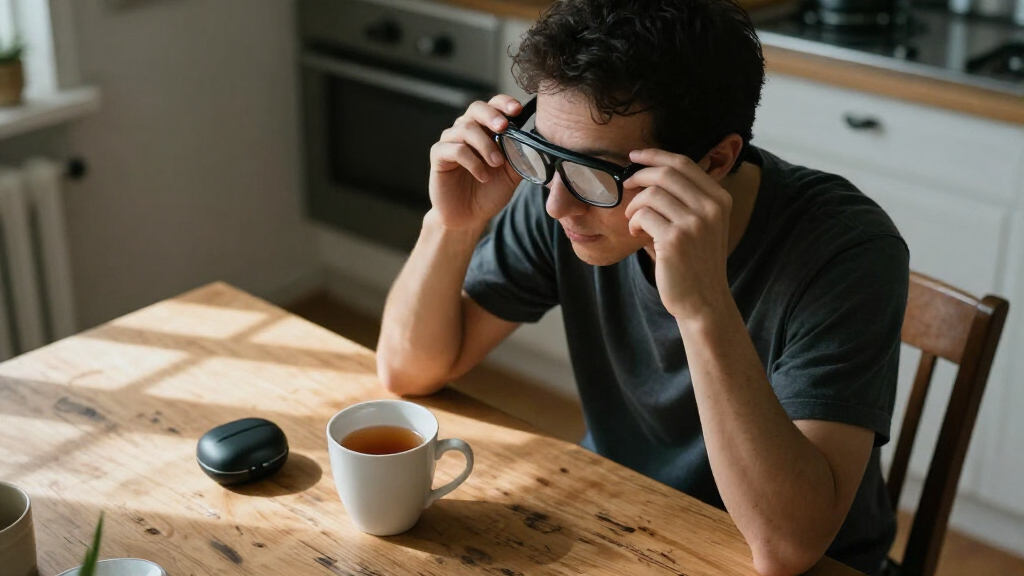
Light therapy glasses for depression can make bright-light sessions easier to fit into a morning routine, but the nine options here differ in light type, features, and how much guidance they offer. I name the Luminette 3 my best overall pick for its wearable daylight-lamp approach, while the AYO stands out for buyers drawn to blue-turquoise light and the Pegasi II for a lightweight, sleep-and-energy focus. The tradeoff is between a familiar, straightforward session and added portability or app-connected features, which may not suit every user. These glasses are not a substitute for professional care, and light therapy may not be appropriate for everyone. Read on for my comparison, selection criteria, and guidance on choosing a pair for your routine.

Give the gift of listening to someone who needs a break
- Choose a 1-, 3-, 6- or 12-month membership
- They pick the audiobooks they love
- Easy to send by email
Key Takeaways
- Luminette 3 is my overall pick because its wearable daylight-lamp format makes it a strong starting point for buyers who want a clearly defined light-therapy option.
- Luminette 2 and Luminette 3 serve different priorities: the older model may suit shoppers comparing a simpler version, while the newer model is the more current pick in this lineup.
- AYO and Pegasi II lean toward lightness and routine flexibility, but buyers should compare their light approach and guidance rather than assume all wearable sessions work the same way.
- Retimer 3 is the feature-led choice for readers interested in app-linked health tracking, while the simpler Re-Timer may make more sense for people who do not need that layer.
- Several generic UV-free models make broad benefit claims; I would prioritize clear product instructions, comfortable fit, and a consistent session routine over claims such as a lux-equivalent figure.
| Pegasi II Smart Light Therapy Glasses – Feather-Light Blue-Green Light for Sleep, Energy & Jet Lag (Black) |  | Best for a Structured Morning Routine | Weight: 1.7 oz | Light spectrum: Blue-green wavelengths | Suggested use: 30 minutes per day, between 7 a.m. and 9 a.m. | VIEW LATEST PRICE | See Our Full Breakdown |
| Portable UV-Free Light Therapy Glasses with Blue and White Light |  | Best for Flexible Session Lengths | Weight: 1.9 oz | Light modes: Blue at 480 nm and white | Stated therapy equivalence: 10,000 lux | VIEW LATEST PRICE | See Our Full Breakdown |
| AYO Wearable Blue-Turquoise Light Therapy Glasses |  | Best Lightweight Pick for Prescription Glasses | Product type: Wearable light therapy glasses | Light colors: Blue-turquoise and red | Weight: 1.1 oz | VIEW LATEST PRICE | See Our Full Breakdown |
| GentleGlow MEINNO Wearable Light Therapy Glasses |  | Best for Simple Preset Sessions | Weight: 2.29 oz | Light modes: Blue at 480 nm and white | Timer settings: 15, 30, and 45 minutes | VIEW LATEST PRICE | See Our Full Breakdown |
| Luminette 2 Wearable Light Therapy Glasses |  | Best for Adjustable Light Intensity | Light type: Blue-enriched white LED | Light intensities: 500, 1,000, and 1,500 lux | Fit: One size with flexible arms | VIEW LATEST PRICE | See Our Full Breakdown |
| Retimer 3 Wearable Light Therapy Glasses for Jet Lag, Insomnia, SAD, Winter Blues & Shift Work |  | Best for Personalized Scheduling | Light wavelength: 500 nm blue-green | Brightness settings: Low and regular | Weight: 36 g | VIEW LATEST PRICE | See Our Full Breakdown |
| Luminette 3 Light Therapy Glasses |  | Best for Adjustable Intensity | Light intensities: 500, 1000, and 1500 lux | Weight: 1.86 ounces | Profile thickness: 1.2 inches | VIEW LATEST PRICE | See Our Full Breakdown |
| Re-Timer Portable Light Therapy Glasses |  | Best for Simple Green-Light Sessions | Light source: LED | Number of light sources: 2 | Light at the eyes: Up to 500 lux | VIEW LATEST PRICE | See Our Full Breakdown |
| Light Therapy Glasses, Blue-White UV-Free Light Therapy Lamp |  | Best for Two Light Modes | Light modes: Blue and white | Blue wavelength: 480 nm | Timer settings: 15, 30, and 45 minutes | VIEW LATEST PRICE | See Our Full Breakdown |
| light therapy glasses for depression | Weight |
|---|---|
| Pegasi II Smart Light Therapy | 1.7 oz |
| Portable UV-Free Light Therapy | 1.9 oz |
| AYO Wearable Blue-Turquoise Li | 1.1 oz |
| GentleGlow MEINNO Wearable Lig | 2.29 oz |
| Luminette 2 Wearable Light The | — |
| Retimer 3 Wearable Light Thera | 36 g |
| Luminette 3 Light Therapy Glas | 1.86 ounces |
| Re-Timer Portable Light Therap | 2.72 ounces |
| Light Therapy Glasses | 1.92 ounces |
More Details on Our Top Picks
Pegasi II Smart Light Therapy Glasses – Feather-Light Blue-Green Light for Sleep, Energy & Jet Lag (Black)
The Pegasi II suits buyers who want a defined morning session rather than several light settings to choose from. Its blue-green light is intended for circadian-rhythm support, and the suggested 30-minute window between 7 a.m. and 9 a.m. gives the routine a clear shape. At 1.7 ounces, its collapsible frame is lighter than the GentleGlow MEINNO, a practical advantage for commuting or packing. Bluetooth app controls add convenience, though this model’s narrow usage window is less flexible than the Portable UV-Free glasses, which offer three timer lengths. It may take consistent daily use before benefits become noticeable, and the product’s sleep-and-energy claims are not a substitute for depression care. Choose it for a repeatable morning habit; skip it if your schedule shifts or you need flexible session timing.
Pros:- Lightweight 1.7-ounce frame folds for easier packing.
- Bluetooth app control supports selecting a light mode.
- A defined 30-minute morning routine is straightforward to plan.
- UV-free light and listed FCC, RoHS, and CE certifications.
Cons:- The recommended session window is relatively restrictive.
- The product description says benefits may take up to seven days of consistent use to become noticeable.
- Its focus on one blue-green spectrum gives less mode flexibility than glasses offering both blue and white light.
Best for: People with a consistent early-morning schedule who want lightweight, app-controlled glasses for a daily circadian-light routine.
Not ideal for: Shift workers or anyone unable to set aside 30 minutes between 7 a.m. and 9 a.m.; the stated routine may be hard to follow consistently.
- Weight:1.7 oz
- Light spectrum:Blue-green wavelengths
- Suggested use:30 minutes per day, between 7 a.m. and 9 a.m.
- Bluetooth:Version 4.0
- Frame:Collapsible
- Certifications and registrations:FCC, RoHS, CE; FDA registered
Our verdict“Choose Pegasi II if you can keep a consistent early-morning routine and value a compact, app-controlled frame over flexible session times.”
Portable UV-Free Light Therapy Glasses with Blue and White Light
These glasses make sense for buyers who want to fit a session around a changing day. Their 15-, 30-, and 45-minute timers with automatic shutoff offer more choice than Pegasi II’s stated 30-minute morning routine, while blue and white light modes let users select between two options. The manufacturer describes the output as equivalent to a 10,000-lux therapy lamp, but that stated equivalence does not make this wearable identical to a lamp or establish that it treats depression. At 1.9 ounces, the frame is portable and can be worn with glasses or contact lenses. A gradual brightness increase over the first minute may make startup less abrupt. The tradeoff is a fixed 480 nm blue mode and a maximum preset session of 45 minutes, so buyers needing other wavelengths or longer sessions should compare alternatives.
Pros:- Three preset session lengths with automatic shutoff.
- Blue and white light modes provide a choice of settings.
- UV-free LEDs with IEC 62471 certification listed.
- Compatible with contact lenses or glasses.
Cons:- The blue mode is specified at 480 nm, limiting wavelength choice.
- The longest preset session is 45 minutes.
- The stated 10,000-lux equivalence does not by itself establish a depression treatment benefit.
Best for: People who want wearable light glasses with preset short, medium, and longer sessions, plus blue and white modes.
Not ideal for: Buyers seeking a session longer than 45 minutes or a broader choice of blue-light wavelengths.
- Weight:1.9 oz
- Light modes:Blue at 480 nm and white
- Stated therapy equivalence:10,000 lux
- Timer settings:15, 30, and 45 minutes
- Automatic shutoff:Yes
- Safety:UV-free; IEC 62471 certified
- Compatibility:Can be worn with contact lenses or glasses
Our verdict“Pick these if preset session flexibility matters more to you than a wider wavelength range or sessions beyond 45 minutes.”
AYO Wearable Blue-Turquoise Light Therapy Glasses
At just 1.1 ounces, AYO is the lightest option in this group with a stated fit over prescription glasses, making it a strong match for buyers who dislike heavier head-worn gear. Its full-visibility design lets users keep seeing their surroundings during a session, unlike a lamp routine that may require sitting in a particular position. The blue-turquoise mode is intended for circadian and energy routines, while a red-light mode adds a wind-down option not listed for Pegasi II. That extra mode may appeal to people building a broader daily routine, but the product data does not provide session timing or light intensity, so it is harder to compare treatment schedules. Guidance also relies on the companion app or support team. Choose it for fit and visibility, not as a proven depression treatment.
Pros:- At 1.1 ounces, it is lighter than the other listed glasses in this batch.
- Designed to fit over prescription glasses with an adjustable nosepiece.
- Full visibility during use supports everyday tasks.
- Offers blue-turquoise and red light modes.
Cons:- The supplied product data does not state light intensity or session duration.
- Personal guidance and recommendations depend on the companion app or support team.
- The head-mounted frame may not suit people who prefer a stationary lamp.
Best for: Prescription-eyeglass wearers who want a very light frame, full visibility, and both daytime and wind-down light modes.
Not ideal for: Buyers who need clearly stated session durations or light-intensity figures before choosing a therapy routine.
- Product type:Wearable light therapy glasses
- Light colors:Blue-turquoise and red
- Weight:1.1 oz
- Fit:Adjustable nosepiece; fits over prescription glasses
- Visibility:Full visibility during use
- Companion app:AYO Circadian Health app
Our verdict“Choose AYO if a very light, prescription-glasses-compatible frame and visible use matter more than published session and intensity details.”
GentleGlow MEINNO Wearable Light Therapy Glasses
GentleGlow MEINNO is a straightforward choice for buyers who want preset sessions without app features or a complicated control system. Its blue 480 nm and white-light modes, plus 15-, 30-, and 45-minute timers with automatic shutoff, resemble the Portable UV-Free glasses’ core setup. The key difference is weight: at 2.29 ounces, MEINNO is heavier than that alternative and much heavier than AYO, which may matter during a full session. UV-free LEDs and IEC 62471 certification are listed, and the frame is described as compatible with glasses or contacts. However, the supplied information does not give a light-intensity figure, making output harder to compare. It is also not water resistant, so it is less suited to sweaty exercise or wet environments. Choose it for uncomplicated timed use, not for the lightest fit.
Pros:- Blue and white light modes offer two choices.
- Three timer presets and automatic shutoff simplify session control.
- UV-free LEDs and IEC 62471 certification are listed.
- Compatible with contact lenses or glasses.
Cons:- At 2.29 ounces, it is heavier than the other glasses in this batch.
- Not water resistant.
- No light-intensity figure is provided in the supplied specifications.
Best for: Buyers who want wearable glasses with two light modes and automatic preset timing, and do not need app control.
Not ideal for: People prioritizing the lightest possible frame, a stated light-intensity figure, or use around water and heavy sweat.
- Weight:2.29 oz
- Light modes:Blue at 480 nm and white
- Timer settings:15, 30, and 45 minutes
- Automatic shutoff:Yes
- Safety:UV-free; IEC 62471 certified
- Light source:LED
- Water resistance:Not water resistant
Our verdict“Choose GentleGlow MEINNO for simple timed sessions and two light modes, but compare lighter options if comfort over longer wear is your priority.”
Luminette 2 Wearable Light Therapy Glasses
Luminette 2 stands apart from the other options here by listing three intensity levels: 500, 1,000, and 1,500 lux. That gives buyers more control over the stated output than Pegasi II, which specifies a blue-green spectrum and routine but no intensity figure. Its blue-enriched white LED design, flexible arms, and unobstructed vision make it practical for using at home, at work, or on a trip, including for people wearing prescription glasses or contacts. Compared with AYO, the product data offers clearer intensity numbers but does not list a red-light mode. The main inconvenience is battery endurance: one charge supports about 5–10 sessions, so frequent users will need to recharge regularly. It is a useful fit for those who value adjustable output, though those figures alone do not establish effectiveness for depression.
Pros:- Three listed intensity levels: 500, 1,000, and 1,500 lux.
- Flexible arms fit a range of head sizes.
- Designed to work with prescription glasses or contact lenses without obstructing vision.
- USB-C charging and a portable wearable design.
Cons:- Provides approximately 5–10 sessions per charge, so frequent use means regular recharging.
- The supplied data does not state a session duration.
- No red-light mode is listed, unlike AYO.
Best for: People who want wearable glasses with stated, adjustable intensity levels for home, work, or travel use.
Not ideal for: Frequent users who want a long run between charges, or buyers specifically seeking a red-light wind-down mode.
- Light type:Blue-enriched white LED
- Light intensities:500, 1,000, and 1,500 lux
- Fit:One size with flexible arms
- Battery:Lithium battery
- Sessions per charge:5–10
- Charging:USB-C cable included
- Eyewear compatibility:Compatible with glasses or contact lenses
- Safety certification:IEC 62471 photobiological safety
Our verdict“Choose Luminette 2 if adjustable, stated light intensity is your priority and you are comfortable recharging after several sessions.”
Retimer 3 Wearable Light Therapy Glasses for Jet Lag, Insomnia, SAD, Winter Blues & Shift Work
For buyers who want help building a repeatable light routine, the Retimer 3 stands out for its app-guided schedules and Apple Health and Google Health syncing. Its 500 nm blue-green light is aimed at circadian timing, which makes it relevant to seasonal mood changes as well as sleep schedules affected by shifts or travel. Compared with Luminette 3, which offers three stated lux settings, Retimer 3 gives less control over intensity, with only low and regular modes. Its main advantage is the personalized tracking rather than a wider brightness range. At 36 g, it is also lighter than the Re-Timer Portable, and adjustable nose pads let it fit over prescription glasses. The limits are practical: it is not water resistant, and two brightness levels may not suit people who are sensitive to light.
Pros:- AI-driven app offers personalized schedules and progress tracking.
- Syncs with Apple Health and Google Health.
- Lightweight 36 g frame with adjustable silicone nose pads that fit over prescription glasses.
- One-hour charging provides up to six sessions.
Cons:- Only low and regular brightness settings are listed.
- Not water resistant.
- Proprietary app and operating system add a software component that buyers may not want.
Best for: People who want app-supported schedules and health-data syncing to help maintain a consistent morning or shift-work light routine.
Not ideal for: Light-sensitive buyers who need several intensity choices, or anyone who wants to wear therapy glasses in wet or humid settings.
- Light wavelength:500 nm blue-green
- Brightness settings:Low and regular
- Weight:36 g
- Connectivity:Bluetooth wireless
- Charge time:1 hour
- Sessions per charge:Up to 6
- Frame and nose pads:Plastic frame; silicone nose pads
- Water resistance:Not water resistant
Our verdict“Choose Retimer 3 if app-based routine planning matters more to you than the broader intensity range offered by Luminette 3.”
Luminette 3 Light Therapy Glasses
The Luminette 3 is the clearest choice here for people who want to adjust session intensity rather than rely on a single setting. Its three levels—500, 1000, and 1500 lux—give more room to tailor use than the Retimer 3’s two modes, though lux figures alone do not establish that a device treats depression. The hands-free design leaves vision unobstructed, so it can fit into a morning routine while reading or preparing food instead of requiring a seated light-box session. At 1.86 ounces, it is light enough for extended wear and works with glasses or contacts. The tradeoff is battery endurance: five to ten sessions per charge means regular recharging, while the Retimer 3 lists up to six sessions but adds app-based scheduling. Buyers should also expect a one-size flexible-arm fit rather than a tailored frame.
Pros:- Three intensity levels offer more adjustment than Retimer 3’s two settings.
- Hands-free illumination does not obstruct vision.
- Lightweight 1.86-ounce design works with glasses or contacts.
- USB-C charging and IEC 62471 photobiological safety certification are specified.
Cons:- Battery lasts only five to ten sessions per charge.
- One-size flexible arms may not provide a tailored fit for every wearer.
- The supplied product details do not list app scheduling or health-data syncing.
Best for: People seeking wearable therapy with multiple stated intensity levels and the freedom to move around during a session.
Not ideal for: Buyers who want app-based scheduling and health syncing, or who need a device with longer stated battery endurance between charges.
- Light intensities:500, 1000, and 1500 lux
- Weight:1.86 ounces
- Profile thickness:1.2 inches
- Battery life:5–10 sessions per charge
- Charging interface:USB-C cable
- Fit:One size fits all with flexible arms
- Vision compatibility:Designed for use with glasses or contacts
- Safety certification:IEC 62471 photobiological safety
Our verdict“Pick Luminette 3 if adjustable stated lux levels and an unobstructed view matter more than app-guided scheduling.”
Re-Timer Portable Light Therapy Glasses
The Re-Timer Portable suits buyers who prefer a straightforward wearable green-light device over a feature-rich routine system. It delivers up to 500 lux at the eyes, is rechargeable by USB, and is listed as meeting IEC 62471 eye-safety standards. That gives it a portable alternative to sitting at a traditional light box, but its stated brightness is lower than the Luminette 3‘s highest 1500-lux setting. The product description calls it equivalent to a 10,000-lux lamp, but that comparison should not be read as the same measured illuminance at the eyes. Compared with Retimer 3, this model has no listed AI scheduling or health syncing, and at 2.72 ounces it weighs more. Its appeal is simplicity; the costs are limited brightness information and recharging needs for frequent daily use.
Pros:- Portable design allows use during low-effort activities such as breakfast or reading.
- Green LED light is described as UV-free.
- USB charging supports use away from a traditional light box.
- IEC 62471 eye-safety standard is listed.
Cons:- Up to 500 lux at the eyes is below Luminette 3’s highest stated intensity.
- Not waterproof, so use is limited to dry settings.
- Battery may need frequent recharging with heavy daily use.
Best for: Buyers who want rechargeable, wearable green-light sessions for a dry indoor routine and value a simple alternative to a light box.
Not ideal for: People who want multiple documented intensity settings, detailed app-based guidance, or a lighter frame for long wear.
- Light source:LED
- Number of light sources:2
- Light at the eyes:Up to 500 lux
- Voltage:3.7 V
- Connectivity:USB
- Control method:App and remote
- Weight:2.72 ounces
- Waterproof:No
- Safety standard:IEC 62471
Our verdict“Choose the Re-Timer Portable for simple, rechargeable green-light use, but favor Luminette 3 if you want more stated intensity options.”
Light Therapy Glasses, Blue-White UV-Free Light Therapy Lamp
This model’s main point of difference is its blue and white light modes: the listing describes 480 nm blue light for shorter sessions and white light for longer, gentler use. It also offers 15-, 30-, and 45-minute timers, which can help buyers follow a set session without checking a clock. Compared with the green-light Re-Timer Portable, this gives a choice of light color and timer duration; compared with Luminette 3, however, it does not provide a stated range of lux settings. The listing claims equivalence to a 10,000-lux therapy lamp, but does not supply a measured lux-at-eye figure, so I would not treat that claim as a direct specification comparison. It weighs about 1.92 ounces and is described as compatible with glasses or contacts. Because details on charging and battery life are absent, routine convenience is harder to judge.
Pros:- Offers both 480 nm blue light and white light modes.
- Three preset timers provide 15-, 30-, and 45-minute sessions.
- UV-free and listed as IEC 62471 certified.
- Lightweight at about 1.92 ounces and described as compatible with glasses or contacts.
Cons:- No measured lux-at-eye output is provided to support comparison with Luminette 3.
- Charging method and battery life are not specified.
- The listing’s 10,000-lux equivalence claim is not accompanied by measurement details.
Best for: Buyers who want a choice between blue and white light plus automatic session timers for a structured home routine.
Not ideal for: People who need clearly documented lux-at-eye output, published battery information, or evidence tailored specifically to depression treatment.
- Light modes:Blue and white
- Blue wavelength:480 nm
- Timer settings:15, 30, and 45 minutes
- Weight:1.92 ounces
- Light source:LED
- Safety certification:IEC 62471, as stated in the product listing
- UV output:UV-free, as stated in the product listing
- Compatibility:Designed for use with glasses or contacts
- Charging and battery life:Not specified in the supplied product information
Our verdict“Consider this model if two light modes and built-in timers are your priorities, but choose a better-documented option if output and battery details matter most.”
How We Picked
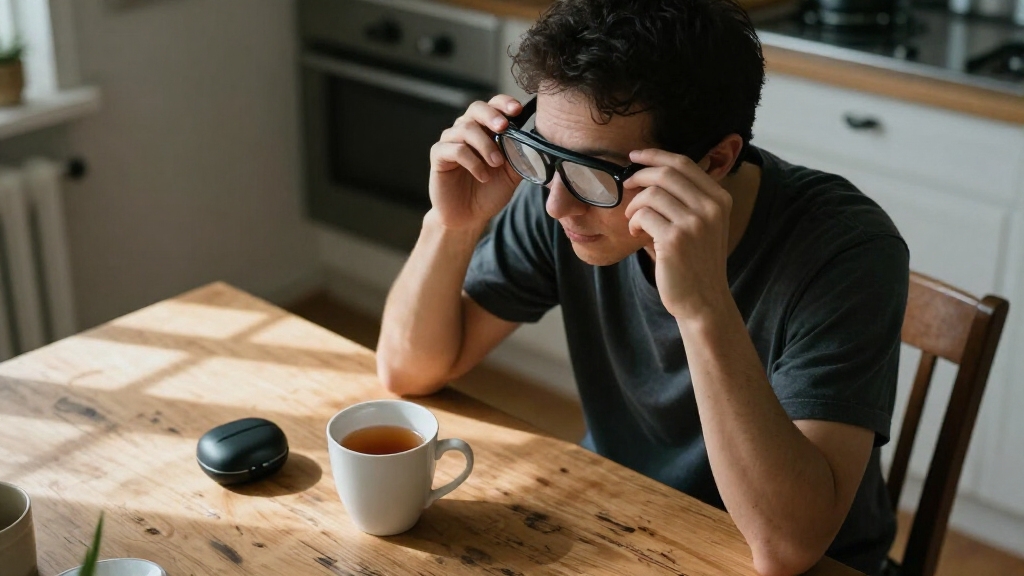
I compared the nine glasses through the needs of someone seeking a wearable light option for seasonal mood concerns: the stated light approach, clarity of intended use, portability, comfort-related design cues, and whether the product adds meaningful guidance or app features. I also considered how well each option could fit everyday activities without turning a session into a complicated task. Since names and marketing claims alone do not establish clinical effectiveness, I avoid treating broad promises about depression, sleep, or energy as proof of a treatment outcome.
The ranking favors practical fit and clear positioning over the longest feature list. Luminette 3 leads as a recognizable wearable daylight-lamp option; AYO and Pegasi II follow for buyers who prioritize a wearable format and distinct light positioning. Retimer 3 earns a place for its connected features, while the older Luminette 2 and Re-Timer may appeal to buyers seeking a more straightforward alternative. The less clearly differentiated portable UV-free listings rank lower because their product titles provide less detail for comparing guidance, use, and fit. I would confirm current manufacturer instructions and consult a clinician before using light therapy for depression, especially if symptoms are significant or a health condition or medication could affect light sensitivity.
Factors to Consider When Choosing Light Therapy Glasses For Depression
Choosing light therapy glasses involves more than picking a product with a portable frame. I would begin with the intended use and session instructions, then check whether the device suits your health needs, daily schedule, and comfort preferences. These broader questions can prevent a feature-heavy purchase that is difficult to use consistently.
Match the Light Approach to Your Clinician’s Guidance
Products may describe blue, blue-turquoise, white, or daylight-style light, and those labels do not make the devices interchangeable. Ask what light approach and schedule are appropriate for your symptoms rather than choosing by color name alone. A device’s stated lux or equivalence claim can be difficult to compare across products unless the measurement conditions and distance are clear. Do not assume that a larger-sounding number means a better fit or a proven depression treatment. If you have bipolar disorder, an eye condition, migraine sensitivity, or take medication that affects light sensitivity, get professional guidance before starting. The right choice is the one whose instructions and light characteristics align with a care plan you can follow.
Check Session Instructions Before Buying
Session length, timing, and positioning can affect whether a device fits into daily life, so look for complete manufacturer directions before purchase. A common mistake is assuming glasses work exactly like a light box or that any time of day is suitable. Confirm whether the maker specifies morning use, distance, brightness settings, or a gradual start. If instructions are vague, contact the manufacturer or ask a clinician rather than improvising a routine. A wearable design may free your hands, but it does not remove the need to follow the recommended schedule. Favor clarity over an impressive-sounding feature list.
Prioritize Comfort and Wearability
Light therapy only becomes a useful routine if you can wear the device comfortably for its prescribed sessions. Check frame weight, nose and ear contact, adjustability, and whether the design interferes with your usual glasses. If you wear prescription eyewear, verify compatibility instead of assuming the frames can be stacked. Consider where you will use the glasses: at a desk, while moving around at home, or during travel. A lighter model may suit a busy routine, while a more structured frame may feel more secure to another wearer. If possible, review the return policy and warranty so fit problems do not leave you with an unusable device.
Decide Whether App Features Earn Their Place
App-linked reminders, session tracking, or health-platform connections can help some buyers build a routine, but they add setup and privacy questions. Before paying more for connected features, ask whether you will use the app after the first week. Check which phone platforms are supported, whether core functions work without a phone, and what data the app collects. A simpler device may be preferable if you want fewer notifications or do not track health information digitally. Conversely, session records may be useful if you and your clinician are monitoring a consistent schedule. Treat connectivity as a convenience, not evidence of stronger treatment effects.
Account for Travel, Power, and Long-Term Use
Portable frames can be appealing for shift work or travel, but portability is only helpful if charging, storage, and replacement parts are practical. Check battery or power requirements, charging method, included case, and whether the device can be used while charging if that matters to your routine. Travelers should also review how easily the glasses pack and whether the manufacturer provides clear guidance for changing schedules across time zones. Think about maintenance, warranty support, and the availability of cables or other accessories before choosing a less familiar listing. A compact product that is difficult to recharge may be less convenient than a slightly larger one with simpler upkeep. Choose around your regular routine, not an occasional ideal scenario.
Set Realistic Expectations and Track Your Response
Light therapy glasses are not a guaranteed remedy for depression, and product claims should not replace medical evaluation or a broader treatment plan. Ask a clinician whether this approach fits your situation and how to monitor possible side effects or changes in mood and sleep. Keep a simple record of session timing, duration, sleep, and symptoms so patterns are easier to discuss. Do not increase exposure or change timing just because you want faster results; follow the device directions and professional advice. If symptoms worsen, or you experience agitation, headaches, or eye discomfort, stop and seek guidance. A careful routine and clear expectations matter more than chasing the most elaborate device.
Frequently Asked Questions
Can light therapy glasses replace treatment for depression?
No. These glasses should not be treated as a replacement for a clinician’s assessment, therapy, medication, or another recommended care plan. Seasonal mood symptoms can overlap with other conditions, and the right treatment depends on the person. Ask a qualified clinician whether bright-light therapy is suitable and how it should fit alongside current care. If you are in immediate danger or thinking about harming yourself, contact emergency services or a crisis support service where you live.
Should I choose blue, blue-turquoise, or white-light glasses?
I would not choose based on color terminology alone because product labels do not establish equivalent output, dosing, or clinical suitability. Compare the manufacturer’s full instructions, including session timing and any stated light measurements, and ask your clinician which approach fits your needs. The AYO and Pegasi II have distinct light positioning, while the Luminette options are presented as wearable daylight lamps. Those distinctions can guide comparison, but they do not prove one approach will work better for you. Avoid substituting one device’s schedule for another’s.
Are app-connected glasses worth choosing over a simpler model?
They may be useful if reminders or session records help you maintain a routine or share information with a clinician. Retimer 3 is the standout connected option in this lineup, while Re-Timer is a more straightforward alternative for buyers who do not want app-linked features. Before choosing, check phone compatibility, privacy details, and which functions remain available without the app. If you already track routines another way, connectivity may add little. The app should make use easier, not become a reason to choose a device whose light instructions or fit do not suit you.
Can I wear light therapy glasses over prescription glasses?
Compatibility depends on the shape and dimensions of both frames, so I would not assume that every wearable model fits over prescription eyewear. Check the manufacturer’s fit guidance and measurements, then confirm the return policy before ordering. If the glasses sit awkwardly, shift during use, or block your regular vision, they may be difficult to use consistently. Ask an optician or the manufacturer about alternatives if you cannot wear them comfortably. Fit is a practical requirement, not a minor preference.
What should I do if light therapy affects my sleep or mood?
Stop or pause use and contact a clinician if you notice worsening sleep, agitation, headaches, eye discomfort, or a marked mood change. Timing and exposure should follow the product directions and any professional advice; do not respond by increasing or extending sessions on your own. People with certain mental health or eye conditions, or who use photosensitizing medication, may need specific guidance before beginning. Keep notes about when symptoms occur and share them with your clinician. Seek urgent help if you feel at risk of harming yourself.
Conclusion
For the best overall fit, I recommend Luminette 3 as the clearest all-round wearable daylight-lamp choice in this group. For value, compare Luminette 2 and Re-Timer if you prefer a more straightforward option and do not need connected features; verify current model details and support before choosing. For a feature-led premium-style pick, consider Retimer 3 if its app and health-platform connections would genuinely support your routine. For beginners, start by comparing Luminette 3 with AYO and choose the one with instructions, fit, and light characteristics that align with clinician guidance. For travel or a lightweight routine, look at Pegasi II; for broad-claim portable listings, verify specifications and directions before buying. None of these products replaces professional depression care, so use clinician guidance to close the final decision.